 跳转到主要内容 跳转到页脚

Stick vacuums face a significant design challenge: their high center of gravity makes them prone to tipping, which often leads to housing fractures and mechanical failure. For B2B distributors and manufacturers, these structural weaknesses result in high warranty claim rates, especially since split hoses alone account for 13.7% of reported faults. Building a reliable product requires addressing specific stress points at the handle and wand connectors where mechanical loads concentrate during daily operation.
We examine the testing protocols used to validate stick vacuum durability, including 1-meter free-fall tests on all six sides to meet ASTM D5276 standards. This guide breaks down the engineering behind integrated shell architectures that use 10 to 14 fasteners to prevent housing flex. You will also find technical data on why polycarbonate, with its 9,500 psi tensile strength, helps units survive repeated impacts and reach a 10-year service life.
The High-Risk Use Case: Drops and Tipping
Stick vacuums face unique durability risks because their high center of gravity makes them prone to tipping from leaning positions. Engineers address these risks by testing structural integrity against EN 60312-1 and ASTM standards, focusing on surviving 40,000 hose oscillations and 600 hours of loaded operation to prevent housing fractures.
Impact Mechanics and Failure Modes in Slender Vacuum Form Factors
Stick vacuums possess a naturally high center of gravity and narrow nozzle footprints, creating unstable equilibrium when users lean units against walls or furniture. These design characteristics make the hardware susceptible to sudden load reversals when a parked unit knocks over. Data indicates that split hoses account for 13.7% of reported faults in upright and stick formats, often triggered by these topple-induced shocks. When a vacuum falls, mechanical stress concentrates on the handle, structural tube joints, and battery pack mounting points. Lateral forces from side pulls or hose snags during daily operation frequently lead to catastrophic housing cracks if the material choice fails to meet impact resistance requirements.
Benchmarking Durability via EN and ASTM Stress Protocols
Engineers use specific numeric targets to validate impact resistance and long-term reliability. EN 60312-1:2013 clause 6.10 requires life tests of 500 to 600 hours with a partly filled dust receptacle, which simulates real-world backpressure and thermal vibration. To ensure the primary air path survives repeated tipping, hose durability standards mandate at least 40,000 oscillations under standardized bending tests. We also utilize ASTM F450 and F595 protocols to measure plastic hose reliability against tensile and torsion stress. Additionally, LONGTIME Certification PSR standards link these physical durability metrics to ISO 9001 quality systems. This framework ensures that structural components, including housings and battery packs, remain repairable even after common countertop drops or falls from storage mounts.
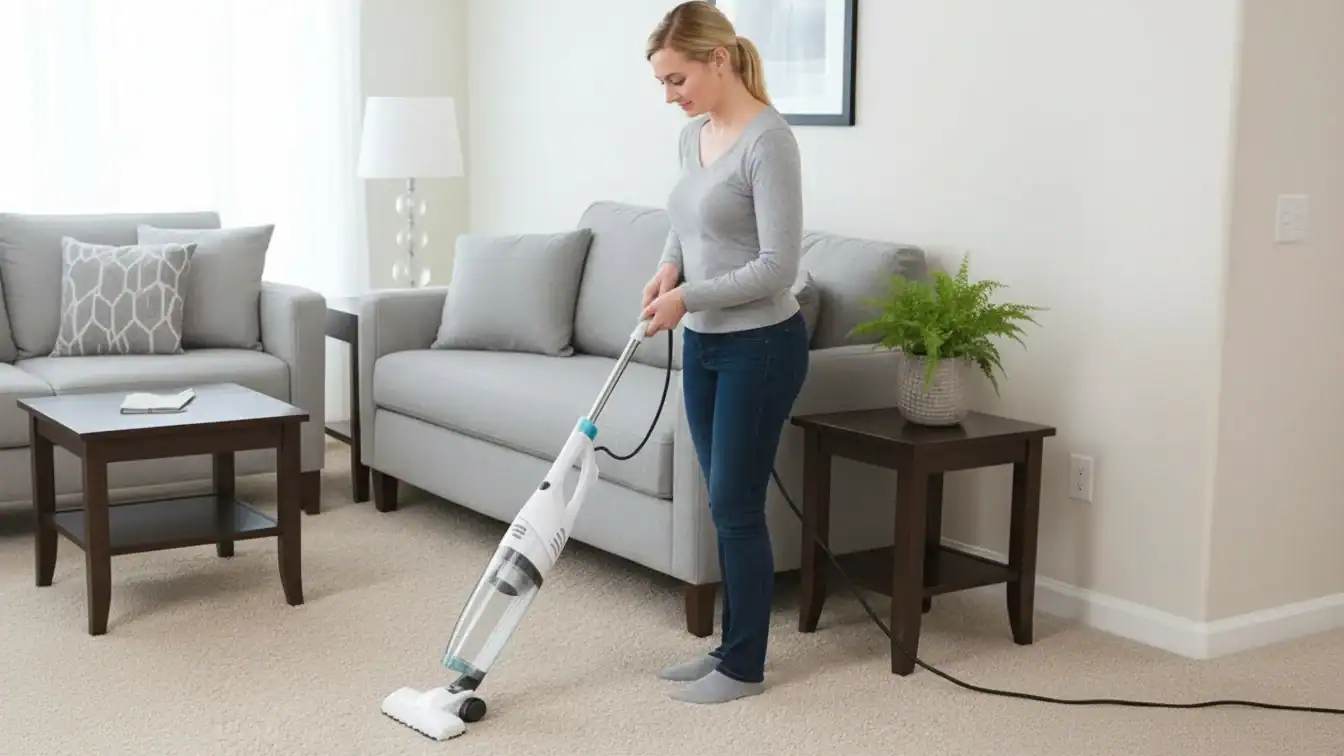
Reinforcing the Handle / Motor Connection Point
Engineers reinforce the handle-motor connection by using integrated shell housings and dense fastener patterns, often involving 10–14 screws. This design distributes mechanical stress across internal ribs and keyed joints, ensuring the vacuum withstands high torque and accidental drops without cracking at the seams.
| Reinforcement Method | Technical Specification | Structural Benefit |
|---|---|---|
| Fastener Density | 10–14 T15/T20 Screws | Clamps shell halves to prevent flex under torque. |
| Integrated Architecture | Single Molded Main Body | Eliminates weak seams at handle-motor junctions. |
| Mechanical Interlock | Keyed Asymmetric Geometry | Resists off-axis loading and twisting. |
Integrated Shell Architecture and Fastener Density
Manufacturers like Shark utilize 10–14 T15/T20 screws distributed around the motor cavity to clamp the shell halves. This high fastener density, featuring roughly six screws on the underside and several at the rear and top, prevents the housing from flexing during heavy use. By securing the motor within a closely fitting plastic cavity, the design ensures that vibration and reaction forces do not separate the housing seams.
Dyson-style main bodies integrate the handle, trigger, and motor housing into a single molded part, typically measuring 160 mm x 100 mm. This compact architecture relies on internal ribbing and thick-walled screw bosses to provide stiffness without adding excessive weight. Full-perimeter shell contact at the split line ensures that mechanical loads distribute across the entire surface area, protecting the assembly during repetitive push-pull motions.
Keyed Mechanical Interlocks and Shear-Loaded Joints
Keyed plug-in connections with asymmetric geometry resist twisting and off-axis loading from the extension wand. These designs often feature audible click-latch systems, found in Beko and Vacmaster models, which confirm a full mechanical interlock. This engagement ensures that bending loads are carried in shear across robust plastic sections rather than placing stress on the latching mechanism itself.
Vertical alignment guides prevent user error during assembly, ensuring the handle and brush head remain perfectly synchronized to avoid joint fatigue. Molded tongues and splines act as the primary load-bearing features, protecting internal electrical pins from physical strain during impact scenarios. By requiring the joint to bottom out completely, manufacturers ensure the connection remains rigid even when the vacuum experiences high leverage during deep carpet cleaning.
Wand Connector Durability: Preventing Wobble
Wand stability in 2026 depends on high-modulus materials like laser-welded stainless steel and reinforced joint geometry. By using wide flange edges and 500 mm segment lengths, manufacturers reduce bending moments and prevent the ovalization that leads to connection wobble during heavy use.
Connector Geometry and Material Selection
Laser-welded stainless steel provides high stiffness and corrosion resistance. This material maintains precise diameter tolerances through thousands of assembly cycles, preventing the gradual wear that causes loose joints. Designers incorporate wide flange edges at the plug-in joint to increase the local section modulus. This reinforcement distributes lateral loads across a larger surface area and prevents the connector from tilting or shifting during operation.
Antistatic polycarbonate bodies and PEEK tips offer a lightweight alternative for precision environments while maintaining dimensional stability under impact. These engineered polymers resist the deformation that typically leads to mechanical play. Reinforced joint regions specifically resist mechanical fretting and denting, ensuring the male and female components maintain a low-clearance slip fit throughout the life of the vacuum system.
Standardized Locking Mechanisms and Segment Ratios
Standard Straight Tool Lock (STL) systems with 1.25-inch (31.75 mm) diameters create repeatable, secure attachments that resist rattling. These locking mechanisms ensure that the wand remains a rigid column even when the user applies significant downward pressure. Limiting wand sections to 500 mm lengths shortens the lever arm acting on each connector. This geometry significantly lowers the bending moment compared to single-piece long sticks, which protects the socket from widening over time.
Standardized diameters of 32, 35, 38, 40, and 50 mm define mating tolerances that minimize play between segments. By controlling these dimensions strictly, manufacturers ensure a friction-lock or detent fit that keeps accessory heads aligned with the wand axis. These precise tolerances prevent the oscillating movement that users identify as “wobble,” ensuring consistent performance during dynamic cleaning motions.
Scale Your Brand with Premium OEM/ODM Vacuum Solutions

Drop Testing Standards (1 Meter on 6 Sides)
Engineers use the 1-meter drop test to simulate real-world accidents where a vacuum falls from waist height. By dropping the unit on all six major faces onto a rigid steel or concrete surface, manufacturers verify structural integrity against ASTM D5276 and ISO 2248 standards, ensuring the product survives impact without functional failure.
| Testing Parameter | Regulatory Standard | Technical Tolerance |
|---|---|---|
| Free-Fall Drop Height | ASTM D5276 / ISO 2248 | 1.0 Meter (Fixed) |
| Impact Surface Plate | ISTA / EN Requirements | Steel ≥ 13 mm (0.5 in) |
| Surface Flatness | D5276 Compliance | ≤ 2 mm deviation |
Industry Benchmarks for Free-Fall Impact Tests
ASTM D5276 and ISO 2248 serve as the primary global standards for free-fall testing of consumer goods up to 50 kg. While standard retail packaging tests often use a 0.8-meter height, the 1.0-meter protocol represents a high-severity scenario that simulates real-world household accidents more accurately. This height exceeds the baseline for standard light packaging, ensuring the device remains durable even under stress.
Six-side drop sequences verify that every internal component—from the lithium-ion battery cells to the motor housing—can withstand impact resonance. By testing each major face, engineers identify potential weaknesses in structural clips or electronic solder joints. KelyLands integrates these benchmarks during the Final Quality Control stage to validate the ruggedness of the handheld vacuum shell before distribution.
Technical Parameters for Impact Surfaces and Rigs
A repeatable test environment requires impact surfaces made of concrete, stone, or a steel plate at least 13 mm thick. These materials prevent the floor from absorbing energy, ensuring the vacuum absorbs the full force of the impact. The test rig must maintain a flatness tolerance where no two points on the surface differ by more than 2 mm, providing a consistent landing area for all six orientations.
Rigidity standards mandate a maximum elastic deflection of 0.1 mm under a 10 kg static load. This level of stiffness ensures that failures result from product design rather than surface compliance. A successful test requires the stick vacuum to maintain its mechanical integrity and suction power, often reaching 20,000Pa, without any cracks or latch failures after the final drop sequence completes.
Switch Endurance: The On/Off Trigger Life
Engineers measure vacuum trigger endurance in paired operations, with industry benchmarks for high-quality switches reaching 30,000 to 50,000 cycles. Technical design focuses on minimizing contact wear and preventing arcing through standards like IEEE 37.66. This ensures the switch survives years of repetitive household use without mechanical failure or electrical degradation.
Mechanical Cycle Life for Vacuum Actuators
Mechanical endurance benchmarks target 50,000 paired operations for lower-voltage models and 30,000 operations for high-voltage vacuum interrupters. Solid dielectric insulation technology minimizes internal wear, which lets triggers maintain structural integrity under repeated manual actuation. Engineering logic prioritizes cycle-rated endurance over continuous runtime. This approach accounts for the frequent on-off bursts typical of cordless cleaning sessions. Standard open and close response times range from 100 ms to 220 ms to ensure immediate user feedback and motor engagement.
Compliance Standards for Arcing and Contact Wear
IEEE 37.66 Class C2 certification indicates a low risk of reignition or restrike after the switch interrupts the electrical circuit. Components must withstand short-time symmetrical currents of up to 12,500 A to prevent terminal welding or failure during electrical surges. Testing protocols for capacitive switching currents between 200 A and 400 A ensure the trigger handles high-draw motor startups without degrading contact points. Quality assurance processes include 100% functionality testing for every unit to align with 2026 reliability expectations and standard 12-to-18-month hardware warranties.
Material Choice: Polycarbonate for High Stress Areas
Polycarbonate provides high impact resistance—approximately 250 times that of glass—and high ductility, preventing structural failure during drops. With a tensile strength of 9,500 psi and heat deflection up to 132°C, it maintains integrity in high-stress zones like motor mounts and handle joints.
Impact Durability and Ductility for Drop Protection
Unfilled polycarbonate achieves a ‘No Break’ rating in Charpy un-notched impact tests, with notched Izod results exceeding 65 kJ/m² per ISO 179/180 standards. This specific energy absorption capacity prevents brittle failure in common household drop scenarios. High elongation at break, typically between 60% and 80%, allows structural components to yield and absorb impact energy rather than shattering. This ductility ensures that thin-walled housings protecting sensitive areas like the battery pack and motor resist crack propagation even under sudden shock loading.
Engineers utilize machine-grade formulations like TUFFAK® MG to reduce internal stress during the fabrication process. Minimizing these residual stresses preserves the inherent mechanical toughness of the polymer when forming complex geometric parts. Maintaining the structural integrity of handle joints and hinges is vital where stress concentrations naturally occur during heavy use. These low-stress formulations ensure the material retains its resistance to fatigue and environmental stress cracking over the lifecycle of the vacuum.
Technical Performance Specifications and Thermal Stability
Polycarbonate demonstrates significant mechanical strength, with tensile yield reaching 9,000 to 9,500 psi (62–65 MPa) and flexural strength peaking at 159 MPa. These values, validated by ASTM D638 and D790 benchmarks, indicate a material capable of carrying repeated bending and assembly loads without permanent deformation. For internal structural frames requiring even higher rigidity, glass-filled variants provide a flexural modulus near 2,600 MPa, serving as a lightweight replacement for die-cast aluminum or zinc components in high-load motor mounts.
Operating longevity depends on thermal stability near the motor and power electronics where localized heat builds up. Heat deflection temperatures of 132°C (270°F) at 264 psi ensure that structural parts maintain their shape and rigidity during extended high-power cleaning cycles. The material preserves dimensional stability across a wide temperature range from -40°C to 138°C. This consistency is essential for maintaining tight tolerances in multi-material interfaces, such as latches and wand connectors, where thermal expansion must remain predictable to prevent mechanical binding or air leaks.
Reducing Warranty Claims through Robust Design
Manufacturers reduce warranty claims by utilizing reinforced polycarbonate and brushless motors, which extend product lifespans to 7-10 years. Implementing modular designs allows for easy component replacement, while rigorous triple-layer quality inspections ensure units meet durability standards before reaching the 2026 global market.
High-Grade Material Selection and Motor Engineering
Manufacturers select high-grade materials like reinforced polycarbonate and ABS blends to ensure vacuum housing resists stress cracks during accidental drops. Integrating brushless motors removes the common failure point of carbon brush wear found in budget models, which often last only two to five years. Sealed filtration systems and advanced cyclonic technology maintain suction levels while preventing abrasive dust from reaching sensitive internal electronics and sensors.
Premium designs often incorporate stainless steel wands and metal brush rolls, drawing from the durability benchmarks of high-end canister vacuums that last up to 20 years. These engineering choices directly contribute to the 7-10 year lifespan observed in top-tier cordless models. By focusing on mechanical longevity, brands minimize the frequency of motor burnouts and structural failures that typically drive high claim rates in lightweight consumer electronics.
Quality Assurance Protocols and Modular Serviceability
Production lines utilize triple-layer inspections—Incoming Quality Control (IQC), Process Quality Control (PQC), and Final Quality Control (FQC)—to verify every unit before shipping. Designers prioritize modular structures that allow technicians or users to replace core components like PCBs and batteries, extending the product life well beyond the standard 18-month warranty. This repairability strategy mirrors high-end brands where replaceable parts keep units functional for over a decade despite heavy use.
Adhering to ISO 9001 and IATF 16949 standards ensures consistent output across high-volume manufacturing runs. Engineering teams also conduct randomized batch testing for switch endurance and motor performance to meet 2026 reliability targets. These rigorous testing protocols, combined with data-driven predicted reliability scores, help identify potential points of failure before products reach the consumer, significantly lowering the total cost of ownership and manufacturer support expenses.
Final Thoughts
Stick vacuum longevity depends on how well engineers manage impact forces and repetitive stress at connection points. Choosing high-modulus materials like polycarbonate and using dense fastener patterns protects the motor and handle from fractures during inevitable falls. These design choices directly influence whether a unit lasts two years or a full decade.
Buyers benefit when manufacturers adhere to 1-meter drop standards and high-cycle switch testing. Since these machines face constant movement and occasional tipping, structural integrity remains the most reliable indicator of long-term value. Investing in a model with reinforced joints and modular components reduces waste and ensures the vacuum performs consistently throughout its service life.
Frequently Asked Questions
What causes a stick vacuum handle to feel loose or wobbly?
Handle looseness usually results from wear at the connection joints, damaged plastic latches, or compromised screw bosses. While some lightweight units have minor flex, a persistent wobble suggests structural damage that requires component replacement to maintain stability.
How long should a high-quality stick vacuum last in 2026?
Standard residential stick vacuums typically provide a service life of 5 to 7 years. Premium models engineered with reinforced materials often extend this lifespan to a 7-to-10-year range when maintained properly.
Can I repair a broken vacuum handle with adhesive?
Adhesives generally fail to restore the structural integrity needed for high-stress pivot points. We recommend replacing the wand or handle assembly with genuine OEM parts to ensure the vacuum can withstand the leverage applied during daily cleaning.
Are plastic vacuum bodies durable enough for long-term use?
Modern vacuums utilize reinforced engineering thermoplastics that offer excellent durability for residential tasks. These materials provide high impact resistance and structural rigidity without adding the excessive weight found in metal alternatives.
Which vacuum models currently lead the industry in durability?
The Dyson V-series and Miele Triflex lines consistently rank as the most durable stick vacuums. These premium units utilize robust connector designs and high-grade polymers to achieve a documented 10-year lifespan.

 English
  Español
  Français
  Deutsch
  Português do Brasil
  Русский
  한국어
한국어  日本語
日本語  العربية