 跳转到主要内容 跳转到页脚
The “battery tax”—the recurring cost of replacing lithium-ion packs every 300 to 1,000 cycles—increases lifetime maintenance costs by up to 50% in fixed facilities. While cordless units often operate between 100 and 500 Watts to prevent overheating, corded architectures deliver a continuous 960–1,440W draw and 120–150+ CFM of airflow. For retailers, positioning these high-suction units as task-optimized infrastructure rather than redundant backups triggers 20–30% revenue growth by capturing the “whitespace” where primary machines fail.
We evaluate the engineering and retail logic behind the “Second Vacuum” pitch, focusing on structural standards like the 2024 IBC for garage utility and 2023 NEC electrical requirements for sustained power delivery. This analysis details the path to scalable production through ISO 9001:2015 and IATF 16949 compliance, proving how empirical performance metrics outperform ornamental design in high-conversion B2B and gift markets.
The Corded Advantage: Beyond the Battery
Corded vacuums deliver double the suction of cordless units by drawing continuous mains power, eliminating runtime limits, voltage sag, and the recurring costs of lithium-ion battery replacement.
Continuous Power Delivery and Engineering Stability
A direct AC connection allows for 24/7 duty cycles. Cordless units usually tap out after 15 to 45 minutes on high-power settings, requiring a rotation of expensive packs and chargers to finish a shift. Corded motors maintain full rated speed and torque indefinitely because they don’t face the thermal throttling or voltage sag common in lithium-ion systems.
Removing the battery also changes the mechanical profile of the tool. Engineering for the mains allows for lighter tool-only weights and more compact housings. This improves ergonomics during overhead cleaning or long-duration commercial maintenance where battery mass causes operator fatigue.
- Power Source: Constant 120V/230V AC vs. fluctuating 18V-36V DC.
- Duty Cycle: Unlimited continuous runtime.
- Cycle Life: 0% performance drift (No chemical cell degradation).
- Control Systems: No Battery Management System (BMS) required, reducing potential failure points.
Performance Benchmarks: Suction, Airflow, and Lifecycle Economics
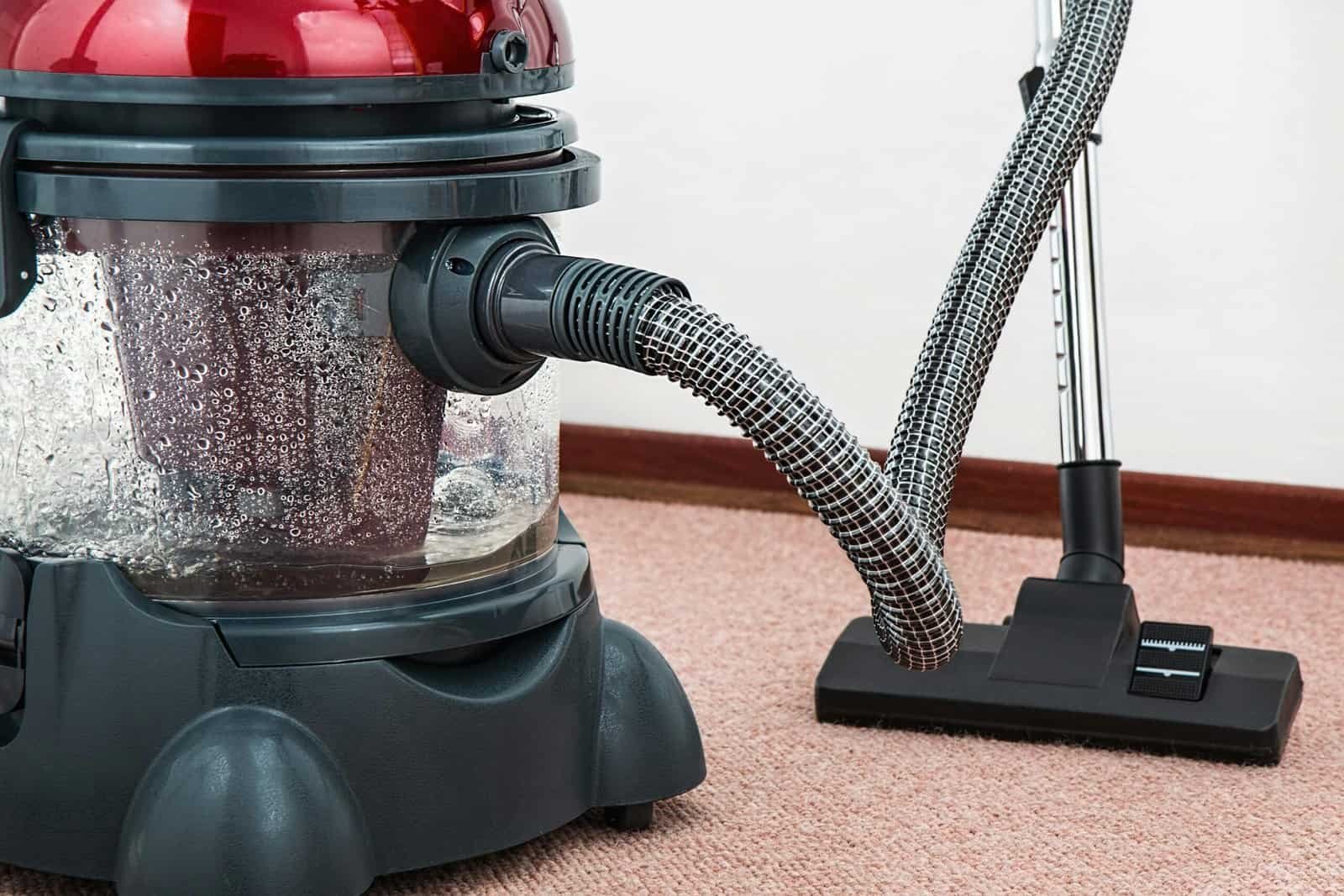
The performance gap between these architectures is significant. Most corded shop vacs pull 8 to 12 Amps, translating to over 1,400 Watts of continuous input. In contrast, cordless units often operate between 100 and 500 Watts under load to prevent the battery from overheating. This massive delta in power allows corded units to handle heavy debris and renovation dust that would stall a battery-powered “daily driver.”
Total Cost of Ownership (TCO) remains the strongest argument for corded hardware in fixed facilities. Avoiding the “battery tax”—the recurring cost of replacing packs every 300 to 1,000 cycles—reduces lifetime maintenance costs by up to 50%.
- Airflow: 120–150+ CFM (Corded) vs. 40–80 CFM (Cordless).
- Sealed Suction: 60–90 inH2O vs. 30–60 inH2O.
- Input Power: 960–1,440W continuous vs. 100–500W average.
- Upfront Savings: 30–50% lower cost by eliminating chargers and spare batteries.
The Garage: Sustained Power for Heavy Messes
Heavy maintenance requires 40 psf live loads, 3,000 lb jack support, and dedicated 20A circuits to power industrial-grade cleaning tools like high-PSI washers and corded vacuums.
| Requirement Category | Technical Specification | Standard / Compliance |
|---|---|---|
| Floor Load (Live) | 40 psf (Uniformly Distributed) | 2024 IBC / ASCE 7-22 |
| Concentrated Load | 3,000 lb on 4.5″ x 4.5″ area | Jack/Point Load Safety |
| Electrical Circuit | 120V, 20A Dedicated Branch | 2023 NEC 210.11(C)(4) |
| Pressure Washing | 1,200 PSI (Epoxy) to 2,500 PSI (Concrete) | Surface Integrity Protocol |
Structural Integrity and Load Capacity for Utility Work
Standard garage slabs often fail under the concentrated pressure of hydraulic jacks or the weight of heavy machinery. Structural design must account for both distributed weight and specific point loads to prevent punching shear and slab cracking during vehicle maintenance.
- Minimum Live Load: 40 psf for passenger vehicles per 2024 IBC standards.
- Concentrated Support: 3,000 lb capacity on a 4.5 in. × 4.5 in. area for jack safety.
- Heavy Vehicle Threshold: AASHTO LRFD standards apply for vehicles exceeding 10,000 lb GVWR.
Electrical Infrastructure and High-Pressure Cleaning Specs
Sustained power delivery is the bottleneck for deep cleaning operations. Professional shop equipment draws significant amperage that exceeds standard 15A residential circuits. Corded industrial vacuums and high-PSI washers require dedicated infrastructure to avoid thermal throttling and voltage sag.
- Dedicated Circuits: One 120V, 20A branch per bay with GFCI protection at 5.5 ft or lower.
- Concrete Cleaning: 2,500 PSI threshold for deep-clean degreasing.
- Epoxy Maintenance: 1,200 PSI limit with fan tips to prevent coating degradation.
- Pneumatic Specs: 20 Gal, 200 PSI oil-free compressors for continuous tool operation.
- Suction Performance: 120–150+ CFM for corded industrial units vs. 40–80 CFM for cordless alternatives.
Corded vacuums dominate heavy-duty tasks because they provide unlimited runtime and consistent torque. Unlike battery-powered units that suffer from discharge curves and heat-related performance drops, corded systems maintain peak suction for hours, making them the only viable choice for renovation dust and heavy shop debris.
The Kitchen: Constant Readiness for Daily Traffic
High-volume kitchens require integrated climate controls and precise 36-44 inch traffic clearances to sustain production of 1,950 daily meals within compact, 360-square-foot footprints.
| Operational Metric | Specification Requirement |
|---|---|
| Peak Throughput | 650 meals per period / 1,950 daily |
| Deployment Speed | Under 45 minutes (4 crew + 1 supervisor) |
| Operating Envelope | -25°F to 120°F ambient temperature |
| Energy Consumption | 2.26 gallons of fuel per 100 meals |
| Standard Footprint | 360 ft² (Containerized/Compact) |
Workflow Engineering and High-Throughput Capacity
Constant readiness relies on physical layout speed and labor allocation. Data from containerized kitchen (CK) environments shows that preparation efficiency dictates the entire production cycle, as three primary activities consume two-thirds of all labor time.
- Throughput: Rated capacity supports 400–800 meals per wave depending on ration type.
- Labor Density: Food preparation accounts for 32% of the total workload.
- Mobility: Systems must transition from transport to full operational status in under 45 minutes.
- Service Volume: Capable of delivering 1,950 meals daily within a 360 ft² footprint.
Technical Infrastructure and Traffic Flow Standards
Sustainable production requires hardened utilities and strict ergonomic clearances. Without specific spatial buffers, institutional choke points develop, slowing meal delivery and increasing fuel waste due to extended generator runtimes.
- Energy Backbone: Powering via 10 kW Tactical Quiet Generators (TQG) and 7 Modern Burner Units (MBUs).
- Traffic Buffers: Aisles must be 36 inches for edging and 44 inches for walking behind seated diners.
- Environmental Control: Integrated HVAC maintains internal stability despite -25°F to 120°F external swings.
- Ventilation: Minimum exhaust requirements of ≥150 CFM for surface appliances.
- Lane Expansion: Allocation of +80 net square feet per additional high-volume delivery lane.
Designers must route general traffic around busy work zones rather than through them. Standardizing these clearances ensures that personnel can move without interrupting the hot zones, where fuel-intensive burners operate continuously.
Scale Your Brand with High-Performance OEM/ODM Home Vacuums

Retail Strategy: The “Second Vacuum” Pitch
Target specific household gaps like pet zones to bypass the 5-8 year replacement cycle. This whitespace strategy drives 20-30% revenue growth in mature markets.
The Whitespace Strategy: Expanding Beyond the 5-8 Year Replacement Cycle
Standard retail models rely on mechanical failure. Most households replace their primary vacuum every five to eight years. In markets where ownership exceeds 90%, waiting for a motor to burn out is a losing game. Growth requires finding the “whitespace” in the home where the primary unit fails or underperforms.
Strategists now map product penetration against specific household pain points. By positioning a second unit as task-optimized infrastructure—rather than a redundant backup—retailers capture immediate sales without waiting for the primary replacement cycle to trigger.
- Revenue Uplift: 20–30% through methodical whitespace mapping.
- Targeted Zones: Garages, workshops, second floors, and high-traffic pet areas.
- Product Archetypes: Quiet stick vacs for night cleaning or high-CFM corded units for renovations.
This model shifts the vacuum from a general appliance to a specialized tool. It turns a single-unit household into a multi-unit fleet, significantly increasing the lifetime value of the customer account.
Data-Driven Conversion: Pitch Personalization and Information Density
Generic marketing fails in the home goods sector. A/B testing confirms that matching a pitch to specific prospect motivations—such as allergy relief or car maintenance—produces a 113.63% lift in conversion rates. You must use the existing vacuum as a “foil” to justify the new purchase.
Effective storytelling “drowns” the status quo. By quantifying lost suction, missed filtration, and the time wasted hauling a heavy upright upstairs, the second unit becomes a rational solution. For the core demographic of methodical buyers, technical specs outperform flashy design every time.
- Conversion Delta: Personalized pitches moved rates from 14.57% to 31.13%.
- Information Preference: Data-heavy pages beat design-heavy layouts by 19.55%.
- Statistical Confidence: 99.99% for methodical buyer segments.
Success depends on empirical proof. When you show a buyer exactly how much dirt their current machine leaves behind, you remove the “it still works” excuse. High information density provides the logical cover they need to authorize a premium purchase.
The Engineering Play: Corded Infrastructure vs. Cordless Convenience
The “Second Vacuum” pitch often positions a high-power corded unit as the necessary heavy-duty partner to a battery-powered daily driver. Corded architecture avoids the voltage sag and thermal throttling common in Li-ion packs, ensuring consistent performance for deep-clean tasks.
- Power Output: 960–1,440 W (8–12 A) continuous draw.
- Airflow Performance: 120–150+ CFM for corded commercial units.
- Suction Metrics: 60–90 inH₂O sealed suction.
- Cost Efficiency: Eliminates battery replacement costs (30–50% of cordless TCO).
Professional-grade corded units maintain full rated speed indefinitely. They provide the “never-stops” suction required for large projects like garage detailing or home renovations where 15–45 minute battery runtimes fail the user.
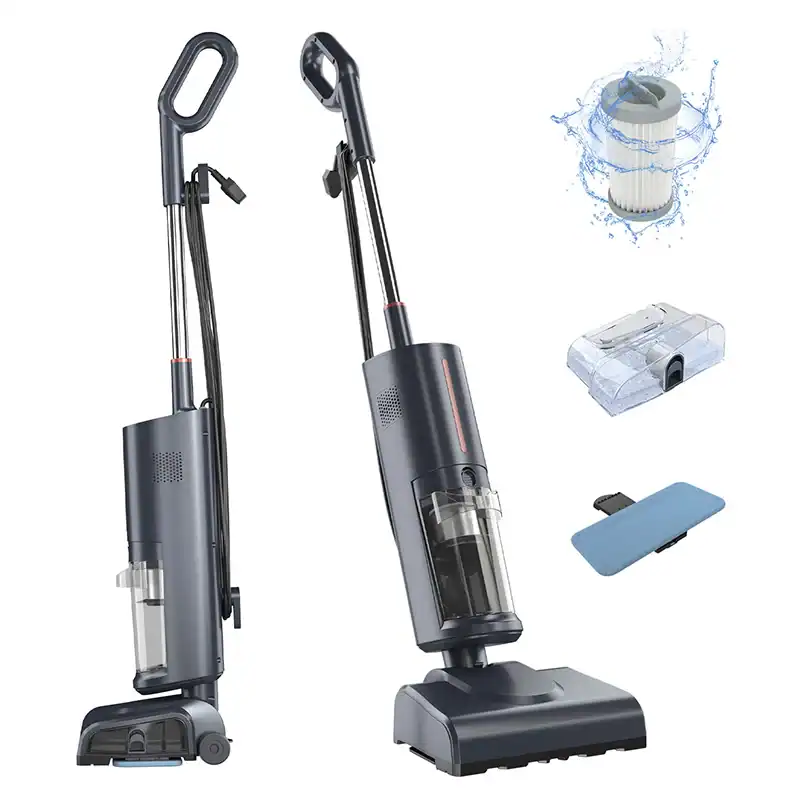
Gift Positioning: Why Utility Beats Novelty
Utility-driven positioning creates defensible technical moats through performance mechanics, outlasting aesthetic novelty which relies on the subjective “average observer test” and faces high replication risks.
Defining Value: Ornamentality vs. Functional Performance
Design novelty is a fragile strategy. Under 35 U.S.C. §171, protection hinges on “ornamentality”—essentially how a product looks to an average observer. If a competitor iterates on the visual shell, the legal barrier often collapses. In the gift market, this leads to a race to the bottom where visual trends expire quickly.
Utility-focused positioning shifts the value to 35 U.S.C. §101 and §102. This protects how a device operates, not just its casing. For example, while a cordless vacuum relies on transient battery tech, a corded utility gift offers raw, non-degrading performance metrics that are harder to engineer around:
- Input Power: 8–12 A at 120 V AC (approx. 960–1,440 W) continuous power.
- Airflow Metrics: 120–150+ CFM compared to 40–80 CFM in compact cordless units.
- Suction Pressure: 60–90 inH₂O sealed suction for commercial-grade debris removal.
Buyers prioritize these functional cores because they drive repeat usage. A uniquely shaped casing provides a one-time “wow” factor, but sustained 150 CFM airflow provides a reason to keep the product for a decade.
Technical Moats: Leveraging Patent Standards for Market Defensibility
Defensibility requires a “Person of Ordinary Skill in the Art” (POSITA) to find the advancement non-obvious. Functional configurations driven by mechanical necessity cannot receive ornamental protection under §171. This means brands focusing on utility own the underlying technology, making it legally impossible for competitors to copy the performance even if they change the color.
The “corded advantage” in gifting highlights this lifecycle logic. Retailers can market a “second vacuum” position—a premium tool that handles heavy-duty tasks when battery-powered daily drivers fail. This positioning relies on specific technical advantages:
- Zero Battery Decay: Avoids the 300–1,000 cycle limit of Li-ion packs.
- Unlimited Runtime: 24/7 duty cycles for renovation or shop cleanups.
- Weight Efficiency: Lower tool-only weight by removing battery mass, improving overhead ergonomics.
Strict novelty mandates under 35 U.S.C. §102 and narrow global grace periods favor manufacturers that prioritize proactive functional innovation. By the time a competitor copies the aesthetic, the utility-first brand has already secured the mechanical mechanics that define the user experience.
Conclusion: Embracing the Niche Case
Retailers win by pivoting to specialized 13,000Pa–20,000Pa portable units. Success requires data mining to bundle products and rigorous ISO/IATF manufacturing standards.
The Strategic Value of ‘Second Vacuum’ Market Segments
General utility cleaners often fail in specialized environments. B2B buyers now prioritize “secondary” solutions—portable units designed specifically for automotive interiors and high-intensity outdoor utility. These niche tools must bridge the performance gap between weak cordless handhelds and heavy corded shop vacs.
- Car-Specific Suction: 13,000Pa minimum threshold.
- Portable Home Suction: Up to 20,000Pa for deep-clean capability.
- Performance Benchmarks: 120–150 CFM airflow for corded units vs. 40–80 CFM for compact cordless.
- Acoustics: Operational noise maintained between 75-82dB.
- Filtration: Integrated HEPA systems to capture fine particulates.
Corded units in this niche offer a distinct advantage: they deliver 960–1,440W of continuous power without the voltage sag or thermal throttling common in 18V battery packs. This makes them the preferred choice for heavy-duty, continuous tasks where 15–45 minute battery runtimes are insufficient.
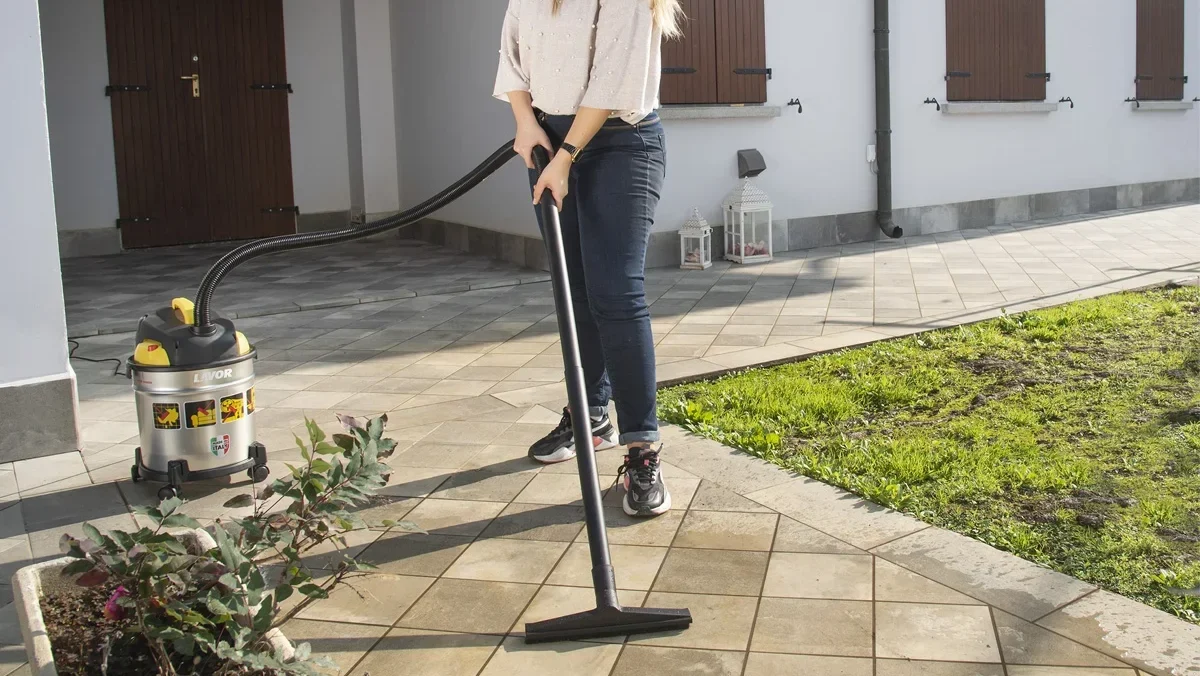
Leveraging Retail Analytics for Scalable OEM Production
Smart manufacturing relies on retail data mining to dictate product development. Using classification and association analysis, manufacturers identify product bundling opportunities—like pairing portable vacuums with car air pumps or mini-fridges—based on actual consumer purchase history and market basket trends.
- Data Mining Techniques: Classification, regression, clustering, anomaly detection, and association analysis.
- Manufacturing Standards: ISO 9001:2015 and IATF 16949 for automotive-grade reliability.
- Compliance: CE and RoHS certifications for global market entry.
- Logistics: 30–40 day mass production lead times for bulk B2B fulfillment.
Predictive analytics allow factories to manage inventory against seasonal demand, ensuring that high-suction units are available for peak gift-buying seasons. By sticking to these technical benchmarks and data-driven insights, manufacturers eliminate the guesswork in product design and focus on high-margin, specialized utility.
Final Thoughts
Cordless units offer convenience but collapse under heavy loads. Corded hardware eliminates the “battery tax” and ensures 24/7 readiness for high-throughput zones like garages or commercial kitchens.
Pitch high-suction corded models as “permanent infrastructure” for specialized zones to bypass the 8-year replacement cycle. Use technical benchmarks—not aesthetic novelty—to build a defensible, multi-unit household fleet.

Frequently Asked Questions
Can these portable vacuum units handle heavy debris like sawdust without clogging?
High-capacity units use 0.8L to 1.9L dust bins and specialized floorheads to prevent clogs. Suction levels between 13,000Pa and 20,000Pa maintain consistent airflow even when clearing heavy workshop debris or sawdust.
Are the filters washable for frequent or messy cleanups?
Most modern systems feature 5-layer filtration or HEPA filters designed for rinsing and reuse. These components protect the motor from fine dust and allow you to maintain peak suction during frequent cleanups without buying replacement media.
What is the perceived durability of cordless vacuums compared to corded models?
High-end cordless units now match corded reliability by using reinforced housings and larger batteries. Manufacturers ensure long-term performance through 100% functionality testing and triple-layer inspections, including IQC, PQC, and FQC protocols.
SEO
Title: Garage & Kitchen: Where Corded Sticks Shine
Description: Home Vacuum Cleaner Manufacturer offers ISO-certified OEM units. Scale your brand with 20,000Pa suction and custom-branded designs.
URL: home-vacuum-cleaner-manufacturer
Keywords: Home Vacuum Cleaner Manufacturer

 English
  Español
  Français
  Deutsch
  Português do Brasil
  Русский
  한국어
한국어  日本語
日本語  العربية