 跳转到主要内容 跳转到页脚

Proper mini freezer utility analysis is critical to prevent sourcing the wrong technology for high-stakes applications. Selling a thermoelectric cooler for insulin storage is a common but costly error, as its inability to hold a precise 2-8°C range leads to product failure and reputation damage.
This report benchmarks cooling systems, comparing ambient-dependent thermoelectric units against compressor fridges capable of precise, true freezing down to -20°C. We examine the core technical data required to align the right product with medical, transport, and residential needs.
Insulin & Meds: Can It Hold Precision Temp (2-8°C)?
Yes, a KelyLands compressor fridge reliably holds the critical 2-8°C range for insulin, regardless of outside heat. Thermoelectric coolers cannot guarantee this precision.
| Feature | Thermoelectric Cooler | Compressor Fridge |
|---|---|---|
| Cooling Performance | Cools 15–20°C below ambient temperature. Unreliable in hot weather. | Maintains set temperature from -19°C to +25°C, regardless of ambient heat. |
| Temperature Precision | Basic thermostat control; cannot be set to a specific degree. | Precise digital control allows you to lock in the exact required temperature. |
| Suitability for Insulin (2-8°C) | Not suitable. Cannot guarantee it will stay within the safe range. | Ideal. The only reliable technology for this medical requirement. |
Why the 2-8°C Range is Non-Negotiable for Insulin
Insulin isn’t just sensitive to temperature; it’s a protein medication that breaks down if stored improperly. Deviating from the required 2-8°C window isn’t a minor issue—it directly impacts the medicine’s ability to work and can be dangerous.
- Heat Damage: Temperatures above 30°C slowly degrade the insulin protein, making it less effective at controlling blood sugar.
- Freezing Damage: Temperatures below 2°C cause irreversible crystallization. The insulin clumps together and is permanently ruined, even after thawing.
- Potency Loss: Correct storage is the only way to ensure the insulin remains at full potency until its expiration date.
Compressor Fridges: The Technology for Medical Precision
For transporting sensitive medication, the underlying cooling technology is what matters. A thermoelectric “cooler” and a compressor “fridge” are fundamentally different machines. Only one is built for medical-grade precision.
- Precise Digital Control: Our compressor fridges let you set and hold an exact temperature anywhere from -19°C up to +25°C. You can lock it at 4°C, and it stays there.
- Ambient-Independent Performance: A compressor unit works like a home refrigerator. It maintains the internal temperature you set, even if the car’s interior gets hot. Thermoelectric models just cool relative to the outside air, which is a major risk.
- The Only Reliable Choice: For medications like insulin that demand a guaranteed temperature range, compressor technology is the only option that provides the necessary safety and reliability.
Breast Milk Transport: Maintaining -18°C on the Go
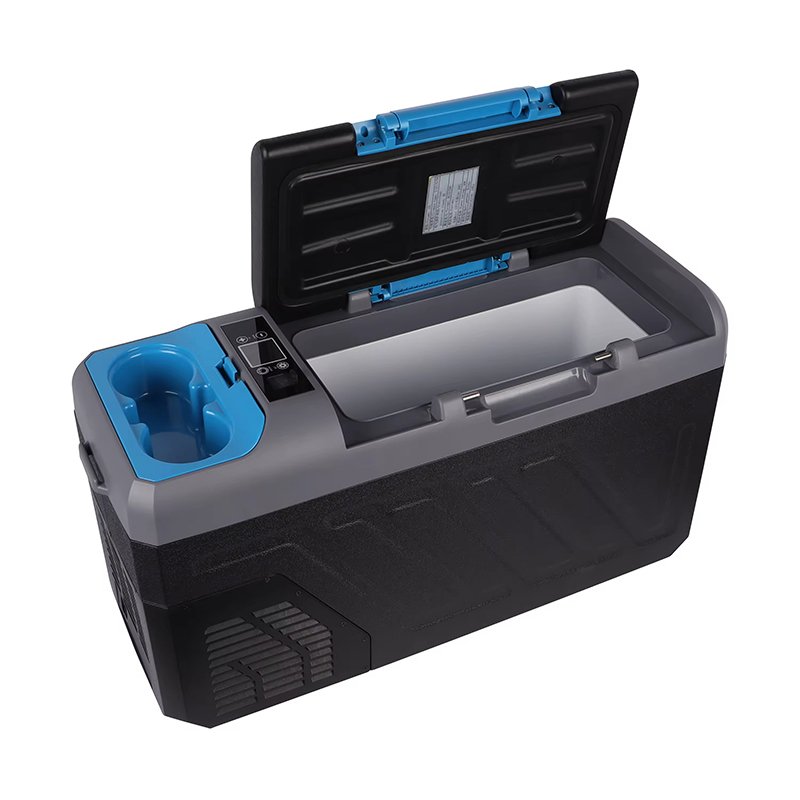
A portable compressor car fridge is the reliable solution for transporting breast milk. It actively freezes down to -20°C, ensuring the required -18°C is held during travel.
The Challenge of Preserving Frozen Milk During Transit
Frozen breast milk must be kept at -18°C (0°F) or colder. If the temperature rises and the milk begins to thaw, you risk bacterial growth and the degradation of essential nutrients.
Traditional insulated coolers that rely on dry ice or frozen packs are temporary measures. They often struggle to maintain a consistent sub-zero temperature, especially over long journeys or in warm weather, making them an unreliable option.
Compressor Fridge: A Reliable -20°C Freezing Solution
Our DC compressor car fridges provide true freezing capability. They can reach temperatures as low as -20°C, and they hold that temperature regardless of the ambient heat outside the unit.
The precise digital temperature controls allow you to set and confidently maintain the exact -18°C needed for safe storage. This gives you a secure and stable environment for breast milk, providing peace of mind on the go.
Boost Your Brand with Custom Coolers

The “Dorm to Roadtrip”: Is It Quiet Enough for Sleeping?
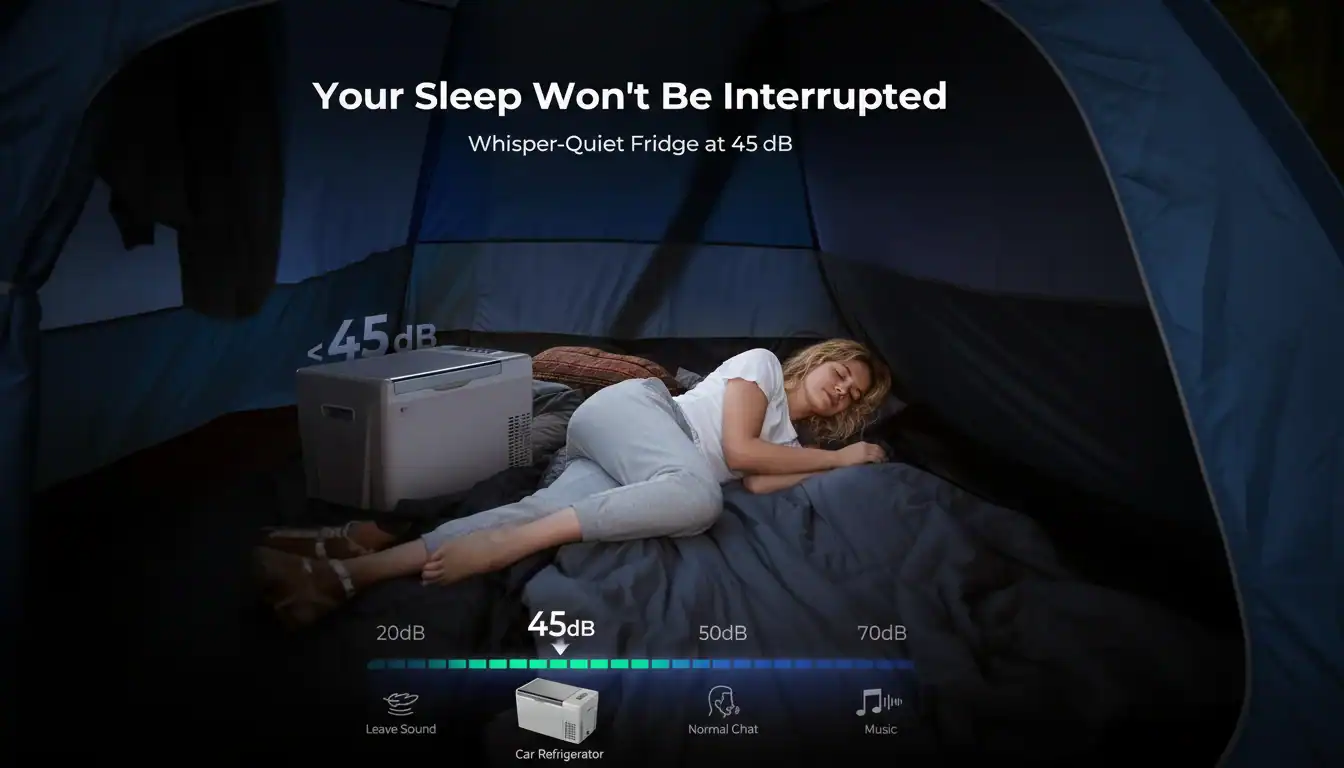
Most portable coolers run between 35-46 decibels. For light sleepers, look for models under 35 dB. Thermoelectric coolers are quieter because their vibration-free fan system avoids compressor noise.
Understanding Acceptable Noise Levels for Sleep
A typical portable cooler or mini freezer operates between 35 and 46 decibels. Any unit that runs below 35 dB is generally quiet enough to place near a bed without issue. Once the noise level hits 39 dB or more, the humming can become disruptive, especially for light sleepers in a quiet dorm room or vehicle cabin.
Thermoelectric Coolers: The Quieter, Vibration-Free Option
Our thermoelectric models are the clear choice for noise-sensitive environments. They use a solid-state Peltier Module, which is a semiconductor chip that cools without any moving parts or vibration. The only sound comes from a small fan, which is much quieter than the loud cycling of a traditional compressor. This design difference makes thermoelectric units a better fit for sleeping areas.
Defrosting: How to Handle Ice Buildup in Small Units?
Ice buildup requires manual defrosting. The safest method is unplugging the unit to let it melt. For faster results, use a bowl of hot water or a plastic scraper.
Most portable refrigerators and freezers lack an automatic defrost cycle. That means ice accumulation is inevitable and needs to be handled manually to keep the unit running efficiently. Ignoring it leads to poor cooling and higher energy use.
Common Manual Defrosting Techniques
Before you start, unplug the unit and move any food to a separate cooler. The goal is to clear the ice without damaging the interior lining, which is a common and avoidable problem.
- Natural Melting: This is the safest and easiest approach. Just unplug the fridge, open the door, and place towels around the base to absorb water. It takes a few hours, but it’s foolproof.
- Accelerated Melting: To speed things up, place a bowl of hot (not boiling) water inside and close the door. The steam loosens the ice quickly, often cutting the defrost time to under an hour.
- Mechanical Removal: Once the ice starts to loosen, you can gently pry off larger chunks with a plastic or wooden scraper. Never use a knife or any sharp metal tool—it can easily puncture the cooling lines and ruin the unit.
Prevention and Best Practices for Compressor Fridges
These maintenance tips are for real compressor car fridges, the models capable of achieving a deep freeze down to -20°C. This doesn’t apply to basic thermoelectric coolers which don’t get cold enough to build up significant frost.
- Perform a defrost cycle whenever the ice buildup gets thicker than 1/4 inch. Waiting longer forces the compressor to work harder, wasting energy and reducing cooling power.
- After cleaning out the melted ice, make sure the entire interior is completely dry before turning it back on. Any leftover water droplets or condensation will just accelerate the next cycle of ice formation.
Frequently Asked Questions
Can your car fridges safely store temperature-sensitive medication like insulin?
Yes, our Compressor Car Fridges are ideal for this. They can be set to maintain the precise 2°C to 8°C range required for unopened insulin, independent of the outside temperature. Thermoelectric coolers are not recommended for this critical application as their performance varies with ambient heat.
Is a portable freezer suitable for transporting frozen breast milk?
Absolutely. Our compressor-based portable freezers are designed to reach and hold temperatures as low as -20°C (-4°F). This provides the stable, deep-freezing environment needed to safely transport breast milk while preserving its nutrients during travel.
What is the fastest way to defrost the unit?
First, always unplug the appliance. For a quick defrost, remove all items and carefully pour warm water over the ice buildup, using towels to catch the meltwater. Alternatively, place a bowl of hot water inside and close the lid; the steam will loosen the ice. This should be done whenever ice exceeds 1/4 inch thick.
Are these units quiet enough for use in a dorm room or while sleeping in a camper?
Yes, they are designed for quiet operation. Thermoelectric coolers are exceptionally quiet as they only use a small fan. Our compressor fridges operate with a low hum, typically in the 35-46 dB range, which is comparable to a quiet conversation and generally not disruptive in a dorm or camper setting.
Final Thoughts
The choice between thermoelectric and compressor technology is a decision on liability. While basic coolers offer a lower entry price, only a compressor fridge guarantees the medical-grade precision needed for insulin or frozen breast milk. Stocking the right technology prevents product spoilage and protects your brand’s reputation.
Don’t leave performance to chance—verify our engineering firsthand. We recommend requesting a compressor fridge sample to test its cooling precision and build quality. Contact our team to discuss your market’s specific OEM requirements and get a wholesale quote.

 English
  Español
  Français
  Deutsch
  Português do Brasil
  Русский
  한국어
한국어  日本語
日本語  العربية