 跳转到主要内容 跳转到页脚
Finding the right OEM cordless tire inflator with power bank capability means understanding how performance specs, customization options, and manufacturer partnerships work together. The sweet spot combines 150PSI pressure capability with 2000-8000mAh battery capacity, while smart features like smartphone integration and dual-cylinder designs create real market differentiation. Success comes from choosing manufacturers who offer reasonable minimum orders around 1000 units, comprehensive certification support, and genuine innovation rather than just competing on basic commodity features.
How Modern Cordless Tire Inflators Changed the Game
Gone are the days when tire inflators just pumped air – today’s units pack emergency power, digital monitoring, and multi-device charging into one essential roadside tool.
Basic tire inflators used to serve one purpose: adding air to tires. Today’s consumers expect devices that work as portable air compressors, emergency power sources, and digital monitoring systems all rolled into one. Modern OEM cordless tire inflator units deliver 150PSI maximum pressure while packing rechargeable lithium-ion battery systems ranging from 2000mAh for basic models up to 8000mAh for professional-grade units.
The technology centers on three integrated systems working together: the compression mechanism, battery management system (BMS), and power conversion circuitry. Single-cylinder models handle standard passenger vehicles just fine, completing 30-36 PSI inflation cycles in under three minutes. Dual-cylinder configurations pump faster and manage heat better during extended use, making them perfect for commercial applications and fleet management.
Understanding how portable tire inflators work helps optimize both component selection and user experience design. Power bank integration goes way beyond simple USB charging ports. Advanced models pack multiple output options including USB-A, USB-C, and wireless charging capabilities. Battery capacity directly affects both inflation capacity and device charging potential – higher-capacity units maintain enough reserve power for emergency device charging even after multiple tire inflation cycles.

Market Positioning and Competitive Differentiation
The competitive landscape shows distinct tiers ranging from basic consumer models under $50 to professional-grade units exceeding $200. Success requires understanding where enhanced features create genuine value versus where cost optimization serves target markets better. Premium positioning depends on demonstrable performance improvements rather than superficial feature additions.
Technical Specs That Separate Winners from Wannabes
Peak pressure ratings only tell part of the story – real-world performance metrics like inflation speed and temperature stability separate professional units from basic consumer alternatives.
Leading rechargeable portable air compressor models hit 150PSI maximum pressure with airflow rates spanning 15-35 LPM. Practical benchmarks focus on inflation time from 30-36 PSI for standard 195/65R15 tires, with top performers completing this task in under two minutes. Temperature stability during continuous operation and duty cycle capabilities distinguish professional applications from basic consumer use.
Lithium-ion battery selection impacts both performance and safety profiles. LiFePO4 cells offer superior thermal stability and cycle life, while standard lithium-ion provides higher energy density in compact form factors. Battery capacity affects inflation capability, device charging potential, and overall emergency preparedness value. Advanced BMS implementations include cell balancing, temperature monitoring, and communication protocols for smart device integration.
| Feature Category | Basic Models | Premium Models | Professional Grade |
|---|---|---|---|
| Battery Capacity | 2000-3000mAh | 4000-6000mAh | 6000-8000mAh |
| Inflation Time (30-36 PSI) | 3-5 minutes | 2-3 minutes | 1-2 minutes |
| Power Bank Output | USB-A only | USB-A + USB-C | Multiple ports + wireless charging |
| Digital Display | Basic pressure reading | Backlit LCD with presets | Smart display with app connectivity |
Digital Display and User Interface Innovations
Modern units feature backlit LCD displays showing real-time pressure readings, preset modes for different applications (car, motorcycle, bicycle, sports balls), and auto-shutoff functionality. Advanced models incorporate smart presets that adjust inflation parameters based on tire size calculations and ambient temperature compensation. Professional heavy duty precision digital tire inflator with pressure gauge systems achieve ±0.5 PSI accuracy for demanding applications. Digital pressure gauge accuracy typically ranges from ±1-2 PSI, with premium models achieving ±0.5 PSI precision.

OEM Customization That Actually Matters
Smart OEM customization goes way beyond slapping your logo on a generic product – it’s about comprehensive brand integration and market-specific feature optimization that customers actually notice.
Effective branding integration covers color schemes, material finishes, and form factor modifications that align with brand positioning. Advanced customization includes packaging design, instruction manual development, and accessory kit configuration. Different markets prioritize different feature combinations: fleet management emphasizes durability and standardization, while consumer retail focuses on ease of use and multi-functionality.
Global market access requires comprehensive certification including CE, FCC, RoHS, UN38.3, and MSDS compliance. Different regions impose varying requirements for battery transport, electromagnetic compatibility, and safety standards. Strategic OEM partnerships should include certification support and regulatory guidance for target markets, typically requiring 60-90 days for complete compliance documentation.
Manufacturing capabilities directly impact customization flexibility and cost structure. Leading OEM partners maintain production capacities exceeding 800,000 units monthly while supporting minimum order quantities as low as 1000 pieces for custom cordless tire inflator projects. Quality assurance protocols include incoming quality control (IQC), in-process quality control (IPQC), and final quality control (FQC) at multiple production stages.
Premium Features That Justify Higher Prices
Next-generation tire inflators pack smart technology and IoT capabilities that transform basic inflation tools into connected automotive accessories worth paying extra for.
Bluetooth connectivity enables smartphone app control, allowing users to monitor inflation progress, receive maintenance alerts, and access tire pressure logging functionality. Advanced units feature GPS integration for location-based pressure recommendations and automatic adjustment for altitude variations. These tire inflator power bank combo devices represent the convergence of automotive tools and mobile technology.
Premium models support simultaneous device charging while maintaining inflation capability through intelligent power management. Fast-charging protocols including Quick Charge 3.0 and USB-C Power Delivery enable rapid device charging comparable to dedicated power banks. Wireless charging pads integrated into unit housing provide convenient smartphone charging during inflation operations.
Emergency Preparedness and Safety Features
Professional-grade units incorporate multiple LED lighting modes including steady illumination, SOS signaling, and strobe functionality. Solutions like the Sealey CTI140 tyre inflator with power bank and worklight demonstrate how manufacturers combine multiple emergency functions into single devices. Some models include integrated emergency hammers, seatbelt cutters, and basic jump-starting capabilities for complete roadside emergency preparedness. These features justify premium pricing by addressing multiple emergency scenarios with a single device.
Join 300+ global partners who trust KelyLands for top-tier car accessories. Review our portable air pumps in our free catalogue
Request now
Market Dynamics and Smart Procurement
Smart procurement evaluation looks beyond initial unit costs to include warranty support, replacement part availability, and total cost of ownership – cheap upfront often means expensive long-term.
Premium suppliers offer extended warranty periods (12+ months), detailed technical documentation, and responsive customer service that reduces total cost of ownership despite higher initial investment. Global supply chain disruptions emphasize the importance of supplier diversification and inventory management strategies. Leading OEM partners maintain strategic inventory reserves and offer flexible production scheduling to accommodate demand fluctuations.
Quality verification includes electrical safety testing, electromagnetic compatibility verification, battery performance validation, and environmental stress testing. Advanced suppliers provide detailed test reports, certification documentation, and traceability systems that support quality assurance and regulatory compliance requirements. Operating temperature ranges typically span -10°C to 45°C, with storage capabilities extending to -20°C to 60°C.
Partnership Evaluation and Long-Term Relationships
Successful OEM relationships require alignment of technical capabilities, quality standards, and business objectives. Evaluation criteria should include R&D capabilities, patent portfolios, manufacturing scale, and track record with similar customization projects. Long-term partnerships enable collaborative product development and preferential pricing for volume commitments.
What’s Coming Next in Tire Inflator Technology
The lines between tire inflators, power banks, and emergency tools keep blurring as manufacturers pack more capabilities and smart vehicle connectivity into these essential tools.
Technology convergence drives integration of wireless tire pressure monitoring, vehicle diagnostic connectivity, and solar charging capabilities for extended outdoor use. Environmental consciousness influences demand for eco-friendly materials, recyclable packaging, and energy-efficient operation. Advanced battery chemistries offer improved performance with reduced environmental impact, while modular designs enable component replacement rather than complete unit disposal.
As vehicles become increasingly connected, portable car tire inflator with digital display systems will integrate with vehicle telematics for automated pressure monitoring and predictive maintenance alerts. Vehicle manufacturers explore factory integration of portable inflation systems as standard or optional equipment, creating new OEM opportunities.
Your Strategic Implementation Framework
Successful market entry requires clear value proposition definition that addresses specific customer pain points while differentiating from existing alternatives in meaningful ways.
Multi-channel distribution strategies maximize market reach while optimizing cost structure. Direct-to-consumer sales through e-commerce platforms offer higher margins but require marketing investment. Retail partnerships provide broader market access but demand competitive pricing and promotional support. B2B sales to fleet operators and commercial accounts offer volume opportunities with longer sales cycles.
Dynamic pricing strategies balance market penetration with profitability objectives. Value-based pricing for feature-rich models captures premium market segments, while competitive pricing for basic configurations addresses price-sensitive segments. Volume pricing for large orders enables market share growth while maintaining acceptable margins.
Compact Air Pumps Built for Every Ride and Adventure
Choose KelyLands air pumps for compact, multifunctional inflation solutions that support cars, bikes, motorcycles, sports balls, and more. With smart digital controls, high-pressure performance, and durable designs, these pumps fit roadside emergencies, daily maintenance, and outdoor adventures. Customize your brand with OEM/ODM options and rely on trusted quality and global support.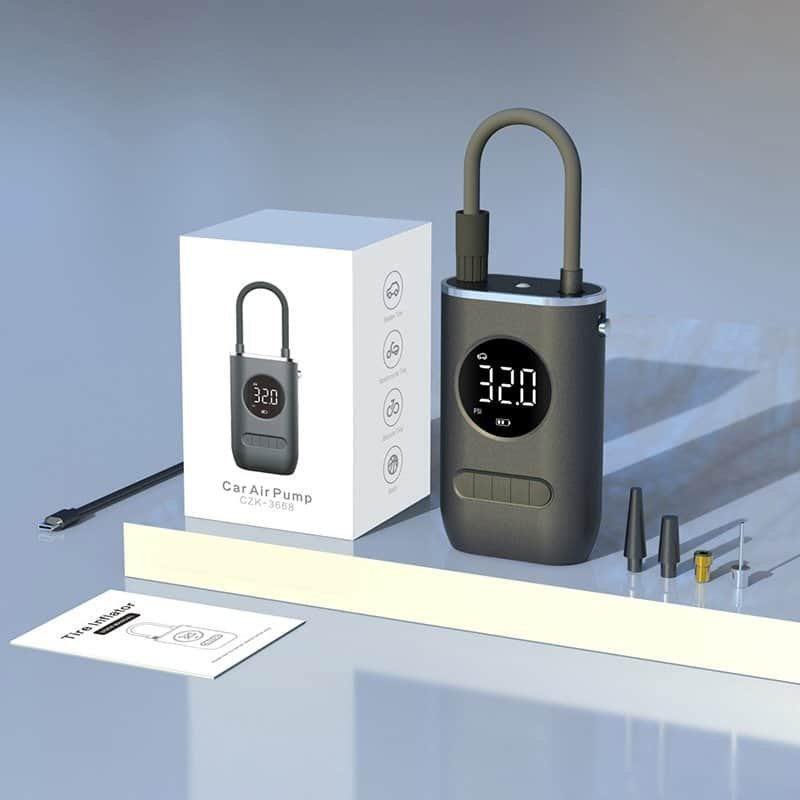
Frequently Asked Questions
What is the typical minimum order quantity for custom cordless tire inflators?
Most reputable OEM manufacturers require minimum orders of 1000-3000 units for custom branding and packaging. Established suppliers with strong production capabilities may accommodate smaller initial orders (500-1000 units) for new partnerships, with volume pricing incentives for larger commitments. Companies like Chuangjie offer car tire inflators with these flexible minimum order arrangements while maintaining quality standards.
How do power bank capabilities affect overall device size and weight?
Power bank integration typically adds 200-400 grams to device weight, depending on battery capacity. Modern designs optimize space utilization through integrated battery compartments, but increased capacity directly correlates with size. Units with 6000mAh+ batteries generally exceed 1 pound total weight while maintaining portable form factors suitable for emergency storage.
What certifications are essential for global market distribution?
Essential certifications include CE (European Union), FCC (United States), RoHS (environmental compliance), UN38.3 (battery transport), and MSDS (material safety). Additional regional requirements may include PSE (Japan), KC (Korea), and specific automotive industry standards. Complete certification packages typically require 60-90 days for completion and ongoing compliance maintenance.
How do inflation speeds compare between single and dual-cylinder designs?
Dual-cylinder designs typically achieve 40-60% faster inflation rates while operating at lower temperatures due to distributed workload. Single-cylinder units offer simpler construction and lower costs but may experience thermal limitations during extended use. Professional applications generally justify dual-cylinder investment for improved performance and durability, especially in commercial fleet environments.
What warranty support should buyers expect from quality OEM suppliers?
Standard warranty periods range from 12-24 months, with premium suppliers offering extended coverage and detailed support. Quality warranty programs include defective unit replacement, technical support, and spare parts availability. Suppliers with ISO 9001:2015 certification typically provide more detailed warranty support and quality documentation, reducing long-term support costs.
Can cordless tire inflators effectively replace traditional air compressors for commercial use?
Cordless units excel for mobile applications and emergency use but may not replace high-volume commercial compressors. They provide excellent supplementary capability for field service, delivery vehicles, and situations requiring portability. Battery capacity and duty cycle limitations should be evaluated against specific operational requirements to determine appropriate applications.
The rechargeable cordless tire inflator pump market represents a dynamic intersection of automotive necessity and modern convenience technology. Success requires strategic thinking that extends beyond product specifications to encompass market positioning, customer value creation, and long-term partnership development. As connectivity and multi-functionality continue evolving, early investment in quality OEM partnerships and strategic product positioning will determine market success in this rapidly advancing sector. Companies seeking comprehensive solutions should consider starting battery and energy storage solutions that complement portable inflator technology for complete emergency preparedness systems.

 English
  Español
  Français
  Deutsch
  Português do Brasil
  Русский
  한국어
한국어  日本語
日本語  العربية