 跳转到主要内容 跳转到页脚

Future Tech 2030(solid state cooling) is the key to preventing catastrophic cold chain failures, where a single point of mechanical failure in a traditional compressor can compromise an entire shipment of temperature-sensitive biologics or high-value electronics. Current portable refrigeration relies on compressor technology that is susceptible to vibration damage, generates disruptive noise, and presents significant design constraints. For industries operating in remote or mobile environments, these limitations are not just inconveniences; they are direct operational risks that impact product integrity and mission success.
This analysis serves as a technical SOP for evaluating the practical integration of solid-state cooling. We will break down the engineering trade-offs between solid-state and compressor systems, focusing on whether silent, vibration-free operation is worth the current energy cost. We will also dissect the ‘no moving parts’ claim to assess true long-term reliability and pinpoint the efficiency gaps that currently prevent solid-state technology from achieving deep-freeze temperatures. Finally, we explore if hybrid systems offer a viable path forward by combining the strengths of both technologies.
Solid State vs. Compressor: Is Silence Worth the Power Cost?
Choosing between solid-state and compressor cooling is a direct trade-off: thermoelectric systems offer silent, maintenance-free operation for specialized uses, while compressors deliver superior power and efficiency for large-scale cooling.
The Quiet Advantage: Why Solid-State Excels in Low-Noise Environments
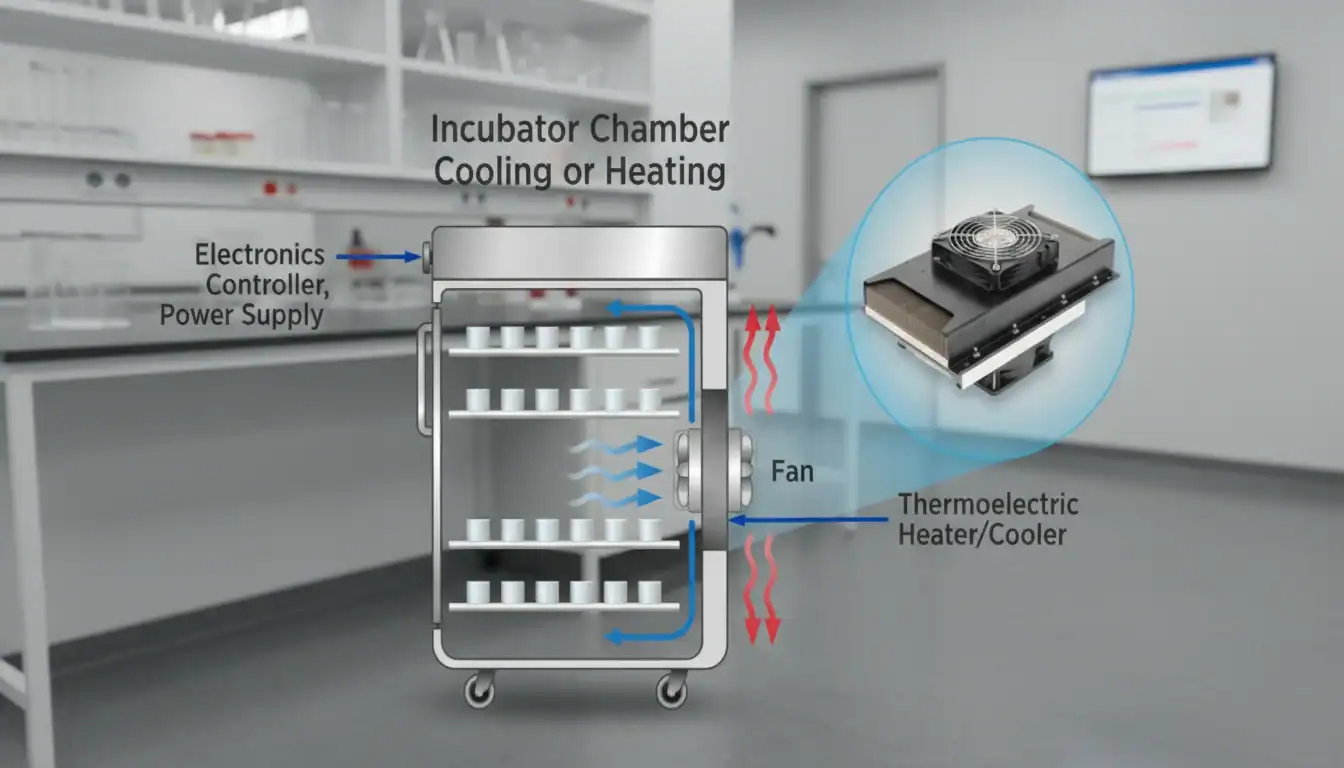
Solid-state coolers, based on Peltier module technology, operate with virtually no noise or vibration. This is because they have no moving parts—no pistons, no motors, no liquid refrigerant running through pipes. The absence of mechanical components eliminates the need for routine maintenance, making them extremely reliable for specific applications. These features are critical in environments like medical labs, compact electronics enclosures, or luxury vehicle consoles where silent, stable operation is more important than raw cooling power.
| Feature | Solid-State (Thermoelectric) | Compressor-Based |
|---|---|---|
| Cooling Technology | Peltier Module (Semiconductor) | DC Compressor (Refrigerant) |
| Primary Benefit | Silent, vibration-free operation | High power, true freezing (-20°C) |
| Power Efficiency | Less efficient during steady-state cooling | More efficient for deep cooling & large loads |
| Ideal Use Case | Small device cooling, maintaining cool temps | Portable freezers, off-grid camping, bulk storage |
Energy Draw: The Hidden Cost of Thermoelectric Cooling
The silence of solid-state cooling comes at a price: energy consumption. During steady-state operation, thermoelectric units consume more electricity to achieve the same cooling output as a modern compressor system. While compressor technology continues to evolve with smaller, quieter, and more efficient designs, the fundamental physics of Peltier cooling makes it less effective at moving large amounts of heat. This higher power consumption is the key trade-off and is why these units are best for maintaining temperatures, not for rapid or deep freezing.
Application-Specific Performance: Matching Technology to Needs
Neither technology is universally superior. The correct choice depends entirely on the application’s demands. Solid-state solutions excel in precise temperature control within compact spaces where noise is unacceptable. A thermoelectric cooler is perfect for keeping drinks chilled in a car, with a cooling performance defined by its “Delta T”—the temperature difference it can achieve below the ambient air, typically 15–20°C. It cannot freeze.
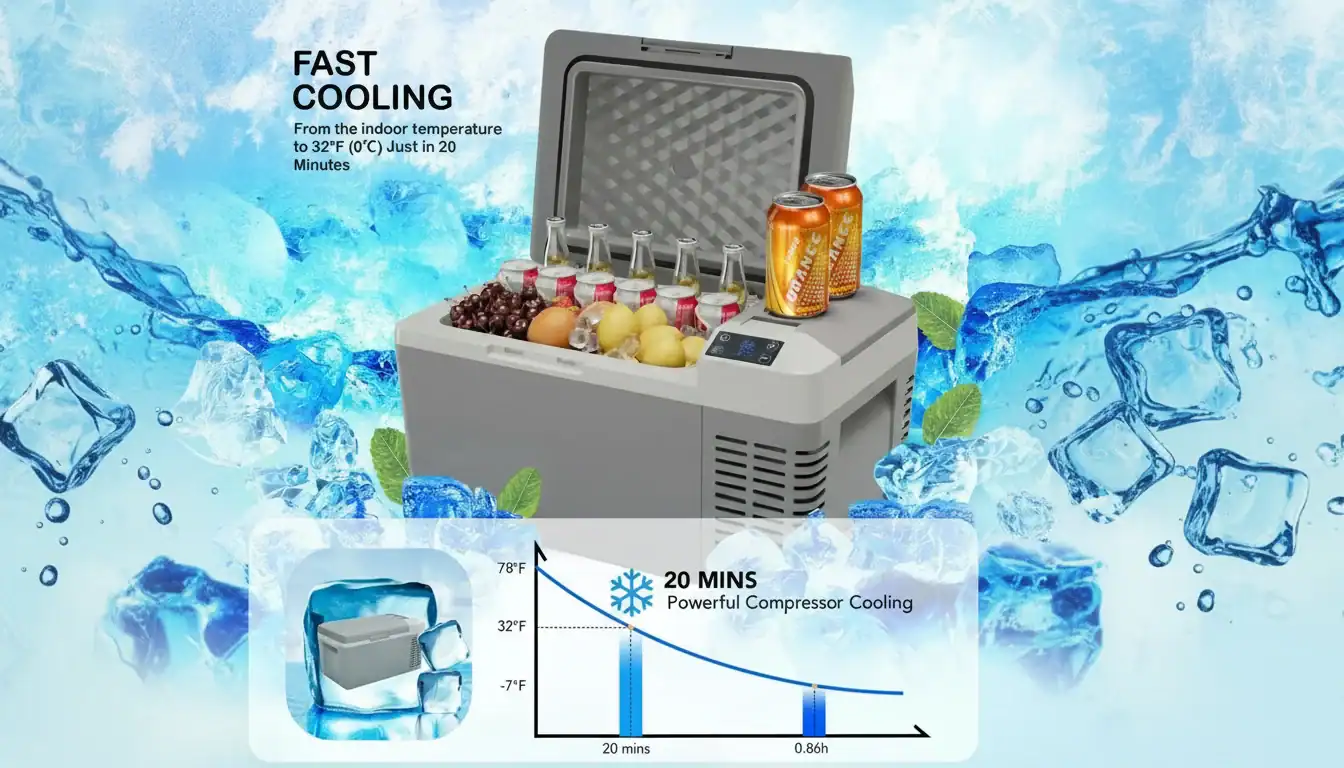
Compressor-based systems remain the standard for any task requiring powerful, consistent cooling, especially to sub-zero temperatures. For storing frozen goods, making ice, or operating in high-heat environments, a compressor car fridge is the only viable option because its performance is independent of the outside temperature. As the efficiency gap between these technologies narrows, the decision still hinges on the necessary balance between silence, power draw, and required cooling capacity.
No Moving Parts: Does It Mean Infinite Lifespan?
The absence of moving parts eliminates mechanical wear, but system longevity is ultimately defined by material degradation and thermal stress on static components.
The idea that “no moving parts” equals an infinite lifespan is a common misconception. While solid-state technology offers a clear advantage in maintenance and operational stress by removing mechanical points of failure, it introduces a different set of challenges that define its operational life.
Material Degradation Over Time
Even without mechanical friction, solid-state components degrade. This breakdown happens at a molecular level, driven by environmental exposure and the inherent chemical properties of the materials used. Unlike a motor bearing that fails from physical wear, a semiconductor’s performance declines over thousands of hours of operation. As of 2026, a significant amount of research is focused on engineering more resilient materials to extend the operational window of these cooling systems.
Thermal Cycling and Stress
Solid-state systems experience significant stress from constant heating and cooling cycles. This thermal cycling causes materials to expand and contract repeatedly, which leads to micro-fractures and the eventual failure of core components. Effective thermal management is not just about dissipating heat; it’s critical for minimizing this stress. Systems like thermophotovoltaic cells are particularly vulnerable to performance loss from this constant thermal strain.
Component Durability vs. Mechanical Failure
Eliminating moving parts just shifts the point of failure. A system’s lifespan is only as long as its weakest link, which in a solid-state cooler is often an electronic component like a power converter, a seal, or the control circuitry. The reliability focus moves from mechanical engineering—preventing physical wear—to materials science and electronics durability, ensuring that the static parts can withstand long-term operational stress.
Boost Your Brand with Custom Coolers

Limitations of Solid-State Cooling Technologies
Solid-state, or thermoelectric, cooling operates on the Peltier effect, which moves heat from one side of a semiconductor module to the other. Its effectiveness is measured by Delta T (ΔT)—the maximum temperature difference it can create between the module’s cold side and the surrounding ambient air. For most commercial thermoelectric coolers, this ΔT is around 15–20°C. This means in a 30°C environment, the unit can only cool its interior to about 10°C. This physical constraint makes true freezing impossible, as reaching -20°C would require an ambient temperature of 0°C or lower, defeating the purpose of a portable freezer.
| Performance Metric | Thermoelectric (Peltier) Cooler | DC Compressor Fridge |
|---|---|---|
| Cooling Principle | Ambient Dependent (Delta T) | Ambient Independent (Refrigerant Cycle) |
| Deep Freeze Capability (-20°C) | No, cannot reach freezing | Yes, true freezing capability |
| Steady-State Power Efficiency | Lower (consumes more power to hold temp) | Higher (cycles on/off efficiently) |
| Ideal Application | Keeping beverages cool; warming food | Storing frozen goods, making ice |
Performance Degradation in Extreme Cold
The challenge isn’t that solid-state coolers perform poorly in cold environments; it’s that they are fundamentally incapable of creating extreme cold from typical ambient temperatures. To achieve a large temperature drop, multiple Peltier modules can be “cascaded” or stacked. Each stage cools the next, but this process is incredibly inefficient. The power consumption increases exponentially, and the overall heat that must be dissipated from the “hot side” becomes unmanageable for a portable device. A compressor, by contrast, uses a vapor compression cycle that is far more effective at moving large amounts of heat to achieve and maintain sub-zero temperatures efficiently.
Current Development and Material Challenges
While research promises future solid-state systems with 20-47% greater efficiency than current vapor compression, these advancements are aimed at improving general cooling performance, not necessarily overcoming the deep freeze barrier for commercial products. The primary material science and engineering focus is on improving the Coefficient of Performance (COP) for applications where precision, low vibration, and reliability are paramount—such as in medical devices and electronics. Closing the efficiency gap for deep freeze applications would require a breakthrough in thermoelectric materials that dramatically increases the achievable ΔT without a corresponding surge in power consumption, a hurdle that has not yet been cleared.
Market Readiness for Deep Freeze Applications
As of 2026, there is no viable market for solid-state deep freeze solutions in the portable cooler space. The technology is correctly positioned for specialized niches: vaccine transport requiring precise, stable temperatures above freezing, or compact electronics cooling. For any application demanding true freezing—storing ice cream, frozen meat, or making ice on a camping trip—compressor-based car fridges remain the only practical and commercially available technology. The market clearly reflects this reality; thermoelectric units are sold as “coolers and warmers,” while compressor units are sold as “portable freezers.”
Hybrid Systems: Can We Combine Compressor Power with Solid State?
The cooling industry is pursuing solid-state technology as a full replacement for vapor-compression systems, not as a hybrid component, because the primary goal is the complete elimination of refrigerants.
Focus on Replacement, Not Integration
As of 2026, the industry positions solid-state technologies as a direct competitor to traditional vapor-compression systems. The goal is not to create a hybrid design but to develop a more efficient, standalone alternative. Current technology roadmaps frame solid-state cooling as a solution that could achieve 20-47% greater efficiency. This approach is driven by the primary objective of completely eliminating harmful refrigerants, an outcome a hybrid model would not fully deliver.
Limited Commercial Exploration of Hybrid Models
Hybrid architectures that combine compressor and solid-state cooling remain largely theoretical. They have not been seriously explored in commercial markets because development resources are focused on perfecting one technology over the other. There is no significant manufacturing of systems that merge both cooling methods. While new solid-state demonstrations show competitive performance, they are consistently presented as standalone systems, not as components for a hybrid configuration.
The Strategic Push for Non-Refrigerant Solutions
The market’s strategic direction prioritizes the total removal of traditional refrigerants. This makes pure solid-state technology a more valuable long-term investment than transitional hybrid models, which would still rely on refrigerant-based components. The pivot away from refrigerants is a core objective shaping future cooling technology. Developing a single, superior non-refrigerant system is considered a more direct path to innovation than creating complex, multi-technology hybrids.
Conclusion
Solid-state cooling offers a compelling future with its silent, vibration-free operation and simplified design. Currently, its cooling power remains limited by ambient temperature, making traditional compressor technology the necessary choice for true freezing down to -20°C. This distinction defines the current market, with each technology serving different user needs.
As you plan your next product line, aligning the technology with customer expectations is critical. Contact our team to explore our OEM compressor and thermoelectric solutions and find the right fit for your brand’s roadmap.
Frequently Asked Questions
Is solid-state cooling better than compressor?
The best cooling technology depends on the specific application. Solid-state cooling, like thermoelectric coolers, excels in environments requiring precision, silence, and no maintenance, such as medical equipment and compact electronics. However, for large-scale cooling or applications where raw power and energy efficiency are paramount, traditional compressor-based systems remain superior. While compressor technology is becoming quieter and more compact, solid-state holds a distinct advantage in its niche use cases.
When will solid-state fridges replace compressors?
A widespread replacement of compressors in consumer refrigerators by solid-state technology is not expected in the immediate future. The primary obstacle is energy efficiency; current solid-state systems consume significantly more power than modern compressors to achieve the same cooling capacity. While solid-state cooling will continue to dominate specialized markets like wine coolers and medical devices, a major breakthrough in material science is needed to close the efficiency gap before they can viably replace compressors in mainstream residential and commercial refrigeration.
Can thermoelectric coolers freeze ice cream?
Standard consumer-grade thermoelectric coolers are generally incapable of freezing or storing ice cream effectively. These devices can typically cool to about 20-30°C (36-54°F) below the ambient room temperature. To keep ice cream frozen solid, a temperature of -18°C (0°F) is required. A thermoelectric cooler in a standard room would struggle to reach this temperature, resulting in soft or melted ice cream. Compressor-based freezers are necessary for achieving and maintaining these low temperatures reliably and efficiently.
What is the most energy-efficient cooling technology?
For most residential, commercial, and industrial cooling applications, modern compressor-based systems are the most energy-efficient technology available today. Specifically, variable-speed or inverter compressors adjust their power to match the cooling load, significantly reducing energy consumption compared to older single-speed models. While solid-state technologies like thermoelectric coolers offer benefits in silence and reliability, they are less efficient and consume more power to move the same amount of heat, making compressors the superior choice where energy efficiency is the primary concern.

 English
  Español
  Français
  Deutsch
  Português do Brasil
  Русский
  한국어
한국어  日本語
日本語  العربية