 跳转到主要内容 跳转到页脚

Manufacturers and retailers must bridge the gap between high-density urban housing constraints and efficient e-commerce logistics. Designing stick vacuum storage that fits within a standard 24-inch closet while surviving the rigors of global shipping requires a precise balance of mechanical engineering and packaging science.
This guide explores the technical standards for closet-ready hardware and the choice between permanent screw-based mounts or 10 kg-capacity adhesive solutions. We also analyze how ISTA 3A flat-pack geometry, specifically keeping the shortest packaging side under 200 mm, reduces carrier surcharges and optimizes warehouse density for FBA-ready inventory.
The “Closet-Ready” Requirement for Urban Users
To qualify as closet-ready, hardware must accommodate the 24-inch deep reach-in module that serves as the industry design standard. Manufacturers should target an external depth envelope of 22-23 inches to allow for door clearance and architectural variations in high-density housing.
Industry Standards for Reach-In Depth
The 24-inch (610 mm) depth serves as the primary engineering baseline for standard wardrobe and reach-in closet modules. While this dimension dominates the industry, the California Building Code Section 1225.5.2.3.8 permits a legal minimum for urban closets at 2 feet deep by 1 foot 8 inches wide. Developers of high-density housing often favor these compact footprints to maximize living area. Linen closet modules frequently compress to 19 inches in depth, representing the most restrictive storage environment for floor-standing hardware. Designing vacuum docks with a narrow frontal footprint maintains compatibility across 48–96 inch wide units without interfering with door hinges or cabinet hardware.
Accessibility and Reach Zone Constraints
Spatial design must account for ergonomic limits and universal access codes. A seated user maintains an effective side reach of 15–16 inches into a closet when the mounting interface sits 46 inches above the finished floor. Standard wardrobe modules typically feature an 84-inch height, placing long-hang rods at 65 inches and double-hang rods at 40 and 80 inches. Universal design principles require front-approach access for storage zones exceeding 24 inches in depth. Placing product latching points and charging ports within the foremost 12–16 inches of the closet cavity optimizes ergonomics for all users.

Designing the Wall Mount: Screws vs. Adhesive
Screws offer high shear resistance through mechanical interlocking, making them ideal for heavy, permanent setups. Adhesives utilize micro-keying and chemical bonding to support loads up to 10 kg without drilling, serving as the primary choice for rental-friendly or smooth-surface installations in 2026.
Fundamental Mechanics of Screw and Adhesive Mounts
Mechanical screw anchors transfer tension and shear loads by keying into the physical deformations of the hole wall. This process creates a mechanical interlock that provides robust stability in solid materials like concrete and masonry. Adhesive anchors create a structural bond through micro-keying into microscopic surface imperfections of the substrate. Torque-controlled adhesive hybrids combine post-cure expansion forces with chemical bonding to increase tension capacity, particularly in core-drilled holes or other challenging environments. Screw joints provide immediate full-strength load capacity, whereas adhesive solutions require specific cure times to reach their peak performance specifications.
Weight Capacity Specs and Surface Requirements
High-performance adhesive screws support up to 10 kg per unit on both rough and smooth indoor surfaces. These mounts distribute weight evenly across the contact area, which reduces stress concentrations compared to the fixed tension points of traditional screws. Standard mechanical screw installations in drywall require 12-inch spacing to ensure the wall material maintains its shear resistance. In coastal environments, mechanical fasteners require bi-metal protective coatings to prevent rust and structural failure over time. While adhesive systems eliminate surface puncturing, they face performance degradation on highly porous or high-humidity surfaces where the bonding agent cannot effectively secure the load.
Accessory Storage on the Dock: Keeping Tools Handy
Modern vacuum docks serve as vertical hubs that store 5 to 9 accessories in a compact 12-by-8-inch footprint. These systems use heavy metal bases or wall anchors to support up to 3 kg of specialized tools, enabling quick swaps during cleaning tasks.
Integrated Tool Hubs and Vertical Organization
Integrated designs like the Tineco OmniHub and Roborock H60 centralize crevice tools and brushes around the main vacuum mast to prevent lost parts. Roborock sets a docking height of 843 mm to optimize the reach for accessories and the main unit, which reduces physical strain during re-docking and equipment retrieval.
Dyson Floor Dok and 360Tronix stands provide between five and nine storage clips, allowing users to organize specialized nozzles for immediate cleaning tasks. Vertical mounting utilizes height rather than floor space, often featuring masts roughly 1.3 meters tall to maximize storage density while maintaining a small footprint in residential closets.
Load Capacity and Stability Engineering
Engineering standards for accessory holders typically require a weight capacity of approximately 3 kg (6.6 lb) to support a mix of standard plastic nozzles and heavier motorized tools. Self-standing docks utilize heavy-duty metal bases weighing between 8.8 and 11 lb to prevent tipping when multiple accessories attach to the upper sections of the mast.
Compact footprint dimensions, such as the 11.8-by-8.3-inch base found on 360Tronix models, ensure stability while fitting into tight corners. Wall-mounted systems, including the RYOBI 18V ONE+ and Dyson V-series, use structural brackets to handle the combined weight of the lithium-ion battery and clip-on accessories effectively.
Scale Your Brand with Premium OEM Vacuum Manufacturing

Self-Standing Designs vs. Wall Mounting
Self-standing designs utilize an internal locking mechanism to stay upright, supporting weights around 7 lbs without external help. Wall-mounted models require fixed installation but often reduce storage height to 69cm through disassembly. Choosing between them depends on whether the target market prioritizes rental-friendly portability or permanent, compact storage.
| Stability Metric | Self-Standing (Dirt Devil) | Wall-Mounted/Detachable (Hoover/Shark) |
|---|---|---|
| Upright Stability | Internal vertical lock (Hands-free) | Requires leaning or wand-clip mode |
| Storage Height | 46 Inches | 27 Inches (69cm) |
| Installation Type | No drilling/Floor-based | Wall-mounted bracket required |
| Total Weight | 7.0 lbs | ~6.2 lbs (Average Cordless) |
Mechanical Stability and Upright Locking Functions
Self-standing models like the Dirt Devil Cordless Standing Stick employ an internal locking mechanism that secures the wand in a vertical position. This allows the vacuum to remain stable during mid-clean tasks, such as moving furniture or emptying the dirt cup, without needing to lean against a wall. The 7-pound weight is distributed to the floor nozzle to prevent tipping.
Non-self-standing units, including the Shark Vertex, do not maintain balance while fully assembled. These models must lean against surfaces or lay flat on the floor to prevent falling. Some manufacturers address this by including storage mode clips. These clips allow the handheld motor to hook onto the lower wand section near the floor nozzle. This configuration lowers the center of gravity for temporary balance but requires the user to partially disassemble the vacuum during breaks.
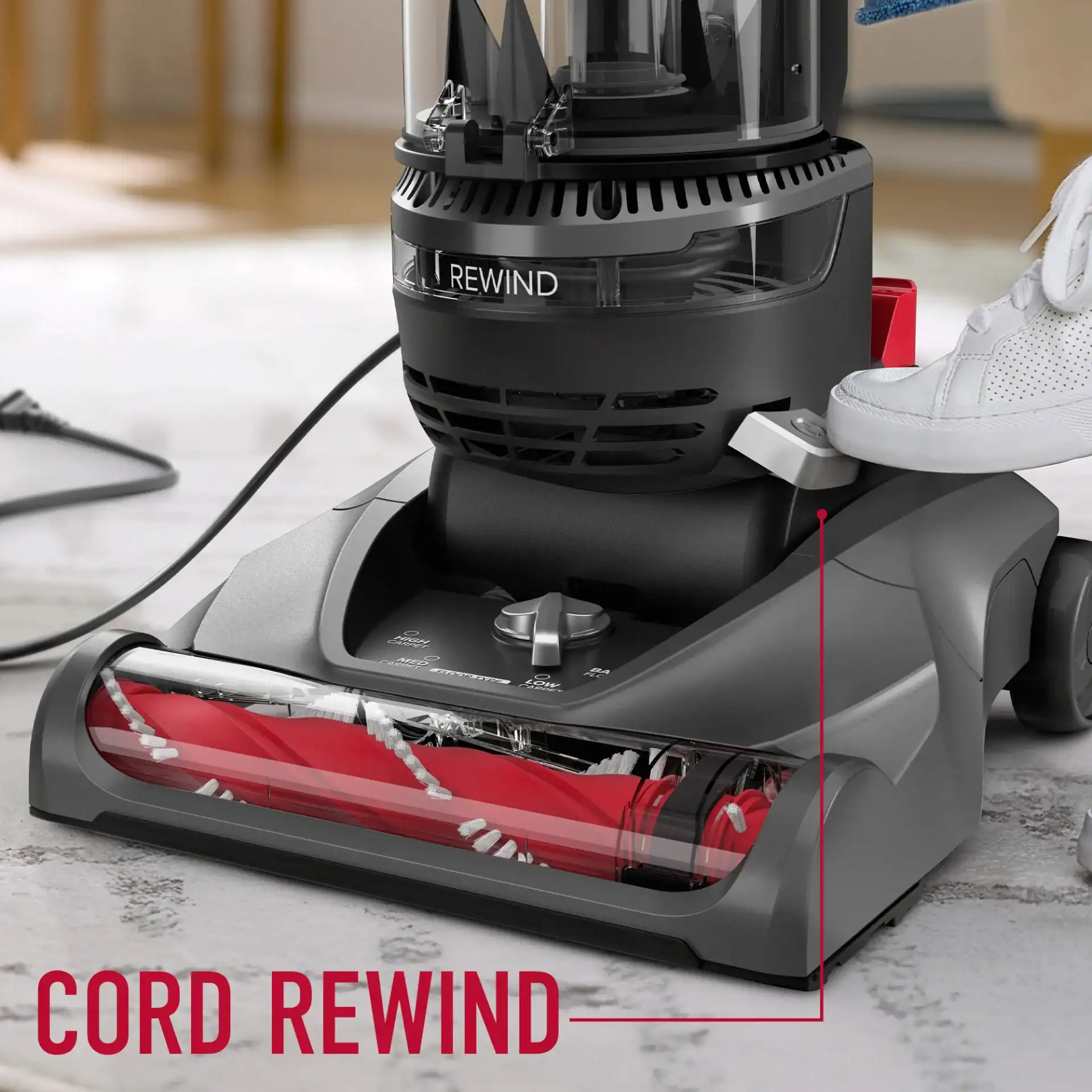
Logistical Footprints and Installation Specifications
Wall-mounted systems from brands like Hoover optimize vertical space by reducing storage height to 69cm (27 inches). These systems are effective for small utility closets but require permanent installation, which involves drilling into wall studs. This requirement can be a drawback for rental properties or temporary housing where wall damage is a liability.
A typical self-standing unit maintains an assembled height of 46 inches with a footprint of 10.5 by 10 inches. Because they require no wall fixtures, these designs are often the preferred choice for FBA logistics and rental-heavy markets. They offer immediate use out of the box and avoid the assembly time and liability issues associated with hardware installation, while keeping the weight under 8 lbs for easy room-to-room transport.
E-Commerce Packaging: The Flat-Pack Advantage
Flat-pack packaging leverages the ISTA 3A standard to reduce dimensional volume, allowing stick vacuum storage components to ship as low-profile parcels. By keeping the shortest dimension under 200 mm and utilizing space-efficient materials like E-flute corrugated board, brands can minimize carrier surcharges and optimize warehouse rack space in 2026.
| Packaging Metric | Technical Specification | Efficiency Impact |
|---|---|---|
| ISTA 3A Flat Profile | Shortest side ≤ 200 mm (8 in) | Qualifies for lower-tier parcel rates |
| FBA Master Carton | Max 25 in side; weight < 50 lb | Eliminates “Heavy Package” surcharges |
| Corrugated Grade | E-flute (approx. 1.2 mm thickness) | Maximizes pallet and rack density |
| Sealing Standard | 48 mm reinforced kraft tape | Secures loads exceeding 11.3 kg |
ISTA 3A Standards and Knock-Down Efficiency
ISTA 3A protocols define a flat packaged product by a shortest dimension of 200 mm or less and a total volume of at least 13,000 cubic centimeters. This geometry allows stick vacuum wall mounts and floor stands to travel as low-profile parcels through ground and air networks. Brands use knock-down cartons to minimize the inbound freight footprint from packaging converters to fulfillment centers. These flat-supplied containers occupy minimal rack volume compared to pre-assembled boxes, letting logistics teams maximize pallet density. Primary performance testing under the ISTA 3A standard validates that these slim parcels resist damage during high-velocity sorting in e-commerce environments for items under 68 kg.
KelyLands provides customizable mailer cartons and eco-friendly solutions that house wall mounts in rigid flat mailers. These designs specifically resist bending during transit, maintaining the structural integrity of the vacuum components. Using flat-pack geometry reduces the storage footprint in 3PL centers, as warehouse staff only erect the cartons on demand. This approach eliminates the cost of shipping air from the manufacturer to the distribution center.
Dimensional Weight and Material Specifications
Shipping costs often depend on dimensional weight rather than actual scale weight. Carriers like FedEx and UPS apply extra charges once a parcel exceeds a dimensional volume of 1,728 cubic inches. Using E-flute corrugated board, which measures roughly 1.2 mm in thickness, provides the structural integrity needed for accessory kits without bloating the package size. This material choice ensures products meet the Amazon FBA 25-inch maximum side-length limit while staying under the 50-pound weight threshold to avoid “Heavy Package” labels.
Logistics managers must secure these cartons with reinforced water-activated kraft tape or 48 mm wide pressure-sensitive tape, especially for loads exceeding 11.3 kg. This sealing standard prevents structural failure during the frequent drops and vibrations inherent in parcel delivery networks. By combining low-profile E-flute board with high-strength adhesives, manufacturers create a package that remains storage-efficient inbound and carrier-compliant outbound.
Protecting the Wand and Motor in Transit
In 2026, protecting vacuums in transit involves maintaining a continuous electrical ground path of ≤ 1 MΩ and structural isolation of the motor. Design standards such as UL 1017 and NFPA 652 ensure that shipping shocks do not compromise bonding continuity or allow dust ingress into the clean-side motor assembly.
Safety Standards for Mechanical Integrity and Grounding Continuity
Adhering to UL 1017 and CSA C22.2 No. 243 ensures the motor assembly and wand retain mechanical integrity after undergoing drop and impact tests simulating transit loads. These certifications confirm that the vacuum structure can withstand the physical rigors of the global logistics chain without exposing internal electrical components.
Engineers maintain a continuous bonding path through the conductive wand and motor housing to keep electrical resistance below 1 MΩ. This technical specification prevents static discharge caused by friction within the shipping container. By managing the conductive path, the design mitigates the risk of electrostatic events during handling.
Grounding straps and antistatic components must remain securely connected to the vacuum chassis. This stability prevents charge buildup induced by transit vibrations. Ensuring these connections stay intact through the logistics process protects the sensitive motor electronics and ensures the unit remains compliant with safety standards upon arrival.
Structural Isolation and Anti-Static Material Specifications
Positioning the motor on the clean side of primary filtration, as required by NFPA 652, protects the fan and electrical components from dust exposure. This design choice is vital if internal seals shift during rough handling. By isolating the motor from the debris path, the manufacturer ensures that the core power unit remains uncontaminated and functional regardless of transit shocks.
Using low-sparking metals such as aluminum and stainless steel in the wand and structural parts prevents percussion arcs. This material selection is essential for units moving through high-speed 2026 sorting facilities where drops or collisions may occur. These metals provide the necessary durability while eliminating potential ignition sources in the event of a mechanical impact.
Internal antistatic filters featuring stainless-steel weaves ensure that internal collisions between components do not lead to insulation breakdown. This specialized material prevents the creation of ignition sources within the housing. By integrating conductive weaves into the filtration system, the vacuum maintains its internal safety margins even when subjected to the extreme vibrations common in long-haul logistics.
Reducing Packaging Volume for Shipping Savings
Packaging volume directly impacts logistics expenses and storage efficiency. Using vacuum technology to remove air from compressible items like textile-based accessories reduces bulk significantly. This allows for smaller shipping cartons, improved pallet density, and lower dimensional weight fees for global distribution in 2026.
Vacuum Compression for Soft Component Storage
Vacuum chamber machines extract up to 99.8% of air from the packaging environment to maximize volume reduction for soft goods. This process specifically targets textile-based items, such as microfiber cleaning cloths, fabric storage bags, and padded components, which often contain significant trapped air. By removing this air, these components compress to a small fraction of their original size, allowing for denser packing configurations without damaging the material integrity.
Airtight seals maintain this reduced footprint during long-term transit. Without a secure seal, items can re-expand, potentially damaging outer cartons or causing pallet instability during sea or air freight. Nozzle vacuum sealers offer a precise method for extracting oxygen from flexible goods, transforming bulky accessories into compact, flat-packed units that are easier to handle and organize within a warehouse environment.

Logistics Efficiency and Equipment Specs
Compact equipment like the AS-V-320 vacuum sealer provides small-scale production lines with professional-grade compression capabilities. These units help operators optimize space within shipping containers and trucks by increasing the total item count per shipment. Smaller dimensions translate directly to lower carrier fees, particularly those associated with dimensional weight (DIM weight) pricing models where carriers charge based on package volume rather than actual weight.
Optimizing package size also yields significant savings in fulfillment and warehousing. For businesses using third-party logistics or Fulfillment by Amazon (FBA), storage fees depend heavily on the total volume occupied on the shelf. Substituting bulky cardboard cartons with slim-profile boxes or compact mailers reduces material waste and lowers storage overhead. This strategic shift in packaging design ensures that every cubic inch of transport and storage space contributes to the bottom line.
Final Thoughts
Choosing the right storage design depends on balancing home architectural standards with user flexibility. Wall-mounted docks maximize vertical space and stay out of the way, while self-standing units offer immediate setup for renters who cannot drill holes. Sticking to the 24-inch reach-in depth standard ensures that either choice fits naturally into common urban floor plans.
Shipping success hinges on how well a product handles the rigors of transit while occupying minimal space. Flat-pack designs and vacuum-compressed accessories allow brands to meet ISTA 3A standards and keep parcel rates low. By prioritizing structural isolation and conductive grounding, manufacturers protect delicate electronics from the vibrations and shocks of long-haul logistics.
Frequently Asked Questions
How do I store a stick vacuum without drilling into the wall?
You can store stick vacuums without permanent wall damage by using high-strength double-sided tape or heavy-duty anchoring blocks on the back of charging stations. Freestanding docks and over-the-door hooks also provide secure storage solutions that require no power tools.
What are the height and depth requirements for a vacuum wall mount?
Installation specs vary by model, but a standard setup like the Samsung Jet requires the mount to sit 113cm from the floor. Installers typically use a 6mm bit to drill 50mm deep holes to ensure the bracket supports the full weight of the machine.
What is the best way to pack a stick vacuum for moving or transit?
To prevent damage during shipping, detach the battery, suction tube, and motorized brush. Secure these individual components in the original manufacturer box or a padded transit bag. This prevents loose parts from shifting and protects the internal motor and wand from impact.

 English
  Español
  Français
  Deutsch
  Português do Brasil
  Русский
  한국어
한국어  日本語
日本語  العربية