 跳转到主要内容 跳转到页脚

Sourcing for Auto Detail Handhelds(car vacuum manufacturing) is a direct trade-off between unit cost and customer returns. Choosing low-spec suppliers to save on the bill of materials often creates a spike in “weak suction” claims, directly eroding profit margins and damaging brand reputation.
This guide benchmarks factory capabilities based on key performance data, from delivering 13,000Pa+ suction with brushless motors to engineering for low-noise operation (≤ 75dB). We analyze component choices and OEM flexibility to help you source a reliable product that protects your brand.
How to balance the cost of a $15 vs. $30 unit?
A $15 unit targets high-volume, cost-sensitive markets with standard parts. A $30 unit uses premium components like brushless motors to capture higher margins from feature-driven buyers.
Defining the Tiers: Volume vs. Feature-Driven Margins
The decision between a $15 and $30 unit is a strategic choice about your target market. The $15 model is built for volume. It uses cost-efficient components to hit a price point that works for mass-market retail or promotional sales where quantity is the main goal.
The $30 unit is engineered for higher profit margins. This model targets customers who actively look for and are willing to pay for superior performance, durability, and features. It’s less about market share and more about brand positioning and value per sale.
Component Choices: Standard Motors vs. 13,000Pa+ Systems
The price difference isn’t arbitrary; it comes directly from the bill of materials. A lower-cost unit typically includes a standard motor that delivers around 4,000Pa of suction. This is perfectly adequate for basic cleaning and meets the expectations of the budget segment.
To justify a $30 price, the hardware must deliver a noticeable upgrade. This means integrating a high-performance brushless motor that provides up to 13,000Pa+ of suction. This component costs more, but it also offers greater power, a longer lifespan, and quieter operation—key selling points for a premium product.
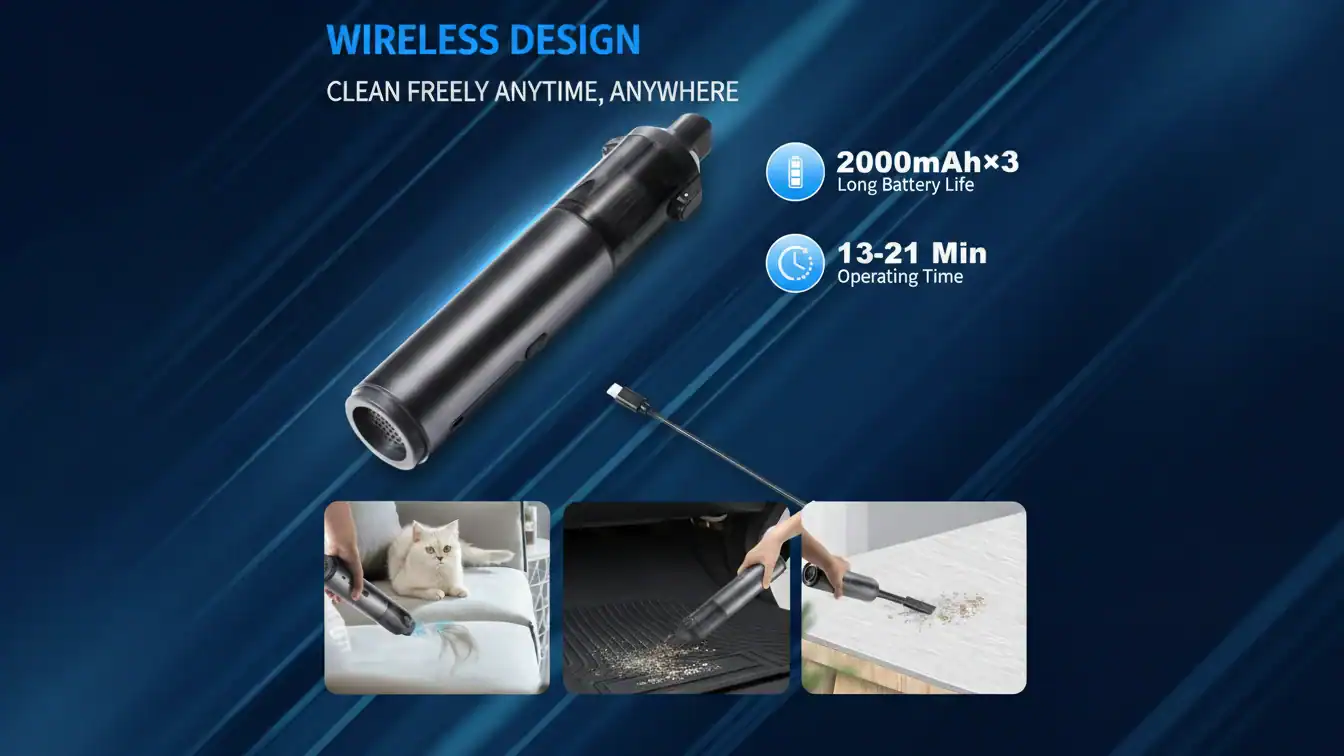
Why is “Safe Power” better than “Max Power” for cars?
“Safe Power” provides enough performance for daily tasks without encouraging risky driving. For vacuums, this means balancing strong suction with low noise and efficiency—a more practical design than raw power.
| Attribute | “Max Power” Approach | “Safe Power” Approach |
|---|---|---|
| Primary Goal | Peak performance, top speed, maximum suction. | Control, safety, and a balanced user experience. |
| Side Effect | Encourages risky habits, high noise, rapid battery drain. | Promotes responsible use, comfortable operation, efficiency. |
| Application (Cars) | High-horsepower sports cars built for the track. | Daily driver sedans and SUVs with adequate merging power. |
| Application (Vacuums) | Units that chase peak suction ratings at all costs. | KelyLands units: 13,000Pa+ suction engineered for ≤ 75dB operation. |
The Trade-Off Between Performance and Driver Behavior
In vehicles, excessive horsepower is often described as “seductive.” It naturally encourages risky behavior like aggressive acceleration and speeding simply because the capability is there. A lower, more controlled power level provides all the performance needed for daily driving—like merging onto a highway—without tempting the driver into reckless habits. The goal of “Safe Power” is to provide sufficient capability, not to test the limits of control.
Balancing Suction with Low Noise Operation
This exact principle applies to car vacuum design. Chasing a “max power” suction number looks good on a spec sheet, but it often results in a loud, unpleasant user experience and rapid battery drain. It’s an unbalanced approach.
We engineer our vacuums for a balanced “Safe Power” output. Our units deliver high suction up to 13,000Pa+, which is more than enough for sand, pebbles, and debris. But we deliberately engineer them for low-noise operation, keeping them at or below 75dB. This provides powerful cleaning that is also comfortable for daily use, avoiding the drawbacks of a “max power” only design.
Powerful Custom Vacuums to Elevate Your Brand

Does a 16ft cable truly reach the trunk of an SUV?
Yes, a 16-foot (5-meter) power cord is designed to reach the trunk of most mid-size SUVs, providing full interior access for deep cleaning.
Key Factors That Affect Cable Reach
How far a cable actually reaches depends on a few practical variables inside the vehicle.
- Vehicle Model: The specific interior length of the SUV.
- Outlet Location: Where the 12V DC power outlet is located—dashboard or center console.
- Cable Path: The route the cord takes around seats, the gear shift, and other obstacles.
Reliable Cleaning with a 12V Corded Design
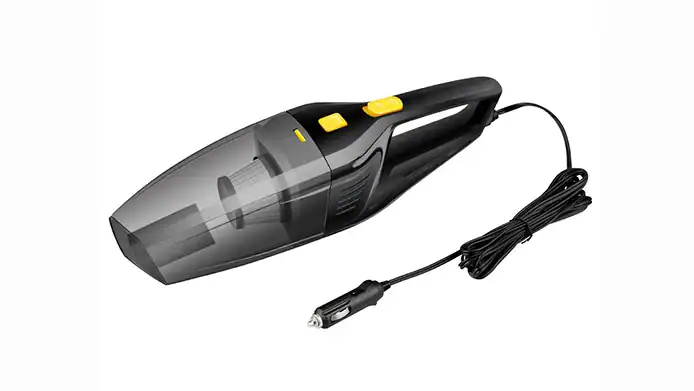
For detailing large vehicles, our high-power 12V corded models are the practical choice. They offer unlimited runtime, so you never have to worry about battery fade during a deep clean. This setup delivers consistent, powerful suction for picking up heavy debris throughout the entire job.
The long power cord is specifically designed to provide complete coverage, ensuring you can easily access the trunk and other hard-to-reach areas without unplugging or repositioning.
Can LED lights reduce customer returns?
Yes. Integrated LEDs illuminate dark car interiors, giving users visual proof of cleaning. This builds confidence in performance and directly lowers return rates from “missed spots” claims.
How Better Visibility Improves Perceived Performance
A common reason for returns is perceived poor performance. If a user can’t see the dirt in a dark car interior, they might assume the vacuum didn’t work. An integrated LED light solves this by making hidden dust and debris visible, giving the user immediate proof that the vacuum is effective.
Integrated LEDs in 4-in-1 Multifunction Units
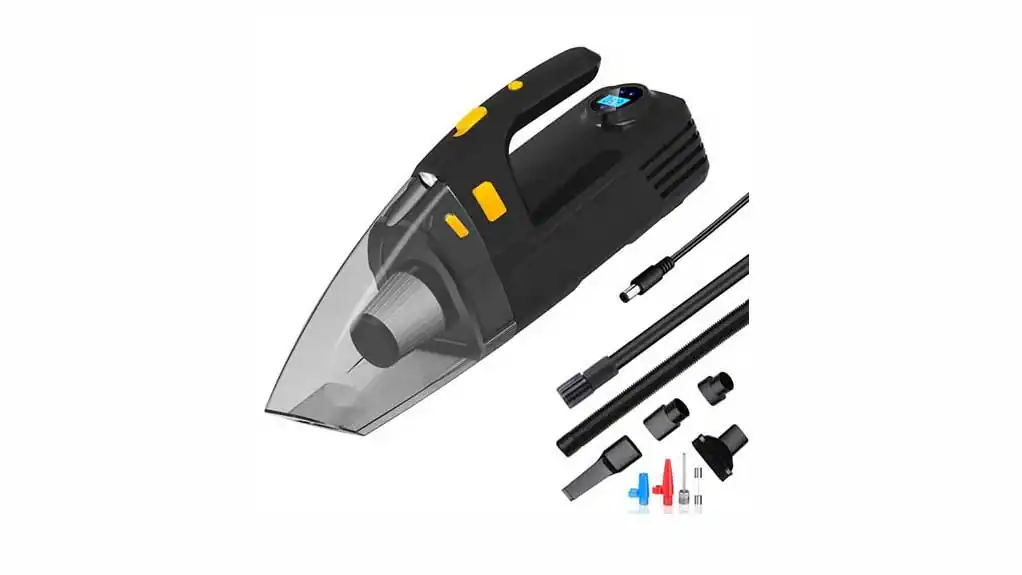
This is a practical feature, not a gimmick. Our 4-in-1 Multifunction Units—which combine a vacuum, tire inflator, LED light, and pressure gauge—include this function specifically for dark car interiors. It allows users to clean thoroughly under seats, in door pockets, and deep in the trunk. This visual confirmation eliminates complaints about ‘missed spots’ or ‘weak suction’ before they happen.
Final Thoughts
Choosing a low-spec vacuum creates brand risk through returns and poor reviews. Engineering for a balanced 13,000Pa+ suction at under 75dB is how you secure higher margins and protect your reputation. This isn’t just about a better product—it’s a better business decision.
The spec sheet is only half the story. Request a sample unit to test our performance and build quality firsthand. Contact our team to get a quote and discuss your OEM branding needs for orders starting at 500 units.
Frequently Asked Questions
What is the minimum order quantity (MOQ) for custom branding?
Our minimum order for full OEM customization, which includes custom Pantone colors, logo printing, and branded packaging, starts at 500 units per model. This allows us to set up a dedicated production line for your specific requirements.
Can I buy a single unit or use your service for dropshipping?
As a source factory, our business model is focused on B2B manufacturing and bulk orders. We do not offer single-unit retail sales or dropshipping services.
What is the maximum suction power your vacuums offer?
Our high-performance car vacuums can be configured with powerful brushless motors to achieve up to 19,000Pa of suction. This is strong enough to handle sand, pet hair, and small pebbles inside a vehicle.
What are your standard payment terms for a new order?
For new clients, our payment structure is a 30% deposit to initiate mass production and the remaining 70% balance due before shipment. We provide a final production report with photos for your approval before the balance payment.
What is the typical lead time for a bulk order?
Once the initial deposit is paid and all packaging artwork is confirmed, mass production typically takes between 30 to 40 days to complete before shipping.
Which international certifications do your products have?
Our products are certified for major global markets, including CE, RoHS, and UKCA for Europe, as well as FCC for the United States. This ensures a smooth customs clearance process for our clients.
Is the vacuum powerful enough to pick up sand and small pebbles?
Yes, performance on heavy debris depends on suction power. Our high-performance models deliver up to 19,000Pa of suction, engineered to lift heavier items like sand, coins, and small pebbles from car mats and seats.
Will a 12V corded vacuum drain my car battery?
Using a 12V vacuum for an extended time with the engine off can drain the battery. For short cleaning sessions under 30 minutes, the risk to a healthy battery is minimal. The best practice is to run the engine while vacuuming, which allows the alternator to keep the battery charged.
Are the filters washable and reusable?
Yes, our vacuums feature a dual filtration system with either a washable HEPA filter or a durable stainless steel filter. Both can be removed, rinsed with water, and air-dried completely before being used again. This makes maintenance cost-effective and eco-friendly.
Is it safe to leave the vacuum in a hot car?
We don’t recommend storing portable vacuums in a vehicle during extreme heat, especially cordless models with lithium batteries. Prolonged exposure to high temperatures can degrade the battery and internal electronic components, reducing the unit’s lifespan and performance.
Does the 12V plug fit all car cigarette lighters?
Our 12V corded vacuums use a standard plug designed for the vast majority of modern vehicle accessory ports, including American Type A and European Type B. While it is compatible with nearly all cars, SUVs, and trucks, very old or non-standard vehicle sockets may not provide a secure fit.

 English
  Español
  Français
  Deutsch
  Português do Brasil
  Русский
  한국어
한국어  日本語
日本語  العربية