 跳转到主要内容 跳转到页脚
Understanding the 10-Amp safety limit is the primary defense against sourcing car vacuums that trigger blown fuses and warranty claims. Many factories market 120W units that operate at the circuit’s edge, a design flaw that leads to high return rates and damages your brand’s reputation with end-users.
This guide provides the electrical testing methods to verify true power draw. We specify how to source units that deliver 13,000Pa suction using efficient motors, all while maintaining a continuous draw in the optimal 8–9 amp range to ensure product longevity and safety.
Why do “120W” vacuums often blow 10A car fuses?
A 120W vacuum on a 12V car system draws 10A, maxing out the fuse. The motor’s startup surge then exceeds this limit, blowing the fuse to protect the wiring.
The Electrical Calculation: How 120W Reaches the 10A Limit
The problem comes down to a basic electrical formula: Power (watts) = Voltage (volts) × Current (amps). In a standard car’s 12V system, a 120W device needs exactly 10 amps of current to run (120W ÷ 12V = 10A). This calculation shows the vacuum operates at the fuse’s maximum rated capacity. It leaves absolutely no safety buffer for any power fluctuations.
Inrush Current: The Hidden Factor That Overloads the Fuse
When a vacuum motor starts, it creates a brief but powerful spike called an ‘inrush current’. This jolt momentarily draws more electricity than its steady 10A rating. This temporary surge is all it takes to push the total current above the 10A limit. The fuse immediately breaks the circuit, doing exactly what it’s designed to do: protect the car from an electrical overload.

How to test true power draw under load?
Advertised wattage is often misleading. True power draw requires measuring voltage and current together under actual load, factoring in motor efficiency to get an accurate number.
| Measurement Technique | Key Function |
|---|---|
| Simultaneous Voltage & Current Measurement | Captures the raw electrical inputs (V and I) at the same time during operation. |
| Power Quality Analyzer | Calculates the true power (Watts) by accounting for the motor’s Power Factor (PF). |
| Electronic Load (Constant Current Mode) | Simulates a consistent, real-world workload for repeatable and controlled testing. |
Core Methods for Accurate Power Measurement
You can’t just slap a multimeter on a vacuum and call it a day. Motors are inductive loads, which means their power consumption isn’t a simple calculation. To get real numbers, you need to measure voltage and current at the exact same time while the motor is working. This gives you the apparent power.
For true power—the watts actually doing the work—we use power quality analyzers. These instruments measure the phase difference between voltage and current to find the power factor. Without this step, readings are inflated and don’t reflect actual performance. For factory-level quality control, we use electronic loads in constant current mode to create repeatable stress tests that mimic tough cleaning conditions.
Verifying Motor Performance and Suction Claims
This level of testing isn’t just academic. It’s how we verify that the claims on our spec sheets are accurate. When we say a unit uses a high-performance pure copper or brushless motor, these tests prove its efficiency. The power draw numbers confirm the motor isn’t wasting energy as excess heat.
Most importantly, this data validates our suction claims. We can prove that our vacuums achieve their maximum 13,000Pa suction power by drawing the correct amount of current, all without pushing a standard 12V car circuit past its safe limits. It’s the difference between a real engineering spec and a made-up marketing number.
Source High-Performance, Custom-Branded Car Vacuums

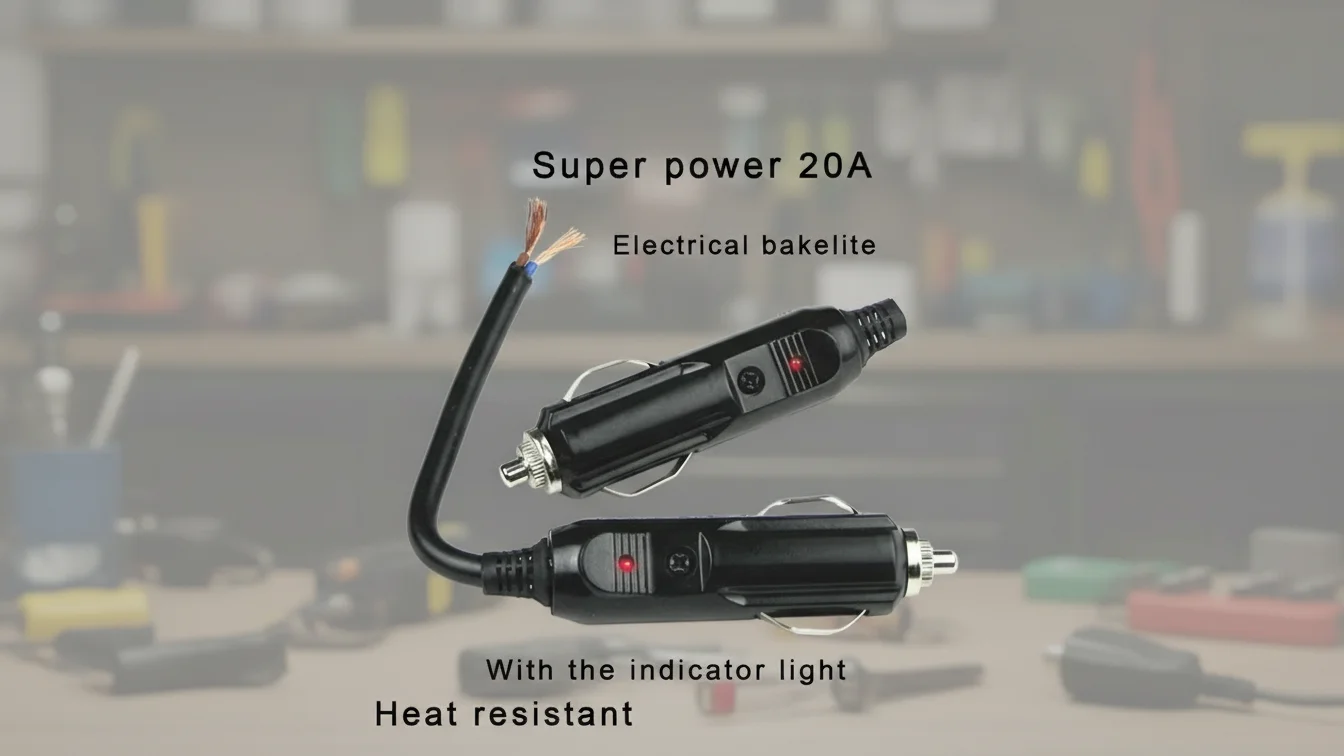
Is heat dissipation better in Bakelite vs. Plastic plugs?
Bakelite doesn’t dissipate heat better, but its superior heat resistance makes it a much safer material for electrical plugs. It withstands high temperatures without warping or failing.
Heat Resistance is Different from Heat Dissipation
People often confuse these two properties. Heat dissipation is about how well a material can pull heat away from a source. Heat resistance is about how much heat a material can endure before it starts to break down, melt, or lose its insulating properties.
Bakelite is excellent at heat resistance. It can handle continuous temperatures between 120°C and 160°C without damage. For an electrical plug, the ability to resist heat damage is far more important than its ability to radiate heat away. The main job is to remain stable and safe, not act as a heatsink.
Why Thermal Stability Matters for 12V DC Plugs
A 12V DC plug, especially one powering a device like a car vacuum cleaner, can generate a surprising amount of heat at the connection points. This sustained thermal load is where material choice becomes critical.
Bakelite’s thermal stability means it maintains its rigid structure and electrical insulating properties even when it gets hot. A plug made from a cheaper plastic might soften or warp under the same load. That deformation can lead to poor electrical contact, more heat, and eventually, a complete failure of the plug. Using a heat-resistant material like Bakelite is a direct investment in safer, more reliable long-term operation.
Why is 8-9 Amps the optimal continuous safety margin?
Operating at 8-9 amps delivers maximum cleaning power while staying safely below the common 10-amp fuse limit in cars. This prevents blown fuses and ensures motor durability.
Balancing Power with Overload Protection
Most car accessory outlets are protected by a 10-amp or 15-amp fuse. A vacuum advertised at 120W will draw exactly 10 amps at 12 volts, leaving zero safety margin. This is a common failure point. When the motor starts, it creates an “inrush current” spike that can easily blow a 10-amp fuse.
We deliberately engineer our units to operate in the 8-9 amp range. This creates a crucial buffer. It prevents nuisance fuse trips during startup or under heavy cleaning loads, avoiding circuit overloads and ensuring the vacuum works reliably every time the user plugs it in.
Ensuring Motor Longevity and Consistent Performance
Running a high-performance motor constantly at its absolute maximum amperage generates significant heat. This thermal stress is the primary cause of premature motor failure and degrades internal electronics over time.
By capping the continuous draw below the peak, we reduce heat buildup and extend the operational lifespan of the motor. This allows our corded 12V models to deliver consistent, powerful suction for long cleaning sessions without risking damage to the vacuum or the vehicle’s electrical system.
Frequently Asked Questions
Why is an 8-9 Amp operating range considered optimal for powerful car vacuums?
An 8-9 Amp range hits the sweet spot between high performance and safety. Motors in this class typically run around 7A with brief startup currents up to 8.5A. This stays safely within the 10A limit of most vehicle accessory circuits, giving you strong suction without blowing fuses.
Does the 12V plug have a replaceable fuse?
Yes, our 12V corded models come with a standard replaceable 15A glass tube fuse located inside the plug. This is a critical safety feature that protects both the vacuum and your vehicle’s electrical system from any power surges.
Can the vacuum run continuously for 20 minutes without the plug overheating?
Absolutely. Twenty minutes of continuous use is well within the unit’s safe operating limits. Our vacuums are designed for 30-60 minutes of use before needing a break. The main cause of overheating isn’t run time; it’s restricted airflow from a clogged filter or a blocked hose.
Is the power cord made with pure copper or CCA wiring?
We only use pure copper wiring in our power cords. It has much higher conductivity and heat resistance than cheaper Copper Clad Aluminum (CCA). This ensures the cord can safely handle the required electrical load without overheating, which is non-negotiable for safety and durability.
Are the units tested to handle vehicle voltage spikes?
Yes, our vacuums are built to work reliably across a vehicle’s entire electrical range. That includes handling the normal charging voltage of 14.4–14.5V, which is higher than the standard 13.8V resting voltage. We test across this full range to make sure the unit is resilient to normal power fluctuations.
Final Thoughts
While generic 120W vacuums promise high power, their design ignores the 10A fuse limit, leading to customer returns and brand damage. Engineering units for an 8-9 Amp continuous draw isn’t a limitation; it’s a deliberate choice for reliability. This standard protects your inventory from becoming a liability.
Verify our engineering claims in your own lab. We recommend requesting a sample kit to test the thermal stability of our Bakelite plug and measure the true power draw. Contact our team to get your technical samples or to start your private label project.

 English
  Español
  Français
  Deutsch
  Português do Brasil
  Русский
  한국어
한국어  日本語
日本語  العربية