 跳转到主要内容 跳转到页脚
Hitting a $30 production target for vacuum cleaners forces manufacturers to make precise trade-offs between component durability and retail viability. While complex upright housing molds can demand up to $100,000 in upfront steel tooling, stick models utilize simpler designs that start near $3,000. For B2B procurement teams, understanding these cost drivers is the only way to maintain competitive margins as material prices for essentials like polypropylene fluctuate.
We examine the specific strategies behind cost engineering, from choosing AC corded motors over expensive battery systems to consolidating parts through Design for Manufacturing and Assembly (DFMA). This analysis highlights how small adjustments, like reducing a power cord from 20 feet to 15 feet to save up to $7 per unit, impact the bottom line. You will find data on multi-cavity mold economics and why stripping decorative features like LED strips is essential for hitting 2026 price points.
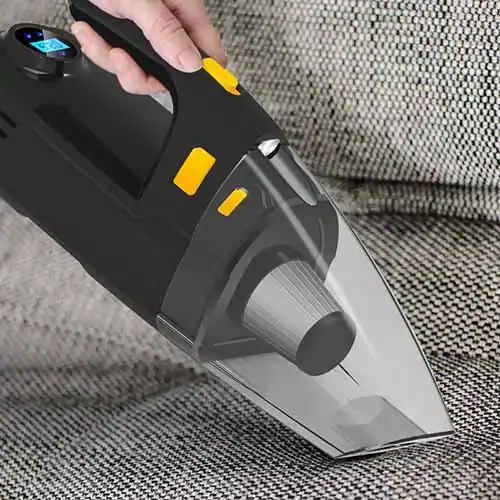
The “Stick vs. Upright” Math: Mold Size & Material Cost
Stick vacuums utilize smaller, single-cavity molds with tooling starting near $3,000, whereas upright models require complex steel molds reaching $100,000. In 2026, manufacturers optimize margins by using polypropylene at $0.90/lb and scaling production beyond 5,000 units to drop per-part costs to under $1.75.
| Production Volume | Tooling Material & Cost | Estimated Unit Price |
|---|---|---|
| Low (100–1,000 units) | 3D-Printed / Aluminum ($100–$1,000) | $4.00 – $5.00 |
| Medium (1,000–5,000 units) | Aluminum / Soft Steel ($2,000–$5,000) | ~$3.00 |
| High (100,000+ units) | Hardened Steel ($25,000–$100,000+) | $0.28 – $1.75 |
Mold Tooling Investment and Geometry Constraints
Prototyping stick vacuum components in 2026 relies on 3D-printed or aluminum low-volume molds costing between $100 and $1,000. These options facilitate rapid design validation before manufacturers commit to mass production. Mid-volume runs ranging from 1,000 to 5,000 units require production-grade aluminum molds, which typically demand an investment of $2,000 to $5,000. These tools provide sufficient durability for niche product launches or limited retail cycles.
Complex upright vacuum housings demand hardened-steel, multi-cavity molds. These tools range in price from $25,000 to over $100,000 due to the high-volume efficiency required for mass-market appliances. Hardened-steel tooling supports production runs exceeding 100,000 units, which significantly reduces the capital cost allocated to each individual part over the product life. This amortization makes the high initial investment necessary for maintaining competitive retail margins.
Raw Material Expenses and Unit Amortization
Polypropylene serves as the primary material for vacuum housings at a market rate of $0.90 per pound. High-durability internal components often utilize nylon, which costs approximately $2.20 per pound. Low-volume production runs result in high per-part costs between $4.00 and $5.00. For quantities under 1,000 units, thermoforming provides a viable alternative to injection molding by lowering the initial tooling barriers.
High-volume injection molding for 2026 retail cycles achieves per-part pricing as low as $0.28 when amortized over 30,000 units annually. Offshore tooling maintains a 2x to 5x price advantage over domestic molds during the setup phase. Domestic production often secures lower long-term piece prices of $0.82 compared to $0.99 for offshore units, providing a financial incentive for localized assembly in high-efficiency plants.
Motor Sourcing: Why AC Corded Beats Cheap Battery
AC corded motors reach 75-90% efficiency by eliminating the friction and heat typical of brushed DC motors. This simplified construction supports a service life of up to 40,000 hours and provides consistent torque that does not degrade as a battery drains, offering a more reliable solution for B2B procurement.
Efficiency Gains through Brushless Construction
AC motors achieve 75-90% energy efficiency because they operate without the energy-sapping friction found in brushes and commutators. This simplified internal architecture reduces heat buildup and eliminates the RFI interference common in cheap DC-powered motors. Lower operating temperatures extend the life of surrounding plastic housings and internal components by preventing thermal degradation during prolonged use.
Extended Service Life and Torque Stability
Robust AC designs deliver a service life between 30,000 and 40,000 hours, which significantly outlasts brushed battery counterparts. A direct grid connection maintains constant motor speed and torque, while battery-powered motors often suffer from performance drops as voltage levels fluctuate. Removing battery management systems and charging circuits lowers the total bill of materials (BOM) for 2026 production runs without sacrificing power density or reliability in high-demand environments.
Simplifying the Mold: Reducing Parts Count
Engineers reduce expenses by merging components via Design for Manufacturing and Assembly (DFMA). This strategy eliminates complex moving cores that add 15-20% to tooling costs. By scaling from single to eight-cavity molds, manufacturers slash per-part costs from $0.15 to $0.06, saving $180,000 on 2 million units in 2026 production cycles.
| Mold Configuration | Production Output | Unit Economics |
|---|---|---|
| Single-Cavity Mold | 1 part / 30 seconds | $0.15 per part |
| Eight-Cavity Mold | 8 parts / 30 seconds | $0.06 per part |
| Moving Core Tooling | Complex Geometry | +15-20% Tooling Cost |
Component Consolidation through DFMA Logic
Merging vacuum cleaner housing components reduces assembly misalignment and slashes inventory logistics costs. Design for Manufacturing and Assembly (DFMA) principles focus on component reduction to bypass the 15-20% price premium required for moving cores or sliding mechanisms in mold construction. By eliminating these features, engineers simplify the tool path and reduce maintenance intervals. Precision tooling relies on micro-milled A36 or 4140 steel plates, which offer 10x better flatness tolerances than traditional rotary grinding. Maintaining a 0.010 in. minimum milling depth enables efficient mold modifications for technical updates, ensuring the tool remains viable throughout evolving product lifecycles.
Multi-Cavity Tooling and Scaled Production Data
Eight-cavity molds produce eight parts per 30-second cycle, multiplying output eightfold compared to single-cavity units without increasing machine time. This transition scales production for high-volume car accessories, dropping per-unit costs from $0.15 to $0.06. Investing in multi-cavity tooling generates $180,000 in savings over a production run of 2 million units, directly improving profit margins for large-scale distribution. High-efficiency designs utilize optimized cooling channels and balanced runner systems to ensure uniform plastic flow. These features prevent part warpage and short shots, maintaining strict consistency across every cavity even during high-speed production runs.
Scale Your Brand with High-Performance Custom Vacuum Cleaners

Cord Length Economics: 15ft vs 20ft Savings
Opting for a 15ft cord over a 20ft alternative reduces copper material costs by 10-20% and significantly lowers electrical resistance. This reduction in length minimizes voltage drop, allowing high-performance car vacuums and air pumps to operate at peak efficiency without needing more expensive, thicker wire gauges to meet safety standards.
Conductor Mass and Manufacturing Cost Reductions
Manufacturing a 15ft (4.57m) cord requires less copper than a 20ft (6.1m) version, which generates 10-20% material savings for bulk B2B production orders. Copper volume directly drives raw material pricing. Engineers estimate economic sizing at approximately $0.1 per cm² per meter of installation. Choosing the shorter length allows manufacturers to optimize their material budget while maintaining the necessary power capacity for automotive accessories.
Shorter cords also decrease the total unit weight of the product. Lowering the weight reduces shipping costs and simplifies logistical handling during large-scale export to global markets. This weight reduction provides a competitive advantage in pricing and distribution efficiency for high-volume retailers.
Voltage Drop Mitigation and Compliance Standards
Electrical resistance increases with length according to the formula R = ρL/A. A 15ft cord maintains lower resistance using standard copper with a resistivity of 1.91 µΩ·cm. IEC 60287-3-2 standards emphasize economic sizing to minimize energy losses. Shorter paths reduce the risk of the system falling below the critical 3-5% voltage drop threshold, ensuring that devices like car air pumps receive full power during operation.
Power cord specifications indicate that lengths exceeding 15ft often require grounding conductors of at least 16 AWG. This requirement increases manufacturing complexity compared to shorter configurations. By utilizing a 15ft limit, manufacturers can often use thinner, more flexible wire gauges that meet safety standards without the added expense of thicker copper conductors required for longer distances.

The “Feature Strip”: Removing Lights & Swivels
Removing the feature strip involves de-installing LED components and mechanical swivels to lower the bill of materials (BOM). Engineers prioritize this to eliminate voltage drop risks in 24VDC systems and simplify housing molds. By stripping these parts, manufacturers reduce assembly time and failure points in car accessory designs for the 2026 market.
Strategic Simplification of Decorative and Mechanical Components
Eliminating HYDROLUME® SLIM RGB LED strips reduces power draw by 3W/ft and removes the need for Class 2 rated drivers. Removing swivels from 2-4 inch units like the Endura™ 8000 series cuts costs by discarding ball bearings and dynamic environmental seals. This simplification targets plastic injection molding lines, lowering the overall parts count for B2B pricing optimization. Engineering focus shifts from aesthetic lighting to core performance, ensuring FMVSS 108 compliance by removing unregulated top-position diodes.
Technical Parameters for LED Removal and Swivel Maintenance
Engineers maintain 24VDC systems under a 3% voltage drop by utilizing 12-18 AWG wire gauges for runs up to 539 feet at 60W. LED de-installation requires detaching M2.9 (#4) screws from mounting channels and ensuring correct polarity on RGBW channels to prevent circuit failure. Swivel disassembly involves extracting ball bearings through the body port and replacing dynamic seals with light machine oil for improved uptime. Choosing cost-effective ABS or PC plastics for fixed housings further reduces costs once the complexity of moving swivel joints is removed.
Final Thoughts
Hitting a $30 price point requires specific engineering trade-offs that favor functional reliability over aesthetics. Stick vacuum designs offer a practical path forward because they use simpler molds that cost significantly less than upright alternatives. Opting for AC corded motors instead of battery-powered systems removes expensive management circuits while providing consistent suction. By shortening power cords to 15 feet and using high-volume 8-cavity molds, manufacturers drop individual part costs enough to maintain healthy retail margins.
Simplifying the bill of materials through part consolidation and feature removal creates a more durable product for mass distribution. Removing complex swivel joints and LED strips lowers assembly time and prevents common electrical failure points. These efficiency-focused decisions allow brands to scale production effectively in the 2026 market. Focusing on material science and motor stability ensures the product performs its core task without the weight of unnecessary features.
Frequently Asked Questions
Can we achieve a target FOB price of $20 for vacuum cleaners with long cords?
Current 2026 market data indicates a $20 FOB target is unrealistic for products requiring 15-20ft heavy-duty cords. Retail prices for 14-16AWG cords in these lengths range from $15 to $28, meaning the cord alone often exceeds the total production budget for the unit.
How much does reducing the power cord from 20ft to 15ft save in production?
Shortening the cord from 20ft to 15ft saves between $3 and $7 per unit. For example, a heavy-duty 15ft NEMA 6-15P to IEC-320 C-13 cord costs approximately $22.25, while a 20ft version typically retails for over $25.85.
Does removing swivel steering features significantly improve durability?
No specific industry data confirms that removing swivel steering reduces breakage. While reducing moving parts simplifies the design, manufacturers prioritize the material quality of the pivot joint rather than total removal to ensure long-term reliability.

 English
  Español
  Français
  Deutsch
  Português do Brasil
  Русский
  한국어
한국어  日本語
日本語  العربية