 跳转到主要内容 跳转到页脚

Selecting the right motor for next-generation vacuum models requires balancing high suction power with strict noise limits and cost constraints. While traditional AC universal motors remain the standard for budget-friendly corded units, the shift toward BLDC technology offers significant advantages in lifespan and thermal management. We examine how these architectural choices impact long-term reliability and user experience in commercial and residential cleaning applications.
We analyze the technical trade-offs between mechanical and electronic commutation, focusing on efficiency benchmarks where BLDC motors reach 85% to 90% compared to the 70% average of induction models. This guide breaks down essential performance metrics, from achieving 450 air watts within 15 A circuit limits to managing high-frequency electromagnetic whine below 60 dBA. We also explore the $4 to $20 unit cost delta that influences current supply chain decisions for portable and corded systems.
Architecture: AC Universal vs. BLDC
AC universal motors utilize carbon brushes and mechanical commutation for cost-effective high torque, while BLDC motors use electronic controllers and permanent magnets to reach 85–90% efficiency. This architectural shift eliminates friction-related wear, significantly increasing the lifespan and suction power of 2026 portable vacuum models.
Mechanical Commutation and Rotor Construction
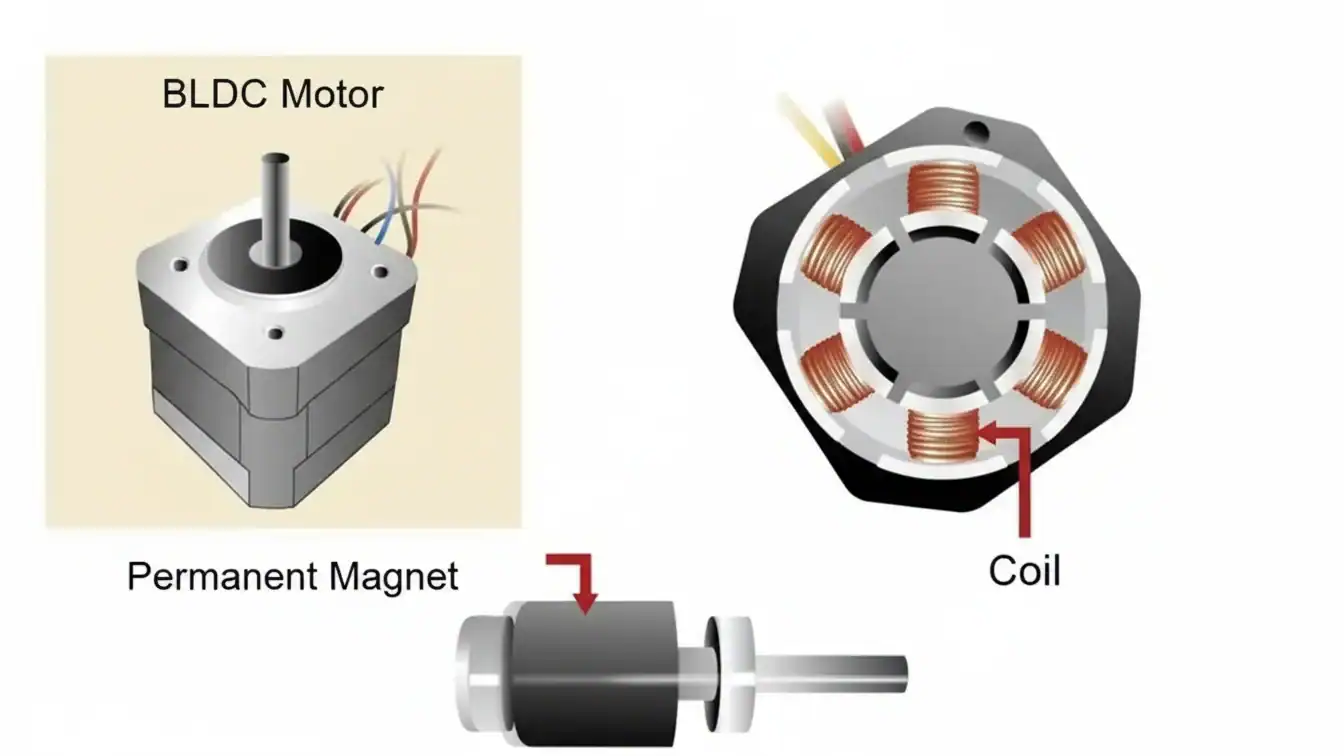
AC universal motors rely on physical contact between carbon brushes and a commutator to switch electrical polarity. This mechanical process generates friction and electromagnetic interference (EMI) during operation, which often impacts the long-term reliability of the tool. In contrast, BLDC architecture utilizes a permanent magnet rotor and wound stator coils, shifting the commutation logic to an external electronic controller or inverter.
The removal of brushes eliminates the primary cause of mechanical wear and failure found in traditional motor designs. This shift reduces maintenance requirements while extending the operational life of the device. Integrated Hall-effect sensors within BLDC systems monitor rotor position in real-time, allowing the motor to achieve the rapid acceleration and deceleration necessary for precise speed control.
Efficiency Benchmarks and Thermal Management
Testing indicates that BLDC motors reach efficiency ratings between 85% and 90%, whereas AC universal and induction motors typically average between 70% and 85%. Because permanent magnet rotors generate less internal heat than squirrel-cage or wound rotors, engineers can design smaller, more compact motor housings. This improved thermal profile is particularly beneficial for handheld cleaning devices where space and heat dissipation are critical factors.
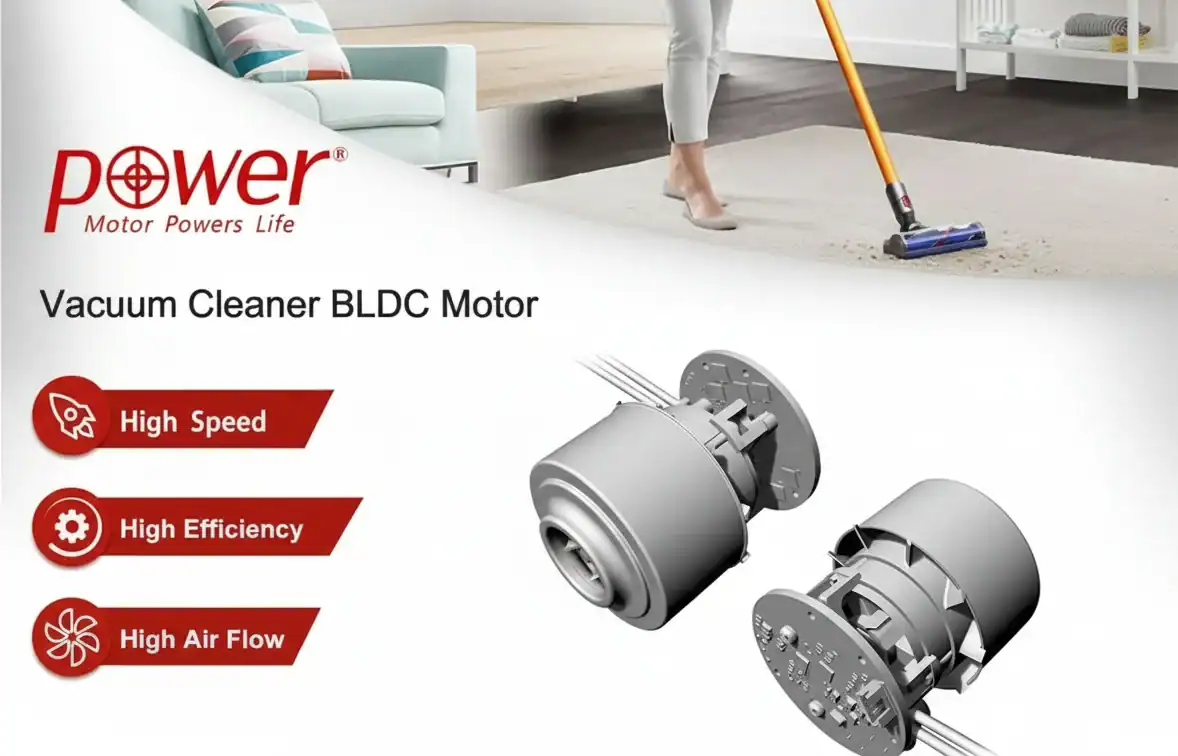
Performance data shows that BLDC systems maintain a flat torque curve across a wide 3,000–4,000 rpm range, preventing the torque loss commonly seen in AC systems at high speeds. These thermal and mechanical advantages allow the motor to sustain peak suction levels up to 20,000Pa while keeping operational temperatures within safe limits for the user.
Efficiency Curve: Watts vs. Suction
Suction efficiency depends on the ratio of air watts—derived from airflow and static lift—to electrical input. High-performance motors in 2026 achieve peak efficiency at 75–100% load, typically delivering 250–450 air watts within an 800–1400 W power draw to operate safely under 15 A circuit limits.
| Performance Metric | Operational Value | Engineering Context |
|---|---|---|
| Suction Output | 250–450 Air Watts | ASTM suction performance target |
| Electrical Input | 800–1400 W | 120 V / 15 A circuit safety limit |
| Airflow Rate | 95–150 CFM | Commercial canister/backpack standard |
| Efficiency Peak | 75%–100% Load | Optimal energy-to-suction conversion |
Air Watt Metrics and Electrical Input Limits
Engineers calculate suction performance using the ASTM International formula, where air watts equal airflow multiplied by static lift in inches of water, divided by 8.5. This metric allows technical teams to balance usable output against the electrical draw of the motor. For portable vacuum systems, designers target a window between 800 and 1400 W to ensure compatibility with standard North American 120 V outlets. This range stays within the 15 A branch-circuit limit, allowing the motor to generate maximum torque without tripping breakers. High-performance canister and backpack units benchmark their targets between 250 and 450 air watts to provide professional-grade cleaning capability.
Efficiency Curves and Operational Load Behavior
Motor efficiency peaks when the system operates at 75% to 100% of its rated load. We map these curves to ensure energy conversion remains high during standard operation. When obstructions occur or HEPA filters become saturated, airflow drops and static lift rises. This shift forces the motor away from its optimal efficiency point, turning excess electrical energy into heat and noise rather than suction. Sustaining airflow between 95 and 150 CFM keeps the motor within its high-performance zone. By aligning the motor’s mechanical sweet spot with common operating pressures, we reduce acoustic stress and prevent premature thermal wear on the internal components.
Acoustic Design: Dampening Motor Pitch
Motor pitch management targets the high-frequency ‘whine’ caused by electromagnetic forces and PWM drives. By 2026, premium vacuum designs prioritize human sensitivity thresholds between 1 kHz and 4 kHz, utilizing ISO 1680 standards and active damping to keep residential noise levels below 60 dBA.
| Acoustic Standard | Technical Scope | Engineering Benchmark |
|---|---|---|
| ISO 1680 | Rotating Machinery | Standardized noise test codes for measurement consistency |
| IEC 60034-9 | Low-voltage Motors | Maximum noise limits for rotating electrical machines |
| ISO 3745 | Testing Environment | Anechoic chamber background noise validation |
Electromagnetic Whine and Human Auditory Sensitivity
High-frequency pitch stems from fluctuating magnetic fields, gear meshing, and Pulse Width Modulation (PWM) drives. These electromagnetic forces create a characteristic whine that dominates the acoustic profile of high-speed vacuum motors. Structure-borne vibrations contribute additional noise between 40 Hz and 1500 Hz, typically arising from commutation harmonics and cogging torques during operation.
Human ears reach peak sensitivity between 1 kHz and 4 kHz. Within this frequency band, even low-decibel motor whines cause significant user discomfort. Manufacturers use A-weighting (dBA) scales to align technical data with human perception, aiming for residential noise thresholds under 60 dBA. Achieving these levels ensures the cleaning environment remains pleasant rather than intrusive.
Mechanical Isolation and ISO 1680 Testing Protocols
Engineers apply rotor slot skewing and vibration-damping mounts to shift acoustic profiles away from sensitive frequency bands. Passive damping utilizes rubber-metal bearings to absorb vibration, while hydraulic bearings provide dynamic stiffness adjustments based on load and frequency. Adjusting PWM frequencies also allows manufacturers to move electromagnetic noise entirely outside the range of typical human hearing.
Compliance testing follows IEC 60034-9 and ISO 1680 to maintain spatial accuracy. Technicians measure noise at one meter radially from the source at 45° increments. Precision calibration uses 94 dB at 1 kHz benchmarks within anechoic chambers that meet ISO 3745 background noise standards. These rigorous measurement practices allow for the isolation of motor sound from ambient interference, ensuring accurate diagnostics and performance validation.
Scale Your Brand with High-Performance, Custom-Branded Home Vacuums

Thermal Cut-Off (TCO) Safety
Thermal Cut-Offs (TCOs) function as one-shot thermal fuses that disconnect power before motor windings reach ignition temperatures. These devices rely on specific Functioning (Tf) and Holding (Th) temperature ratings to prevent fire hazards during mechanical stalls or ventilation failures while maintaining compliance with UL safety standards.
Operational Mechanics of Eutectic Thermal Fuses
Vacuum motors utilize eutectic-type TCOs as primary over-temperature protection to satisfy UL motor safety standards. These components react to excessive heat by opening the circuit before components or surrounding plastics reach ignition points. Small vacuum motors typically utilize Functioning Temperatures (Tf) ranging from 60°C to 165°C, providing a specific window of protection based on the motor’s insulation class.
Manufacturers mark motors equipped with these safety devices with the “T.P.” (Thermally Protected) designation on the nameplate. This indicates the motor includes internal safety mechanisms to prevent overheating during abnormal conditions. Unlike resettable breakers, TCOs provide one-shot operation. If a locked-rotor fault or mechanical stall triggers the fuse, the motor remains de-energized until a technician replaces the component, ensuring the underlying fault is addressed before the machine runs again.
Technical Ratings and Mechanical Installation Constraints
Reliability depends on maintaining the Holding Temperature (Th) below the specified limit during standard operation. Running a motor too close to the TCO’s functioning point causes nuisance trips and accelerates thermal aging. This aging process, caused by repeated sub-Tf heat cycles, can drift the effective opening temperature upward over time. Such a shift potentially delays safety intervention during a genuine fault, allowing winding temperatures to exceed safe limits.
Precise mechanical installation protects the integrity of the fuse. Engineers must maintain a minimum distance of 3.2 mm (1/8 inch) from the epoxy seal when forming lead bends. Bending leads too close to the body can crack the seal, altering the melting point of the internal eutectic alloy and risking failure. High-quality components, like the MICROTEMP G4 series, follow UL File E60271 and pass the Conductive Heat Aging Test (CHAT) to ensure high-temperature durability and consistent interruption capability.
Cost Delta: Why Corded Vacuums Don’t Use BLDC Yet
Supply chain data shows a significant 2–3× cost gap between standard brushed universal motors and high-speed BLDC systems. Commodity brushed motors for 1200W corded vacuums price at $4–$8 per unit, whereas vacuum-grade BLDC motors cost $12–$20. The addition of a mandatory electronic inverter drive further inflates the bill of materials for price-sensitive corded segments.
Motor Component and Controller Costs
Brushed universal motors used in 1200W–1600W corded vacuums average $4–$8 ex-works at 1,000-piece minimum order quantities. High-speed BLDC motors for suction applications typically range from $12 to $20 per unit. This price difference stems from the fundamental power requirements of each technology. Universal motors operate directly from mains power with basic triac speed control or EMI protection, keeping the internal electronics simple and inexpensive.
BLDC systems require a sophisticated inverter drive PCB featuring a MOSFET bridge, MCU, and current sensing. This mandatory electronic overhead significantly increases the total system cost compared to a brushed motor. For corded machines where portability and battery weight are not concerns, the added complexity of these power electronics often outweighs the efficiency gains in the eyes of budget-conscious manufacturers.
Material Grade and Retail Price Constraints
BLDC vacuum designs rely on expensive NdFeB permanent magnets and high-grade electrical steel laminations to achieve high suction levels. Budget corded uprights and canisters target retail price points under $200. At this level, a $15 motor-system delta is difficult for a brand to absorb without pushing the product into a higher price tier where it may lose competitiveness against established brands.
The use of ball bearings in BLDC motors improves operating life and reduces noise, but adds cost compared to the sleeve bearings often found in entry-level brushed units. In 2026, manufacturers continue to prioritize the low initial bill of materials of universal motors for mass-market corded products. The superior efficiency of BLDC remains a secondary consideration when the primary goal is meeting a specific price point for high-volume retail sales.
Final Thoughts
Selecting the right motor technology requires balancing manufacturing costs with end-user performance expectations. While BLDC systems offer superior lifespan and reduced noise for premium portable models, the cost-effectiveness of AC universal motors keeps them relevant for the high-volume corded market. Designers must weigh these trade-offs against specific cleaning targets and retail price points to find the best fit for their product line.
Integrating precise acoustic damping and thermal safety components protects the device while improving the user experience. As motor technology evolves, focusing on heat management and frequency control separates high-quality hardware from standard components. Sourcing teams should prioritize motors that meet rigorous testing standards to ensure long-term durability in the competitive cleaning appliance sector.
Frequently Asked Questions
What distinguishes AC motors from DC motors in vacuum cleaners?
AC universal motors provide stable power for high-voltage household cleaners but create more noise and have a limited lifespan due to brush friction. DC motors favor battery-powered portability and high torque, making them standard for cordless car and home vacuums.
How long do vacuum motors typically last?
Brushless (BLDC) motors offer a lifespan two to three times longer than traditional universal motors. Because they lack physical brushes that wear down over time, BLDC units maintain performance for much longer periods without mechanical failure.
Why are brushless motors considered more efficient for portable vacuums?
BLDC motors are 33% to 50% lighter than universal series motors, which significantly reduces the overall weight of portable devices. They also run much cooler, with a temperature rise of only 40-45°C compared to the 95°C typical of brushed motors.
Can motor design influence vacuum noise levels?
Yes. Brushless and PMSM (Permanent Magnet Synchronous Motor) technologies produce less acoustic vibration. These motors support stepless speed control, allowing the vacuum to operate at lower pitches and reducing the harsh noise associated with high-RPM universal motors.

 English
  Español
  Français
  Deutsch
  Português do Brasil
  Русский
  한국어
한국어  日本語
日本語  العربية