 跳转到主要内容 跳转到页脚

Evaluating the overland durability 12 volt tea kettle market shows that rugged engineering protects OEM brands from crippling warranty returns and dangerous campervan electrical fires. Standard kitchen appliances fail rapidly on washboard dirt trails because constant vehicle vibrations shatter cheap plastic mounts and fray low-quality wiring. B2B buyers who source unverified equipment face angry end-users and massive liability risks when poorly insulated power cables short out inside a cramped wooden cabinet.
This manufacturing breakdown details the exact specifications factories use to build off-road appliances that survive extreme environments. We evaluate locking base plate mechanisms that absorb severe trail shocks, specify high-temperature silicone wiring protocols to eliminate fire hazards, and test the corrosion resistance of 316 stainless steel interiors against acidic liquids. Supply chain managers and product engineers can rely on these technical benchmarks to source safe, reliable equipment for the demanding off-grid vehicle market.
How Does the Locking Base Plate Survive Extreme Off-Road Vibrations?
Engineered off-road base plates decouple kinetic energy from the main unit using physical isolation barriers and reinforced ribbing to prevent structural fatigue during continuous high-frequency vibration cycles.
Structural Reinforcement in the Base Plate
Base plates rely on engineered material structures to handle continuous physical stress during travel. Standard flat plastics warp or snap under the sustained G-forces generated by washboard roads and rocky trails. Building a robust foundation requires precise geometry.
- We implement reinforced ribbing and cross-bracing in the base plate to distribute impact forces evenly across the unit.
- Designers incorporate radiused edges into the molding process to prevent the stress concentrations that routinely cause structural fatigue and micro-cracking over time.
| Testing Standard | Frequency Range | Application Focus |
|---|---|---|
| MIL-STD-810G | 5 Hz to 2,000 Hz | Rugged environments and high-acceleration unsprung locations |
| SAE J1455 | 5 Hz to 500 Hz | Heavy-duty commercial vehicle chassis and cabins |
| ISO 16750-3 | 10 Hz to 2,000 Hz | Road vehicle electrical and mechanical systems |
Vibration Dampening and Isolation Techniques
Decoupling the base plate from the mounting surface minimizes the transfer of kinetic energy from the vehicle chassis to the appliance. Without proper isolation, rigid mounting points transfer harmonic vibrations directly into the core components, leading to premature electrical or mechanical failure.
- Rubber isolators and nylon spacers act as physical barriers between the base plate and the vehicle mounting surface, absorbing high-frequency shocks.
- Engineered standoff gaps reduce mechanical resonance and prevent the direct transmission of heavy off-road vibrations into the sensitive electronics of the kettle unit.
Fastener Specifications for High-Vibration Environments
Heavy-duty mounting hardware keeps the base plate locked firmly in place during aggressive driving maneuvers, steep inclines, and sudden impacts. Standard screws strip or vibrate loose, compromising the safety of the entire installation.
- The assembly integrates grade-rated bolts and large flat washers to withstand repeated vibration cycles without backing out of their threads.
- Captured fasteners hold the plate tightly to the mounting bracket, and precise torque applications guarantee the mechanical connection stays secure across the roughest overland terrain.
Can the 316 Stainless Interior Withstand Acidic Tea and Coffee Grinds?
The molybdenum-enriched 316 stainless steel interior neutralizes the weak organic acids in coffee and tea, preventing structural degradation while preserving beverage flavor.
Molybdenum and Nickel Composition
We engineer our kettle interiors using 316 stainless steel specifically for its advanced chemical makeup, featuring molybdenum and elevated nickel concentrations compared to standard alloys. These elements create a highly resilient barrier against the tannins and weak organic acids naturally found in coffee grinds and tea leaves. The metal consistently withstands daily exposure to hot, acidic liquids without degrading or leaching metallic flavors into the beverage.
Prevention of Pitting and Crevice Corrosion
Repeated exposure to moisture and acidity rapidly deteriorates inferior metals. The precise addition of molybdenum in our 316 stainless steel directly halts pitting and crevice corrosion inside the kettle chamber. This structural defense delivers distinct advantages for mobile and off-grid users:
- Brewing highly acidic dark roasts daily leaves zero microscopic pitting on the metal surface.
- Delayed cleaning during intense long-haul drives will not compromise or degrade the interior chamber.
- The enhanced structural integrity outlasts standard commercial kettles under identical environmental stress.
High-Temperature Tolerance and Food Safety
The 316 stainless alloy maintains its physical strength at continuous temperatures up to 870°C, drastically exceeding the standard 100°C boiling point of water. This extreme heat tolerance establishes a critical safety margin during aggressive heating cycles and rigorous dry-boil prevention testing. The inherent chemical resistance ensures the surface remains sanitary and safe for direct food contact. This construction aligns perfectly with global LFGB certifications, guaranteeing fleet drivers and overland campers a clean, uncontaminated pour every single time.
Source Safe, Fast-Heating OEM Car Kettles
Do You Use High-Temp Silicone Wire to Prevent Campervan Electrical Fires?
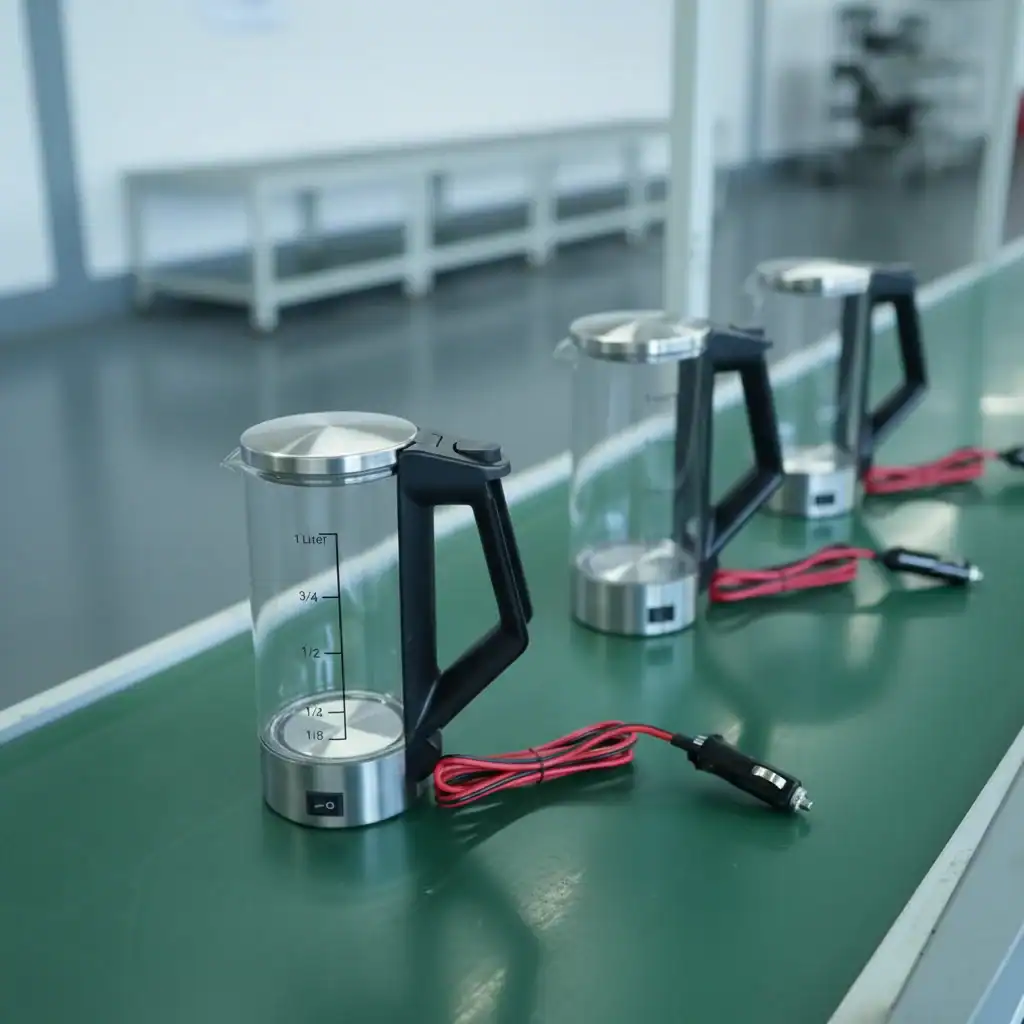
High-temperature silicone insulation and 100% pure copper wiring form the critical baseline for safely managing continuous 150W to 300W electrical loads in 12V/24V campervan systems.
Continuous Operation at 150-200°C
Industry standards for demanding mobile environments require wiring infrastructures capable of withstanding sustained thermal stress. High-temperature silicone insulation delivers superior thermal management across automotive electrical systems, allowing continuous operation at temperatures ranging from 150°C to 200°C without degrading. This exceptional temperature tolerance provides a massive thermal margin above the 100°C boiling point of water. By maintaining structural integrity under these extremes, silicone wire directly prevents insulation breakdown, eliminating the root cause of subsequent electrical fires in off-grid campervan setups.
| Electrical Component | KelyLands Specification | Standard Market Equivalent |
|---|---|---|
| Cable Core Material | 100% Pure Copper | Copper-Clad Aluminum (CCA) |
| Wire Insulation | High-Temp Silicone (up to 200°C) | Standard PVC (Max 80°C) |
| 12V/24V Plug Housing | Phenolic Resin (Bakelite) | Standard ABS Plastic |
100% Pure Copper Cables and Bakelite Plugs
KelyLands engineers its 12V and 24V mobile appliances with uncompromising materials to eliminate the risk of dashboard socket melting. We outfit our in-car kettles with heavy-duty, 1.4-meter cables constructed from 100% pure copper. This guarantees highly efficient, low-resistance power transmission during extended 30-minute boiling cycles. We pair these premium cables with high-temperature Bakelite plugs, rejecting the cheap ABS plastics common in the market. These specific material choices safely manage continuous 150W to 300W electrical loads, entirely preventing short circuits and melted vehicle fuses during regular daily fleet operations.
Flexibility and Chemical Resistance in RV Environments
Modern automotive wire designs must deliver mechanical durability alongside high thermal performance to survive off-grid travel conditions. Campervan routing requires highly flexible cables that navigate tight corners and cramped kitchen spaces without causing internal wire fatigue over time. Silicone coatings naturally resist chemical exposure, protecting critical electrical connections from cooking oils, harsh cleaning agents, and minor liquid spills inherent to mobile kitchens. By integrating these robust, chemically resistant materials into our 2026 mobile product line, KelyLands guarantees a lifespan exceeding 30,000 hours and ensures long-term fire safety for fleet operators and overland travelers.
Is the Handle Ergonomically Designed for Pouring in Cramped RV Kitchens?
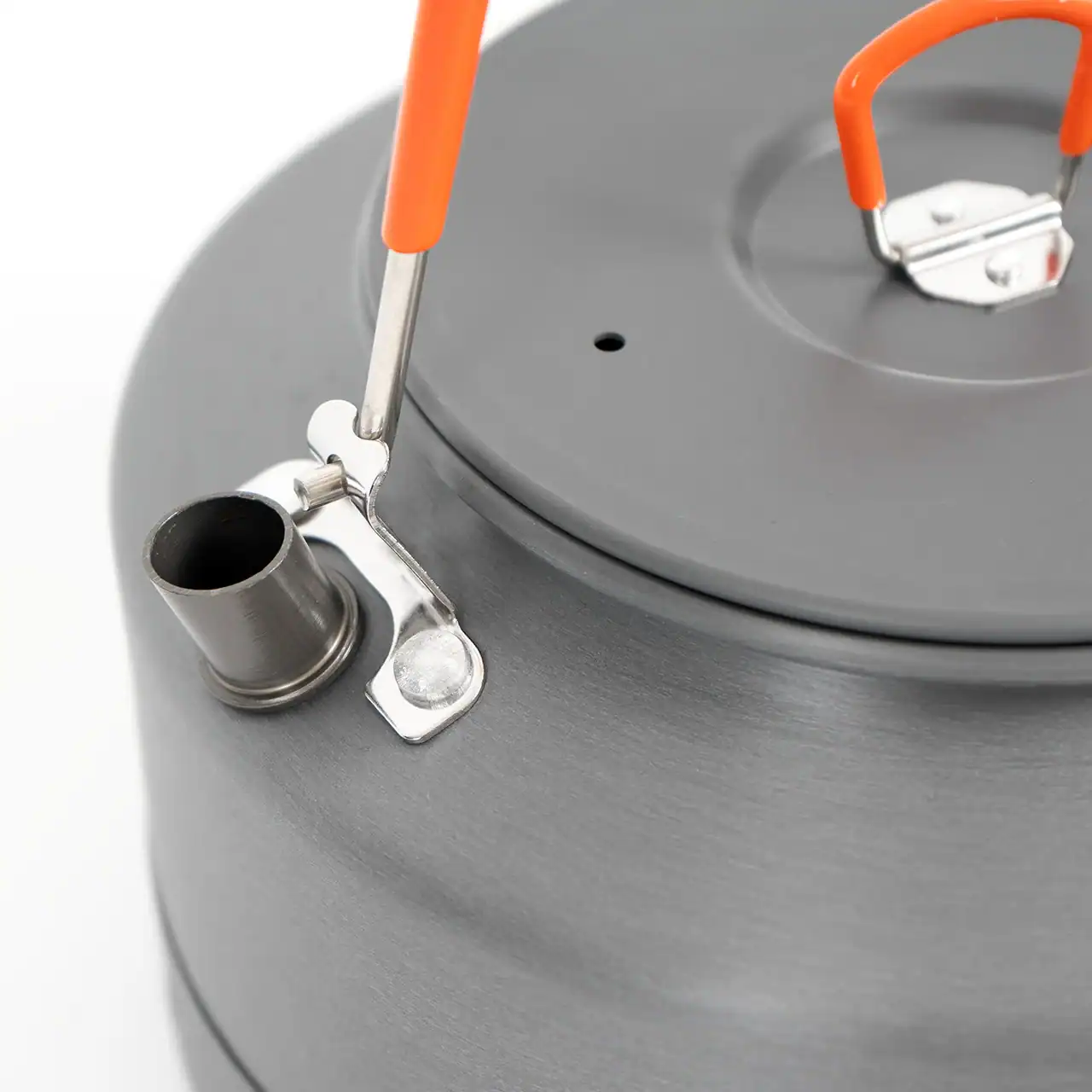
The KelyLands handle architecture combines heat-insulated polymers and a push-button release to guarantee one-handed pouring precision in space-restricted campervan galleys.
Heat-Insulated Secure Grip Design
KelyLands integrates high-temperature resistant materials directly into the handle to protect users from burns while operating the kettle in tight quarters. The heat-insulated build stays completely cool to the touch throughout the entire 30-minute boiling cycle, preventing thermal transfer from the heavy-duty heating elements.
A secure, non-slip grip drastically reduces the risk of accidental drops or spills when handling boiling water in confined vehicle spaces. This tactile surface ensures a firm hold, even if the user has wet hands from working near a small RV sink.
Push-Button Mechanism for One-Handed Operation
The ergonomic handle features an accessible push-button layout engineered specifically for safe, controlled pouring. RV occupants open the spout effortlessly with a single thumb press, bypassing the need to use two hands or reach awkwardly across a hot kettle lid.
This targeted mechanism minimizes dangerous wrist angles. Users direct hot water precisely into travel mugs or dehydrated meal containers safely, right where overhead clearance and shallow counter depths restrict normal pouring motions.
Compact Profile for Confined Layouts
The handle geometry complements the strict physical dimensions of both the KelyLands 600ML CC Series and 1000ML SM Series kettles. This streamlined shape keeps the overall product footprint remarkably small. The unit fits effortlessly under low-hanging RV cabinets, inside tiny storage cubbies, or beside tight sink fixtures without protruding into the active cooking workspace.
This compact handle coordinates perfectly with the 1.4-meter pure copper cable. The calculated layout gives users the necessary slack to pick up, maneuver, and pour boiling water without snagging the heavy-duty power cord on adjacent kitchenware or delicate interior fixtures.
Conclusion
Equipping overland campervans with a rugged 12 volt tea kettle requires strict attention to material durability and electrical safety. Components like locking base plates, food-grade stainless interiors, and pure copper wiring prevent hazardous spills and electrical failures on unpredictable terrain. Prioritizing these engineering standards protects vehicle electrical architectures and ensures a reliable boiling experience for end users.
Review your current RV kitchen appliance specifications to ensure they meet off-road vibration and high-current safety standards. Contact our OEM team to request a sample or review the complete KelyLands DC kettle catalog for your next vehicle build.
Frequently Asked Questions
Does the 12 volt tea kettle have a locking base for driving?
Yes, premium 12-volt tea kettles designed for overlanding and mobile applications feature a mechanical or magnetic locking base. This design ensures the kettle remains securely mounted to the docking station during transit, preventing dangerous spills and maintaining structural stability while driving on uneven terrain.
Are the power wires insulated with high-temp silicone?
Yes, the power wires are insulated with high-temperature silicone jacketing. This premium insulation protects the internal copper conductors from melting or degrading under continuous, heavy current loads. It ensures safe and reliable operation even in enclosed, high-heat automotive environments.
How does the factory test for off-road vibration resistance?
Factories test off-road vibration resistance by subjecting units to multi-axis shaker tables that simulate extreme terrain. Engineers evaluate the effectiveness of strategic isolation techniques, verifying that rubber isolators, nylon spacers, and standoff gaps successfully decouple the unit to reduce resonance. They also confirm that hardware specifications, such as grade-rated bolts and captured fasteners, prevent loosening over repeated vibration cycles.
Best 12v tea kettle for overland campervans?
The best 12V tea kettles for overland campervans combine a double-walled stainless steel interior with a rugged, insulated exterior. Top-tier models include a locking travel base, high-temperature silicone wiring, and automatic boil-dry shutoff features. They are engineered to operate efficiently within a 150W to 200W power draw, balancing rapid heating capabilities with off-grid battery conservation.

 English
  Español
  Français
  Deutsch
  Português do Brasil
  Русский
  한국어
한국어  日本語
日本語  العربية