 跳转到主要内容 跳转到页脚

Optimizing phase 5. ESG & Packaging Logistics(plastic free electric kettle) operations represents the critical barrier between securing strict EU retail contracts and experiencing devastating glass transit damage rates. Relying on outdated EPS styrofoam for fragile appliances guarantees high sea freight breakage costs and immediate disqualification from modern European procurement tenders. Logistics directors need packaging engineering that actively absorbs severe drop impacts during rough transport without utilizing banned polymer foams.
This technical standard operating procedure details the exact engineering protocols required to transition your supply chain away from standard EPE foam. We outline the mechanics of substituting styrofoam with high-density molded pulp for heavy glass components, verify export durability against strict ISTA 3A drop-test parameters, and analyze the direct cost variations of implementing FSC-certified paper boxes. Supply chain managers can use this framework to eliminate plastics from their shipping lines while maintaining near-zero breakage rates across global freight networks.
How Does Molded Pulp Replace EPS Styrofoam for Heavy Glass Items?
Molded pulp reduces packaging carbon emissions by up to 70 percent while meeting 2026 global retail mandates, requiring precise segmented engineering to match EPS shock absorption for heavy glass exports.
Regulatory Drivers and Carbon Emission Reductions
Global markets enforce stricter packaging regulations by 2026, pushing manufacturers to phase out EPS materials. The upcoming EU Packaging and Packaging Waste Regulation (PPWR) transforms sustainability from a corporate initiative into a mandatory compliance threshold for market access. Molded pulp directly addresses these requirements by cutting carbon emissions by 30 to 70 percent compared to traditional foam packaging.
Expanding regulatory bans on EPS across global export markets accelerate the transition to sustainable alternatives. Retailers increasingly demand suppliers meet strict void-space limitations and transition toward fully recyclable transport packaging, making standard EPS packaging structurally unviable in modern B2B procurement contracts.
Stacking Strength During Export Transport
Molded pulp provides structural rigidity suited for high-volume B2B logistics and warehousing. High-density molded pulp maintains superior stacking strength when logistics teams load heavy pallets for international shipping. The rigid geometry prevents compression damage to underlying units in bulk container shipments, often outperforming standard foam in static load-bearing scenarios.
| Performance Metric | High-Density Molded Pulp | EPS Styrofoam |
|---|---|---|
| Carbon Footprint | 30–70% reduction in emissions | High baseline petroleum emissions |
| 2026 EU Compliance | 100% compliant and recyclable | Subject to phase-outs and bans |
| Stacking & Rigidity | High static load-bearing geometry | Susceptible to compression degradation |
Managing Shock Absorption for Fragile Goods
Heavy glass products demand specific protective properties that require targeted packaging engineering. EPS retains technical advantages in shock absorption, moisture resistance, and thermal insulation for highly sensitive or exceptionally heavy fragile items. Transitioning away from EPS for glass goods requires intelligent structural design rather than simple material substitution to prevent sea freight breakage.
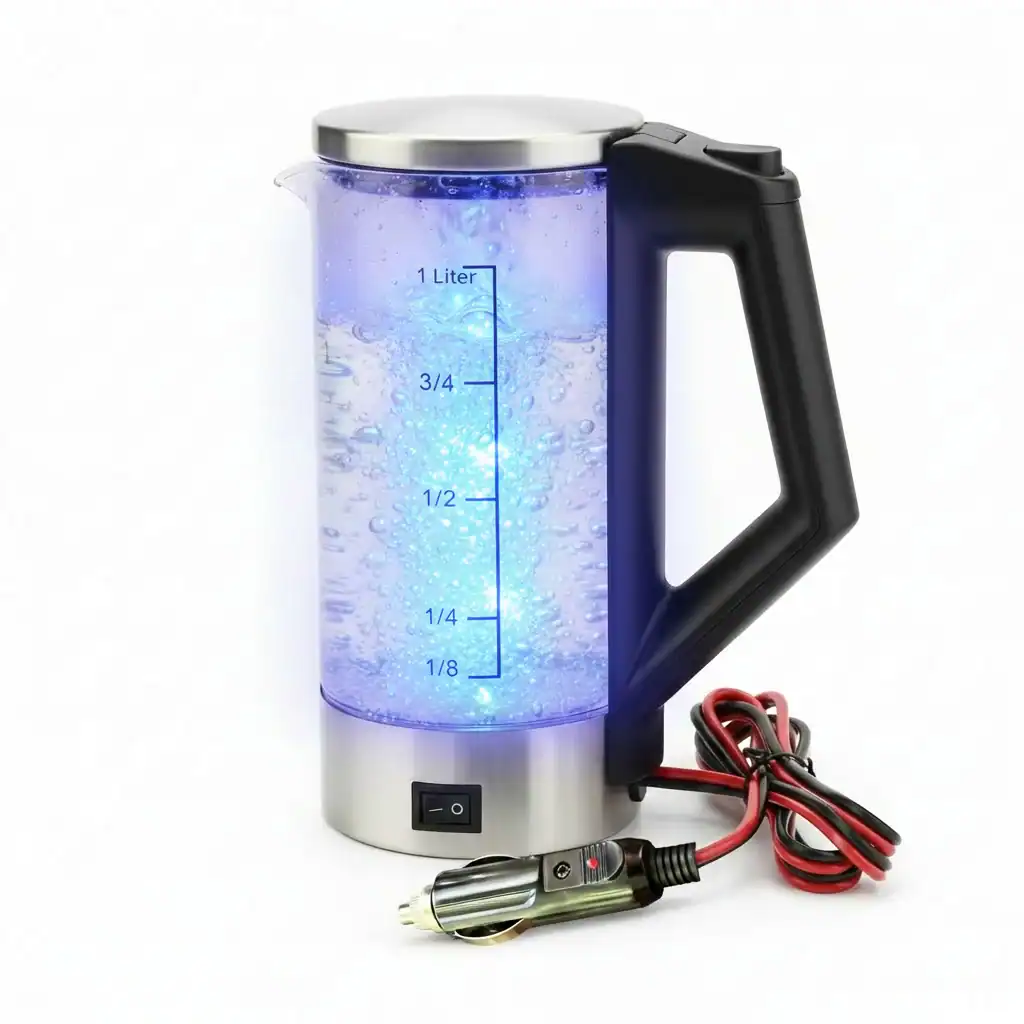
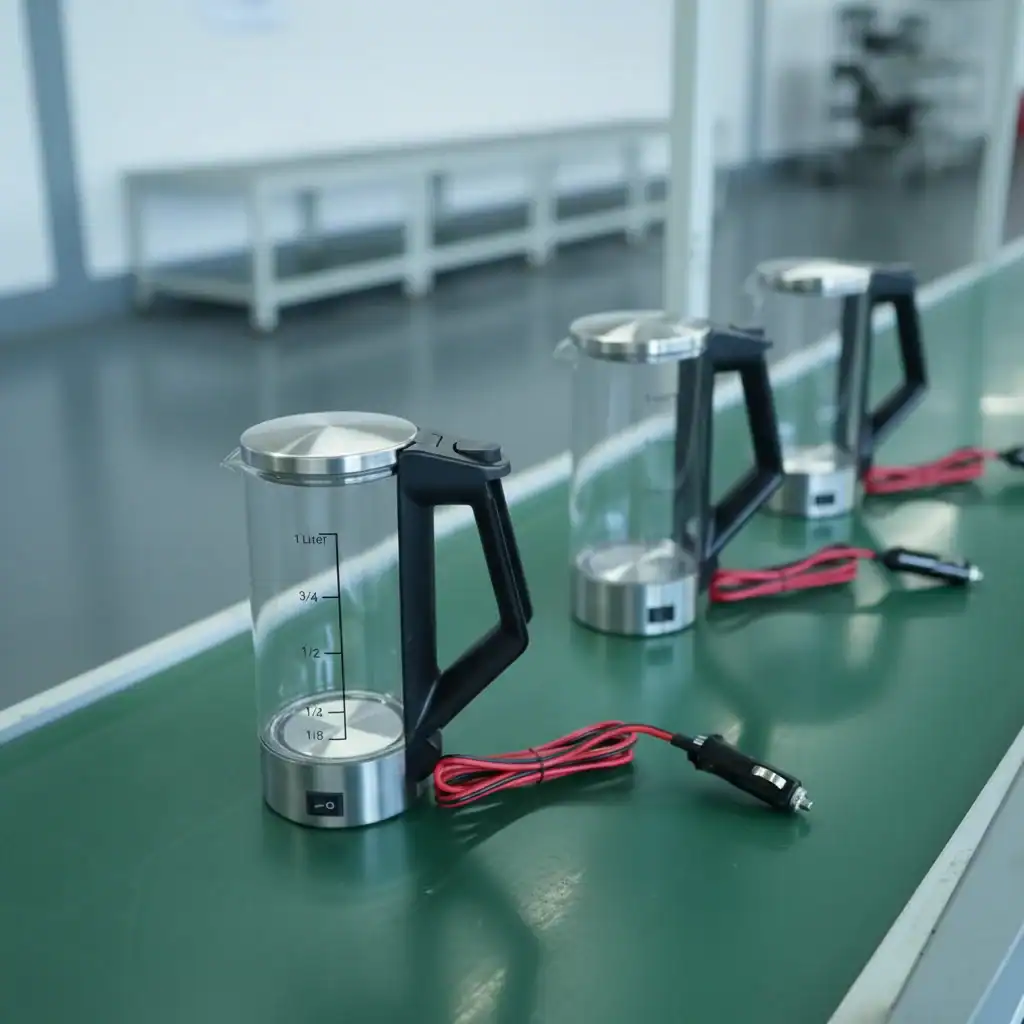
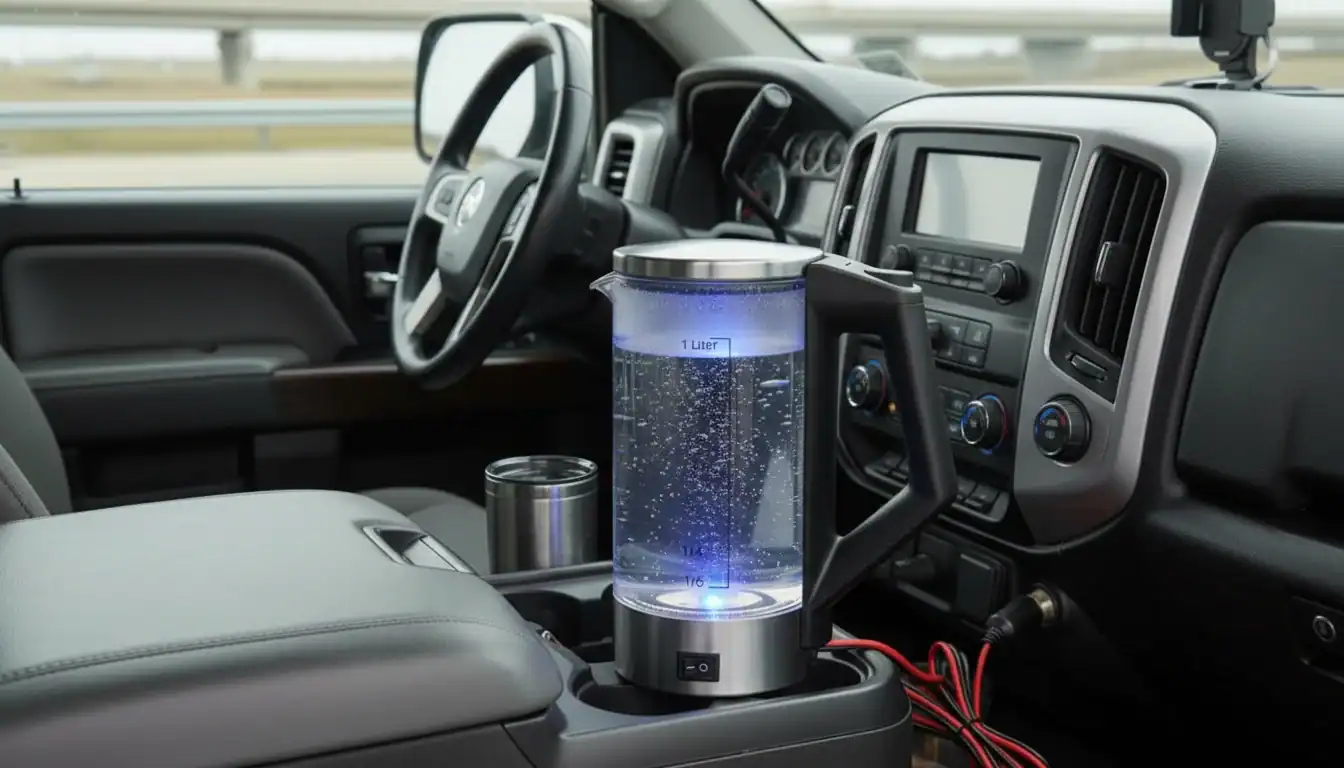
Manufacturers like KelyLands protect High Borosilicate Glass components in their 12V/24V car kettles using a segmented packaging approach. This method balances eco-friendly molded pulp compliance with precise structural support to eliminate transit damage.
- Targeted Cushioning: Segmented inserts isolate the dense stainless steel heating base from the fragile glass body, managing uneven weight distribution.
- Impact Resistance: Layered pulp mimics the shock absorption profile of EPS for critical drop-test impact zones.
- Transit Optimization: The SM400 glass model ships in specialized thicker master cartons (12 PCS/CTN, 43.5 x 42.5 x 56 CM) to maintain the 1-2% industry standard breakage threshold during international transport.
What Is the ISTA 3A Drop-Test Protocol for Glass Export Shipments?
ISTA 3A establishes a strict testing baseline for parcel networks, subjecting packaged glass shipments to rigorous dynamic impacts and environmental conditioning to guarantee transit survivability.
Fragile Product Classification Requirements
ISTA 3A explicitly groups glass into a high-risk fragility tier alongside ceramics, clay, and delicate electronics. Because glass shatters easily under sudden mechanical stress, the protocol demands testing multiple identical samples rather than relying on a single unit. This redundancy ensures the packaging design provides consistent, repeatable protection across entire production runs.
The standard applies directly to packaged shipments weighing under 150 pounds (70 kg) that travel through major parcel delivery networks like UPS, FedEx, or DHL. For B2B export shipments containing items like the KelyLands SM400 High Borosilicate Glass Kettles—where master cartons weigh approximately 13 kg—meeting these baseline parcel requirements secures final-mile distribution reliability.
Standard Drop Test Procedures and Orientations
The protocol mandates a precise impact sequence engineered to simulate realistic handling stresses. Test laboratories execute rotational drops, flat-face drops, edge drops, corner drops, and direct impacts against simulated hard hazards. Technicians scale the exact required drop heights dynamically based on the packaged product’s total weight and physical dimensions.
| Drop Type | Orientation Tolerance | Simulation Purpose |
|---|---|---|
| Flat-Face Drop | Maximum 2° Variance | Simulates direct floor impacts during warehouse sorting and belt transfers. |
| Edge & Corner Drops | Maximum 5° Variance | Replicates severe localized stress from manual handling and uneven drops. |
| Hazard Impact | Direct Contact | Tests structural penetration resistance against sharp or unyielding objects. |
Impact angle accuracy determines the validity of the entire test. Laboratory equipment must guarantee proper package orientation upon impact, limiting variance to ensure forces distribute exactly as intended during field failures.
Complete Simulation Sequence Beyond Impact
Physical drops represent only one phase of a broader transit simulation designed to replicate total environmental and mechanical strain. A complete ISTA 3A sequence for glass requires several distinct testing phases:
- Atmospheric preconditioning and conditioning to expose packaging to extreme temperature and humidity fluctuations.
- Random vibration testing to mimic the continuous strain of vehicle transport and road resonance.
- Compression testing to evaluate structural stability under heavy warehouse stacking loads.
- Mandatory leak testing for all glass shipments, covering both liquid-filled items and sealed empty containers.
These combined tests expose material vulnerabilities that standard single-drop checks often miss. Passing this comprehensive sequence guarantees that heavy glass products survive long-haul sea freight and subsequent parcel distribution without suffering thermal shock or mechanical failure.
Premium 12V/24V OEM Car Kettles for Wholesalers
Can Plastic-Free Packaging Help You Win Retail Contracts in the EU?
The upcoming 2026 EU Packaging and Packaging Waste Regulation (PPWR) transforms plastic-free, recyclable packaging from an optional ESG metric into a mandatory threshold for securing European retail procurement contracts.
Understanding the EU PPWR 2026 Mandates
The EU Packaging and Packaging Waste Regulation (PPWR) enforces strict procurement rules taking effect on August 12, 2026. Selling products across the EU requires treating sustainability as a baseline compliance metric rather than a marketing bonus.
- Retailers require suppliers to meet specific recyclability thresholds to keep their shelf space.
- By 2030, you must hit mandatory minimum recycled-content percentages for all plastic materials.
- Failing to demonstrate compliance results in direct exclusion from major retail networks.
Meeting Void-Space and Reusability Metrics
Retailers aggressively enforce space limitations to cut transport waste across their logistics networks. Optimizing your box dimensions cuts shipping costs and ensures your products clear these strict sizing audits without delays.
- Suppliers must limit packaging void space to a strict maximum of 50% for all transport containers.
- Brands need to transition toward reusable packaging systems to align with shifting buyer demands.
Securing Contracts Through Chemical Compliance
Chemical restrictions heavily influence how EU retail buyers select their supply partners. Clearing these stringent chemical safety checks prevents immediate contract termination from leading European retail groups.
- Procurement teams actively reject shipments containing PFAS, particularly in food-contact packaging applications.
- You must supply clear documentation proving your packaging materials exclude banned chemicals.
Aligning KelyLands OEM Packaging with EU Standards
KelyLands designs custom packaging systems that help B2B buyers meet European market regulations seamlessly. Our engineers optimize carton layouts to protect delicate components, like the SM400 high borosilicate glass kettle, while adhering to strict environmental guidelines.
- Our engineering team creates customized, eco-friendly retail color boxes for 12V/24V appliance lines that comply directly with EU recyclability metrics.
- We systematically eliminate excess void space in bulk shipments, helping distributors easily hit the 50% transport packaging limit.
- KelyLands provides fully compliant gift boxes and mailer cartons, ensuring your EV chargers, car fridges, and DC kettles pass retailer audits right out of the factory.
What Is the Cost Difference Between Eco-Packaging and Standard EPE Foam?
While basic corrugated inserts undercut standard EPE foam by 60%, advanced compostable materials and custom molded pulp introduce significant tooling fees and unit premiums that require strategic volume scaling to offset.
Unit-Level Pricing Comparisons
Transitioning from expanded polyethylene (EPE) to plastic-free packaging presents a mixed financial picture at the unit level. Procurement managers often find immediate savings with corrugated cardboard inserts, which cost approximately $0.18 per unit compared to $0.46 for standard EPE foam. Moving to custom-molded paper pulp trays flips the cost dynamic entirely. These protective trays run about $2.02 per unit, significantly outpacing standard polystyrene alternatives priced around $0.81. Your final per-unit expenditure depends strictly on the material density and structural complexity required to protect fragile, high-weight items during transit.
| Material Category | Standard Plastic Cost | Eco-Alternative Cost |
|---|---|---|
| Basic Void Fill / Inserts | EPE Foam: $0.46 / unit | Corrugated: $0.18 / unit |
| Rigid Protective Trays | Polystyrene (PS): $0.81 / unit | Paper Pulp: $2.02 / unit |
| Logistics & Food Containers | Standard Foam: $21.00 / case | Compostable Bagasse: $70.90 / case |
Cost Premiums for Compostable Materials
Scaling up to fully compostable materials introduces the steepest pricing premiums in the packaging sector. Bagasse, derived from sugarcane fiber, represents a major cost jump for high-volume logistics. Standard foam trays price out at $15.65 per case, while bagasse equivalents command $46.60—a nearly 198% increase. Container applications expose an even wider gap, with compostable options hitting $70.90 per case against a $21.00 foam baseline. Compostable cold cups follow a similar trajectory, costing $73.50 per thousand units versus $40.82 for foam. Procurement teams must weigh these 80% to 237% price hikes directly against impending regulatory compliance demands and market access requirements.
Upfront Tooling and Long-Term Savings
Custom protective packaging demands significant upfront capital before unit production begins. Developing exact-fit paper pulp molds for specific heavy-duty components requires initial tooling investments ranging from $10,000 to $15,000. Biodegradable packaging systems force higher launch costs, yet they systematically reduce end-of-life disposal fees and Extended Producer Responsibility (EPR) taxes across stringent markets like the EU. As market preference aggressively shifts toward sustainable materials, the temporary cost advantage of standard EPE foam degrades. Brands investing in eco-packaging infrastructure now secure long-term commercial viability and bypass future regulatory exclusion.

Conclusion
Transitioning to plastic-free molded pulp packaging for the KelyLands SM400 glass kettle ensures you meet strict EU ESG retail requirements without sacrificing transit safety. Passing the ISTA 3A drop-test protocol means your freight arrives intact, keeping sea freight breakage rates near zero. Aligning your logistics with eco-friendly standards directly improves your procurement margins and brand compliance.
Evaluate your current freight packaging to see if standard EPE foam is holding back your retail contract bids. Reach out to our team to request a sample of the SM400 glass kettle in its fully certified plastic-free retail box.
Frequently Asked Questions
How do you pack glass kettles without using styrofoam?
To pack glass kettles without Styrofoam (EPS), we utilize custom-engineered molded pulp inserts that are precisely contoured to the kettle’s shape. Molded pulp provides excellent stacking strength and significant carbon emission reductions. To ensure high-level shock absorption, the glass components are structurally isolated within the box using strategically designed cavity buffers, and we often wrap the kettle in biodegradable honeycomb paper sleeves to prevent surface friction and movement.
Does the plastic free electric kettle packaging pass ISTA drop tests?
Yes, plastic-free electric kettle packaging is explicitly engineered to pass rigorous ISTA drop tests, including ISTA 1A and 3A transit standards. By utilizing high-density molded pulp combined with sturdy, multi-wall corrugated cardboard outers, the packaging design features targeted crush zones. These engineered zones effectively absorb kinetic energy during a fall and dissipate impact forces away from the fragile glass body and electronic base.
What is the breakage rate of glass kettles in sea freight?
With industry-standard export packaging, the breakage rate for glass kettles in sea freight is strictly controlled to below 1%. This exceptionally low damage rate is achieved by securing the individual retail boxes inside heavy-duty, double-wall corrugated master cartons, optimizing pallet stacking parameters to distribute weight evenly, and using reinforced bracing to mitigate sustained container vibration and shifting during prolonged ocean transit.
Can the factory provide FSC certified paper boxes?
Yes, the factory can fully provide FSC (Forest Stewardship Council) certified paper boxes. Utilizing FSC-certified materials is a standard practice in our sustainable packaging operations, guaranteeing that all corrugated cartons, internal paper structures, and retail boxes are sourced from responsibly managed forests and meet global corporate environmental compliance requirements.

 English
  Español
  Français
  Deutsch
  Português do Brasil
  Русский
  한국어
한국어  日本語
日本語  العربية