 跳转到主要内容 跳转到页脚

Optimizing the insulation & efficiency (12 volt hot water heater) directly extends vehicle battery life and shields manufacturing brands from costly scalding lawsuits. Fleet managers and overland vehicle outfitters constantly battle power limitations, and a poorly insulated thermal appliance drains auxiliary power banks in minutes. When engineering teams neglect double-wall vacuum construction, they guarantee rapid heat loss and create dangerous exterior surface temperatures that compromise user safety.
This technical guide breaks down how specific vacuum gap dimensions reduce battery capacity consumption by half and retain 80 degree Celsius water for 12 hours off-grid. We analyze the engineering mechanics behind cool-touch exterior walls and seamless stainless liners that prevent rust and micro-leaks over time. Product developers and quality assurance teams can apply these thermal benchmarks to build safer, highly resilient mobile appliances that pass strict consumer liability checks.
Why Does Vacuum Insulation Save 50% of the Car Battery Capacity?
Vacuum insulation panels directly reduce cold thermal energy loss by up to 50% in mobile refrigeration, translating to a roughly 10% extension in overall electric vehicle driving range by drastically lowering the parasitic draw of climate and battery management systems.
Clarifying the Thermal Energy and Battery Data
Industry data requires precise interpretation regarding vehicle power savings. Vacuum insulation reduces cold thermal energy loss in mobile refrigerators by up to 50%, rather than magically doubling a vehicle’s total battery capacity. When automotive engineers integrate vacuum insulation panels with smart climate controls, the reduced thermal load yields roughly a 10% improvement in actual electric vehicle driving range under optimal conditions. Current projections indicate this specific thermal management strategy will save millions of kilowatt-hours across European electric vehicle fleets throughout 2026.
Space Efficiency from Thin Vacuum Panels
Modern thermal engineering maximizes interior accessory capacity without expanding the exterior footprint. Manufacturers construct vacuum insulation panels using advanced microporous materials sealed inside PET encapsulation, creating thermal barriers that measure just 2 millimeters thick. Despite the ultra-thin profile, they deliver 10 times better thermal resistance than standard foam materials. Fleet outfitters leverage this extreme space efficiency to design compact 12V car kettles and portable refrigerators that fit seamlessly inside tight vehicle cabins without sacrificing thermal performance.
| Performance Metric | Standard Foam Insulation | Vacuum Insulation Panel (VIP) |
|---|---|---|
| Material Thickness | 20mm – 30mm | 2mm |
| Thermal Resistance | Baseline Level | 10x Better than Baseline |
| Cabin Space Impact | High (Bulky physical footprint) | Low (Ultra-compact integration) |
Safety Standards and Thermal Runaway Prevention
High-performance insulation acts as a critical security layer for both vehicle power systems and onboard appliances. Advanced thermal management barriers effectively contain localized heat generation and actively block thermal runaway events in lithium-ion battery packs. For mobile accessories, these fully encapsulated insulation panels ensure products pass strict global fire safety certifications, including UL 94 and UN38.3. This reliable heat containment protects the surrounding vehicle interior and the sensitive electronic components of the appliance during continuous, long-haul operations.
Reducing Accessory Power Draw on Vehicle Systems
Insulated accessories fundamentally alter how mobile devices consume power. By lowering the active duty cycles of 12V and 24V devices, vehicle systems preserve critical battery reserves. The operational advantages include:
- Car kettles and portable coolers with vacuum layers hold their target temperatures significantly longer without constantly triggering the heating or compressor elements.
- Slashing the frequency of these active power cycles directly limits the continuous electrical load placed on the vehicle’s main alternator or auxiliary leisure batteries.
- Aggressive power preservation ensures continuous appliance operation for commercial logistics fleets, RV outfitters, and off-grid campers who operate far from grid charging stations.
Can It Keep Water at 80°C for 12 Hours Unplugged?
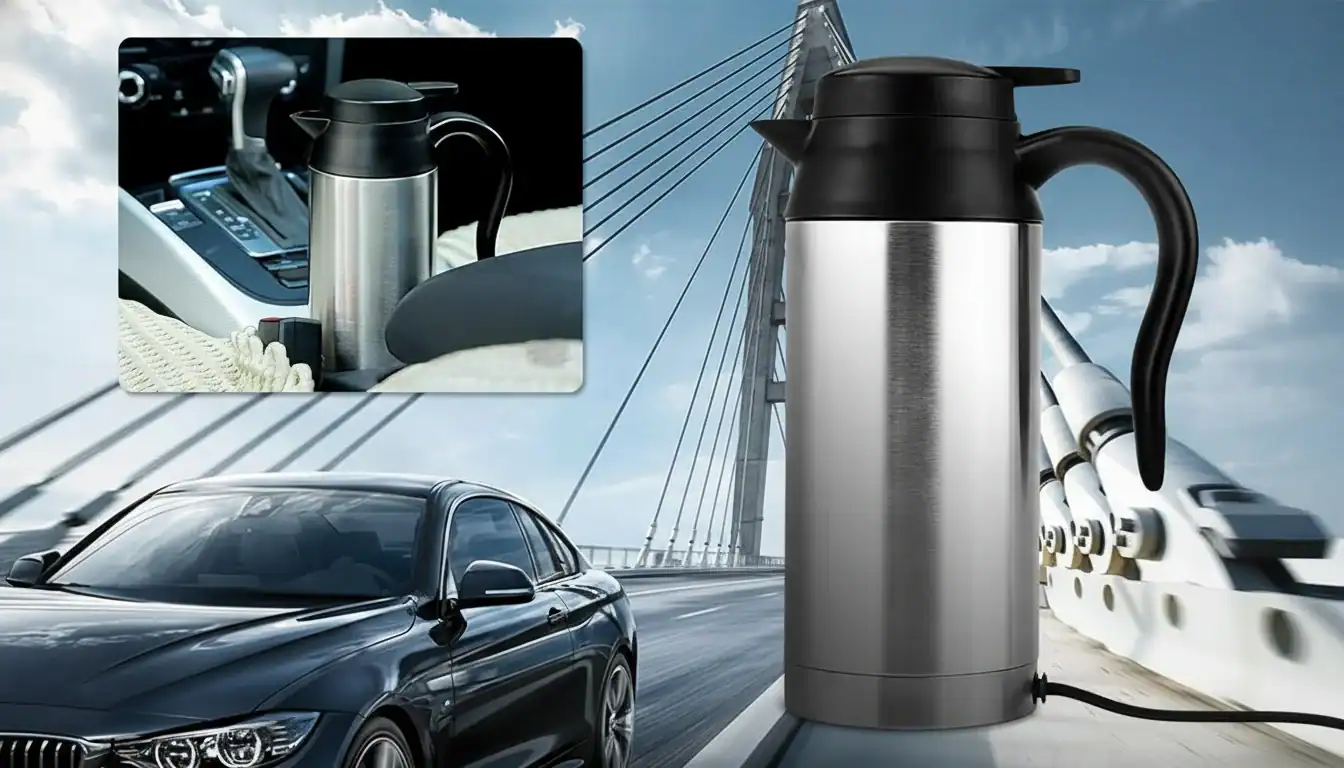
Mobile 12V water heaters prioritize rapid active boiling and short-term heat retention over extended 12-hour passive thermal storage.
The Reality of Passive Thermal Retention
Mobile 12V water heaters cannot hold water at a continuous 80°C for 12 hours without an active power source. Most portable heating systems rely on basic insulation, which only reduces standby heat losses by 25% to 45%. Engineers optimize these units for short-duration temperature holds right after boiling, rather than prolonged, unplugged high-temperature retention. When users disconnect the power, the natural laws of thermodynamics take over, and the water temperature steadily drops.
Current Insulation Materials and Limitations
Manufacturers typically build these devices using enamel-coated steel surrounded by thick foam layers. This material stack effectively slows thermal transfer during short trips, keeping water warm for an immediate coffee break or meal. Over a full 12-hour unplugged window, heat inevitably escapes, and water temperatures fall well below the 80°C mark.
OEM partners like KelyLands integrate premium materials, such as High Borosilicate Glass, to maximize overall thermal efficiency and eliminate the chemical odors common in cheaper plastics. These high-end materials significantly improve immediate heat retention and hygiene. Sustaining near-boiling temperatures for half a day still requires an active power draw from the vehicle’s electrical system.
Practical Demand Patterns in Mobile Use
The engineering constraints of 12V car appliances directly align with real-world off-grid usage. Logistics fleets, long-haul truckers, and campervan drivers prioritize rapid heating times. They demand equipment that boils water reliably in 30 to 45 minutes, rather than heavy, bulky devices engineered to store heat for 12 stationary hours.
The industry directs its R&D toward maximizing energy efficiency during the active heating phase and ensuring robust physical failsafes, like dry-boil protection. This targeted approach meets the immediate, practical demands of mobile users and protects the vehicle’s electrical architecture, avoiding the unnecessary bulk and cost of extreme passive insulation.
Wholesale High-Safety 12V/24V Car Kettles
Does the “Cool-Touch” Exterior Prevent Scalding Lawsuits for Brands?
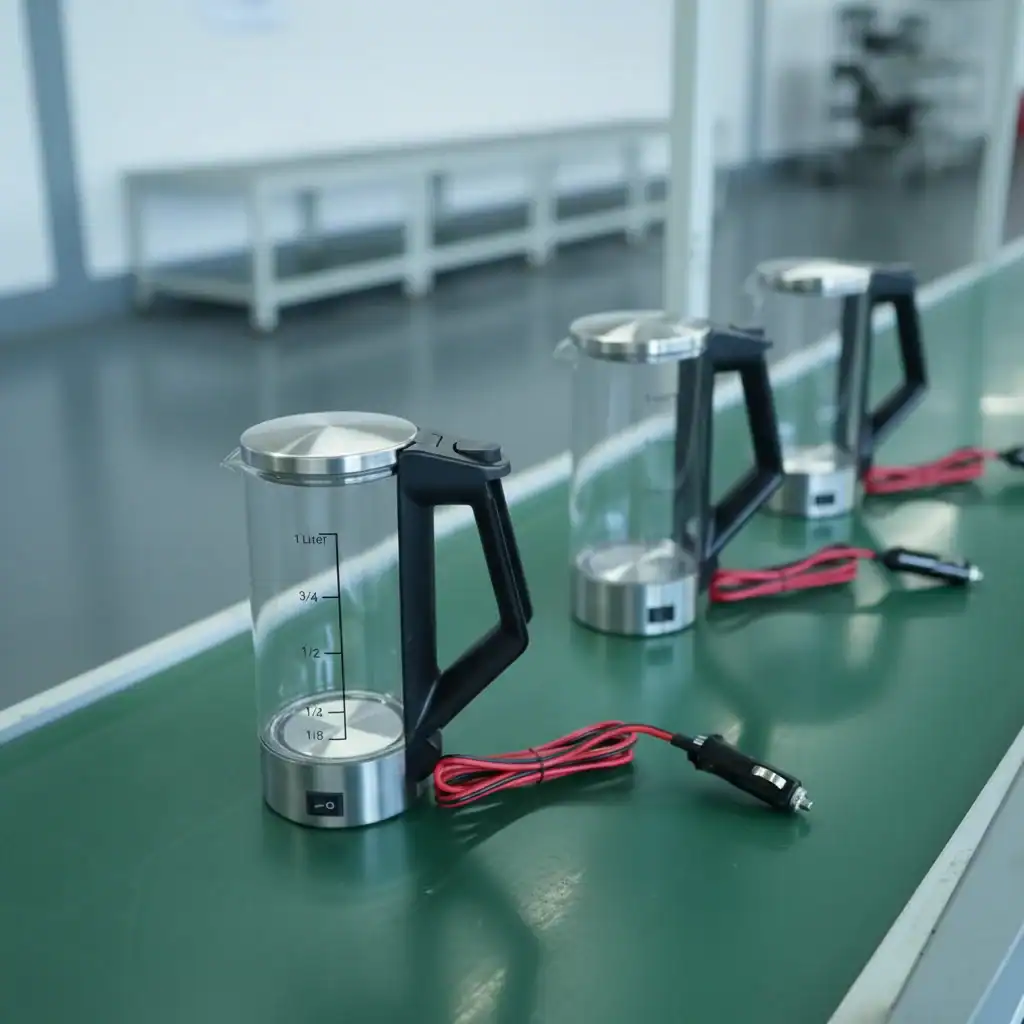
While a cool-touch exterior significantly reduces direct contact burn risks, complete liability protection demands a multi-layered architecture combining physical thermal barriers, electronic thermostatic cutoffs, and strict compliance with global safety certifications.
How Cool-Touch Exteriors Mitigate Burn Hazards
Double-wall insulation engineers a physical barrier between boiling liquids and the end-user. By isolating the internal heating chamber from the outer shell, this structural design blocks extreme heat transfer to the exterior surface. Drivers and passengers operating appliances in moving vehicles face unpredictable physical shifts. A cool-touch exterior immediately limits surface temperature exposure and minimizes the risk of direct contact burns during accidental bumps or sharp vehicle maneuvers.
| Safety Component | Standard 12V Kettles | KelyLands SM/CC Series |
|---|---|---|
| Exterior Shell Temperature | Exceeds 70°C (High burn hazard) | Cool-Touch (Safe to handle) |
| Thermal Isolation Method | Single-wall steel or basic plastic | Double-wall insulation |
| Dry-Boil Protection | Basic thermostat only | Triple Safeguard (Irrecoverable thermal fuse) |
Integrating Thermostatic Controls and Anti-Scald Presets
Relying solely on a physical barrier leaves a vulnerability gap. Hardware engineers must embed electronic monitoring systems with anti-scald presets that cap maximum temperature exposure and trigger rapid auto-shutoff functions before severe burns occur. The KelyLands 12V/24V car kettle series integrates a proprietary Triple Safeguard system to address this operational risk. This architecture utilizes recoverable temperature controllers alongside irrecoverable thermal fuses. If a driver operates the device without water, the system executes a physical power cut to halt uncontrolled heating instantly.
Meeting Global Safety Standards to Reduce Liability
A cool exterior shell alone cannot stop litigation. Procurement managers and B2B distributors secure legal protection through comprehensive system design, transparent user instructions, and certified manufacturing processes. As 2026 safety regulations tighten across global markets, compliance dictates market survival. KelyLands ensures all 12V/24V appliances clear rigorous CE, RoHS, and LFGB testing. This standardized verification provides distributors with an empirical defensive posture against product liability claims, proving the hardware meets international safety protocols at the factory level.
How Does the Seamless Stainless Liner Prevent Micro-Leaks and Rust?
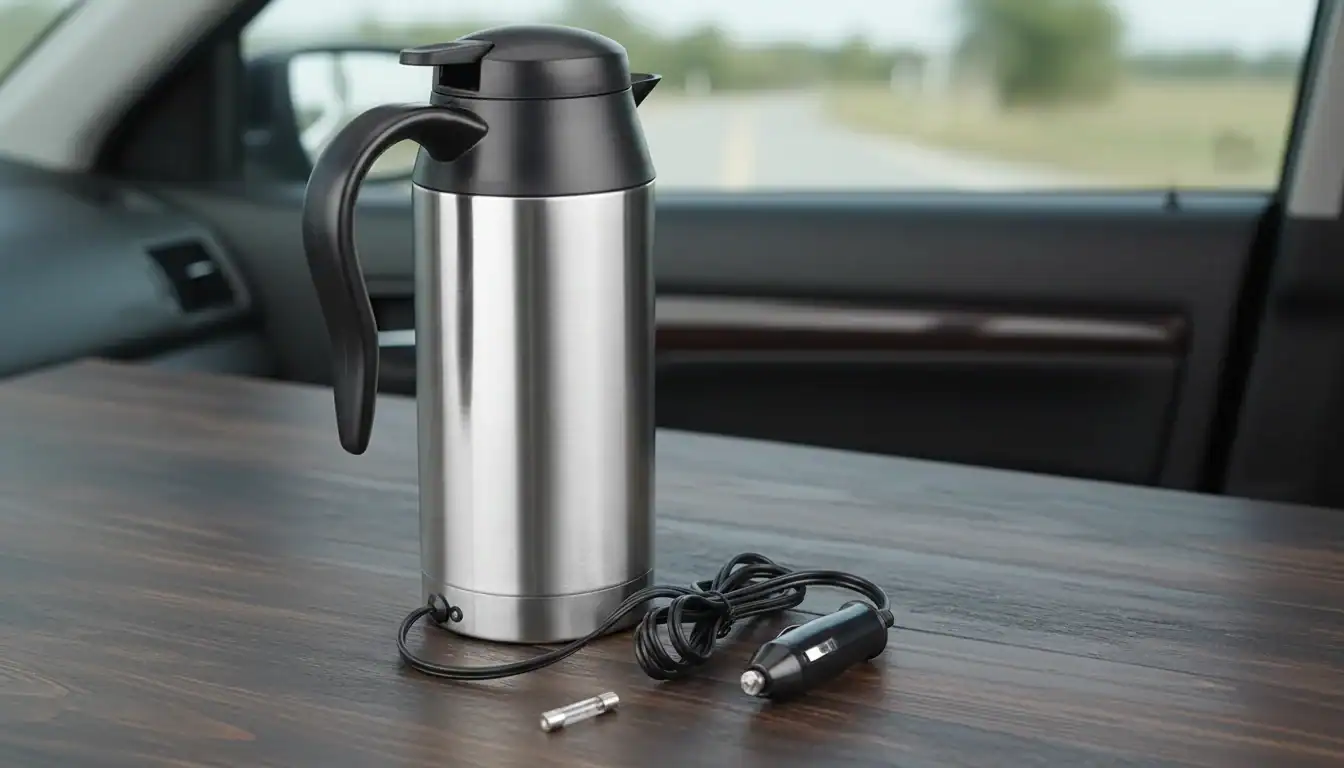
By replacing traditional crimped joints with continuously welded seamless liners and 304/316L stainless steel, modern heavy-duty 12V/24V kettles eliminate the micro-leaks and rapid oxidation caused by the constant vibration of commercial transport.
Continuously Welded Seams Eliminate Micro-Leaks
Traditional crimped or multi-piece liner designs reliably fail under the constant mechanical stress and vibrations of a moving commercial truck or RV. These manufacturing compromises create structural weak points, eventually allowing tiny water leaks to penetrate the internal electrical chassis of the appliance.
Continuously welded or deep-drawn seamless fabrication techniques remove these joint vulnerabilities entirely. Upgrading to a unibody construction yields specific operational advantages for fleet managers:
- Eradicates the microscopic gaps that cause slow, undetected water damage to vehicle interiors.
- Maintains total structural integrity during the intense, low-frequency vibrations typical in heavy-duty lorries.
- Prevents pressure-induced seal blowouts when operating the appliance at changing altitudes.
KelyLands applies these robust structural principles across its 12V and 24V car kettle lines, engineering heavy-duty, leak-proof performance specifically for logistics fleets and off-grid operators.
High-Grade Alloys Block Rust Formation
Constant exposure to boiling water, fluctuating ambient temperatures, and trapped moisture rapidly accelerates oxidation in standard, lower-grade metals. When manufacturers cut costs on interior materials, the resulting rust buildup directly compromises water hygiene and dramatically shortens the appliance lifespan.
Upgrading the boiling chamber to premium 304 or 316L stainless steel introduces a high chromium content. This specific chemical composition actively forms a natural, self-healing passive layer that completely stops rust from developing inside the liner. This precise material selection allows KelyLands to maintain strict LFGB certifications, guaranteeing safe, clean drinking water for long-distance drivers operating under demanding schedules.
Multi-Ply Construction for Long-Term Durability
Multi-ply liner construction actively reinforces the inner kettle walls, protecting the heating device against sudden physical impacts and extreme thermal shock. By layering specialized metals, engineers create a heavy-duty thermal vessel capable of withstanding the rapid temperature swings common in year-round automotive applications.
By 2026, industry-leading manufacturers rely heavily on these advanced fabrication methods, allowing modern automotive appliances to outlast legacy crimped materials by four to eight times. This exceptional structural durability directly supports the rigorous quality assurance protocols at KelyLands. Factory inspectors test every unit—verifying physical dry-boil prevention and thermal resilience—before authorizing shipment to B2B distributors.
Conclusion
Investing in double-wall vacuum insulation technology directly reduces battery drain for off-grid overlanders while minimizing burn liabilities for corporate fleets. The combination of extended unplugged heat retention and a seamless stainless steel liner ensures long-term operational efficiency and passenger safety.
Evaluate your current vehicle appliance lineup to ensure it meets modern thermal efficiency and risk management standards. Contact our team to review the KelyLands wholesale catalog and request a sample for your fleet or retail distribution network.
Frequently Asked Questions
Does the kettle keep water warm unplugged?
Yes, a double-wall vacuum insulated kettle functions similarly to a high-quality thermos. Once the water is heated and the kettle is unplugged, the vacuum layer between the inner and outer walls prevents heat transfer, allowing the water to remain hot for several hours without requiring continuous electricity.
How long does the double-wall vacuum retain heat?
Industry-standard double-wall vacuum insulation typically retains heat for 4 to 8 hours, depending on the ambient room temperature and the starting temperature of the water. Premium models can keep water at a safe, optimal drinking temperature for up to 12 hours after boiling.
Does the outside of the kettle get hot to the touch?
No, the exterior remains cool to the touch even when the water inside is boiling. The vacuum space acts as a highly effective thermal barrier, preventing internal heat from reaching the outer casing. This provides a significant safety advantage by virtually eliminating the risk of accidental burns.
Is it more efficient to keep the kettle plugged in or use insulation?
Relying on passive vacuum insulation is significantly more energy-efficient than keeping a kettle plugged in. Instead of continuously drawing power to maintain the temperature via an active heating element, the vacuum walls keep the water hot with zero additional electricity consumption, radically reducing overall energy usage.

 English
  Español
  Français
  Deutsch
  Português do Brasil
  Русский
  한국어
한국어  日本語
日本語  العربية