 跳转到主要内容 跳转到页脚

Misinterpreting compressor tech(12v compressor fridge) specifications is a primary driver of premature product failure and expensive warranty recalls in the mobile refrigeration market. Sourcing teams often struggle to differentiate between premium components and low-cost alternatives, leading to units that fail under real-world conditions like steep inclines or inconsistent solar power. This discrepancy between a component’s spec sheet and its field performance creates significant financial and reputational risk for equipment manufacturers.
This guide breaks down the core engineering trade-offs for sourcing DC compressor motors. We will analyze the performance differences between variable-speed inverter models and traditional on/off units, particularly for solar-dependent systems. We’ll also examine the oil return logic required for safe operation on off-road slopes, the function of soft-start technology in protecting sensitive electronics, and the technical reasons justifying the price premium for brands like Secop.
Inverter vs. On/Off: Why Do Efficiency Gaps Matter for Solar?
In off-grid solar applications, inverter efficiency is a direct multiplier on battery life and system ROI, where even a 2% gain translates into significant long-term operational savings.
The Financial Impact of a 2% Efficiency Gain
Small variations in inverter efficiency directly affect the financial viability of a solar-powered system. A seemingly minor 2% difference in performance doesn’t just look good on a spec sheet; it accumulates into substantial energy savings over the equipment’s lifespan. For any mobile or off-grid application, higher efficiency maximizes the energy harvested from panels, which directly shortens the payback period of the initial investment. Modern DC inverter compressors operate with 90–98% efficiency, creating a clear value proposition over older on/off systems that often peak at 80–90%.
| Performance Metric | Legacy On/Off Systems | Modern DC Inverter Systems |
|---|---|---|
| Operational Efficiency | 80–90% | 90–98% |
| Power Consumption Logic | Cycles on and off at full power | Modulates speed to match demand |
| Battery Autonomy | Standard (Higher amp-hour draw) | Up to 2-3x longer run time |
Peak vs. Real-World Performance: Understanding Efficiency Curves
An inverter’s peak efficiency rating doesn’t represent its performance in the field. This number is typically achieved under ideal lab conditions. Real-world efficiency is dynamic and changes based on solar intensity and the connected energy demand. Analyzing the full efficiency curve is critical because it reveals how the unit performs under partial loads. A system with a superior curve wastes less power during low-light conditions, like on cloudy days or early in the morning, generating more usable energy throughout the day.
How System Configuration Influences Overall Efficiency
The architecture of the solar setup plays a major role in total system efficiency. Grid-connected and hybrid inverters often achieve better performance because they can intelligently manage power flow between solar panels, the grid, batteries, and direct consumption. Standalone off-grid systems lack the grid to act as a buffer, making them entirely dependent on well-matched components. In these configurations, every percentage point of efficiency lost in the inverter translates directly to reduced battery life or an inability to power devices.
The Secop Standard: Why Does Danfoss Tech Command a 40% Premium?
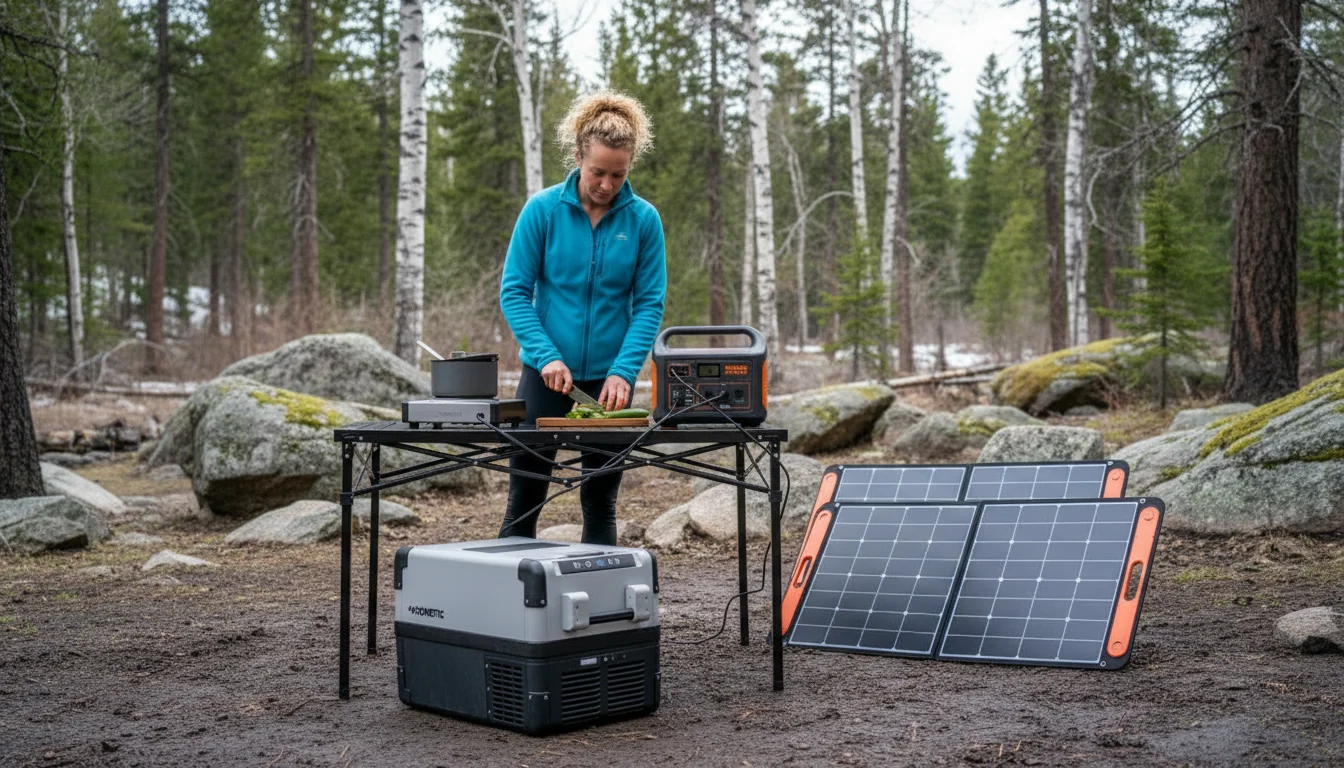
The premium for Secop compressors is a direct result of superior energy efficiency and operational reliability, which translates to extended battery life in demanding off-grid applications.
Advanced Variable-Speed Compressor Technology
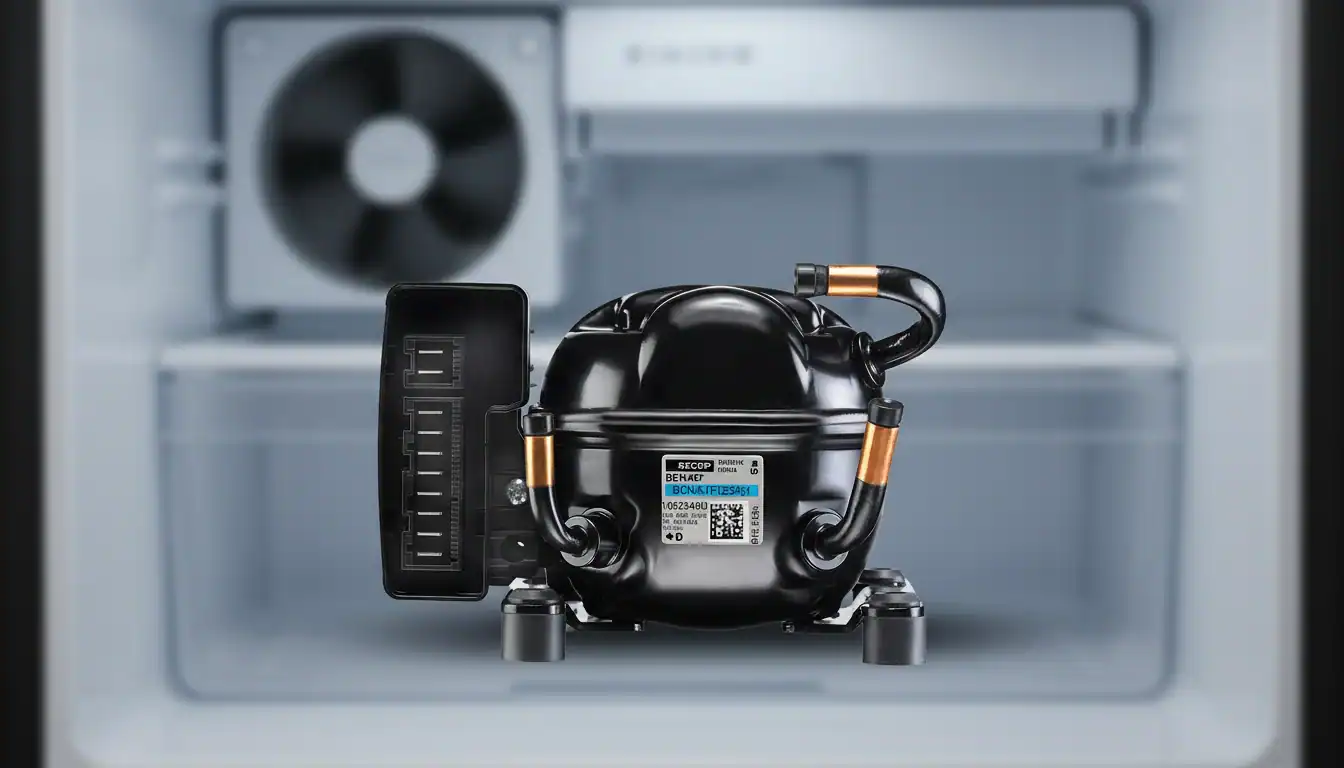
The mobile refrigeration market has standardized on efficient variable-speed hermetic compressors. This technology is a major upgrade over older systems, using low-energy brushless DC motors paired with smart electronic controllers. The controller adjusts the compressor’s speed based on real-time cooling demand, preventing the wasteful energy spikes common in simple on/off cycles. This approach not only improves efficiency but also extends the motor’s operational lifespan.
| Compressor Brand | Core Technology Focus | Market Position / Price Point |
|---|---|---|
| Secop (Danfoss Tech) | High energy efficiency, brushless DC motors, and robust design for mobile use. | Premium: Engineered for reliability and performance in demanding off-grid scenarios. |
| LG | Inverter technology, quiet operation, and strong brand recognition. | Premium: A leader in residential and light commercial applications. |
| Chinese Brands (e.g., Anuodan) | Cost-effectiveness, adherence to international standards, and volume production. | Standard/Value: Provides reliable performance for mass-market applications. |
Significant Reduction in Power Consumption
Empirical data shows these modern compressors consume 30-40% less power than conventional on/off or absorption-style units. This efficiency gain is not marginal; it is the core justification for their premium price. For any battery-powered system, reducing the amp-hour draw is a primary engineering goal. This advantage is especially critical in energy-sensitive applications like RVs, marine vessels, and remote off-grid setups where power is a finite resource.
Extended Battery Autonomy for Off-Grid Use
Lower power consumption directly translates to longer battery autonomy. An efficient compressor allows a refrigeration unit to run for extended periods without draining the battery bank, pushing back the need to start a generator or connect to shore power. For operators who depend on their equipment in remote locations, this added reliability and independence is worth the higher initial investment. The cost difference is offset by the practical value of a system that works longer and more predictably when disconnected from the grid.
Source Your Custom, Globally Certified Car Coolers

Oil Return Logic: Can It Operate Safely on 30° Off-Road Slopes?
A compressor’s ability to maintain lubrication on a steep incline depends entirely on specific engineering adjustments that counteract gravity’s pull on the system’s oil.
The Role of Inverted Traps in Oil Management
An oil return system in a refrigeration compressor uses a pipe design called an inverted trap to stop oil from flowing backward into the compressor when it’s off. This design collects oil at low points in the discharge line, holding it until the compressor restarts. Without this mechanism, oil management fails.
- When the compressor activates, the high velocity of the refrigerant gas forces the trapped oil forward.
- This action circulates the oil correctly through the system and back to the condenser.
- Ineffective traps lead to an empty oil sump, causing lubrication failure and irreversible mechanical damage.
Gravity’s Impact on Sloped Operation
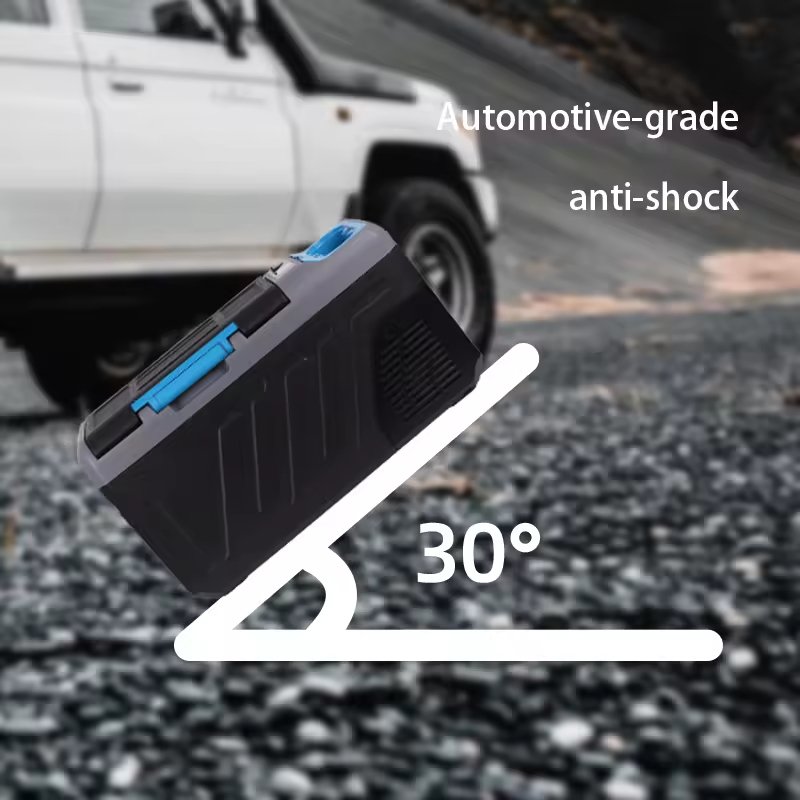
Operating on a 30° incline introduces gravity as a major obstacle. The angle pulls oil backward, working directly against the normal return flow and stressing the system’s ability to maintain proper lubrication. This is the primary point of failure for standard compressors used in off-road applications.
| Design Consideration | Standard System (Level Operation) | Off-Road System (30° Slope) |
|---|---|---|
| Oil Return Mechanism | Relies on standard refrigerant velocity. | Engineered for higher discharge velocity to overcome gravity. |
| Piping Configuration | Standard inverted traps at key points. | Increased trap frequency along any vertical rises. |
| Safety Controls | Basic pressure sensors. | Integrated oil failure controls to monitor sump levels. |
Essential Design Adjustments for Off-Road Use
A standard refrigeration system requires specific modifications to function reliably on steep terrain. These adjustments directly counteract the effects of gravity, ensuring a consistent oil supply and protecting the compressor from seizure.
- Install inverted traps more frequently along vertical piping to manage oil flow effectively.
- Engineer the system for higher discharge line velocities to generate enough force to push oil uphill.
- Integrate oil failure controls that monitor the sump’s oil level and trigger an automatic shutdown if it drops to a dangerous low.
Why Standard Compressors Need Custom Solutions
Most 12V compressors assume a level installation and are not built for sustained use at a 30° angle. Achieving reliable off-road performance demands a custom-designed piping layout and specialized components that are not found in off-the-shelf units.
- Stock systems lack the specific piping configuration needed to manage oil flow on steep inclines.
- Safe operation often requires auxiliary oil return mechanisms to supplement the standard traps.
- By 2026, KelyLands Car Accessory Co., Ltd. can engineer custom solutions to meet the unique demands of challenging off-road environments.
Start-up Current: How Does Soft Start Tech Protect the Circuit?
Soft start technology protects electrical systems by ramping up motor voltage gradually, which cuts damaging inrush currents by up to 75% and eliminates the mechanical shock of conventional startups.
Reducing Harmful Inrush Current
Soft start technology intelligently manages the voltage supplied to a motor during startup. Instead of hitting the circuit with full power, it gradually ramps up the voltage. This simple but effective process limits the initial current surge—a spike that can be 3-5 times the normal running amperage. By controlling this inrush, the system avoids overwhelming the electrical infrastructure.
- Prevents tripped circuit breakers and blown fuses from sudden power draws.
- Allows motors to operate smoothly on circuits with lower power ratings.
- Protects sensitive electronic components, like PCBs, from damaging voltage spikes.
Minimizing Mechanical and Electrical Stress
The abrupt torque from a conventional hard start causes significant wear on a motor’s mechanical parts. A soft starter ensures a smooth, controlled acceleration that reduces this physical shock and eases the strain on the entire electrical system. This controlled ramp-up is critical for extending the operational life of the equipment.
- Lessens jolts on gears, belts, and compressor components, extending equipment life.
- Reduces electrical stress on wiring, connectors, and power supply units.
- Lowers the risk of motor overheating during the critical startup phase.
Enhancing Compatibility with Limited Power Sources
Many portable power sources, like vehicle inverters or small generators, cannot handle the high inrush current of a standard motor. Soft start technology makes equipment compatible with these limited sources by keeping the initial power demand low and stable. This capability is essential for off-grid and mobile applications where power is not guaranteed.
- Enables compressors and motors to run reliably on generator power without causing stalls.
- Improves stability when connected to renewable energy systems or off-grid batteries.
- Offers multi-layer protection, including overcurrent detection and voltage regulation, for safer operation.
Conclusion
Choosing the right DC compressor technology defines the final product’s reliability and market position. Core engineering details like inverter efficiency, off-road oil return logic, and soft-start protection directly impact performance in demanding environments. Sourcing units with these proven systems ensures lower return rates and protects brand reputation.
For a complete breakdown of our compressor options, including Secop and LG configurations, contact our team. We can provide a full technical catalog or arrange a sample unit for your evaluation.
Frequently Asked Questions
Does the unit use a variable speed DC inverter compressor?
Yes, the unit is equipped with a high-efficiency variable speed DC inverter compressor. This technology allows the compressor to adjust its speed based on cooling demand, significantly reducing energy consumption, minimizing noise, and providing more stable temperature control compared to traditional single-speed compressors.
What is the maximum tilt angle for continuous operation (30° vs 45°)?
The unit is designed for continuous operation at a maximum tilt angle of up to 30°. Operating beyond this angle for extended periods can disrupt the compressor’s lubrication system, potentially leading to premature wear and failure.
Is the compressor sourced from Secop, LG, or a Chinese generic brand?
This unit utilizes a premium compressor sourced from a globally recognized manufacturer, typically Secop, known for its exceptional reliability, efficiency, and low-noise performance in demanding mobile and off-grid applications. This ensures long-term durability and optimal energy management.
What is the start-up surge current (LRA) at 12V?
Thanks to the integrated soft-start technology in the variable speed DC inverter, the start-up surge current is exceptionally low. At 12V, the peak inrush current is typically managed to be under 10-12 amps, a momentary surge that lasts only milliseconds. This eliminates the heavy electrical load common with older compressors, making the unit ideal for battery-powered systems.

 English
  Español
  Français
  Deutsch
  Português do Brasil
  Русский
  한국어
한국어  日本語
日本語  العربية