 跳转到主要内容 跳转到页脚

Failing to mandate strict battery protection (truck kettle 24V) standards directly causes dead starting batteries, leading to expensive roadside service calls and missed freight delivery windows. Fleet managers and owner-operators face constant operational risks when drivers plug in basic cabin appliances that silently drain the electrical system during mandatory rest periods. A single forgotten switch can drop the system below the critical cranking threshold, turning a simple comfort item into a logistical nightmare.
This guide breaks down the specific circuitry and smart sensors that keep these heating elements safe for heavy-duty electrical systems. We analyze the exact voltage thresholds that trigger low-voltage cutoffs, calculate the continuous amp draw of sustained heating functions, and explain how engine-on detection interacts with the alternator. You receive a precise technical breakdown of boil-dry sensors that survive aggressive road vibrations, giving your maintenance team a reliable standard for approving in-cab electrical accessories.
Low-Voltage Cutoff: How Does It Prevent Stranding a $150k Semi-Truck?
Active low-voltage disconnect modules safeguard commercial fleet batteries by shedding high-draw accessory loads long before voltage drops below critical engine-cranking thresholds.
Automatic Voltage Monitoring and Load-Shedding
System engineers design modern 12V/24V commercial appliances to track incoming battery voltage in real time. When a driver operates a heavy-draw accessory like a 24V/300W truck kettle during a rest break, the internal circuitry continuously measures the available power. If the battery voltage falls below safe operating limits, the cutoff mechanism immediately triggers a load-shedding sequence.
This automatic disconnect completely stops power flow to the appliance. Halting a high-wattage draw prevents the accessory from silently depleting the battery cells while the engine remains off, effectively neutralizing the risk of over-discharge.
| System Function | Standard Retail Accessories | Commercial LVD Architecture |
|---|---|---|
| Voltage Tracking | Blind Operation (Constant Draw) | Active Real-Time Monitoring |
| Load Shedding Trigger | Manual Unplug Required | Automatic Cutoff at Safe Limits |
| Switching Component | Mechanical Relay | Solid-State Module |
Prioritizing Essential Truck Functions
Commercial fleet operators depend on the primary battery to deliver massive cold-cranking amps for heavy-duty engine starts. Cutting auxiliary power to non-critical in-cab appliances forces the vehicle’s electrical system to reserve its remaining capacity specifically for the starter motor.
This targeted power management guarantees drivers retain full use of critical dispatch communications and safety lighting. Fleet managers avoid the costly downtime associated with jump-starting a stranded semi-truck, keeping high-value logistics schedules strictly intact.
Solid-State Design and Programmable Thresholds
Modern low-voltage disconnect modules utilize solid-state engineering, bypassing the mechanical failures common in older relay systems. These durable components easily handle the constant road vibrations and sudden alternator voltage spikes that define heavy-duty trucking operations.
- Solid-state architecture rated for over 1,000,000 duty cycles without degradation.
- Custom-programmed thresholds aligned with exact lead-acid and AGM discharge curves.
- Total immunity to high-frequency road vibrations that typically destroy mechanical switches.
Manufacturers program precise voltage thresholds into these devices to match the distinct chemical properties of commercial batteries. This calibration ensures the cutoff activates at the optimal moment, maximizing appliance usage time while fiercely protecting the battery’s overall lifespan.
Boil-Dry Protection: Why Is the Sensor Critical for Bumpy Roads?
Physical fluid shifts on uneven terrain expose heating cores to open air, requiring instantaneous thermal detection to prevent catastrophic element failure and cabin fire hazards.
How Sloshing Water Exposes Heating Elements
Uneven terrain causes liquid inside a commercial vehicle kettle to shift rapidly, creating dangerous dry spots on the heating core. Constant vibration and sharp turns force water away from the base, leaving sections of the food-grade stainless steel heating plate exposed directly to open air rather than submerged in water.
Basic thermal sensors struggle to register these rapid fluid changes. When a standard sensor fails to detect the exposed element, the hardware superheats within seconds. This rapid temperature spike melts surrounding plastic housing and permanently damages the internal circuitry, turning a simple appliance into an immediate electrical hazard.
Triple Safeguard Systems for Unpredictable Terrain
Heavy-duty 12V and 24V kettles require layered safety hardware to manage steep inclines and continuous road shocks. KelyLands engineers all SM and CC Series appliances with a strict Triple Safeguard setup designed to interrupt thermal runaways:
- Automatic Boiling Shut-Off: Temperature-based detection cuts power the moment water reaches boiling point.
- Recoverable Temperature Controller: Acts as the primary defense against rapid heat spikes caused by exposed elements.
- Irrecoverable Thermal Fuse: A physical hardware failsafe that permanently severs the circuit if a driver operates the unit entirely dry.
This hardware framework cuts power instantly if the water level drops below the sensor threshold during a steep climb or sudden braking. By utilizing physical failsafes, the system stops the heating cycle before internal temperatures degrade the heat-resistant Bakelite components or compromise the truck’s main fuses.
Factory Testing for Thermal Shock and Vibration
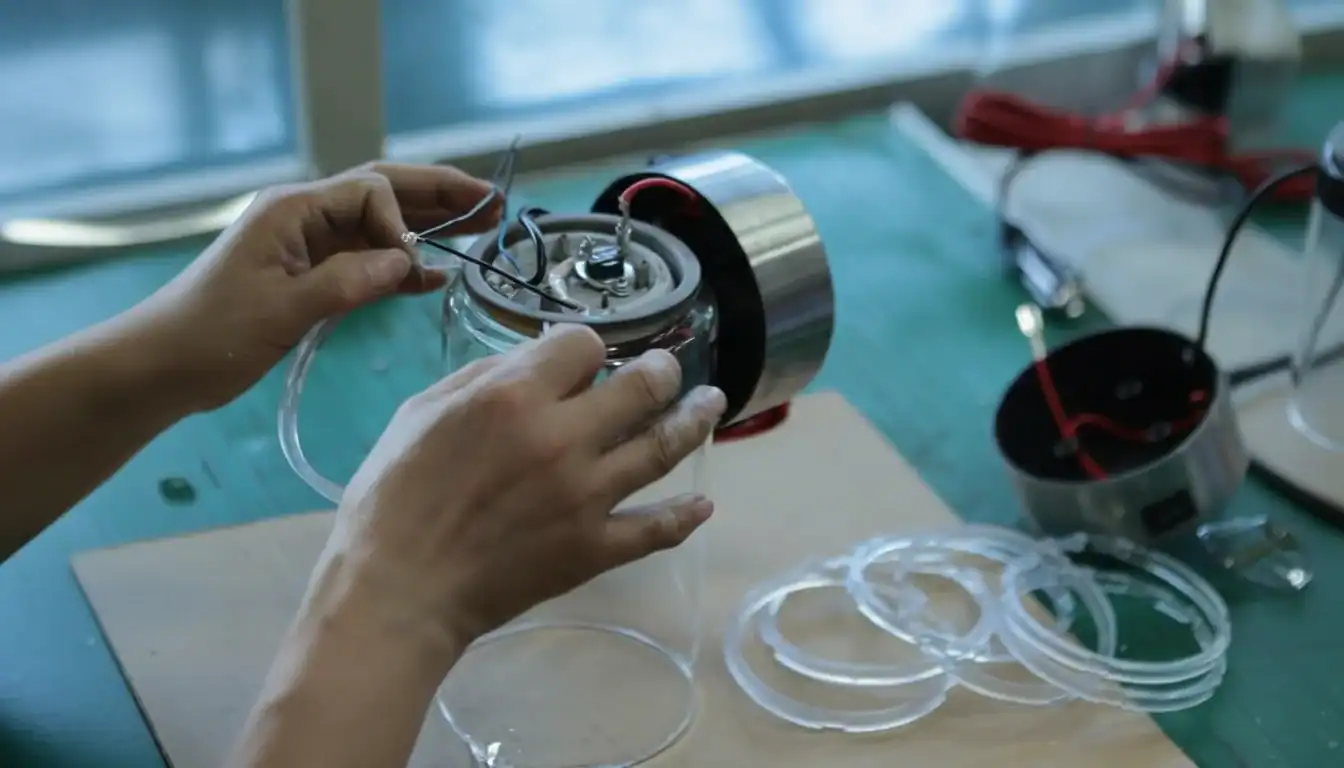
Real-time temperature probes must survive extreme physical stress to maintain accurate readings inside a vibrating heavy-duty cabin. KelyLands quality control teams subject 100% of production units to severe dry-boil simulations and thermal shock resistance tests to validate sensor durability before deployment.
Rigorous physical testing guarantees the internal temperature sensor stays securely mounted to the heating plate. This structural integrity maintains accurate heat tracking regardless of off-road conditions, continuous highway vibrations, or extreme thermal swings inside the vehicle.
Reliable OEM Truck Kettles Built for Safety
Engine-On Detection: Does It Only Boil When the Alternator Is Running?
Boiling water draws intense electrical loads, making alternator-driven power management essential to prevent commercial vehicle battery depletion.
High Amp Draw on 12V and 24V Systems
Heavy-duty 24V truck kettles require substantial energy to convert cold water into a rolling boil. A standard KelyLands SM series 24V kettle pulls up to 300W to boil 1000ML of water in roughly 30 minutes. Pulling this sustained thermal load from a resting battery rapidly degrades deep-cycle capacity and risks compromising the vehicle’s primary starter battery.
Alternators generate continuous electrical power when the engine runs. Operating the kettle while the engine is active shifts the heavy heating load directly from the battery to the alternator. This mechanical support ensures safe, efficient kettle operation and prevents drivers from draining their electrical reserves at rest stops.
Voltage Sensors and Alternator Output
Smart vehicle systems use precise voltage thresholds to authorize or restrict high-draw appliances. A resting 12V battery stabilizes around 12.6V, but an active alternator drives the system voltage past 13.5V. In heavy commercial trucks, 24V systems surge above 27V when the alternator engages.
Engine-on detection circuits track this specific voltage spike. They confirm the alternator is fully active before allowing a heavy 15-amp to 20-amp draw from the dashboard socket. If the vehicle’s system voltage drops below the active charging threshold, the power management system instantly interrupts the boiling cycle. This automatic load-shedding safeguards the truck’s starting capabilities and prevents deep discharge.
Hardware Design for Safe Power Delivery
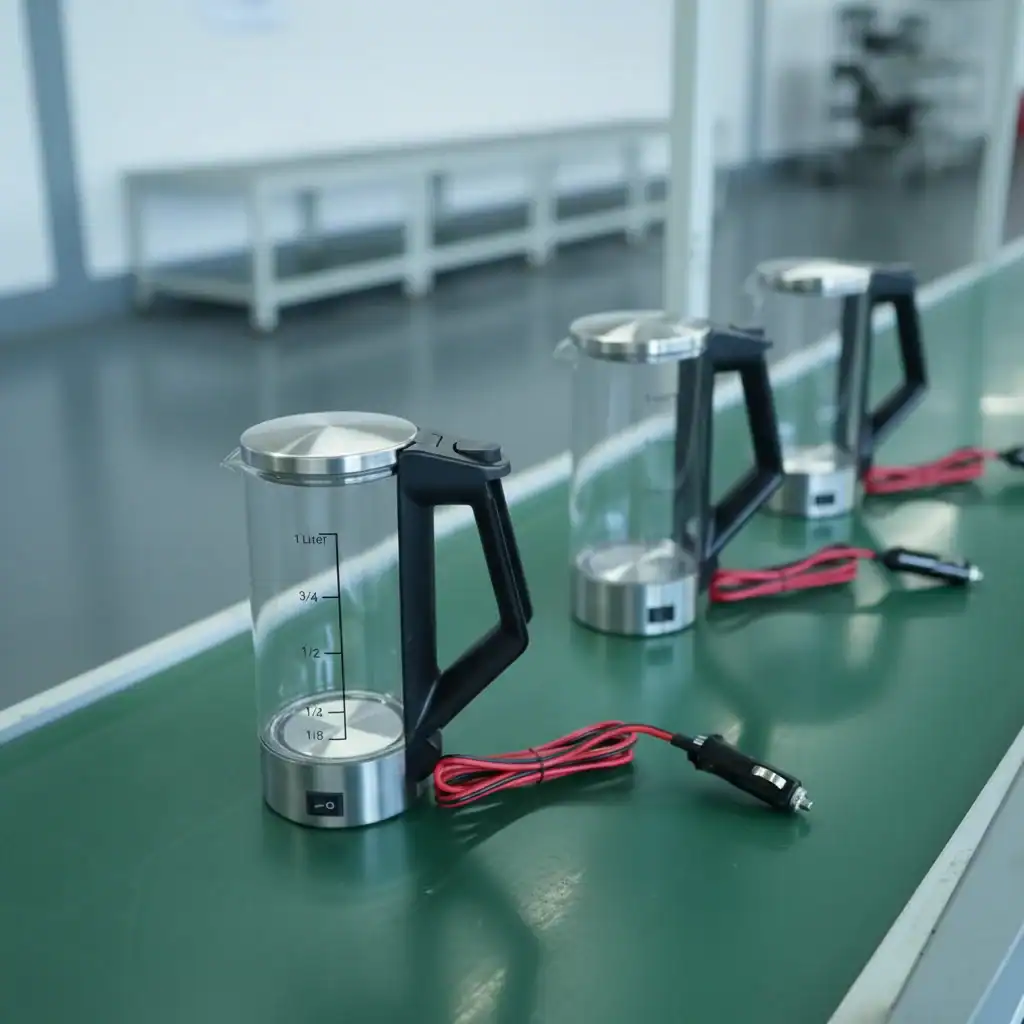
Pushing high currents through a vehicle dashboard requires robust physical infrastructure. KelyLands engineers outfit all heavy-duty kettles, including the flagship SM408 and SM400 Glass models, with 100% pure copper cables and high-temperature Bakelite phenolic resin plugs. These industrial-grade components safely manage continuous 250W to 300W loads without melting or triggering electrical faults.
By pairing this rugged hardware with the truck’s native low-voltage disconnect (LVD) and battery protection systems, drivers safely boil water during engine idle or highway cruising. This engineering standard guarantees reliable performance on long hauls and completely eliminates the fire hazards associated with cheap ABS plastic accessories.
The “Keep Warm” Draw: How Many Amps Does It Cost to Hold 90°C?
Modern 24V commercial kettles use thermostatic pulsing to hold 90°C at just 10 to 120 watts, drawing a minimal 5 amps to prevent auxiliary battery depletion during long-haul shifts.
Calculating the Amperage Draw for Temperature Maintenance
KelyLands 12V and 24V auto kettles pull between 150W and 300W during the initial boiling phase to rapidly heat cold water. Once the liquid reaches the target temperature, integrated thermal management systems take over. These systems drop the continuous power consumption significantly, operating within a narrow 10 to 120-watt band to maintain a stable 90°C.
| Heating Phase | Power Consumption | Amperage Draw (24V System) |
|---|---|---|
| Initial Rapid Boil | 250W – 300W | 10.4A – 12.5A |
| Keep Warm (90°C) | 10W – 120W | 0.4A – 5.0A |
| Engine-Off Standby | 0W | 0A |
On a standard 24V semi-truck electrical system, a 120-watt keep-warm function draws a minimal 5 amps. This low amperage requirement leaves ample capacity for critical auxiliary electronics, communications gear, and cabin climate controls without taxing the alternator.
Thermostatic Pulsing Versus Continuous Power Drain
Intelligent temperature-responsive systems cycle the heating element on and off rather than drawing power constantly. This thermostatic pulsing strategy minimizes parasitic drain while holding the liquid tightly at the 90°C mark.
Logistics fleets rely heavily on this cycling method to manage energy budgets. By delivering short bursts of power only when the internal sensor detects a temperature drop, the total amp-hours consumed over a 10-hour driving shift decrease dramatically compared to older, continuous-draw heating coils.
Managing Battery Strain in 12V and 24V Logistics Fleets
Running a continuous keep-warm function for hours strains standard truck batteries if the system lacks intelligent power management. High-resistance wiring or cheap plastic connectors compound this strain, converting wasted electrical energy into dangerous heat at the socket. KelyLands mitigates battery and electrical strain through specific hardware engineering choices:
- Pure Copper Cabling: 100% pure copper wire carries sustained electrical loads safely without voltage drops.
- Bakelite Plugs: High-temperature phenolic resin components completely eliminate the risk of melting the dashboard socket during extended use.
- Low-Voltage Disconnects: Top-tier 24V appliances integrate smart voltage monitoring to shut off the heating element entirely if the battery drops below safe engine-starting thresholds.
Entering 2026, combining thermostatic pulsing with physical thermal fuses guarantees that long-haul drivers have access to hot water without compromising the truck’s main fuses or starting reliability.
Conclusion
Equipping truck cabs with a 24V kettle requires reliable power management to protect the vehicle electrical system. Features like low-voltage cutoff and physical boil-dry safeguards ensure drivers can access hot water without risking dead batteries or melted dashboard sockets. Choosing appliances built with high-temperature Bakelite plugs and pure copper wiring protects fleet assets and minimizes costly downtime on the road.
Review your fleet accessory specifications to ensure they meet commercial safety standards for continuous electrical loads. Contact KelyLands to request a product sample or explore our OEM customization options for heavy-duty 12V and 24V kettles.
Frequently Asked Questions
Will a 24V truck kettle drain my battery?
A 24V truck kettle will draw significant power during operation, but modern commercial setups utilize Low-Voltage Disconnect (LVD) technology. This smart battery management system automatically monitors voltage levels and will disconnect non-critical loads like a kettle before your battery is depleted, guaranteeing you always have enough reserve power for essential functions like engine starting and vital communications.
Does the truck kettle have boil-dry protection?
Yes, industry-standard 24V truck kettles are built with integrated boil-dry protection as a mandatory safety measure. This system utilizes precision thermal sensors to instantly cut power to the heating element if the kettle is activated with insufficient water, completely eliminating fire hazards and preventing permanent thermal damage to the internal components.
At what voltage does the auto-shutoff trigger?
Thanks to modern Low-Voltage Disconnect (LVD) technology, these systems feature programmable thresholds that can be customized to your specific fleet operations. However, for standard 24V commercial vehicles, the automatic load-shedding shutoff is typically calibrated to trigger when the system drops to approximately 23.5V to 24.0V, effectively safeguarding the battery’s lifespan and starting capacity.
Can I leave the 24V kettle plugged in overnight?
Although your vehicle’s LVD system utilizes robust solid-state designs rated for over 1 million cycles to prevent complete battery depletion and overvoltage, it is highly recommended to unplug a 24V kettle overnight. Disconnecting high-amperage appliances when unattended eliminates parasitic standby power draw and strictly adheres to commercial cabin fire safety protocols.

 English
  Español
  Français
  Deutsch
  Português do Brasil
  Русский
  한국어
한국어  日本語
日本語  العربية