 跳转到主要内容 跳转到页脚
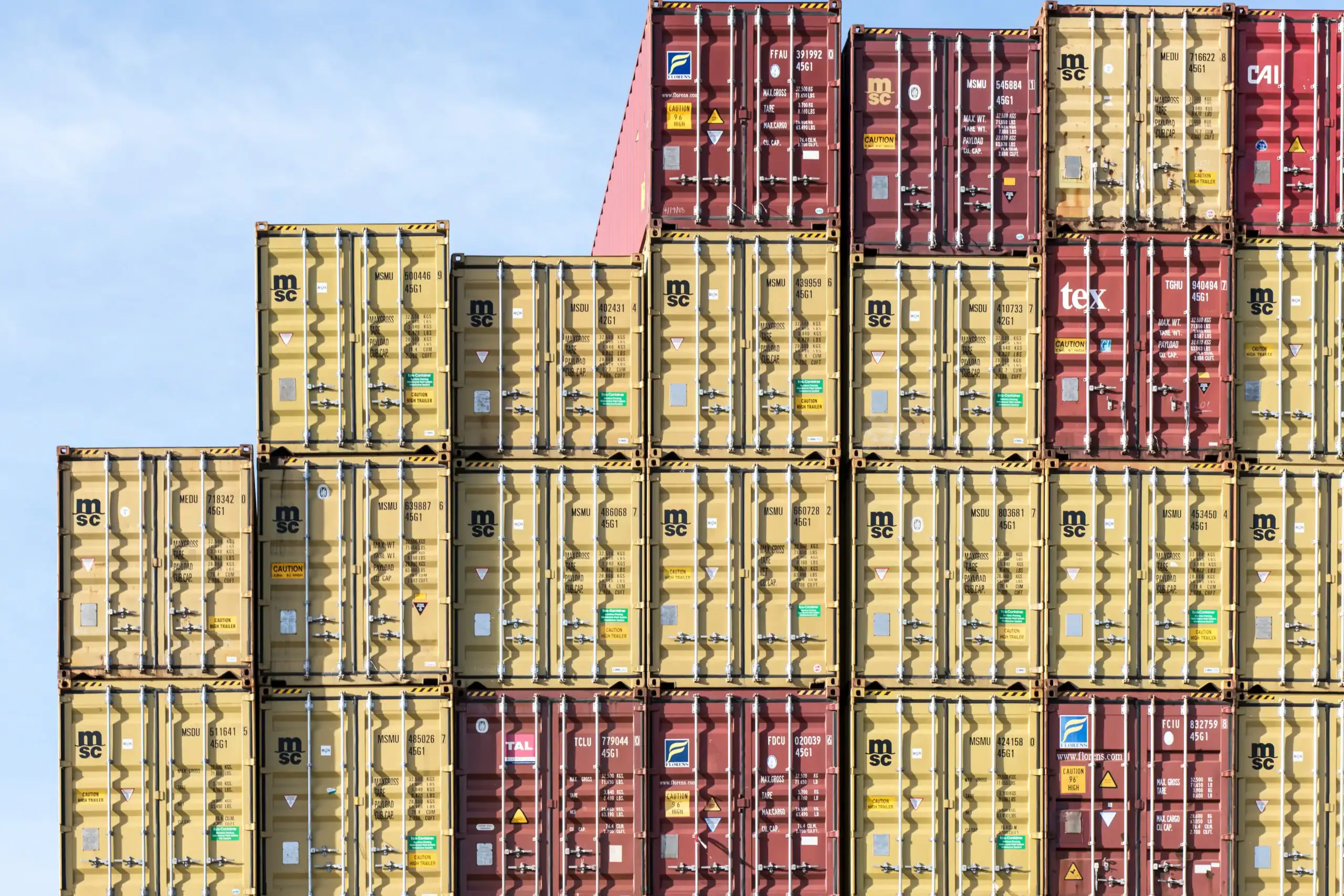
Shipping empty space drives up landed costs and shrinks profit margins for high-volume budget goods. Logistics managers face the constant challenge of filling every cubic centimeter of a container without exceeding weight limits or damaging cargo during transit.
This analysis covers logistics strategies for container optimization, including packing patterns and material selection. We compare the 10-20% capacity gains of floor loading against the speed of palletization and examine why E-Flute cardboard saves nearly 50% more storage space than B-Flute. The text also details technical standards for modular tube disassembly and weight distribution within the 76 m³ volume of a 40HQ container.
The 4000+ Unit Container: Optimization Goals
The optimization of the 4000-unit container series focuses on modularity, safety, and scalability. These vented containers replace legacy systems by utilizing HEPA filtration and a nested design across eight sizes. Engineering targets prioritize a five-year maintenance-free lifecycle while meeting strict thermal and pressure differential standards for solid material storage.
Modular Design and Scalable Deployment Standards
Engineers developed eight standardized sizes for the SAVY-4000 series, ranging from 1-quart to 10-gallon capacities. This variety allows facilities to select the most efficient volume for specific material loads, reducing wasted space. The nested design enables smaller containers to fit securely inside larger units. This configuration minimizes storage cube requirements and simplifies the logistics of container transport and onsite inventory management.
Production targets exceed 4000 units to support complex-wide deployment across Department of Energy (DOE) sites. By replacing legacy Hagan-style containers with these standardized models, facilities achieve greater consistency in handling protocols. The design emphasizes reusability and operational simplicity, which reduces the need for specialized tools or complex closure mechanisms during processing.
Pressure Regulation and Structural Performance Limits
Safety specifications include integrated HEPA filters that manage hydrogen release and prevent internal pressurization. These filters maintain a stable pressure differential between 1 kPa and 2 kPa, depending on the container size. This venting system eliminates the risk of flammable gas buildup from hydrogen off-gassing, providing a safer alternative to sealed pressure vessels for the long-term storage of solid materials.
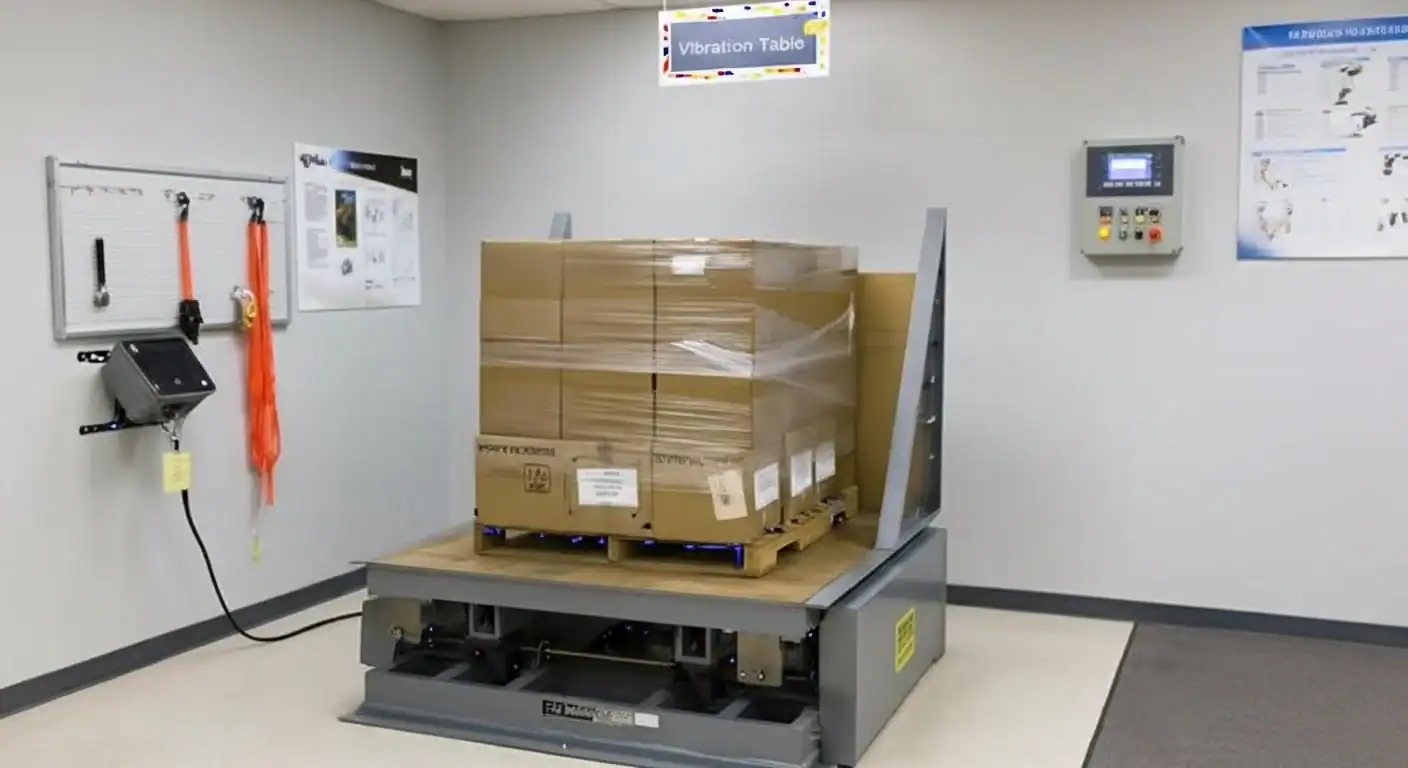
Structural validation involved 3.66-meter drop tests, which exceed Type A criteria for non-liquid contents by a factor of three. Additionally, a uniform 10-watt thermal power limit applies to all modular sizes in the series to ensure thermal stability. The current design supports a five-year maintenance-free lifecycle, with ongoing protocols for extensions through 2026 based on detailed o-ring temperature and performance analysis.
Gift Box Design: “Tetris” Packing for 40HQ
Tetris packing utilizes the 76 m³ volume of a 40HQ container by arranging gift boxes in an interlocking, multi-layered pattern. This method leverages the 2.69m internal height to fit approximately 10% more cargo than standard 40GP containers, significantly reducing per-unit landed costs for 2026 logistics.
| 40HQ Specification | Metric Value | Imperial Value |
|---|---|---|
| Internal Dimensions (LxWxH) | 12.03m x 2.35m x 2.69m | 39’6″ x 7’9″ x 8’10” |
| Total Internal Volume | 76 m³ | 2,694 ft³ |
| Maximum Payload | 28,600 kg | 63,052 lbs |
| Maximum Gross Weight | 32,500 kg | 71,650 lbs |
Volumetric Efficiency via Interlocking Box Dimensions
Aligning gift box dimensions as factors of the 2.35m internal width and 12.03m length eliminates empty gaps within the container. We calculate these measurements precisely to ensure each unit sits flush against the next, creating a dense, self-supporting block of cargo. This geometric alignment maximizes the available floor space and height, ensuring no cubic centimeter remains unutilized during the transit process.
Interlocking stacking patterns increase cargo stability and reduce the need for additional dunnage or plastic wrapping. By alternating the orientation of layers, we create a structural bond between boxes that prevents shifting during ocean swells. Choosing cardboard grades like E-Flute provides a crucial advantage; the material balances structural integrity with a thin profile, allowing us to fit more units per cubic meter compared to thicker, less efficient packaging materials.
40HQ Container Specifications and Weight Distribution
The 2.69m internal height of the 40HQ container offers a 10% volume advantage over standard 40GP containers. This extra vertical space is critical for lightweight, voluminous goods like retail gift boxes. We manage payload limits by keeping the total cargo weight under the 28,600 kg threshold while fully occupying the 76 m³ internal volume. This approach prioritizes density without exceeding safety limits for crane operations or vessel stability.
Distributing weight evenly across the container floor meets 2026 road safety standards and port regulations. Concentrating heavy pallets in one area can lead to axle overloads during truck transport or tipping risks during loading. Effective loading plans also account for door opening clearances, which measure 2.34m in width and 2.58m in height. Leaving appropriate clearance for the final layers of the Tetris stack ensures the doors close securely and the cargo remains accessible for inspection at customs checkpoints.
Body Disassembly: Splitting Tubes to Reduce Length
Splitting long tubes into modular segments using split-sleeve technology reduces dimensional weight and freight costs. By utilizing ASTM A516 Gr. 70 carbon steel shells and elastomer seals like Buna-N, these components maintain structural integrity and pressure containment up to 1500 ANSI class while facilitating easier handling and packaging.
Engineering Principles of Split Shell Assembly
We utilize ASTM A516 Gr. 70 carbon steel for half-shell bodies to enable reversible disassembly, allowing long tubes to be broken down into manageable segments for transport. This design relies on mechanical gripping via sequential ferrule action, where a precise 1/16 inch nut movement secures the tubing without compromising the metal structure. This method accommodates tube outer diameter variations of up to 0.01 inches while maintaining a leak-proof connection upon reassembly.
To manage the physical weight of modular components, we integrate hinges and lifting lugs on any segments 8 inches or larger. These features facilitate manual handling and ensure that technicians can align the split sections accurately during the rejoining process. This modular approach transforms static, oversized piping into a dynamic system that fits standard shipping dimensions, significantly lowering logistics overhead.
Technical Standards and Pressure Containment
Safety and performance specifications for these modular components follow API 6H and ASME Section VIII Div. 1 standards. These frameworks guide the calculation of pressure-retaining capabilities, ensuring that the split shells perform as reliably as continuous tubing. Following shipment and reassembly, we conduct hydrostatic testing at 1.5 times the working pressure to validate the seal performance and ensure the system is ready for operation.
The hardware uses Buna-N or Viton gaskets to maintain pressure integrity across ANSI classes 300 through 1500, providing versatility for various industrial applications. For long-term protection, we apply 100-micron thick epoxy coatings to all carbon steel surfaces. This barrier prevents corrosion during long-haul transit and storage, while optional sacrificial anodes can be added for enhanced cathodic protection in high-moisture environments.
Custom Home Vacuums Built for Your Brand’s Growth

Cardboard Quality: E-Flute vs. B-Flute Cost
E-Flute (1-1.6mm) reduces shipping volume and fiber weight compared to B-Flute (3-3.2mm), making it more cost-effective for high-density container loading. While B-Flute provides better cushioning for heavy components, E-Flute’s denser structure (90 flutes/foot) offers superior crush resistance and print quality for retail-ready gift boxes.
Material Density and Structural Profiles
E-Flute thickness ranges from 1mm to 1.6mm with 90 flutes per linear foot, providing a dense structure for fine printing. This profile creates a smooth surface that supports high-resolution graphics better than thicker alternatives. B-Flute maintains a thickness of 3mm to 3.2mm with approximately 49 flutes per linear foot. The larger arch in B-Flute offers more air space, which improves vertical cushioning for fragile items during transit.
Standard fluting materials utilize 90-175 GSM waste-based fluting (WBF). Manufacturers currently treat 105 GSM WBF as the industry benchmark for 2026 production standards. Dense corrugation in E-Flute enhances flat crush resistance. This physical property protects internal retail packaging from being squeezed when boxes are stacked in deep warehouse rows.
Logistics Efficiency and Landed Cost Factors
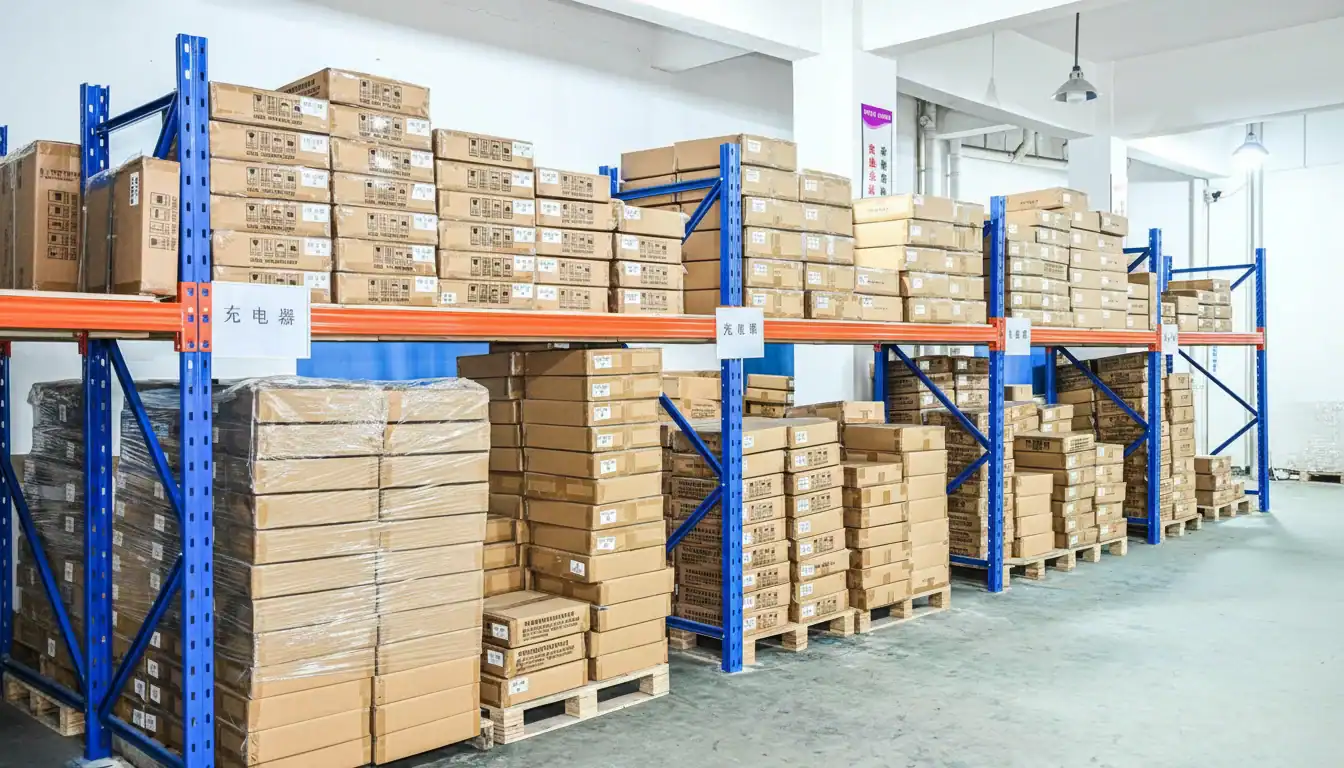
E-Flute requires nearly 50% less storage space than B-Flute, so it directly increases the number of units that fit into a 40HQ container. Reduced board thickness minimizes total fiber volume. This lowers the overall weight of the master carton and helps reduce associated air or sea freight surcharges. These savings are particularly beneficial for e-commerce brands shipping high volumes of small to medium-sized accessories.
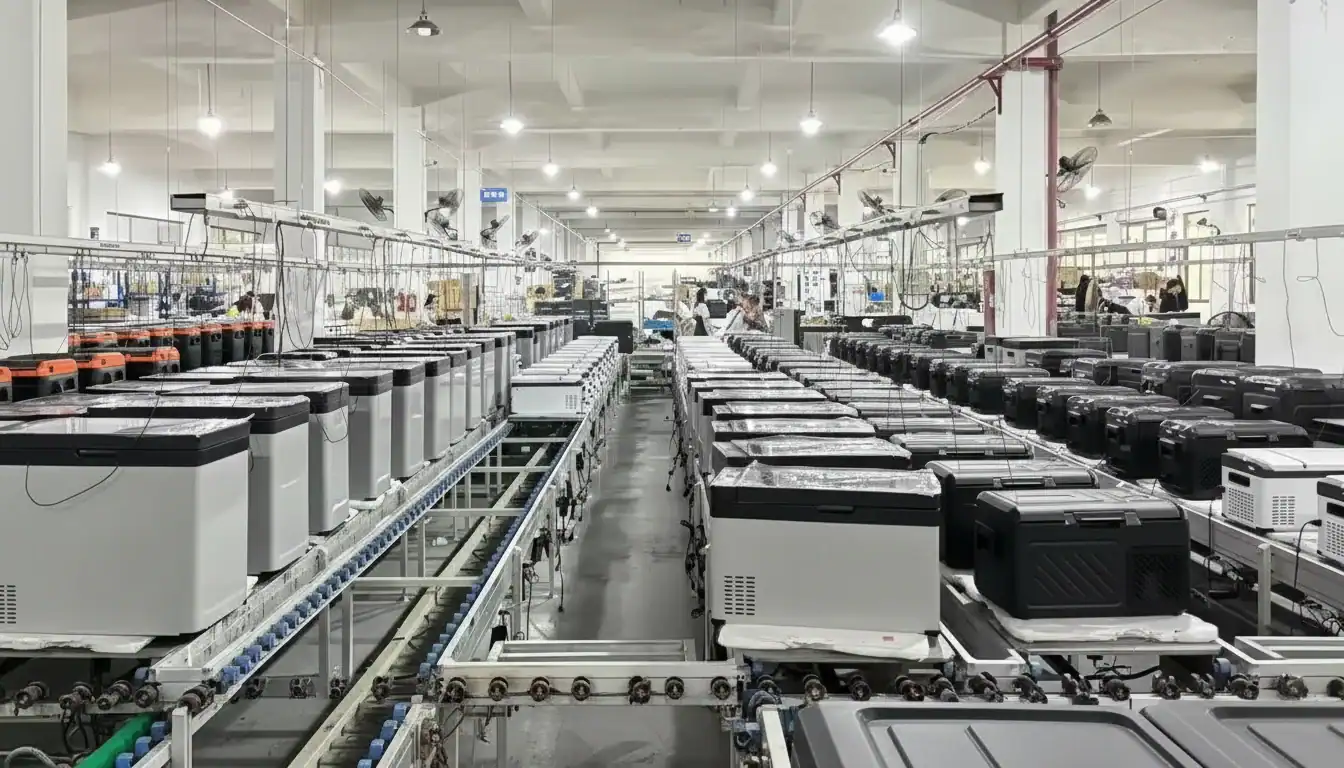
B-Flute’s superior puncture resistance makes it better suited for internal partitions or heavier car accessories like portable fridges that require high structural stability. For logistics models requiring a balance of impact protection and high-end branding, hybrid EB-Flute (4-4.5mm) provides a double-wall alternative. This combination uses the dense outer fluting of E-Flute for print quality and the thicker inner fluting of B-Flute for transit durability.
Pallet vs. Floor Loading: Labor vs. Space
Shipping strategies in 2026 prioritize either cubic volume or rapid turnaround. Floor loading removes pallet gaps to increase container capacity by 10-20%, making it ideal for high-volume bulk orders. Palletization utilizes standard 48×40 inch platforms to ensure forklifts complete unloading within the 2-hour carrier budget, reducing manual labor costs.
| Logistics Metric | Floor Loading | Palletization |
|---|---|---|
| Space Utilization | Maximum (no gaps) | Reduced (pallet volume loss) |
| Unloading Speed | Slow (Manual handling) | Fast (Forklift compatible) |
| Cargo Protection | Moderate (Stacking pressure) | High (Elevated from floor) |
Space Efficiency and Volume Gains in Floor Loading
Removing standard 48×40 inch pallets eliminates the wasted horizontal and vertical gaps that typically consume container volume. This strategy allows loaders to stack car fridges and large accessories to the roof of 40HQ containers, maximizing total cubic utilization. Tight “jig-saw” packing patterns prevent cargo from shifting during ocean transit and reduce the need for extra securement materials. High-volume shippers use this method to decrease the total number of containers, which lowers the overall freight expense for 2026 logistics budgets.
Labor Performance and Equipment Compatibility
Palletized cargo helps forklift operators finish unloading within the standard 2-hour carrier window, so companies avoid expensive detention fees. Manual floor loading demands more staff and repetitive physical labor to handle heavy car accessories. Using pallets also protects fragile electronics like EV chargers and compressor fridges from floor spills or ground-level vibrations. Standardized dimensions ensure these shipments move through 53-ft trailers and LTL terminal systems without specialized handling requirements.
Final Thoughts
Efficient logistics relies on aligning product design with container dimensions. Choosing E-Flute cardboard and modular component sizes directly impacts the bottom line by turning wasted air into usable cargo space. These decisions allow brands to ship more units without increasing their shipping footprint.
Balancing speed and volume defines the final shipping strategy. Floor loading offers the highest density for bulk orders, while palletization protects delicate electronics and speeds up port turnaround. Selecting the right method for 2026 shipments ensures products arrive safely while keeping landed costs manageable.
Frequently Asked Questions
What is the total unit capacity for a floor-loaded 40HQ container?
A 40HQ container has an internal volume of 76.4 m³ (2,698 ft³). For floor-loaded shipments, the practical capacity usually reaches 55 to 60 CBM depending on carton dimensions. This method maximizes vertical space compared to palletized loading, which often fits up to 40 standard 1.2m x 1m pallets.
Can we split product tubes into two sections to reduce the gift box length?
We do not standardly split tubes into two parts because it risks the structural integrity of the accessory. Shortening the box through tube disassembly requires custom-engineered joints and validation to ensure the product performs correctly after reassembly by the end-user.
Does the packaging comply with ISTA 1A drop test standards for courier shipping?
ISTA 1A compliance involves a 26-drop sequence from heights ranging between 150mm and 760mm for parcels weighing up to 18kg. While we use durable E-Flute and B-Flute cardboard, specific certification depends on the final weight and dimensions of your customized retail packaging.

 English
  Español
  Français
  Deutsch
  Português do Brasil
  Русский
  한국어
한국어  日本語
日本語  العربية