 跳转到主要内容 跳转到页脚

The car cooler vs cosmetic fridge distinction rarely shows up in the quote. It shows up in a phone call like this: ‘Can you confirm the input voltage on the production batch?’ ‘AC-only,’ the supplier says. ‘The 12V car cooler is a different line.’ That exchange explains how a $50,000 order goes sideways — the pre-production sample passed on looks, the mass production run didn’t match the channel, and the buyer was left with units that couldn’t run off a car lighter.
Once you compare the cosmetic fridge vs car cooler margin per cubic foot, the form factor drives the math. A 15L car cooler carries roughly 2.5x the retail margin per liter of a 4L cosmetic fridge, but the beauty unit turns over four times faster during Q4 holiday gifting. FOB pricing per unit matters less than freight cost per carton, since the car cooler consumes more container space per dollar of margin. That seasonal split is the real wholesale inventory planning calculation: hold camping stock through November or chase the December gifting wave.
The bridge SKU is the dual-voltage 8L mini fridge — an AC/DC unit that plugs into a 48W wall outlet for the vanity and a 12V lighter socket for the trunk. One carton serves both the summer camping wave and the holiday beauty wave, reducing dead inventory and spreading freight cost across two selling seasons. Power draw matters at retail, too: a 48W AC-only unit demos easily on a countertop, while a 12V-only cooler needs a vehicle or battery source to show its function. That detail separates buyers who sell into both channels from buyers who guess.
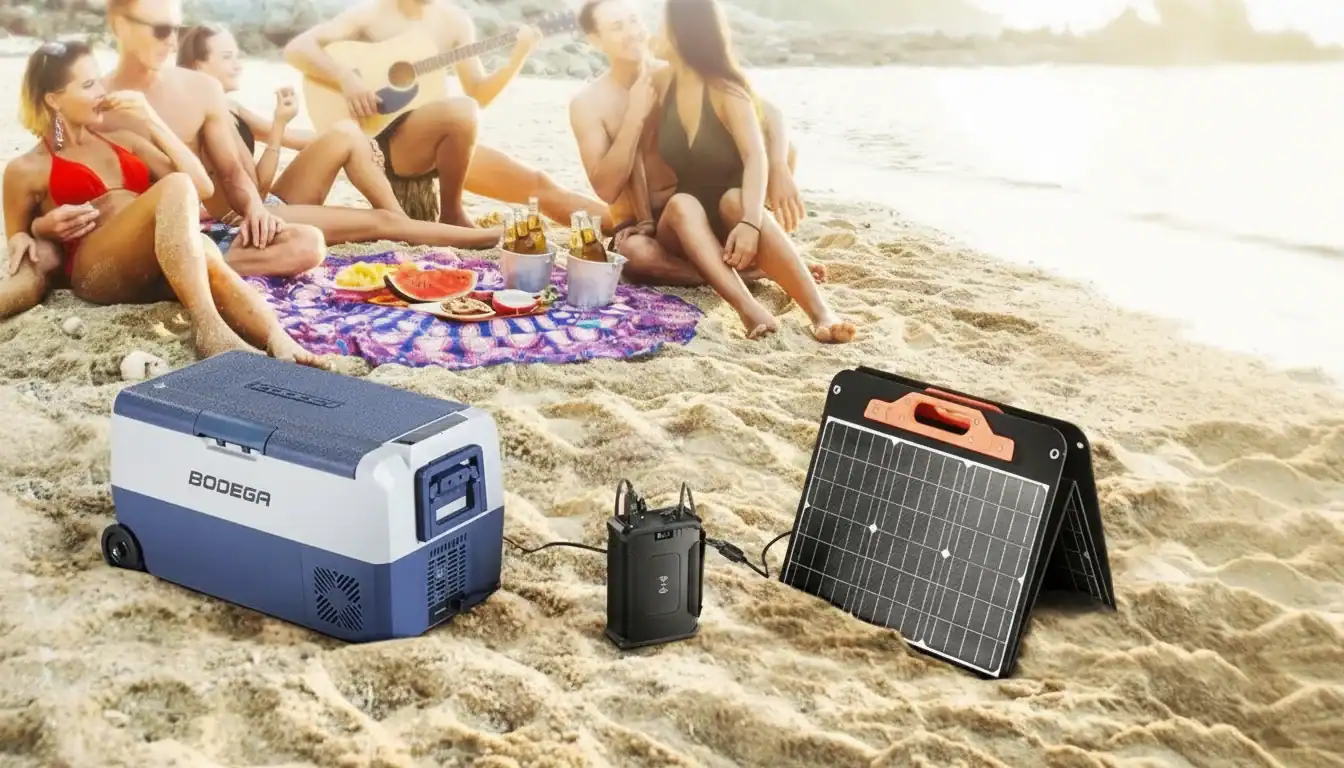
Use Case Differences That Drive Channel Stocking
15L car cooler wins on margin per liter; 4L beauty fridge wins on Q4 turnover; 8L AC/DC covers both.
The split between a car cooler vs cosmetic fridge starts with where the unit plugs in, not how cold it gets. A road-tripper running a cooler off a 12V outlet needs DC power and rugged construction. A skincare buyer placing a 4L unit on a vanity expects quiet AC operation and a design that matches the room. Confuse those two paths and you end up with returns: a car camper who can’t power the unit, or a beauty customer who doesn’t want a 12V plug on her nightstand.
Car camping and road trips need 12V; skincare storage needs AC
Camping buyers anchor on 12V car cooler pricing and current draw. They run the unit from a vehicle outlet or a portable battery station, so 12V-only compatibility is a feature, not a limitation. Skincare storage buyers shop almost exclusively for AC convenience. They plug a cosmetic fridge into a bathroom socket and leave it there. The use case defines the plug, the size, and the acceptable noise level.
-
-
- Road trip buyer: Wants 15L or larger, 12V/24V DC input, and cooling that holds up in a hot car. Margin per unit is higher, but the sale is seasonal.
- Skincare storage buyer: Wants 4L–8L, AC-only is acceptable, quiet operation, and visible brand design. Turns inventory quickly in Q4 gifting.
- Retail demo: A 48W AC-only beauty fridge runs from any wall socket; a 12V-only car cooler needs a vehicle battery or bench power supply to demo in-store.
-
The margin math changes when you factor in turnover. A 15L car cooler can deliver roughly 2.5x the retail margin per liter of a 4L cosmetic fridge, but the beauty SKU moves about 4x faster during holiday gifting. That makes the cosmetic fridge vs car cooler margin comparison two different games: one rewards per-unit profit, the other rewards inventory velocity.
KelyLands entered the portable fridge segment in 2018 through a partnership with a Ningbo-based fridge factory, so the line was built around batch consistency and reliable delivery rather than one-off novelty units. That factory relationship matters when you stock a crossover SKU across two demand seasons.
Dual-voltage 8L is the inventory hedge
The dual voltage mini fridge 8L supplier conversation becomes valuable when you want one SKU to ride both demand curves. An 8L AC/DC unit with a 12V car cable and a standard AC plug is effectively an AC DC mini fridge for camping and beauty. It covers the summer camping wave and the holiday beauty wave without requiring a forced reorder in between.
Seasonal inventory planning for mini fridge orders rarely works if you treat camping and beauty as separate categories. A single 8L crossover SKU lets a general storefront avoid dead inventory when the season flips. For Amazon sellers, the best selling car fridge SKU for Amazon FBA is often the 8L AC/DC unit because sales velocity holds across both seasonal peaks — summer trips and December gifting.
-
- Choose a 15L car cooler if: Your channel is outdoor co-ops, RV dealers, or camping e-commerce and you want margin per unit through summer.
- Choose a 4L cosmetic fridge if: Your channel is beauty gifting and Q4 velocity matters more than margin per liter.
- Choose an 8L AC/DC unit if: You run a general storefront and need one SKU that rides both demand curves without leftover stock.
Feature and Price Comparison Table
A 15L car cooler earns 2.5x the margin per liter of a 4L beauty fridge; the beauty SKU turns over 4x faster.
Most buyers compare FOB pricing before they look at margin per liter. That order misses the point in the car cooler vs cosmetic fridge comparison. When an importer evaluates 12V car cooler wholesale price, the useful number is margin per liter, not unit cost.
The numbers split by season. A 15L 12V car cooler carries roughly 2.5x the retail margin per liter of a 4L AC-only beauty fridge, but the beauty SKU turns over about 4x faster during Q4 holiday gifting. That difference shapes which SKUs earn warehouse space.
4L AC-Only Beauty Fridge vs 15L 12V Car Cooler
The two products operate in different power environments. The 4L unit runs on household AC at around 48W, so a sales rep can demo it at any wall outlet. The 15L car cooler runs on 12V DC, which means in-store display needs a DC adapter or battery rig. That demo friction changes sell-through in physical retail.
-
-
- Capacity: 4L holds skincare bottles on a vanity. 15L fits drinks for two people on a weekend camping trip.
- Power input: 4L: AC only at ~48W. 15L: 12V only, no standard wall plug.
- Margin per liter: 15L cooler generates roughly 2.5x the retail margin per liter of the 4L beauty fridge.
- Seasonal peak: Cooler demand peaks in summer; beauty fridge demand peaks in Q4 gifting.
-
When buyers compare cosmetic fridge vs car cooler margin, they need to add turnover to the math. The 4L beauty fridge’s low price point makes it an easy December impulse buy. The 15L car cooler needs a trip or camping plan behind it. That behavioral difference shows up in reorder frequency, not just gross margin.
8L AC/DC Crossover as the Bridge SKU
An AC DC mini fridge for camping and beauty closes the gap. Its 8L capacity works on a skincare shelf and inside a car or tent. It runs on both 12V and household AC, so one unit covers the summer camping season and the winter beauty counter. That dual voltage feature keeps a single SKU alive across two demand waves.
KelyLands’ portable fridge line runs through a Ningbo-based factory partnership, so a buyer consolidating seasonal inventory planning mini fridge wholesale orders can source mini fridges, car coolers, and crossover units through one account. A dual voltage mini fridge 8L supplier can offer one SKU where a less flexible range would require two. That simplifies warehouse planning and cuts dead inventory risk.
-
- Choose 15L 12V car cooler if: your channel is outdoor co-ops, RV dealerships, or summer-focused camping e-commerce and carton size is not a constraint.
- Choose 4L AC beauty fridge if: your channel is beauty e-commerce, pharmacy, or holiday gifting and you can trade margin per liter for faster Q4 turnover.
- Choose 8L AC/DC crossover if: you run a general Amazon storefront or a mixed outdoor/beauty catalog and want one SKU that serves both seasons.
For Amazon FBA sellers reviewing the best selling car fridge SKU for Amazon FBA, the 8L dual-voltage unit often wins because a single ASIN retains ranking data across two shopping seasons. The 15L unit earns more margin per liter when it sells. The 4L beauty fridge compensates with volume in December. Before committing, request sample approval that tests both AC and 12V performance, not just idle temperature. Channel mix and warehouse capacity decide the rest.
| Feature | 4L AC-Only Beauty Fridge | 15L 12V Car Cooler | 8L AC/DC Crossover | Buyer Consideration |
|---|---|---|---|---|
| Capacity | 4 liters | 15 liters | 8 liters | Car camping buyers need 15L for drinks; beauty buyers accept 4L for skincare. |
| Power Source | AC only (wall outlet) | 12V DC (car cigarette lighter/portable power) | AC + DC dual voltage | Dual-voltage 8L unit serves both car camping and indoor beauty display. |
| Typical Power Draw | ~48W | ~35W at 12V | ~40W AC / ~33W DC | AC-only beauty fridge is easier to demo in-store; 12V-only requires a power source demo. |
| Indicative Wholesale Price | $18 – $28 | $35 – $55 | $28 – $45 | 15L margin per unit is higher, but 8L crossover reduces total SKU count. |
| Retail Margin per Liter | Baseline (1x) | 2.5x the margin per liter | ~1.8x the margin per liter | Larger format yields more absolute margin, but slower turn may offset it. |
| Seasonal Inventory Turnover | 4x faster in Q4 holiday gifting | Peaks in summer camping season | Two demand waves: summer + Q4 | Crossover 8L minimizes dead inventory across seasons. |
| Freight per Unit (Carton Dimension) | Small, low weight (~0.8 cu ft) | Larger, heavier (~2.2 cu ft) | Medium (~1.4 cu ft) | 4L ships more units per pallet, lowering landed cost per unit. |
| Ideal Retail Channel | Beauty e-commerce, pharmacy chains | Outdoor co-ops, RV dealerships | General Amazon storefronts, mass merchandisers | Match SKU to channel seasonality to maximize turn and margin per cubic foot. |
Margin and Inventory Turnover by Form Factor
Seasonality flips the margin math: the 15L cooler wins per liter, the 4L beauty fridge wins per shelf day.
The margin comparison shifts once you bring the calendar into it. The 15L car cooler carries roughly 2.5x the retail margin per liter of the 4L cosmetic fridge, but the beauty SKU turns over about 4x faster during Q4 holiday gifting. That means the cooler earns more per unit sitting on a shelf, while the cosmetic fridge earns more per month of inventory carried.
Seasonal demand curves: summer camping vs holiday beauty
Camping and overlanding demand climbs in April and peaks through July, then drops hard once schools reopen. Skincare gifting runs in the opposite direction — the Q4 wave starts in October and produces repeat orders in November and December. A buyer who commits to only one curve carries dead inventory for half the year.
KelyLands’ Ningbo-based portable fridge factory partner builds both the camp-style coolers and the AC-only beauty units, so switching volume between the two seasonal lines is a production planning decision rather than a supplier switch. For a distributor, the cleaner hedge is a dual-voltage 8L AC/DC unit. One SKU covers summer tailgating and the holiday beauty gifting wave.
Freight cost per unit for each carton dimension
Freight rates follow dimensional weight, not the liter sticker. A small 4L beauty fridge packs into a compact carton that lets you stack more units per pallet, which keeps the per-unit freight allocation low. The 15L car cooler uses a taller, wider carton that eats deck space quickly, so its freight cost per unit runs meaningfully higher.
The same logic applies to air freight and FBA inbound: a lighter unit can still cost more if its carton volume pushes it into a higher chargeable weight band. On FOB terms, that gap lands on the buyer’s freight bill, not the supplier’s.
The practical margin metric is profit per cubic foot, not profit per unit. A 15L cooler delivers more absolute margin, but it also demands more shelf space, warehouse storage, and freight cube. The 4L unit makes up for lower absolute margin with faster turns, and its AC-only design runs on standard wall power at around 48W, so stores can demo it without a car battery.
-
- Choose the 15L cooler if: your outdoor channel sells through summer and customers expect 12V operation on the road.
- Choose the 4L beauty fridge if: your Q4 gifting business rewards fast shelf turns over high per-unit profit.
- Choose the 8L AC/DC crossover if: you want one dual-voltage SKU that spans the camping season and the beauty season without a second purchase order.

Which Retail Channels Order Which SKUs
Channel choice tracks end use: food cooling buys 12V, skincare buys AC, Amazon buys both.
The fastest way to predict which SKU a channel orders is to trace the end customer’s use case. Outdoor co-ops and RV dealerships sell experiences that happen outdoors, so their shelf leans on the 15L 12V car cooler. Beauty e-commerce and pharmacy chains sell routines that happen indoors, so they default to the compact 4L AC-only cosmetic fridge. Amazon storefronts, with no physical aisle to organize, buy the crossover.
Outdoor co-ops and RV dealerships lead with the car cooler
These channels anchor their assortment on the 15L 12V car cooler. Their customer is planning a road trip, not preserving serums. The 12V car cooler wholesale price matters, but the reliability story matters more — can it hold temperature when ambient heat climbs and the vehicle sits parked?
The first batch that fails on that test generates return rates that erase the margin. Outdoor co-ops add a second filter: low noise, because campground quiet hours and tailgate setups punish a rattling compressor.
That kind of client exposure — over 500 partners across 50+ countries — gives the KelyLands export team a clear read on channel behavior: RV dealerships rarely cross-order cosmetic fridges.
Beauty e-commerce and pharmacy chains stick to the cosmetic fridge
Beauty e-commerce sellers and pharmacy chains order the 4L AC-only cosmetic fridge first. Their customer keeps it on a vanity or bathroom counter, which pushes two specs: appearance and a steady 48W draw that plugs into any wall outlet.
That wattage also makes in-store demos practical. A 12V-only car cooler needs a car or a bench power supply to show. During Q4, this channel turns stock over 4x faster than the summer camping wave, which sharpens the cosmetic fridge vs car cooler margin debate — thinner per-unit margin, dramatically better velocity.

General Amazon storefronts ride the dual-voltage crossover
Amazon sellers face a different problem: dead inventory. Stocking a single dual-voltage 8L unit — AC and DC — lets one SKU serve both the summer camping wave and the Q4 holiday beauty wave. That is the seasonal inventory planning mini fridge wholesale buyers actually want: one purchase order, two demand peaks, less cash tied up.
Sellers searching for a dual voltage mini fridge 8L supplier are consolidating two seasonal bets into one line item. Search patterns like ‘AC DC mini fridge for camping and beauty’ confirm the crossover demand. For anyone tracking the best selling car fridge SKU for Amazon FBA, the dual-voltage 8L is the SKU that keeps turning instead of sitting in a warehouse bin.
-
- Outdoor co-op / RV dealer: Stock the 15L 12V car cooler first. Add the 4L AC unit only as a secondary item for overland or glamping customers.
- Beauty e-comm / pharmacy chain: Stock the 4L AC-only cosmetic fridge. The 48W draw makes it demo-friendly and the Q4 gifting window moves it fast.
- Amazon / general storefront: Stock the dual-voltage 8L crossover. One SKU rides both seasonal peaks and trims the dead-inventory risk.
Conclusion
Choosing between a car cooler and a cosmetic fridge comes down to two numbers: margin per liter and seasonal turnover. A 15L car cooler delivers roughly 2.5x the retail margin per liter of a 4L cosmetic fridge, but the beauty unit moves about 4x faster during the Q4 holiday gifting window. If you stock only one form factor, you either leave margin on the table in summer or watch units sit idle through the holidays.
-
- A 15L car cooler earns roughly 2.5x the retail margin per liter of a 4L cosmetic fridge.
- Beauty fridge units turn over about 4x faster than car coolers in the Q4 gifting season.
- A dual-voltage 8L unit bridges both markets, cutting dead inventory across summer and holiday peaks.
- AC-only beauty fridges at 48W are simpler to demo in-store than 12V-only car coolers.
Map your 2026 assortment against these two demand curves before you place the next container order. A dual-voltage 8L mini fridge supplier can quote a single SKU that covers both the summer camping wave and the holiday beauty wave, so compare those price breaks against the 15L car cooler wholesale price and the 4L AC-only unit before locking your mix.
Frequently Asked Questions
What is the difference between a car cooler and a cosmetic fridge?
A car cooler is a 12V portable fridge built for camping and road trips, while a cosmetic fridge is typically a small AC-only unit for skincare storage. The real difference is input voltage and. Choose by channel use case before comparing price.
Which SKU has better margin per cubic foot?
A 15L car cooler earns roughly 2.5x the margin per liter of a 4L beauty fridge, but the beauty SKU turns faster during Q4. Prioritize car coolers for outdoor and RV channels and cosmetic. Match the SKU to your seasonal channel demand.
Should I stock dual-voltage crossover units?
Yes, an 8L AC/DC mini fridge works as a bridge SKU because it serves both car camping and indoor beauty storage. It gives general Amazon storefronts one SKU instead of two, but the. Use it only when your channel needs crossover flexibility.
What channel orders car coolers first?
Outdoor co-ops and RV dealerships order car coolers first because their customers need 12V cooling for camping and road trips. Beauty e-commerce and pharmacy chains order cosmetic fridges first, while general marketplaces prefer dual-voltage. Align your first order with your primary channel.

 English
  Español
  Français
  Deutsch
  Português do Brasil
  Русский
  한국어
한국어  日本語
日本語  العربية