 跳转到主要内容 跳转到页脚


car fridge ventilation clearance is the first checkpoint buyers should lock before they approve a supplier, budget, or production slot. Every sourcing guide you will read tells you to focus on compressor brand and insulation thickness. That advice is fine until a container of 40L units lands at your warehouse and your distributor reports a 12% return rate on installation because the fridges cycle too frequently in SUV center consoles. The real problem is never the compressor spec — it is the car fridge ventilation clearance that nobody verified before signing the PO. A $50K order can go sideways because the pre-production sample ran fine on a workshop bench but choked for air once mounted with less than 75mm rear gap in a vehicle cubby.
The gap between what a factory calls minimal clearance and what actually keeps a Secop compressor from tripping thermal overload is usually about 20mm. That difference shows up in the return data, not in the catalog sheet. When you are comparing FOB pricing across three Ningbo suppliers, ask for their ambient 43°C performance curve at stated clearance — not just the standard ambient test. A supplier who cannot produce that thermal imaging report has likely never run their own unit under real summer cabin conditions.

Why Ventilation Clearance Causes Installation Returns
Most returns trace back to one of three clearance failures, not the fridge itself.
A distributor had 14 units returned from a single shipment. The fridges worked fine on the bench. Every return came from a customer who wedged the unit into a tight drawer system with zero rear airflow. The compressor thermal protection kicked in after 45 minutes of highway driving, and the buyer assumed the fridge was defective.
The 3 Most Common Clearance Failures in Vehicle Fitment
-
- Zero rear gap: The fridge is pushed flush against a carpeted false floor or drawer divider. No air channel exists behind the condenser grille. Internal temperature rises by 8-12°C above setpoint within an hour at 35°C ambient.
- Side blockage by trim panels: Many SUV cargo areas have molded plastic side panels that protrude inward. A 50mm side clearance on paper becomes 15mm once the panel contour is accounted for. This traps heat along the side-mounted condenser coils.
- Top obstruction from cargo: Buyers stack camping gear directly on top of the fridge, blocking the hot air exhaust vent. The compressor runs continuously and never cycles off, pulling high current and shortening service life.
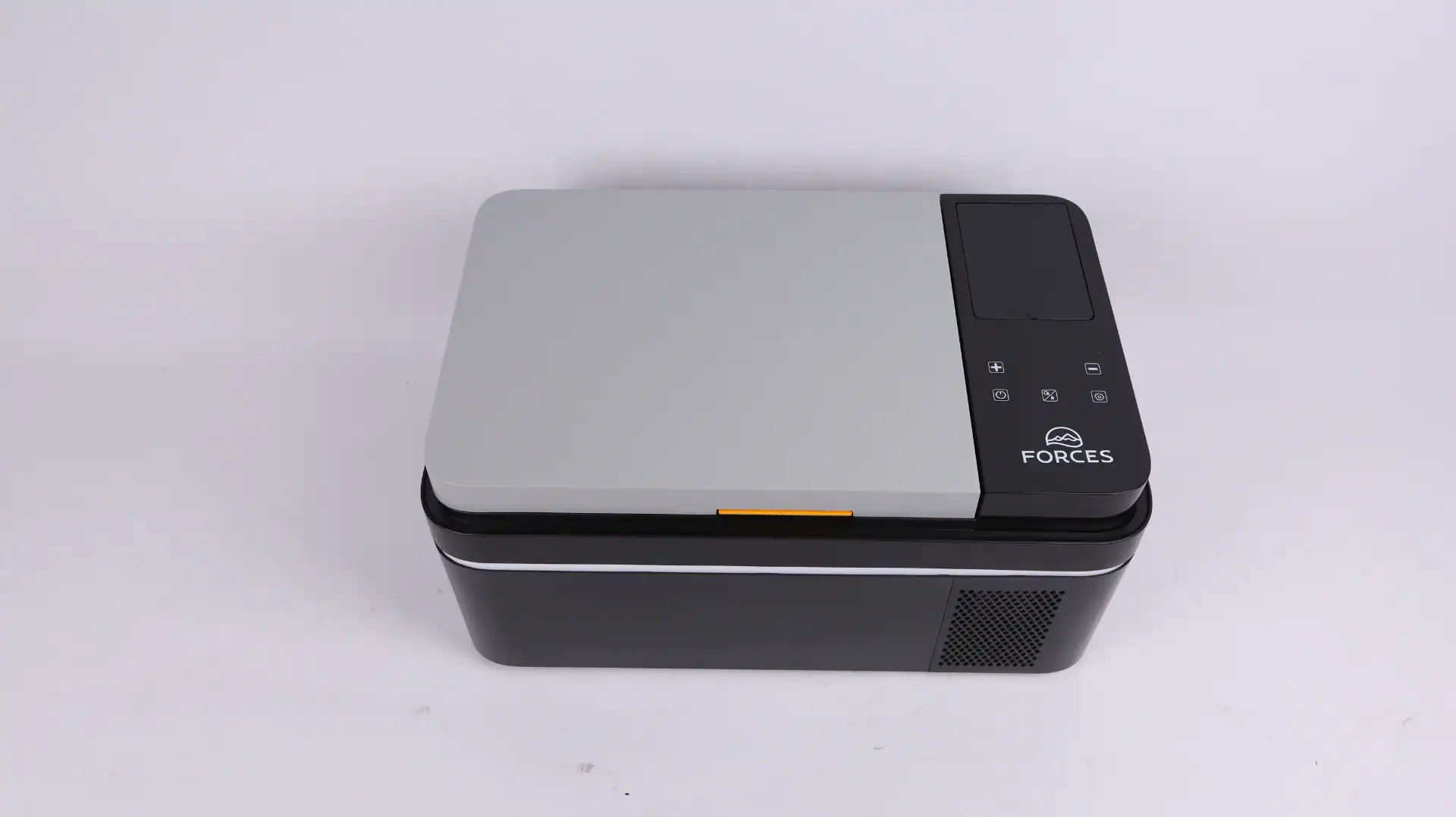
Minimum Ventilation Gaps by Fridge Size and Compressor
Compressor type dictates clearance — Secop units need 20% more rear gap than in-house brands.
Ventilation clearance is not a one-size spec. The compressor type, condenser layout, and internal airflow path all change the minimum gap required to keep the fridge cycling correctly under load. A 20L unit crammed into a center console with 30mm of side clearance will throttle down after 45 minutes of highway driving in July. That is not a defect — it is a physics problem caused by insufficient air exchange around the hot-side heat exchanger.
20–30L Compact Fridges: 50mm Side / 75mm Rear
For single-zone fridges in the 20 to 30-liter range — typically built with small-frame compressors from Huayi or Aspen — the minimum ventilation gap that passes thermal validation testing is 50mm on each side and 75mm at the rear. These units dissipate roughly 40 to 60 watts of heat during sustained operation. At those levels, the side gaps handle passive intake while the rear gap allows hot air to exit past the condenser fins. Reduce either dimension and the internal cabinet temperature drifts upward by 3°C to 5°C within two hours at ambient 32°C.
The most common failure seen on compact fridges returned from installation is a side clearance of less than 40mm combined with a rear gap under 60mm. The compressor runs hotter, trips its internal thermal protector, and the buyer assumes the unit is faulty. It is not faulty — it is suffocating.
40–60L Mid-Size Fridges: 75mm Side / 100mm Rear
Move up to a mid-size portable fridge in the 40 to 60-liter bracket — these are the most common volume for overlanding builds and SUV installs — and the heat rejection jumps to roughly 80 to 110 watts depending on compressor duty cycle. The tested minimums shift accordingly: at least 75mm on each side and no less than 100mm at the rear.
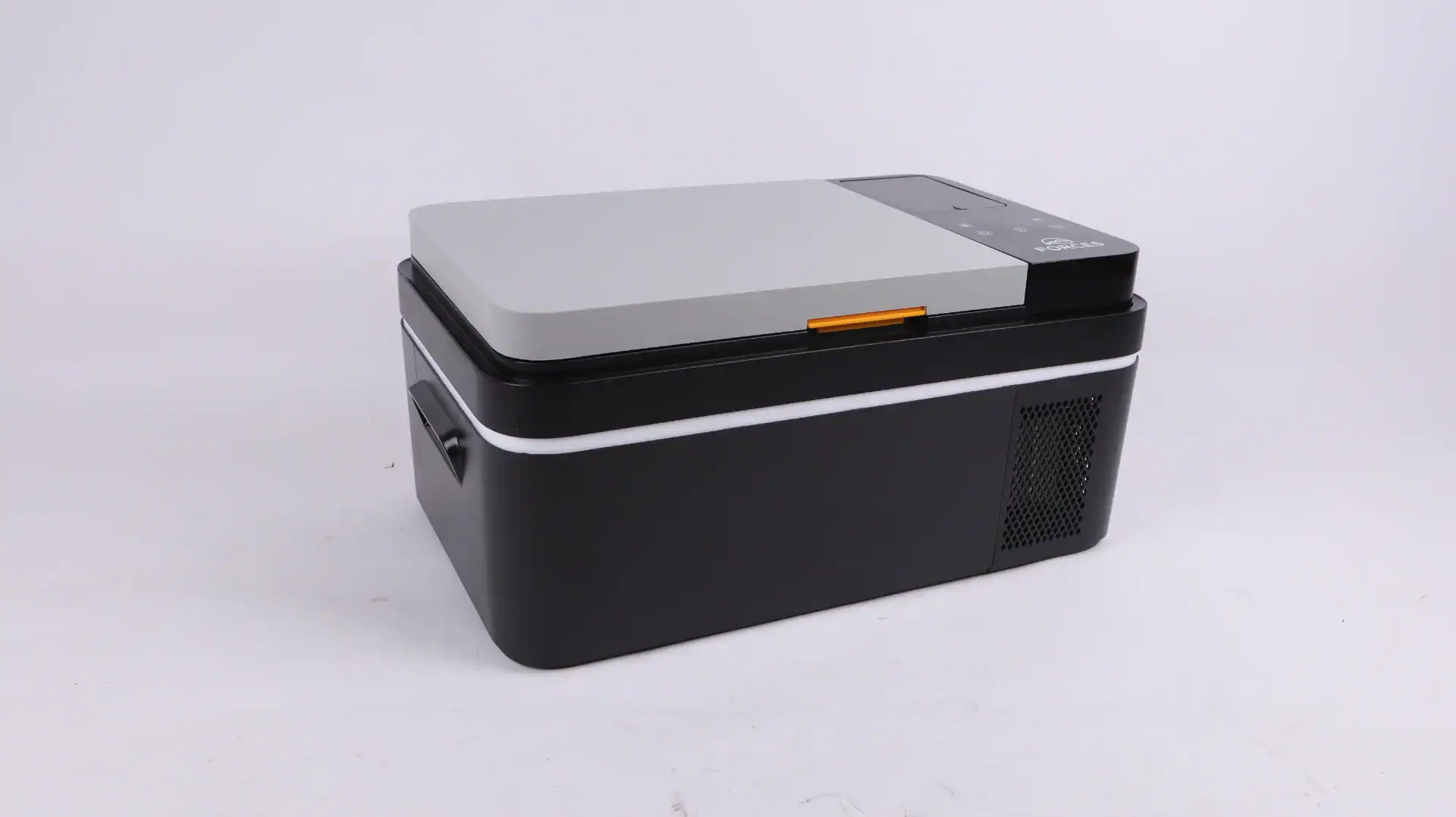
Supplier Verification Checklist for Importers
Most Chinese factories quote clearance as a single number.
A volume importer placing a 40-foot container of car fridges needs more than a glossy catalog. The difference between a reliable product and a return-generating headache often comes down to three verification steps that most buyers skip during supplier qualification. Here is what to ask for, what to ignore, and where to push back.
Required Test Data: Ambient 32°C and 43°C Performance Curves
Any supplier can claim their fridge holds -18°C in a 25°C room. That tells you nothing about real-world performance. The two curves that matter are ambient 32°C (a hot parking lot) and ambient 43°C (desert summer or enclosed trunk). Ask for the compressor run-time percentage at both temperatures with the stated ventilation clearance. If the run-time exceeds 80% at 43°C, the compressor is undersized or the clearance is insufficient.
Many Chinese car fridge factories quote clearance as minimal gap without specifying whether it applies to side, rear, or top airflow. Always request thermal imaging test reports showing operation at those ambient conditions with the exact gap dimensions labeled on the image. A supplier who cannot produce these reports likely has not tested them.
Red Flags: Universal Fit Claims Without Dimension Drawings
When a supplier advertises universal fit for their car fridge line, ask for the dimension drawing showing inlet and outlet airflow paths. A universal claim without a technical drawing is marketing, not engineering. Real products require specific clearance on at least two sides — usually side and rear — depending on condenser placement.
– No dimension drawing = no verified airflow path. – Universal fit claims often hide an undersized condenser that relies on unrestricted airflow. – Compressor-mounted models need 20% more rear clearance than in-house branded compressors due to heat dump design. – If the drawing shows less than 50mm on any ventilation side for a mid-size unit, reject the spec.
Factory Audit Questions: Airflow Testing and Condenser Placement
– Where is the condenser mounted relative to the compressor? – What is the measured static pressure drop across the condenser grill at rated fan speed? – Does your production QC include a minimum airflow verification step before sealing the cabinet? – Can you provide photos of five random units from last month showing actual installed clearance in test fixtures?

Conclusion
Ventilation clearance is the single most overlooked spec in car fridge procurement, and it drives a measurable share of installation returns. A 40L unit with a Secop compressor needs at least 100mm rear clearance to dump heat effectively at 43°C ambient — anything less, and the compressor cycles into thermal shutdown within two hours.
-
- Compact fridges (20-30L) require minimum gaps of 50mm side and 75mm rear.
- Mid-size models (40-60L) need at least 75mm side and 100mm rear clearance.
- Dual-zone units (80L+) demand a full 100mm on all sides for proper airflow.
- Always request thermal imaging test data at both ambient conditions before approving sample.
Use these minimum ventilation gap car fridge specs as your baseline when reviewing supplier dimension drawings. Ask for the ambient performance curve at both standard and high-heat conditions — if the factory can’t produce it, that’s a red flag worth noting before you commit to container quantities. Compare supplier test data against these benchmarks on the product pages to see which models match your installation requirements from the start.
Frequently Asked Questions
What is the minimum ventilation gap for a car fridge?
For a 20–30L compact fridge, you need at least 50mm on the sides and 75mm at the rear. Larger units like 80L+ dual-zone fridges require 100mm on all sides to prevent overheating. Always match gap specs to your fridge’s compressor type.
Does compressor type affect ventilation clearance?
Yes, Secop compressors typically need 20% more rear clearance than in-house brands. This difference directly impacts installation fitment and return rates. Confirm compressor brand before finalizing your mounting design.
Why do car fridges get returned due to ventilation issues?
Most returns are caused by inadequate side or rear clearance, not the fridge itself. Common failures include blocking vents with cargo or tight vehicle fitment that restricts airflow. Verify your vehicle’s mounting space against these minimums before ordering.
What should I check in a supplier’s ventilation specs?
Ask for ambient performance curves at 32°C and 43°C, plus dimension drawings showing condenser placement. Red flags include vague ‘universal fit’ claims without specific airflow test data. Use these tests to filter out unreliable factories early.

 English
 Español
 Français
 Deutsch
 Português do Brasil
 Русский
 한국어
 日本語
 العربية