 跳转到主要内容 跳转到页脚

dual battery vs power station is the first checkpoint buyers should lock before they approve a supplier, budget, or production slot. Two setups sit on the spec sheet. One is a 100Ah LiFePO4 dual battery system wired into the vehicle’s alternator. The other is a 1kWh portable power station you can carry with one hand. Both claim to run a 40L car fridge for two days in 32°C heat. But the actual runtime, recharge speed, and total cost of ownership diverge fast once you look past the headline numbers — especially when advising retail clients who expect a single recommendation that won’t bounce back as a return.
The dual battery vs power station decision isn’t about which technology is better. It’s about which trade-off your customer’s use case tolerates. A permanent overland build with daily driving can absorb the higher installation weight and wiring complexity for faster alternator recharge times. A weekend camper swapping vehicles or renting out gear needs portability and zero installation friction, even if it means slower top-ups from a 12V socket. Get this wrong on a $50K fridge-and-power bundle order, and you’re explaining warranty claims across three distributorships.
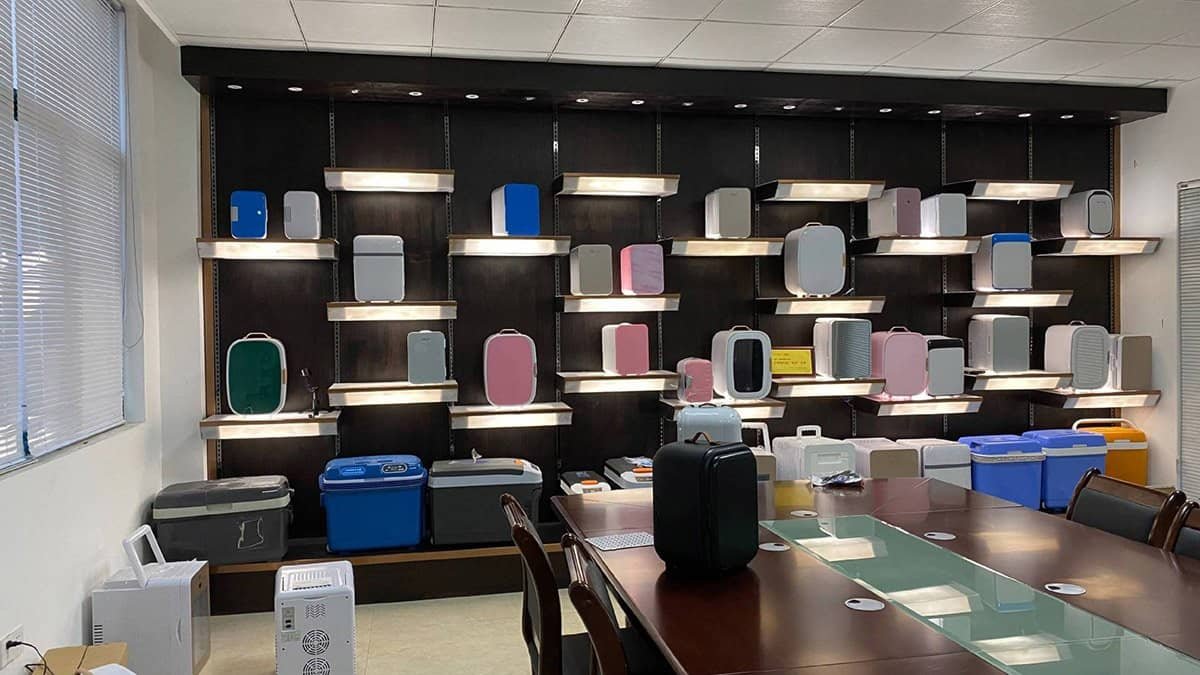
Power Demand Basics: Watts, Amp-Hours, and Duty Cycle
A 40L fridge at 32°C draws 2.5–4.5A.
Most buyers spec a battery without calculating the fridge’s actual duty cycle. That’s where the math falls apart. A 40L compressor fridge in 32°C ambient pulls between 2.5A and 4.5A at 12V — but only when the compressor is running. The rest of the time, it sits at near-zero draw.
40L Fridge Typical Draw: 2.5–4.5A at 12V in 32°C Ambient
The steady-state current depends on insulation thickness, ambient temperature, and how often the lid opens. A well-insulated fridge in stable conditions runs closer to 2.5A. Throw in direct sun or frequent access, and you hit 4.5A quickly.
Convert that to watt-hours: at a constant draw of 3.5A (middle of the range), the fridge consumes roughly 42W per hour of runtime — about 1,008Wh over a full day if it never turned off.
How Duty Cycle (Compressor Runtime) Affects Sizing
But no compressor runs continuously. Duty cycle — the percentage of time the compressor actually runs — is the missing variable in most power calculations.
- Typical daily energy draw (40L fridge): At 25% duty cycle: ~360 Wh/day | At 50% duty cycle: ~720 Wh/day | At continuous run: ~1,008 Wh/day.
The difference between a low-duty-cycle setup (thick insulation, moderate ambient) and a high-duty-cycle one (thin walls, hot climate) is enough to push a marginal battery into failure by mid-afternoon on day two.
For distributors advising retail clients on dual battery vs power station for 12V fridge setups, this means recommending capacity based on worst-case duty cycle — not brochure numbers tested at 20°C.
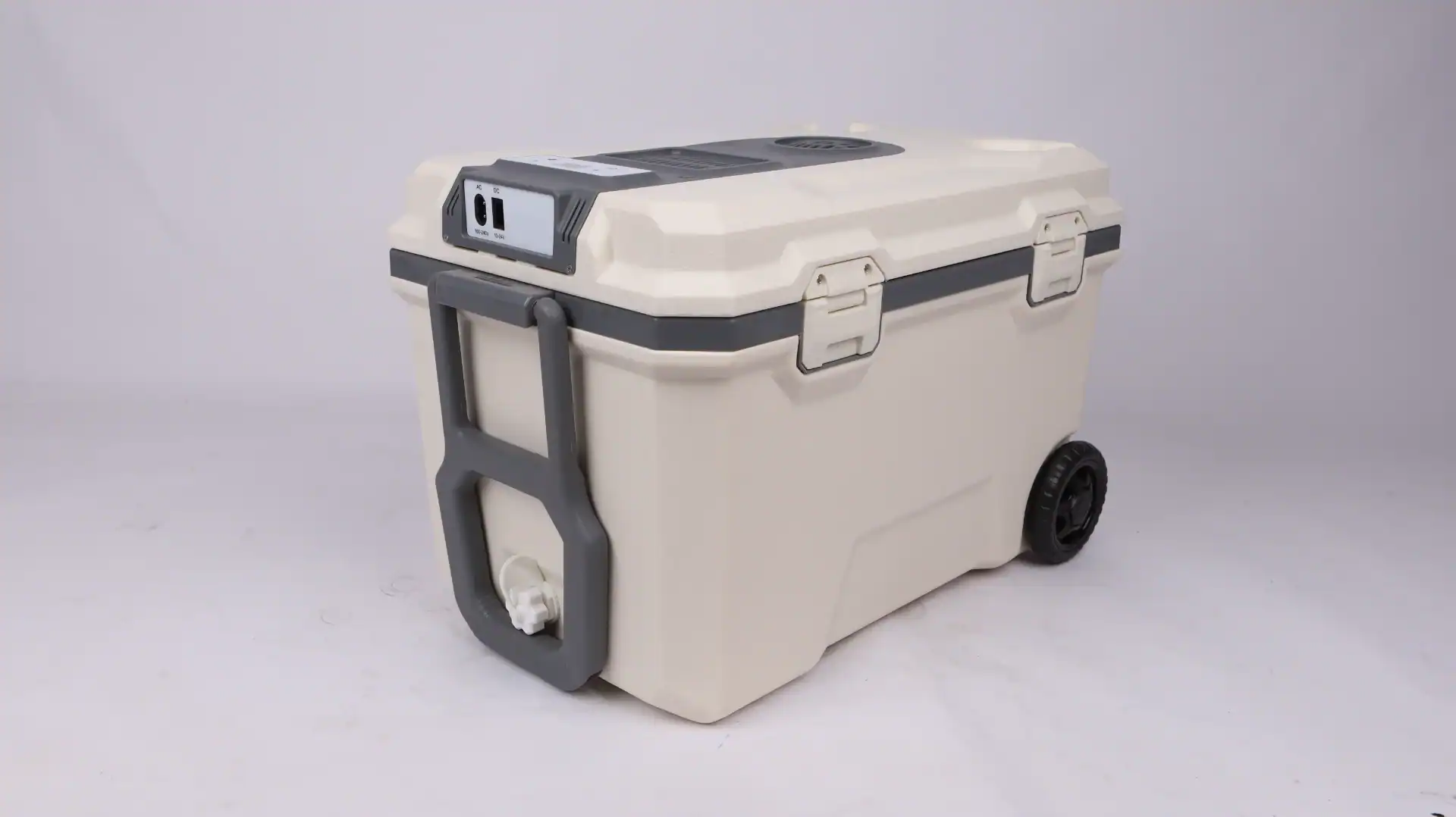
Dual Battery System Breakdown
A 100Ah LiFePO4 dual battery delivers 60% more usable energy than a 1000Wh power station, but weighs 18 kg more and requires.
The core decision between a dual battery system and a portable power station comes down to usable capacity versus weight and installation complexity. A 100Ah LiFePO4 battery provides roughly 1280Wh of usable energy at an 80% depth of discharge. A 1000Wh LiFePO4 power station, also at 80% DoD, gives you only 800Wh. That difference matters when your retail clients run a 40L fridge for multiple days off-grid.
AGM vs LiFePO4: The Chemistry Trade-Off
AGM batteries are cheaper upfront but punish your client with weight and cycle life. A typical 100Ah AGM weighs around 26 kg, can only be discharged to 50%, and lasts roughly 300–500 cycles before capacity drops below acceptable levels. The same capacity in LiFePO4 weighs about 12 kg, discharges to 80–100%, and delivers 2000–5000 cycles depending on the BMS quality.
For a distributor recommending products to overland or camping customers, the total cost of ownership math favors LiFePO4 after the first replacement cycle. AGM looks cheaper on the shelf but costs more per usable amp-hour over three years of regular weekend use.
Real Run Times: What a 100Ah LiFePO4 Actually Delivers
A standard 40L compressor fridge draws between 2.5A and 4.5A at 12V in a warm environment (32°C ambient), depending on insulation quality and how often the lid opens. With a duty cycle of roughly 30–40%, that translates to an average consumption of about 1.0–1.8A per hour — or roughly 15–22Ah over a full day.
Using those numbers, a dedicated 100Ah LiFePO4 dual battery will run that fridge for 48 to 72 hours before hitting the low-voltage cutoff, assuming no other loads are connected. That is enough for a long weekend without recharging — provided your client remembers to turn off parasitic draws like phone chargers or LED strip lights left on overnight.
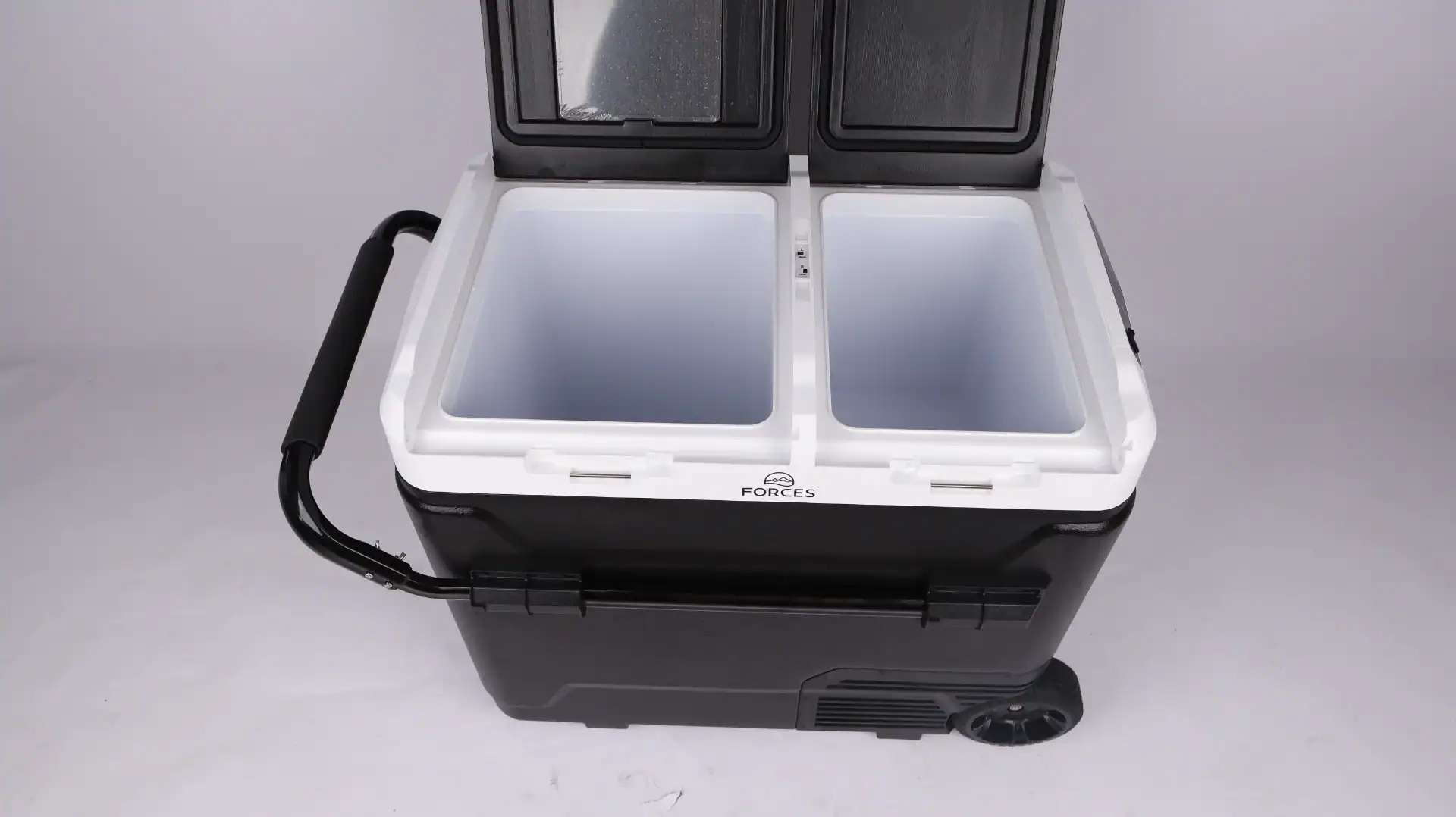
Portable Power Station Breakdown
A 1kWh power station runs a 40L fridge for 28–36 hours.
The portable power station is the simpler sell for most retail clients, but only if you match the capacity tier to their actual fridge size and trip duration. Three tiers dominate the market: 500Wh, 1kWh (1000Wh), and 2kWh (2000Wh). Here is how each performs with a typical 40L compressor fridge drawing 3.5A average at 12V in moderate ambient temps.
500Wh — Weekend Warrior Only
A 500Wh unit delivers roughly 400Wh usable (LiFePO4 at 80% depth of discharge). That powers a 40L fridge for about 12–16 hours before hitting low-battery cutoff. For a Saturday-to-Sunday trip where the fridge stays closed most of the time, it works. Push to three days and you are dead by Sunday morning. This tier suits single-day users or those who also carry a dual battery as backup.
1kWh — The Sweet Spot for Most Campers
A 1000Wh power station gives you about 800Wh usable. That runs a 40L fridge for roughly 28–36 hours depending on ambient temperature and how often the lid opens. For a standard weekend plus one travel day, this tier covers it without anxiety. It also leaves enough reserve to charge phones, run a laptop, or power LED camp lights overnight.
2kWh — Multi-Day Overland Ready
At this tier you get around 1600Wh usable — enough to run that same fridge for nearly three full days without any recharge input. The trade-off is weight: most units in this class hit the scales at over twenty kilograms. That matters when the buyer moves gear between vehicles or carries it from truck bed to campsite.
Which to Recommend for Your Retail Channel
Match the power solution to the customer’s vehicle setup and usage frequency — one size fails both segments.
Your retail channel likely serves two distinct customer groups. One lives in their truck for weeks at a time. The other camps four weekends a year and rents a van for the trip. These two buyers need different power solutions, and if you recommend the wrong one, you absorb the return or the complaint.
For Truck Bed and Overland Builds: Dual Battery Wins
The overland customer runs a fridge 24/7, often in 35°C+ ambient temperatures. Their compressor cycles more frequently, pulling closer to 4.5A sustained. A dual battery system with a 100Ah LiFePO4 gives them 1,280Wh usable at 80% depth of discharge — enough to run a 40L fridge for 48–72 hours without recharging.
Charge speed seals it. A quality DC-DC charger pushes 40A from the alternator, refilling that battery in 4–6 hours of driving. A portable power station plugged into the same vehicle’s 12V socket takes 8–10 hours for the same top-off. For someone driving into remote areas daily, that time gap matters.
Installation is permanent — battery tray, isolator, fuses, cabling — but overland customers expect that commitment. They’re not moving the system between vehicles. They wire it once into their truck bed setup or canopy build and leave it.
For Weekend Campers and Rental Fleets: Power Station Wins
The weekend camper uses their fridge maybe three consecutive days per trip. Their duty cycle is lower — cooler evenings mean less compressor runtime. A portable power station in the 1kWh range delivers roughly 800Wh usable (LiFePO4 chemistry). That keeps a fridge cold through Saturday night into Sunday afternoon on a single charge.
Weight is the real advantage here. A typical dual battery setup adds roughly 30 kg once you include the battery, isolator bracket, wiring kit, and fuse block. A comparable power station weighs about 12 kg and fits in a duffel bag.
Rental fleets love this because every vehicle doesn’t need permanent wiring work done on it before being rented out again to another family who will never use it anyway.
-
- Choose Dual Battery if: Your customer lives in their truck; drives daily; needs guaranteed runtime beyond two days without alternator charging.
- Choose Power Station if: Your customer camps occasionally; shares gear across multiple vehicles; values portability over max capacity.
Conclusion
The decision between a dual battery system and a portable power station comes down to usable capacity versus portability. A 100Ah LiFePO4 dual battery delivers roughly 1280Wh of usable energy, enough for 48–72 hours on a 40L fridge. A 1000Wh power station gives you about 800Wh usable but weighs half as much and moves between vehicles in under a minute.
-
- Dual battery offers higher usable capacity at lower cost per Wh.
- Power station charges from alternator in 8–10 hours vs dual battery in 4–6.
- Weight penalty is decisive for rental fleets and weekend campers.
Frequently Asked Questions
How to get a quote for Dual Battery vs Power Station: Car Fridge Power Specs?
The exact answer depends on the product specification, quantity, and order setup. The safest approach is to confirm the commercial terms only after the final requirement sheet is. The final choice should be matched to the actual use case and performance target.
Can I request samples first?
The exact answer depends on the product specification, quantity, and order setup. The safest approach is to confirm the commercial terms only after the final requirement sheet is locked. Sample availability should be confirmed against the current stock and shipping plan.

 English
  Español
  Français
  Deutsch
  Português do Brasil
  Русский
  한국어
한국어  日本語
日本語  العربية