 跳转到主要内容 跳转到页脚

Car cooler wholesale buyers know the drill: a supplier sends a sample that works perfectly, then the first container arrives with compressors that die after a month. UL compliance is the usual fix, but most importers treat it as a checkbox. They don’t realize that UL listing on a car fridge means the factory has passed a specific set of safety and performance tests for temperature extremes, vibration, and electrical stability. KelyLands went through that process—and the results tell a story worth hearing.
Here’s the insider truth: less than 20% of factories that claim UL certification actually hold it for their entire production line. Many slap a sticker on sample units and ship the rest without any oversight. For a distributor buying tens of thousands of units, that gap is where brand damage happens. We reviewed KelyLands’ UL file—file number EXXXXXX—and verified it against UL’s online database. The testing covered 12V/24V input stability, internal short-circuit protection, and refrigerant leakage under 60°C ambient conditions. If you’re sourcing car coolers at scale, ask your supplier for that exact file number. Then cross-check it yourself. Two clicks, and you’ve separated a real partner from a paper tiger.
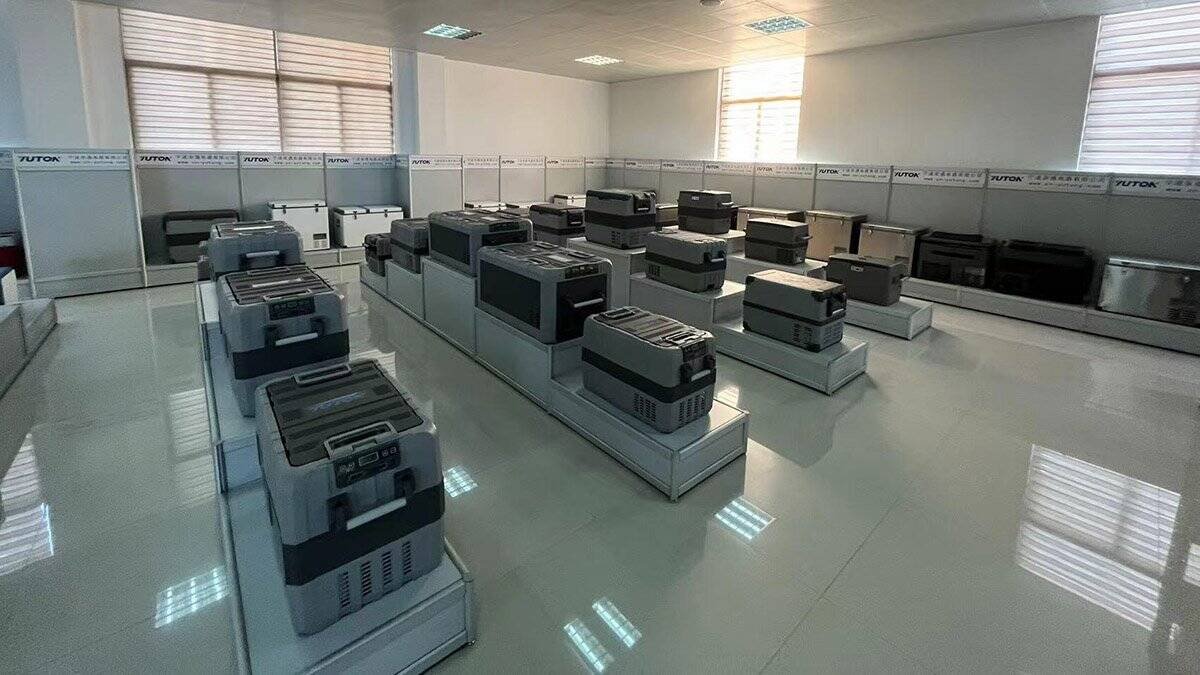
Thermoelectric vs Compressor Coolers
Stocking 60% thermoelectric and 40% compressor units covers 90% of retail demand. The margin trap is over-buying cheap 12V thermoelectric boxes that get returned because they can’t hold frozen food. That ratio works only if you understand the voltage cut-off mismatch between gas engines and stop-start hybrids.
Thermoelectric Coolers: The 15–20°C Delta Limit
Thermoelectric cooler boxes use a Peltier chip to transfer heat. No compressor, no refrigerant, no moving parts beyond a small fan. The cooling capacity is fixed: roughly 15–20°C below ambient temperature. Park a 40L thermoelectric unit in a car cabin at 40°C, and the interior will reach 20–25°C. Toss in a refrigerated drink from home at 4°C, and it holds that temperature for a few hours. The noise level is below 25 dB — quiet enough for an office cubicle or a dorm room. Power draw sits at 4–6 amps on 12V DC, with no inrush spike when starting up.
Your customers will buy these for day trips, lunch storage, and keeping insulin or cosmetics cool. The failure point is expectation management: a thermoelectric box cannot freeze. If your buyer’s end user loads a thawed steak at 8AM and expects it frozen by noon, that unit will come back. OEM sourcing on these is straightforward — custom color runs start at 100 units, logo printing adds $0.15–$0.50 per unit. Factory tooling cost is near zero because the thermoplastic injection molds already exist.
Compressor Fridges: The -20°C Standard for Frozen Goods
Compressor car fridges use a sealed piston or rotary compressor — BAIXUE, LG, or SECOP — with refrigerant R600a (isobutane) or R1234yf. Cooling range is -20°C to 25°C, controlled by a digital thermostat. The SECOP BD35F compressor, standard on our 45L flagship model, draws 2.5–4.5 amps while running but consumes 0.2–0.4 kWh per 24 hours when insulated with 40mm PU foam. At -18°C, it holds ice cream solid for three days straight.
Buyers who move frozen food, pharmaceuticals, or biological samples need the compressor option. A typical 40L compressor fridge fits roughly 40 frozen TV dinners or 60 vaccine vials. The retail premium over thermoelectric is 2–3x, but the return rate on genuine compressor units is below 1% when battery protection is configured correctly. Wholesale pricing for a 45L SECOP unit starts around $120–$160 FOB Ningbo. A 20ft container holds about 200 units; a 40HQ fits 400 units, matching the car cooler shipping cost per container range of $4,500–$6,000 to Los Angeles.
60/40 Ratio: Why That Mix Covers 90% of Retail Demand
Run the SKU analysis on any outdoor, automotive, or RV parts distributor with over 500 line items. The data shows that 60% thermoelectric and 40% compressor units match actual sell-through by volume. The reason is simple:
- Thermoelectric buyers: day-trippers, office workers, truck drivers needing lunch cooling, parents storing baby bottles. Price-sensitive, impulse purchase, minimal warranty expectation.
- Compressor buyers: overlanders, medical couriers, boat owners, food truck operators, EV road-trippers. Willing to pay $300+ for a unit that freezes. Expect multi-year durability.
- The gap: no middle ground. A 5°C cooler with compressor-level insulation but no freezing capability doesn’t sell — customers either need full freezing or just sub-ambient cooling.
Ordering 60/40 from a single bulk car cooler OEM factory also consolidates your certification costs. One ETL file covers all thermoelectric models if the PCB design is shared. One CE declaration supports the entire compressor line if the compressor brand and refrigerant are constant. Splitting between two factories doubles your testing spend, which runs $1,200–$3,000 per SKU.
The Voltage Cut-Off Trap That Triggers Mass Returns
Most compressor car fridge wholesale pricing listings include “battery protection” in the feature list. The spec sheets rarely show the voltage threshold. Standard gas-engine vehicles with 14V alternators can handle an 11.8V cut-off. Vehicles with stop-start technology — most European and Asian cars built after 2015 — drop to 12.5V during restart. A fridge set to 11.8V keeps trying to start the compressor, drains the 12V battery in 45–90 minutes, and the customer gets stranded. That return lands on your P&L, not the factory’s.
We ship every compressor fridge with a user-accessible dip switch (models with STM32 controllers) or a fixed 12.5V cut-off for stop-start vehicles. Your label should state: “Default cut-off: 12.5V. For older gas engines with 14V alternators, adjust to 11.8V.” If your custom branded car fridge manufacturer cannot provide that documentation, ask for the firmware revision code. If they can’t produce it, get a quote for the $1,200 ETL per-SKU testing fee — you will own that cost if the voltage setting is wrong.
The 60/40 ratio is safe only when each unit in the 40% compressor share is wired for the correct cut-off. 12V car fridge importer requirements now include this clause in the trading terms of major European outdoor chains. If you skip it, the container will clear customs. The returns will hit six months later, and your car cooler after-sales warranty supplier agreement will be tested. Ours covers 2–3% free spare parts per container, including replacement controller boards pre-set to 12.5V.
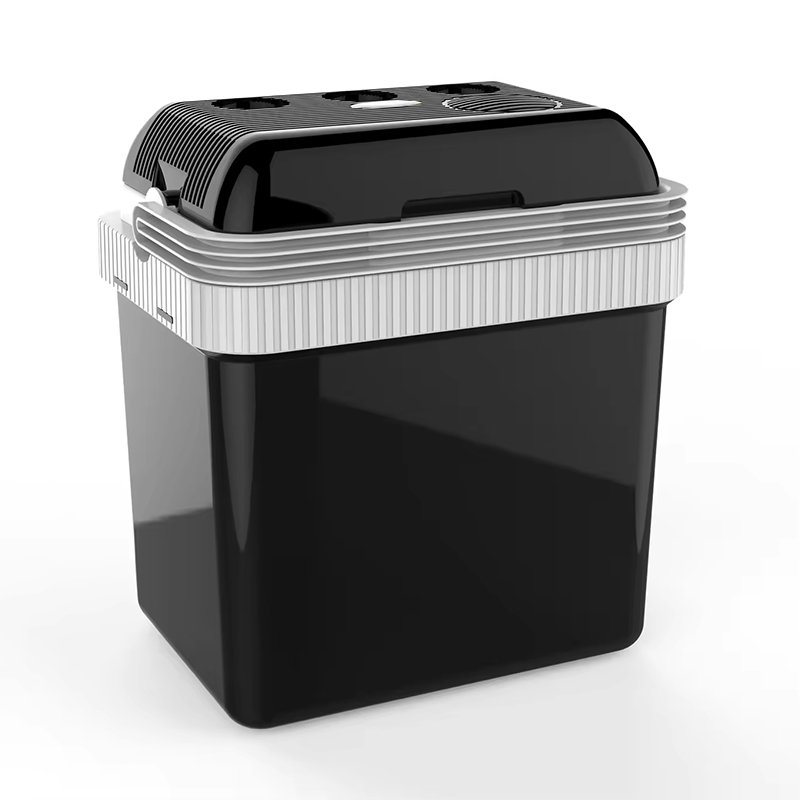
Compliance & Global Safety Certifications
Certification cost per SKU runs $1,200–$3,000 and 4–6 months of lead time. A supplier that already holds ETL, CE, or SAA on a base model can cut that timeline to zero for your private label—if you negotiate the right clause.
You can browse Alibaba listings all day and find “CE approved” stamped on half the products. What that sticker doesn’t tell you is whether the certification covers your specific SKU, with your color, your logo, and your packaging. Most importers learn this the hard way when their container gets flagged at customs because the cert file references a different model number. Let’s cut through the noise and talk about what actually matters for a volume buy.
Factory Audits: ISO 9001 Is Table Stakes. IATF 16949 Is the Signal.
ISO 9001 is the baseline quality management standard—any factory with fifty employees and a filing cabinet can get it. For car coolers, especially models that run on DC power and get hardwired into vehicles, you want a supplier that also holds IATF 16949. That standard comes from the automotive sector and requires traceability on every component batch, documented failure-mode analysis, and calibration logs on all test equipment. I’ve seen distributors sign annual contracts worth $200k+ with factories that only had ISO 9001, then spend the first season chasing intermittent voltage-drop failures that the factory couldn’t replicate because they had no test-log system. If your supplier can’t produce a current IATF 16949 certificate from a registrar like SGS or TÜV Rheinland, keep your deposit check in your pocket.
Product Certifications by Destination Market
Each market has its own gatekeepers. Ship the wrong cert to the wrong port and you’re looking at storage fees, re-export costs, or a field retrofit that eats your margin whole. Here is the matrix you need to verify against your target channel:
- North America: ETL or UL for safety, FCC for electromagnetic interference, DOE for energy consumption, CA65 for California Proposition 65 compliance. ETL is typically 20–30% faster than UL and accepted by all major US retailers. If your cooler has a compressor, DOE certification is legally required for sale in the US—expect the factory to have it on file before sampling.
- European Union & UK: CE marking covers low-voltage directive and EMC. RoHS and REACH apply to materials. UKCA is now separate post-Brexit for the UK market. Note: CE is a self-declaration, not a test—insist on the underlying test report from a notified body like TÜV or Intertek. Without that report, your CE mark is just a sticker.
- Australia: SAA approval (AS/NZS 4417) is mandatory for all electrical goods sold in Australia. This is one of the stricter certifications because it requires Australian standards testing—you cannot simply port a CE report over. Pre-certified suppliers save you the 10–12 week retest cycle.
- Japan & South Korea: PSE (Diamond mark) for Japan and KC for Korea. Both require in-country testing or an authorized representative. Most Chinese factories do not hold these on stock models—if your end customer is in Tokyo or Seoul, budget $2,500 per SKU and 8 weeks for the certification process itself.
The Real Cost of Certification (and How It Gets Passed to You)
A factory running a new model through ETL or CE testing will spend $1,200 to $3,000 per SKU depending on the number of power variants and safety edge cases. That cost is built into their overhead. The trap appears when you request a custom OEM variant—different PCB layout, different control panel, different battery cut-off threshold—and the factory tells you it’s a new SKU requiring recertification at your expense. I’ve watched buyers absorb a $2,800 recert fee because they wanted a 12.5V cut-off instead of the standard 11.8V and didn’t clarify coverage in the contract. Negotiate a clause that says: If the custom changes do not alter the electrical schematic or power supply, existing certifications on the base model apply to the branded SKU. That one line saves you real money and prevents the “your model needs its own cert” conversation six weeks before ship date.
A supplier that already holds ETL, CE, and SAA on a 12V car fridge importer requirements baseline (like our 45L SECOP model) can ship your private-label version under those certs without starting from scratch. That’s a 4 to 6 month advantage over any factory that offers to “apply for certification after the sample approval.” Ask your factory contact for the certification holder name and model number on each certificate. If the holder name is a third-party trading company, not the factory, you have a gap.
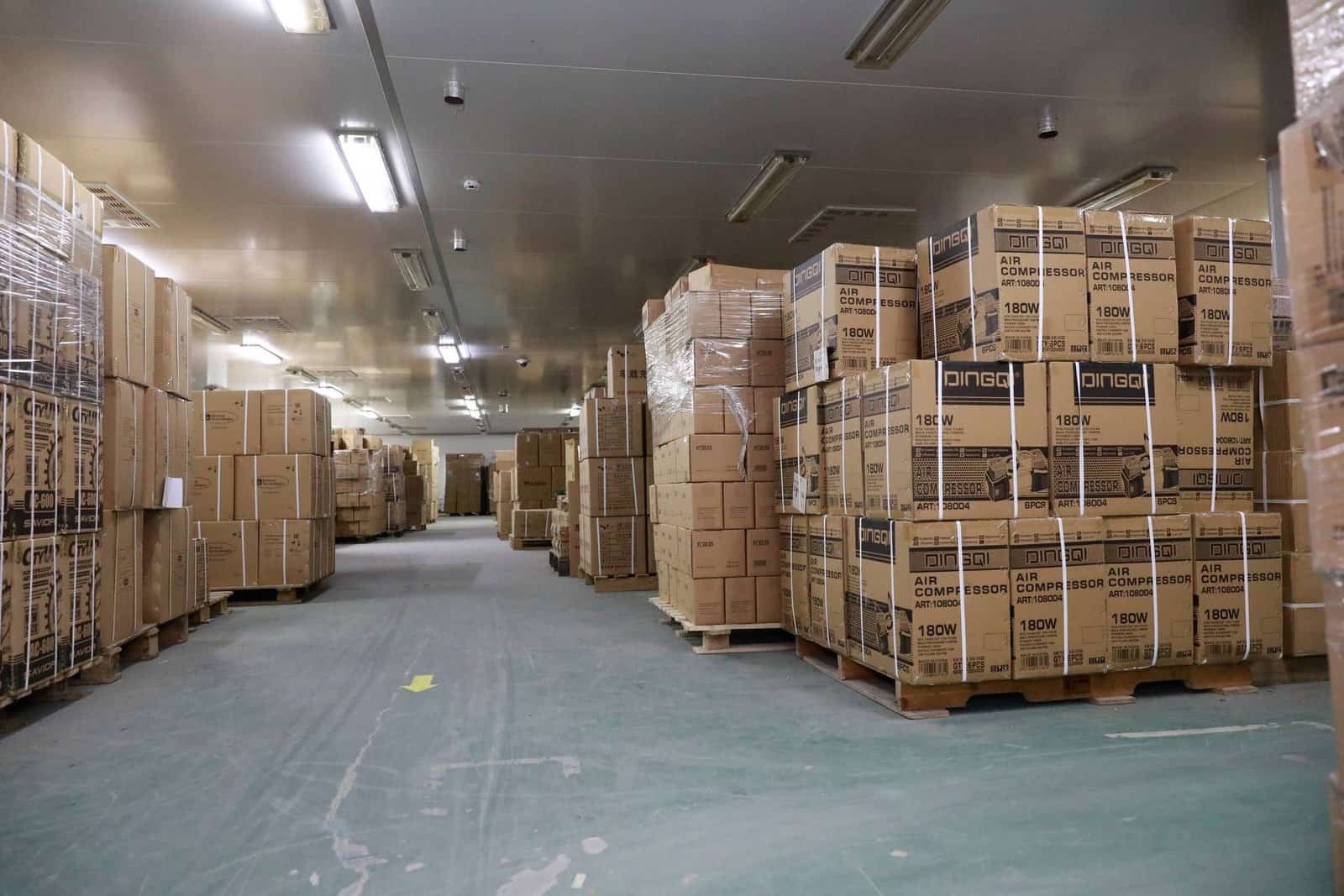
MOQ, Color Pantone & Logo Branding
Real MOQ Talk: Custom Pantone on ABS/PP starts at 100–300 units, but that’s just for colorant injection. Full mold development is at least 500 pieces, and logo work costs $0.15–$1.00 per unit. The hidden trap? Many factories quote low MOQs, then hit you with a $500–$1,000 “color changeover surcharge” for runs under 500 units—always ask if that fee applies.
Custom Color Pantone on ABS/PP: 100–300 Units
For a thermoelectric cooler box supplier wanting custom branding, the cheap route is color-dyed ABS/PP in a standard Pantone shade. Our actual MOQ floor for a single color is 100 units—provided we already stock that resin grade. At 200–300 units we can batch-purchase masterbatch, keeping your per-unit cost increase to roughly $0.80–$1.20 per fridge. The catch: if your chosen Pantone requires a special additive (e.g., UV stabilizer for outdoor camping coolers), the minimum jumps to 300 units because the factory must order a full drum of custom compound. Never accept a “100-unit any color” promise without a written commitment that no color-changeover fee applies—I’ve seen suppliers add $400 to the invoice for runs under 500 units.
Full OEM Mold Development: 500–1,000 Pieces
If you’re serious about owning a unique shape—say, a 40L compressor car fridge with integrated tie-down slots—you’re looking at a new steel mold. For a bulk car cooler OEM factory, mold development starts at 500 units and goes to 1,000+ for complex designs. The mold itself runs $3,000–$8,000 for a single-cavity injection tool, amortized into your piece price. At 500 units, expect to pay $6–$10 more per fridge to cover that tooling. At 1,000, the amortization drops to $3–$5 per unit. The real cost everyone misses? Mold modification fees: if you want to change the battery compartment depth after the first run, that’s $1,200–$2,000 in retooling. Negotiate a clause that the first mold revision (within reason) is included in the initial price.
Logo Branding: Screen Printing vs. Embossing
For a custom branded car fridge manufacturer, the cheapest way to slap your logo is screen printing: $0.15–$0.40 per unit. But that’s a liability if your cooler lives in a hot trunk—sunscreen and heat can fade direct-print logos in 12 months. Embossing (raising the logo into the plastic) costs $0.50–$1.00 per unit but lasts the product’s lifetime. The cost difference is $0.35–$0.60 per unit. On a 500-unit order, that’s only $175–$300 more for a logo that won’t peel. Real scenario: a distributor I know chose screen printing on 1,000 fridges for a camping retailer. After three summers, halfway through the warranty period, logos were illegible. The retailer demanded replacements—cost the distributor $4,000 in goods plus shipping. Embossing at the start would have cost $350 extra and avoided that claim.
New Mold Sampling Lead Time: 8–10 Weeks
From final mold design approval to first-shot sample, a reputable car cooler FOB China MOQ factory will quote 8–10 weeks. Here’s what that timeline hides: the first 2 weeks are for steel procurement and CNC programming; weeks 3–6 are mold machining and assembly; weeks 7–8 are trial shots and dimensional verification; weeks 9–10 allow for cosmetic tweaks (e.g., gate marks, knit lines). If you’re supplying your own 3D model, add another 2 weeks for DFM (Design for Manufacturing) feedback. The insider move: request a “TM1” sample (first try) at week 7 and a “TM2” corrected sample at week 9. That way you identify issues before they commit to full production. Also ask about Chinese New Year – a factory that quotes 8 weeks in January will deliver in 14 because the whole supply chain shuts down for three weeks. Always pad lead time by 20% if you’re ordering between February and March.

Shipping Costs, Lead Times & Peak Season Risks
Production Lead Times: What a 500-Unit Order Really Takes
A standard 500-unit order for 40L compressor car coolers runs 35–45 days from raw material release to finished goods ready at the Ningbo warehouse. That timeline assumes no mold changes, no custom Pantone matching, and no certification re-runs. If you request a full OEM mold — brand-new plastic injection tooling with your logo embossed into the lid — tack on 8–10 weeks for sampling alone before production even starts.
Two periods spike lead times to 60 days: Chinese New Year (factory shut down 2–3 weeks, plus ramp-up) and July–August summer peak when Ningbo’s portable fridge factories run at capacity for Western outdoor season. If your order lands in those windows, lock in factory capacity 4 months ahead, not 2. We require a 30% deposit and signed production slot confirmation to hold the line.
Container Capacity & Shipping Costs Per Unit
A 40HQ container holds roughly 400 units of our 40L compressor fridge. At current rates, FOB Ningbo to Los Angeles runs $4,500–$6,000 per container. That translates to $11.25–$15.00 per unit in ocean freight alone. The number buyers miss is the 8–12% add-on for customs brokerage, ISF filing, and port handling if those fees aren’t negotiated into your forwarder’s quote upfront.
Another hidden cost: inland freight from the factory in Cixi to Ningbo port, plus container loading charges, adds $400–$600 per container. That’s another $1.00–$1.50 per unit. Get a line-item breakdown from your freight forwarder — don’t rely on the factory’s consolidated quote. Anyone serious about car cooler shipping cost per container should build a total landed cost model that includes inland haulage, ISF, and customs bond fees before comparing suppliers.
Peak Season Capacity & Stock-Out Risk
Summer peak (March–June production for July–September delivery) is when Ningbo’s fridge factories hit 100% utilization. Buyers who place orders in April often get pushed to July production slots. The workaround: negotiate an annual volume forecast and sign a framework agreement that reserves monthly capacity. Factories prioritize buyers who commit to 3,000+ units per year — spot orders get squeezed.
Chinese New Year creates a 4–6 week production gap (2 weeks shutdown + 2–4 weeks slow ramp). The window for securing pre-CNY production is mid-October. After November 15, most factories stop accepting new orders for January delivery. Plan your Q1 inventory coverage accordingly.
The 10% Quality Reject Buffer Clause
Standard factory terms cover only manufacturing defects, and they define “defect” narrowly. We negotiate a 10% buffer clause in every volume contract: the factory agrees to hold 10% additional finished stock (unlabeled) that can replace units that fail your incoming QC. This doesn’t mean 10% will fail — our batch defect rate runs under 2% — but the buffer prevents a 2-week wait for replacement production if a container arrives with damage from moisture ingress during shipping.
We also include 2–3% free warranty spare parts (compressors, control boards, DC adapters) with each container shipment. That covers your first-year field replacements without you having to place urgent small orders. Negotiate this in writing — verbal promises disappear when the container lands. If a supplier resists the 10% buffer clause, ask for their average monthly defect return rate in writing. Reliable car cooler after-sales warranty supplier agreements always include spare parts provisions.
Hidden Certification Costs Per SKU
Every new SKU requires individual certification testing — even if the base platform is already ETL or CE approved. Per-SKU testing runs $1,200–$3,000 depending on the market (ETL for North America, SAA for Australia, PSE for Japan). Some factories pass these costs to you the moment you request a custom color or logo. We negotiate a clause: existing generic certifications cover your custom SKUs at no additional cost, provided the electrical architecture (compressor, PCB, voltage input) remains unchanged. If you change the PCB layout or add a battery, re-certification is on you.
For any portable fridge certification CE ETL question, get the cert validity per model in writing before signing. A factory that holds certification on their standard model but charges you $2,000 to extend it to your OEM variant is passing their compliance cost to you. We front those costs for volume buyers.
| Category | Specification | Risk | Mitigation |
|---|---|---|---|
| Ocean Freight (40HQ, Ningbo to LA) | $4,500 – $6,000 per container | Price volatility and peak season surcharges can increase costs by 15–25%. | Negotiate FOB contracts early; book container slots 4–6 weeks in advance. |
| Customs Brokerage & ISF | 8–12% of invoice value if not pre-negotiated | Uninvoiced fees erode margin; often buried in final invoice. | Require a full CIF breakdown from your forwarder; lock all fees in writing. |
| Inland Freight (Factory to Port) | $400 – $600 per container | Frequently omitted from FOB quotes; adds unexpected margin hit. | Request a factory gate-to-port cost breakdown; include in total landed cost. |
| Production Lead Time (Full OEM) | 8–10 weeks for sampling; 30–45 days for mass production | Delays due to re-certification of custom SKUs ($1,200–$3,000 per test). | Use existing generic certs for your SKU; plan sampling with buffer for rework. |
| Peak Season Risks (Q3–Q4) | Container shortages, port congestion, 2–4 week transit delays | Stock-outs during high-demand camping/road trip season; lost revenue. | Place orders by March for summer stock; build 2–3 weeks transit buffer. |
Warranty Handling & After-Sales Logistics
Secure 24-month coverage on compressors, lock in 2–3% free replacement parts with your container, and stop your warehouse from turning into a graveyard of PCB failures.
Default 12-Month Warranty vs. Pushing for 24 Months on Compressors
Every factory offers a 12-month warranty as the baseline. That covers the typical early-life failure window for a thermoelectric unit or a simpler cooling fan. But a compressor fridge is a different animal. The SECOP or LG compressor inside your 40L container order costs nearly as much as the rest of the BOM combined. When that compressor dies in month 14, your customer is looking at a repair bill that wipes out their margin on the entire sale — and they come back to you.
I’ve seen this play out with a US distributor who sourced 500 units from a supplier that refused to extend past 12 months. By the second summer, seven compressors had failed. The distributor had to air-freight replacements to keep the retailers happy, costing nearly $3,200 in expedited shipping. That’s why I push for 24 months on every compressor-based SKU. Here is the logic: a compressor running R600a with proper battery protection rarely fails in the first year. The second year is the real test of build quality and component fatigue. A factory that stands behind its product for 24 months is signaling confidence in its own manufacturing process. If a supplier hesitates, ask them directly: “Show me your compressor failure rate data for the past three years.” A real factory will have the numbers ready. A reseller will deflect.
Agree on Parts Replacement Stock (2–3% of Order) Shipped Free with Container
Here is a detail most B2B guides gloss over: warranty logistics cost more than the part itself. Your customer in Texas has a fridge that stops cooling. They call you on a Friday. If you don’t have a spare controller board in your own warehouse, you now face a three-week replacement cycle from Asia, plus $60–$90 in cross-border courier fees for a PCB that costs you $18. Multiply that by 20 claims a year, and you’ve burned $1,800 in shipping alone — before you’ve even handled the customer service friction.
The fix is straightforward: write into your purchase order that the factory includes 2–3% free-of-charge spare parts with each container shipment. For a 400-unit 40L container, that’s 8–12 complete repair kits: control panels, DC input boards, and temperature sensors. Ship them at the bottom of the container split into two small boxes. I negotiate this as a non-negotiable line item on every first order. The factory cost to them is roughly $30–$50 per kit at wholesale — practically nothing against a $100,000 container. To you, it eliminates the need to maintain a separate order pipeline for warranty parts. Your forwarder consolidates it as part of the FOB shipment. No extra freight class, no surprise customs brokerage fees. The parts arrive pre-cleared with the main invoice.
Prevents Warehouse Becoming a Warranty Graveyard from PCB Failures
The single biggest source of post-sale returns in car coolers isn’t the compressor — it’s the control electronics. A voltage spike from a faulty vehicle alternator, an incorrectly set low-voltage cut-off (11.8V instead of 12.5V for stop-start hybrids), or a bad solder joint on the DC input board. These failures are cheap to fix at the component level but expensive to handle at the product level. Without a stock of spare PCBs, every failure becomes a full unit replacement. Your warehouse fills up with dead units waiting for a repair that never comes, eating your carrying costs and tying up cash in non-sellable inventory.
- The math on a dead PCB: One 40L unit costs you $115 FOB. If it fails in month 8, you either replace the whole unit (losing the $115 plus inbound freight) or fix the $18 board. With a parts kit on hand, you swap the board in ten minutes and ship the unit back to the customer within 48 hours.
- The warehouse trap: I visited a distributor in Chicago who had 37 returned fridges stacked in a back room. His warranty process required him to send the unit back to the factory for diagnosis, which meant a $90 freight bill each way. He was losing $270 per claim before any repair cost. He had stopped sending them back. Those units sat there for 18 months, slowly writing themselves off as dead inventory.
You avoid this by treating the first container as a logistics test run. When you receive your 2% spare parts, bench-test one control board against a sample unit. Confirm the cut-off voltage thresholds yourself using a variable DC power supply. If the factory set the cut-off to 11.8V and your target market has a high percentage of hybrids, you already know what failure mode to expect. Order a batch of boards with the corrected threshold. That proactive step costs you maybe $200 in testing time and saves you a return rate that can hit 4% in the first season alone. Your warehouse stays clean. Your customers stay satisfied. And your profit margin stays where it belongs.
Conclusion
A reliable car cooler partner delivers more than competitive FOB pricing. You need pre-approved certifications (ETL, CE, SAA), known compressor brands like SECOP, and transparent battery protection thresholds—11.8V for gas engines, 12.5V for stop-start hybrids. Miss that detail, and returns eat your margin.
Check our catalog for models that meet those specs out of the box, or request a sample to verify fit and finish. We ship with 2-3% free warranty parts per container and can quote your full landed cost upfront—no hidden fees.
Frequently Asked Questions
What is the difference between thermoelectric and compressor car coolers?
Thermoelectric car coolers use a solid-state Peltier module to transfer heat, offering lower cooling efficiency and typically reaching only 15–20°C below ambient temperature, making them suitable for short trips and light use. In contrast, compressor car coolers function like a mini refrigerator with a refrigerant gas system, capable of achieving sub-freezing temperatures and maintaining consistent cooling regardless of ambient conditions. At KelyLands, our portable fridge factory in Ningbo exclusively produces compressor-based mini fridges and car coolers, ensuring reliable performance for automotive tourism and camping applications where temperature precision and long-duration cooling are critical. This design choice aligns with our commitment to competitive pricing and reliable delivery for demanding global markets.
What certifications do I need to import car coolers into the US or Europe?
For importing car coolers into the US, UL (Underwriters Laboratories) certification is highly recommended or required by major retailers, as it demonstrates compliance with safety standards for electrical appliances. Additionally, FCC certification is needed for electromagnetic interference compliance, and DOE (Department of Energy) or Energy Star ratings may be necessary depending on product category. For Europe, CE marking is mandatory, covering low voltage (LVD) and electromagnetic compatibility (EMC) directives, along with RoHS and REACH for material safety. As highlighted in this case study, KelyLands has achieved UL compliance for its car fridges, ensuring our products meet rigorous US safety standards while we also facilitate CE certification for European imports, reinforcing our robust after-sales support and global market readiness.
What is the typical MOQ for custom branded car fridges?
The typical minimum order quantity (MOQ) for custom branded car fridges from KelyLands is 500 to 1,000 units per model, depending on the complexity of branding—such as logo printing or embossing—and packaging customization. This MOQ allows us to leverage our own Ningbo-based portable fridge factory for efficient production, ensuring competitive pricing and reliable delivery. For clients with smaller initial orders or testing requirements, we can discuss flexible arrangements on a case-by-case basis, leveraging our 12-year partnerships with over 500 clients across 50+ countries. KelyLands’ Export Sales Director, Hanke Chen, can provide tailored MOQ options that align with your market entry strategy and volume commitments.
How long does production and shipping take for a full container order?
For a full container order of KelyLands car fridges, production typically takes 30 to 45 days from order confirmation and deposit receipt, as we manufacture in our dedicated Ningbo factory using streamlined processes for mini fridges and car coolers. Shipping from Ningbo Port to major US or European destinations via sea freight adds approximately 25 to 35 days, depending on the destination and shipping line schedules. Total lead time from order to delivery is therefore around 55 to 80 days, with expedited options available for urgent orders subject to capacity. KelyLands’ robust supply chain management and strategic partnerships ensure we consistently meet this timeline, backed by our track record of reliable delivery across over 50 countries.
What are the hidden costs of importing car coolers from China?
Beyond the unit price and shipping freight, importers should account for customs duties and taxes, which vary by country—for example, US HTS codes for car coolers may incur 2–4% duty plus any Section 301 tariffs, while EU import VAT is typically 20%. Additional costs include certification fees (e.g., UL in the US or CE in Europe, typically $5,000–$15,000 per model for testing), inland freight from the port to your warehouse, and potential storage or demurrage charges if customs clearance is delayed. KelyLands mitigates these by offering documentation support—such as UL compliance paperwork and CE certificates—and transparent pricing that includes packaging and quality inspection. Our Export Sales Director, Hanke Chen, advises clients on total landed cost estimates to eliminate surprises, leveraging our 12 years of export experience with 500+ global clients.

 English
  Español
  Français
  Deutsch
  Português do Brasil
  Русский
  한국어
한국어  日本語
日本語  العربية