 跳转到主要内容 跳转到页脚
Selecting the right certified vacuum cleaner supplier is pivotal for ensuring product reliability, compliance, and long-term business success. This article delivers a comprehensive buyer’s guide tailored for B2B purchasers, highlighting key certifications, supplier capabilities, and strategic considerations essential for choosing trustworthy and compliant vacuum cleaner suppliers. Certified vacuum cleaners with CRI Seal of Approval ensure superior carpet cleaning performance and environmental standards. Industrial vacuum cleaners certified to OSHA standards and equipped with HEPA filters remove at least 99.97% of particles down to 0.3 micrometers.
Essential Certifications and Compliance for Vacuum Cleaner Suppliers
Certifications such as CRI, ISO 9001:2015, CE, RoHS, UKCA, and OSHA standards form the core credibility pillars for certified vacuum cleaner suppliers.
Industry Credentials and Certification Requirements
Begin your evaluation by verifying a supplier’s core industry credentials. The Carpet and Rug Institute (CRI) Seal of Approval or Green Label certifications are essential benchmarks for carpet cleaning performance and environmental standards. These validate a vacuum’s ability to effectively remove soil while containing dust. For detailed CRI-certified options, visit the CRI vacuums archive.
For manufacturing quality, insist on ISO 9001:2015 certification. This demonstrates a sustained commitment to robust quality management systems and process control. It is a fundamental indicator of a reliable production partner.
Market access depends on regional compliance. Suppliers must provide clear proof of CE, RoHS, and UKCA approval for sales in European and UK markets. For industrial applications, OSHA certifications are critical for safe operation in hazardous and combustible environments.
| Certification | Scope | Significance | Typical Application |
|---|---|---|---|
| CRI Seal of Approval | Carpet cleaning efficacy | Ensures cleaning performance & dust containment | Residential and commercial carpet vacuums |
| ISO 9001:2015 | Quality management | Indicates sustained commitment to quality and process control | All manufacturing facilities |
| CE Mark | European product safety | Mandatory for product sale in EU | All vacuum product categories |
| RoHS | Hazardous substances | Compliance with environmental restrictions | Electrical vacuum components |
| UKCA | UK product compliance | Post-Brexit UK market entry | All vacuum products sold in UK |
| OSHA Standards | Workplace safety | Critical for industrial and hazardous environments | Industrial vacuum cleaners, explosion-proof models |
Table source: Intelligence briefing and compliance standards.
Filtration Standards and Performance Certifications
Filtration is a key performance differentiator. True HEPA filters must capture 99.97% of airborne particles as small as 0.3 micrometers. This is non-negotiable for maintaining indoor air quality and serving allergy-sensitive markets. According to OSHA, a HEPA filter is defined as a filter that is at least 99.97% efficient in removing particles of 0.3 micrometers in diameter, ensuring safer environments for sensitive users (Goodway Industrial Guide).
For ultra-critical environments like clean rooms or laboratories, ULPA filters are required. These offer 99.99% efficiency at 0.12 micrometers. Always request proof of filtration testing to guarantee low dust emission and long-term reliability.

Core Supplier Evaluation Criteria: Experience, Product Range, and Quality Assurance
Beyond certifications, supplier reputation, extensive product offering, and stringent quality control processes determine their suitability as certified vacuum partnerships.
Industry Experience and Reputation
An established track record significantly reduces procurement risk. Prioritize suppliers with years of proven industry experience and a history of customer satisfaction. Longevity often correlates with stability and reliability. Researching industry experience and reputation is essential for selecting a quality vacuum cleaner supplier.
Conduct thorough due diligence by researching customer reviews and testimonials. Consistently positive feedback on service quality and product reliability is a strong indicator of a trustworthy partner. This research is your best defense against supply chain disruptions.
Comprehensive Product Range and Quality Features
A strong supplier offers a diverse portfolio to meet various market needs. This includes upright, canister, robotic, backpack, and wet-dry models. For industrial clients, specialized models for sectors like mining, oil and gas, and hazardous waste are essential. When looking for suppliers, consider tips on choosing the best vacuum cleaner supplier to ensure suitability across applications.
Evaluate essential performance features across the product range. Look for adjustable height settings for different carpet types, robust HEPA filtration systems, and designs focused on durability and ease of operation. The machine’s design and capacity directly impact its end-user appeal.
Quality Assurance and Testing Protocols
Probe deeply into the supplier’s quality control protocols. Leading manufacturers employ stringent processes like 100% functional testing before shipment. This commitment drastically minimizes defect rates and costly returns.
Request details on their quality inspection reports and commitments to low fault rates. Certifications from third-party auditors like SGS or TÜV Rheinland provide independent verification of their manufacturing reliability and should be a standard request.
Supplier Capacity, Logistics, and Customization for Competitive Advantage
Capacity to handle scale, flexible logistics, and custom product innovation are vital for meeting diverse market demands and maintaining supply chain resilience.
Manufacturing Scale and Supply Chain Reliability
High-volume capacity safeguards your business against stockouts. Manufacturers with large facilities and monthly outputs exceeding 180,000 units can reliably support major orders. This scale is crucial for fulfilling peak seasonal demands.
Annual production capacities above 5 million units demonstrate a robust supply chain. Location proximity can also be a strategic advantage, enabling faster delivery, reduced shipping costs, and more efficient technical support and service.

Logistics Optimization and Packaging Solutions
Expertise in logistics translates to direct cost savings. Suppliers with professional packing experience can optimize pallet configurations. This eases warehousing and reduces distribution expenses for your operation.
Lightweight and compact packaging design is particularly critical for e-commerce and FBA sellers. It directly reduces freight expenses, improving your bottom line. Strong logistics partnerships ensure flexible shipping options tailored to your specific import requirements.
Customization and Innovation Capacity
The ability to customize products is a key differentiator. Look for partners offering options like enhanced battery performance, specialized attachments, or OEM/ODM support. This allows you to create unique products for your target market.
Ongoing R&D is a sign of a forward-thinking supplier. A pipeline that delivers new products annually keeps your offerings competitive. Furthermore, a willingness to sign strict NDAs protects your intellectual property during design collaborations.
Powerful Portable Car Vacuum Cleaners
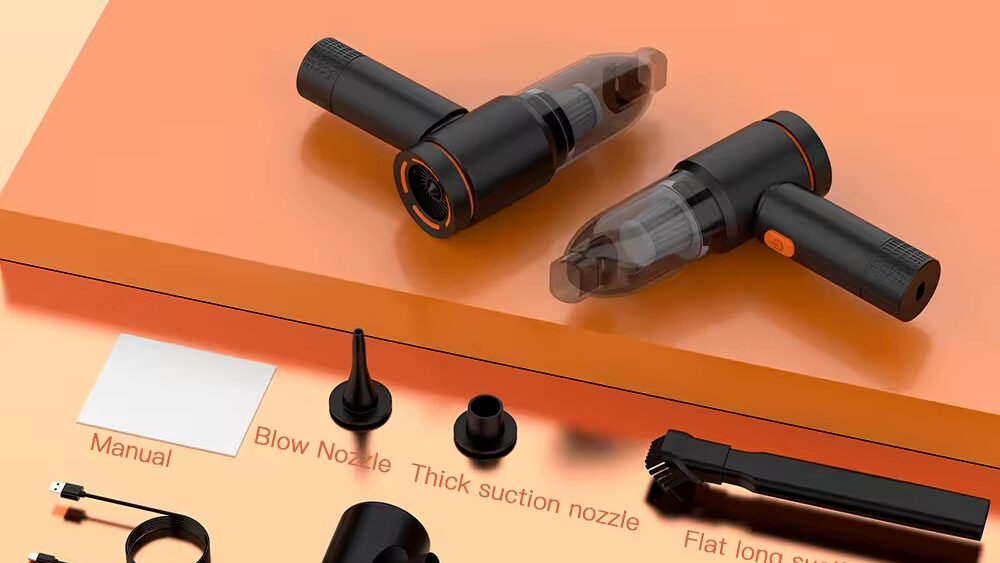
KelyLands offers compact, cordless vacuum cleaners with strong suction, versatile attachments, and quiet operation. Perfect for daily car cleaning, pet hair removal, and travel messes. Customize your order with trusted OEM/ODM support and global certifications.

Frequently Asked Questions
What certifications should I prioritize when selecting a certified vacuum cleaner supplier?
Prioritize certifications based on your target market and application. The CRI Seal of Approval is key for carpet performance, while ISO 9001:2015 ensures manufacturing quality. CE, RoHS, and UKCA are mandatory for European and UK market access. For industrial use, OSHA compliance is critical for safety in hazardous environments.
How important is supplier experience and reputation in choosing vacuum cleaner partners?
Experience is a primary indicator of reliability. A long-term track record and consistently positive customer reviews significantly reduce procurement risk. An established supplier is more likely to have resilient supply chains and proven product quality, ensuring business continuity.

What key features make a vacuum cleaner suitable for industrial applications?
Industrial vacuums require robust features for demanding environments. Key specs include wet/dry capability, high capacity tanks, OSHA certification for safety, and true HEPA filtration. For extreme conditions, look for explosion-proof designs and specialized features for sectors like mining or metal processing.
How can large production capacity benefit my procurement process?
A high-capacity supplier ensures reliable supply during peak seasons and for large orders, preventing costly stockouts. It provides scalability for your business growth and reduces the risk of production delays, offering greater supply chain stability and predictability.
What customization options should I consider for differentiated vacuum products?
Consider customization that adds market-specific value. This includes enhanced battery life for cordless models, specialized attachments for unique use cases, custom color schemes, and private labeling. These options allow you to create a unique product that stands out to your customers.

 English
  Español
  Français
  Deutsch
  Português do Brasil
  Русский
  한국어
한국어  日本語
日本語  العربية