 跳转到主要内容 跳转到页脚

Sourcing a high-performance digital tire inflator protects distributors from the liability of sensitive 2026 TPMS safety standards. Inconsistent pressure readings trigger immediate dashboard alerts and increase retail return rates, directly eroding profit margins for automotive wholesalers.
Hardware must align with the ±1.5 PSI precision benchmark and maintain thermal stability via pure copper motors. Integrated auto-stop logic and real-time LCD monitoring provide the factory-level calibration required for professional fleets and international retail supply chains.
Set It & Forget It: How does “Auto-Stop” logic prevent over-inflation?
Integrated digital sensors track real-time PSI against user-defined limits, triggering an immediate motor shutdown once targets align to prevent tire damage and eliminate manual oversight.
The Feedback Loop Between Sensors and the Motor
Modern inflation hardware relies on a constant data exchange between the tire valve and the pump’s internal processor. This feedback loop ensures the motor only operates while the pressure remains below the safety threshold.
- Digital Sensors: These components measure internal tire pressure constantly throughout the inflation cycle.
- Electronic Control Unit (ECU): The board compares real-time PSI data against the pre-programmed target value set by the operator.
- Automated Shutoff Trigger: The system halts airflow instantly when the values align, preventing the pressure spikes common in manual pumps.
Precision Calibration in KelyLands Smart Auto-Stop Systems
KelyLands integrates this logic into our B2B manufacturing standards to meet the reliability demands of professional automotive distributors and retail chains.
- Target Versatility: Users can preset targets for cars, bikes, or balls up to a maximum of 150 PSI.
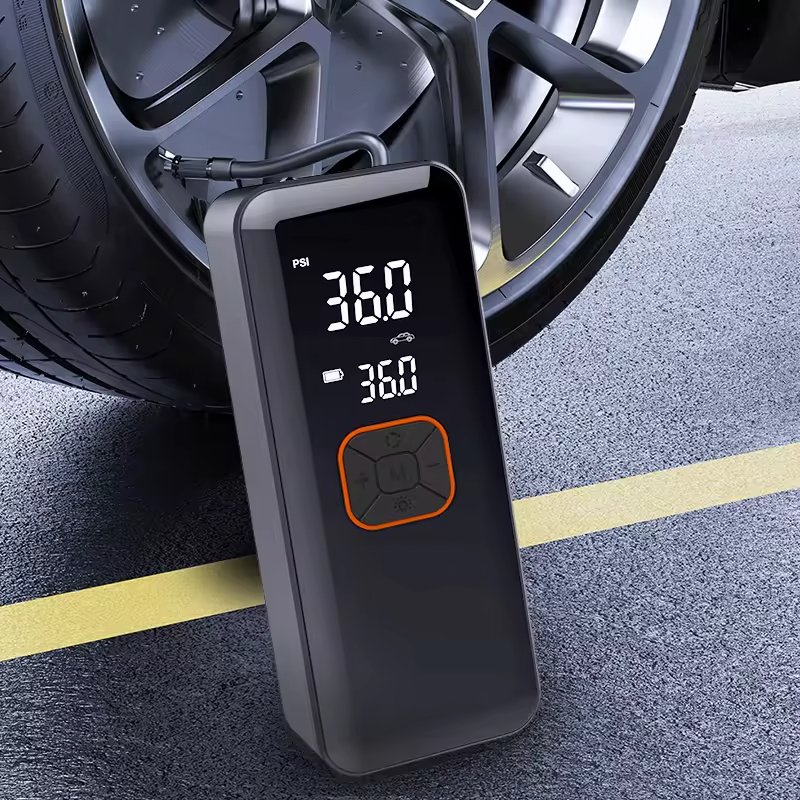
- Real-Time Monitoring: High-contrast LCD screens display live pressure to ensure the pump stops at the exact required level.
- Pure Copper Motor: We use high-performance copper motors to maintain stable airflow and ensure the digital interface triggers a responsive shutoff.

Night Visibility: Backlit LCD vs. Dark Analog Dials.
Backlit LCDs solve the visibility gaps of analog dials by providing internal illumination and precise data, ensuring operators monitor pressure accurately during nighttime emergencies without needing external light sources.
Impact of Light Emission on Night Vision Retention
Analog dials rely on passive reflection or luminescent paint. While this design avoids the melatonin suppression associated with bright blue-light screens, it makes reading a needle nearly impossible in total darkness without a secondary flashlight.
- Safety Standards: LCD backlights provide the necessary contrast to meet 2026 safety requirements, ensuring digits stay visible in pitch-black conditions.
- Cognitive Load: High-contrast digital displays allow users to parse specific PSI values instantly, whereas small analog gauges require more focus to track a vibrating needle.
- Vision Protection: Optimized backlighting intensity keeps the screen legible while minimizing the glare that causes temporary night blindness during roadside use.

Integrated LCD Precision for Real-Time Pressure Monitoring
KelyLands Smart Digital Handheld models utilize high-performance LCD panels. These screens function as an active digital pressure gauge the moment the hose connects to the tire valve, providing immediate feedback for wholesalers and service providers who prioritize speed and accuracy.
- Real-Time Monitoring: The system displays live pressure data, allowing users to verify tire health in seconds without external lighting equipment.
- Sensor Accuracy: Our digital sensors maintain a tolerance of ±1.5 PSI, providing a level of precision that analog needles cannot replicate through visual estimation.
- Unit Versatility: The digital interface allows for instant switching between PSI, BAR, and KPA, catering to international markets including Europe and North America.
Digital displays also facilitate the “set it and forget it” workflow. By presetting the target pressure, the internal electronic control system triggers an automatic shutoff once the sensor matches the target, removing the operator from the immediate proximity of high-pressure equipment during the inflation cycle.
High-Performance Portable Car Air Pumps for Wholesale
Accuracy: Is +/- 1 PSI precise enough for TPMS sensors?
A ±1 PSI variance meets 2026 safety standards. This level of precision ensures TPMS sensors trigger alerts correctly before tires reach dangerous under-inflation levels.
| Feature | Industry Standard (AAA 2026) | KelyLands Factory Spec |
|---|---|---|
| Accuracy Tolerance | 1.2% – 1.5% Variance | ±1.5 PSI |
| Real-Time Monitoring | Direct TPMS Integration | Instant LCD Sync |
| Motor Stability | Varies by Manufacturer | Pure Copper (High-Stability) |
Understanding Industry Standards for Digital Gauges and TPMS Sensors
Most modern vehicles rely on direct TPMS sensors located inside the tire. These systems focus on identifying significant pressure drops rather than providing laboratory-grade absolute measurements. Automotive experts confirm that a variance of 1 PSI does not compromise vehicle stability or fuel economy.
- Direct TPMS Accuracy: Systems use internal sensors accurate to within 1 PSI for real-world driving conditions.
- AAA Benchmarks: Studies show a 1.2% to 1.5% absolute difference between gauges and sensors is standard for 2026 vehicle models.
- Alert Thresholds: Precision at this level effectively monitors under-inflation, alerting drivers when pressure hits 70-75% of the recommended placard PSI.
KelyLands Factory Calibration and Real-Time Monitoring Specs
We calibrate our inflators to match these industry benchmarks. This alignment ensures that the reading on your handheld pump matches the data reported by the vehicle’s onboard computer. By using stable materials, we maintain this tolerance even under heavy-duty use.
- Functional Testing: KelyLands inflators undergo 100% aging and functional testing to ensure a factory pressure accuracy of ±1.5 PSI.
- Real-Time Monitoring: The LCD displays tire health immediately upon connection, allowing you to check pressure in seconds without starting the pump.
- Smart Auto-Stop: The control logic utilizes these precise readings to shut down the pure copper motor exactly at your defined target, preventing over-inflation.
Unit Conversion: Switching between PSI, BAR, and KPA instantly.
Global standards vary by region. KelyLands digital inflators use multi-unit toggles on backlit screens to match manufacturer specs instantly without manual math.
Global Pressure Standards: Understanding PSI, BAR, and kPa
Tire maintenance protocols depend on geographic location. Most vehicle manufacturers provide pressure specifications in the unit most common to their primary market, requiring users to understand these three distinct scales.
- PSI (Pounds per Square Inch): The primary measurement in the United States, Canada, and the UK. Most passenger tires require 32–35 PSI.
- BAR: The metric standard across Europe. 1 BAR equals approximately 14.5 PSI. Standard vehicles typically range from 2.2 to 2.5 BAR.
- kPa (Kilopascal): A high-precision metric scale used in technical manuals and scientific contexts. 100 kPa equals exactly 1 BAR.
- Mathematical Conversion: 1 PSI equals 0.06895 BAR or 6.895 kPa.
Smart LCD Interfaces for Real-Time Unit Toggling
KelyLands hardware integrates these units into a single interface. This eliminates the need for manual calculations or external conversion charts, which often lead to inflation errors.
- High-Resolution LCD: Functions as a real-time digital pressure gauge immediately upon connection to the tire valve.
- Unit Toggling: The digital control module allows users to cycle through PSI, BAR, and kPa with a single button press.
- Sensor Precision: Internal sensors maintain a pressure accuracy of ±1.5 PSI, ensuring the auto-stop logic functions reliably across all scales.
- Stable Airflow: Pure copper motors provide the consistent pressure needed for sensors to deliver accurate readings during cycles up to 150 PSI.
Digital systems allow operators to switch between these standards to meet local vehicle requirements. This flexibility ensures that a single device remains compatible with international vehicle fleets and technical specifications.
Frequently Asked Questions
How accurate are the pressure sensors in these digital inflators?
KelyLands units utilize precision sensors with an accuracy tolerance of ±1.5 PSI. This level of precision meets modern vehicle requirements for sensitive TPMS sensors and prevents the large error margins typically found in cheap analog gauges.
Does the pump display current tire pressure before it starts inflating?
Yes. Upon connecting the air hose to the valve stem, the LCD screen provides a real-time pressure reading. You can verify the current PSI immediately and decide if inflation is necessary before you activate the motor.
How do I reset the tire pressure light on my dashboard?
Inflate all tires to the manufacturer’s recommended level first. Then, press and hold the TPMS reset button under your dashboard until the light flashes. Many 2026 vehicle models also offer automatic recalibration after 10 to 15 minutes of steady driving.
Will the device save my previous pressure settings?
Most KelyLands digital models include a memory function that stores your last used PSI setting. This removes the need to manually re-enter the target pressure when you move between tires or perform regular weekly maintenance.
Can I read the digital display in direct sunlight?
We use high-contrast, backlit LCD screens specifically designed for visibility in all environments. Whether you work in bright midday sun or a dark garage at night, the interface remains readable without glare or dimness.
What happens if the pump overheats during continuous use?
The pure copper motor and integrated cooling fans regulate internal temperatures. If the unit reaches a safety threshold, the smart thermal protection kicks in to prevent damage. The high-performance cooling system typically allows for the inflation of four standard car tires in one session without interruption.

 English
  Español
  Français
  Deutsch
  Português do Brasil
  Русский
  한국어
한국어  日本語
日本語  العربية