 跳转到主要内容 跳转到页脚
Choosing between digital and analog car air pumps isn’t just about bells and whistles—it’s about finding the right tool for your specific needs. Digital pumps shine with their auto-shutoff convenience, backlit displays for nighttime use, and precision that’s perfect for multiple vehicles with different pressure requirements. Analog pumps win on durability, working reliably for decades without batteries or electronics that can fail. Your decision comes down to whether you value modern convenience or bulletproof reliability, with digital units typically lasting 5-7 years while quality analog models keep pumping for 10-15 years.
Picture this: you’re standing in an auto parts store staring at a wall of car air pump selection options, or you’re scrolling through endless product listings online. The fundamental question hits you—digital or analog? This choice affects way more than just how fancy your tool looks. It determines how accurately you’ll maintain tire pressure, how long your investment will last, and ultimately, how safe you’ll be on the road.
Most people get distracted by price tags or brand names, but the display technology in your tire inflator actually determines how well you’ll keep your tires properly inflated. This directly impacts your gas mileage, how long your tires last, and how your car handles. Drawing from real manufacturing data from KelyLands—a company that serves over 500 clients across 50+ countries—we’ll break down the actual differences between these technologies and help you make the smart choice.
Join 300+ global partners who trust KelyLands for top-tier car accessories. Review our portable air pumps in our free catalogue
Request now
How Digital and Analog Air Pumps Actually Work
Digital and analog systems measure tire pressure using completely different approaches—one relies on electronics for precision, while the other uses mechanical parts for reliability.
Digital Systems: When Electronics Meet Tire Pressure
Digital air pump systems use electronic sensors paired with LCD or LED screens to show you exact pressure numbers. These systems convert pressure readings into digital format, displaying measurements in precise increments that typically range from 0.1 to 1 PSI. The technology includes electronic pressure sensors for accurate measurement, computer-controlled displays, and automatic shut-off features that stop pumping when you hit your target pressure.
The advantages of digital air pumps become obvious when you’re working in the dark. Unlike analog tire gauge systems that need decent lighting to read the dial, digital tire gauge models have backlit screens that stay visible even in complete darkness—a game-changer for roadside emergencies or early morning tire maintenance. Modern digital features include programmable presets for different vehicle types, memory functions that remember your most-used PSI level settings, and error detection systems that warn you about problems.
Analog Systems: Old-School Mechanical Reliability
Analog air pump systems use mechanical gauges built with Bourdon tube technology. When pressurized air enters the gauge, it causes a curved metal tube to straighten slightly, which moves a needle across a numbered dial. This mechanical design provides built-in durability without electronic components that can get damaged by moisture, extreme temperatures, or electrical interference.
Professional-grade analog systems feature oil-filled gauges that reduce vibration, dual-scale displays showing both metric and imperial units, and heavy-duty construction designed for commercial use. The immediate pressure response without electronic delays makes them particularly valuable for diagnostic work and fine pressure adjustments that require quick feedback.

Real-World Performance: How They Stack Up
When you actually use these pumps day-to-day, the differences in convenience, accuracy, and durability become crystal clear—and the results might surprise you.
Daily Use: Convenience vs. Control
The automatic shut-off feature in digital pumps transforms tire inflation from a hands-on task to a set-it-and-forget-it operation. You preset your desired pressure, connect the pump, and walk away—the pump stops automatically when it reaches your target. This eliminates the constant checking and guesswork that comes with analog systems.
For families managing multiple vehicles with different pressure needs, digital pumps excel through memory presets. You can store and instantly recall different pressure accuracy requirements for your sedan, SUV, and truck. Analog tire gauge systems require you to manually check reference charts each time, though experienced users often develop an intuitive feel for proper pressure levels.
Durability: The Long Game
Laboratory testing under harsh conditions shows analog systems consistently outperform digital ones in reliability. Digital systems show higher failure rates when exposed to temperature swings between -20°F and 140°F, humidity levels above 85%, and the vibration stress that comes from bouncing around in vehicle storage. Analog systems have failure rates roughly 60% lower than comparable digital units over 5-year test periods.
Component lifespan analysis reveals LCD displays typically last 3-5 years, while electronic sensors last 5-7 years with regular calibration maintenance. Battery-powered inflator systems need battery replacement every 2-3 years. Analog Bourdon tubes maintain 10-15 year operational life with minimal maintenance and zero battery dependencies.
Matching Pump Types to Your Vehicle
Different vehicles and driving styles heavily favor one technology over the other—and choosing wrong can cost you time, money, and reliability when you need it most.
Daily Drivers and Family Cars
For standard passenger vehicles with tire pressures between 30-35 PSI, digital tire gauge systems offer the best combination of convenience and precision. The accuracy helps you maintain manufacturer-specified pressures for optimal fuel efficiency and tire wear. Look for features like auto-shutoff with 1 PSI accuracy, preset memory for front and rear pressure differences, and 12-volt power outlet compatibility for roadside emergencies.
KelyLands manufacturing data shows passenger car owners report 85% satisfaction rates with digital pumps that include preset memory functions, compared to 65% satisfaction with basic analog models. The convenience factor significantly outweighs reliability concerns for typical consumer use patterns.
Trucks and Heavy-Duty Applications
Heavy-duty applications requiring pressures up to 80-100 PSI benefit from analog pump reliability. Commercial vehicles operating in diverse environmental conditions need equipment that performs consistently without the risk of electronic failures. Critical specifications include pressure ranges extending to 150+ PSI, heavy-duty hose construction, and professional-grade gauge accuracy.
Fleet managers consistently report lower maintenance costs and higher uptime rates with analog pump systems in commercial applications. The independence from electrical systems proves invaluable in remote locations or during extended use scenarios where a pump power source might not be available.
Off-Road and Performance Vehicles
Off-road enthusiasts who frequently adjust pressure for different terrain types need pumps capable of rapid, accurate pressure changes. Rock crawling demands precise low-pressure settings (10-15 PSI) where digital accuracy becomes valuable, while desert running requires consistent high-pressure maintenance where analog reliability excels.
Portable tire inflator systems for adventure use must balance dust and moisture resistance with reliable operation. Many experienced off-roaders carry both types: digital for precise adjustment and analog as backup for remote reliability when they’re miles from the nearest 12-volt power outlet.
Partner with a trusted supplier to elevate your product offerings. Our ISO-certified car air pumps meet global standards (CE, FCC, RoHS). Request our latest catalogue to discover cost-effective solutions for your business.
Making the Smart Choice: Your Decision Framework
Your optimal air pump choice depends on how you actually use it, where you drive, how precise you need to be, and what you’re willing to spend over the long haul.
Professional vs. Home Use
Commercial shops and professional mechanics typically choose analog systems for immediate pressure response during diagnostic work, zero battery management requirements, and superior durability under constant use. The lower total cost of ownership over 5+ year periods makes analog systems economically favorable for professional applications where reliability trumps convenience.
Consumer home use benefits most from digital systems offering set-and-forget convenience for routine maintenance, clear visibility in residential garage lighting, and modern interfaces that match other electronic tools. The preset storage capability proves particularly valuable for families with diverse vehicle types requiring different tire pressure monitoring approaches.
Long-Term Cost Analysis
While digital pumps often cost more upfront ($60-$150 range), the total cost analysis reveals complex considerations. Digital pumps create recurring expenses for battery replacement, averaging $15-25 annually for frequent users, plus calibration services at $25-40 when available. Analog pumps require minimal ongoing costs, primarily occasional gauge recalibration at $15-30 per service, typically needed every 3-5 years.
Quality analog pumps in the $40-$120 range often provide better long-term value for users prioritizing durability over convenience features. The investment calculation depends heavily on usage frequency and environmental exposure, with harsh conditions heavily favoring analog reliability.
Industry Insights: Global Trends and Future Developments
Manufacturing data spanning 15 years reveals surprising regional preferences and shows how climate, infrastructure, and technology comfort levels shape pump choices worldwide.
Regional Preferences Tell a Story
KelyLands’ manufacturing data shows North America leads digital adoption at 70%, followed by Europe at 65%. Asia-Pacific markets show 45% digital preference, while emerging markets maintain 25% digital adoption rates. These patterns reflect infrastructure development, climate considerations, and consumer comfort with technology.
Extreme climate regions show higher analog adoption due to electronic component reliability concerns. Tropical regions with high humidity report 40% higher digital pump failure rates compared to temperate zones, directly influencing consumer preferences toward mechanical reliability over electronic convenience.
Innovation and What’s Coming Next
Emerging cordless tire pump designs incorporate smartphone connectivity, allowing remote monitoring and automatic pressure logging. These features appeal to performance enthusiasts and fleet managers requiring detailed maintenance records. Hybrid technology solutions combine analog gauge reliability with digital convenience features, using mechanical pressure measurement with electronic preset controls.
Sustainability initiatives emphasize repairability and component longevity. Modular designs allow users to replace specific components rather than entire units, reducing environmental impact and total ownership costs. This trend particularly benefits analog systems with their inherently serviceable mechanical components that can be maintained and rebuilt rather than replaced.
Reliable Air Pumps for Every Vehicle and Activity
Find the perfect KelyLands air pump for cars, bikes, motorcycles, sports balls, and inflatables. Featuring precise digital controls, fast inflation up to 150 PSI, and rugged portability, these pumps are ideal for emergencies, daily use, and outdoor fun. Boost your brand with tailored OEM/ODM solutions and enjoy dedicated support worldwide.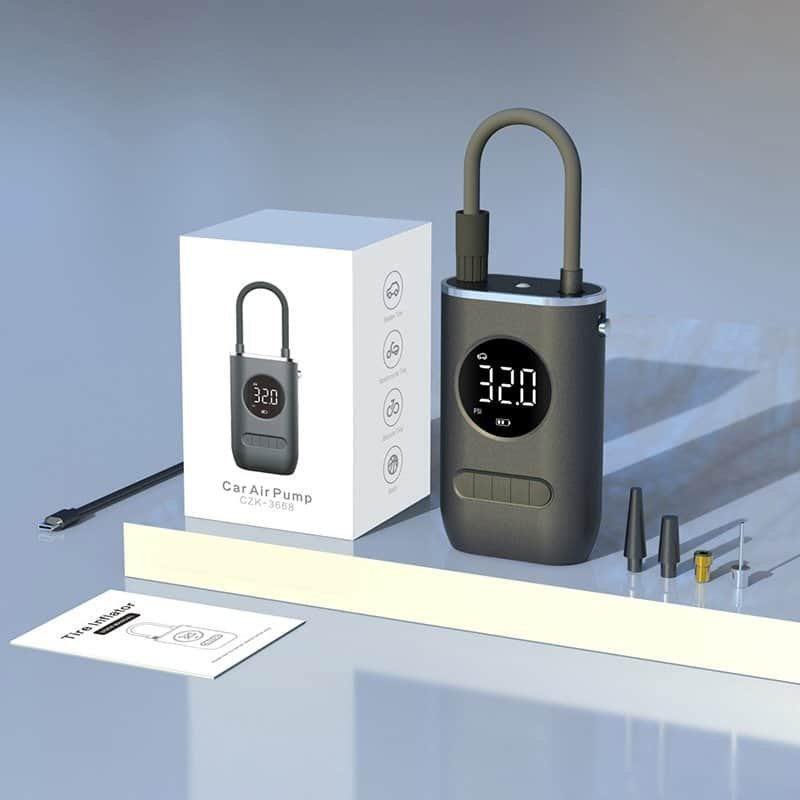
The choice between digital and analog car air pumps ultimately comes down to your specific needs, usage patterns, and priorities. Digital pumps excel in convenience, precision display, and modern features, making them ideal for tech-savvy users managing multiple vehicles or requiring nighttime visibility. Analog pumps provide superior durability, independence from power sources, and often lower total cost of ownership for professional applications and extreme environments.
For most car owners, a quality digital air pump with backup 12V power capability offers the best balance of convenience and reliability. If you value simplicity, durability, and cost-effectiveness over convenience features, a professional-grade analog air pump will serve you well for decades. The investment in either technology pays dividends through improved tire life, better fuel efficiency, and enhanced tire safety.
Frequently Asked Questions
Are digital air pumps more accurate than analog ones?
Digital tire gauge systems display measurements more precisely (typically 0.1 PSI increments), but accuracy depends on sensor quality and calibration maintenance. Professional-grade analog pumps often maintain accuracy longer due to their mechanical simplicity and stability. Both types require periodic calibration for optimal pressure accuracy.
How long do digital air pump batteries typically last?
Battery life varies significantly based on usage patterns and battery type. Lithium-ion batteries in quality units last 2-3 years with monthly use, while basic alkaline batteries may require annual replacement. Many battery-powered inflator systems also offer 12-volt power outlet options as backup power sources.
Which type performs better in extreme weather conditions?
Analog tire gauge systems generally perform better in extreme temperatures since they lack electronic components sensitive to temperature variations. Digital systems may show reading delays or failures in extreme cold, while analog pumps maintain consistent mechanical operation across wider temperature ranges.
What’s the typical lifespan difference between digital and analog air pumps?
Quality analog pumps often last 10-15 years with basic maintenance, while digital pumps typically last 5-7 years before requiring significant component replacement or calibration. The mechanical simplicity of analog systems contributes to their longer operational life and lower maintenance requirements.
Which type is better for emergency roadside use?
Digital pumps offer better visibility in dark conditions and automatic shut-off convenience, making them user-friendly for emergencies. Analog pumps provide greater reliability since they don’t depend on battery charge levels. Consider a digital pump with 12V backup power for optimal emergency preparedness and versatility.
How often should I calibrate my air pump?
Check calibration annually using a known-accurate reference gauge. Digital tire gauge systems may require more frequent calibration (every 6-12 months), while quality analog tire gauge models can maintain accuracy for 2-3 years between calibrations. Regular calibration ensures reliable tire pressure monitoring and optimal vehicle performance. For comprehensive guidance on choosing and using the right tire pressure gauge, professional automotive suppliers offer detailed resources covering everything from accuracy standards to maintenance schedules. Understanding the differences between analog and digital tire pressure gauges can help you make more informed decisions about which technology best fits your maintenance routine and environmental conditions. For technical specifications and tire inflator selection criteria, industrial suppliers provide detailed guides covering pressure ranges, connection types, and application-specific recommendations.

 English
  Español
  Français
  Deutsch
  Português do Brasil
  Русский
  한국어
한국어  日本語
日本語  العربية