 跳转到主要内容 跳转到页脚

Static LED indicators no longer satisfy the data demands of modern automotive and industrial equipment. B2B buyers are increasingly shifting toward high-resolution IPS touchscreens to provide users with real-time diagnostics and intuitive control in the field.
We analyze the transition from basic 7-segment displays to 10.1-inch LCD panels featuring 1024 x 600 resolution and 1200-nit brightness for sunlight readability. This guide also covers the technical requirements for 2026 models, including IP66-rated durability, quad-core processing power, and Unicode support for 24 languages to ensure global accessibility.
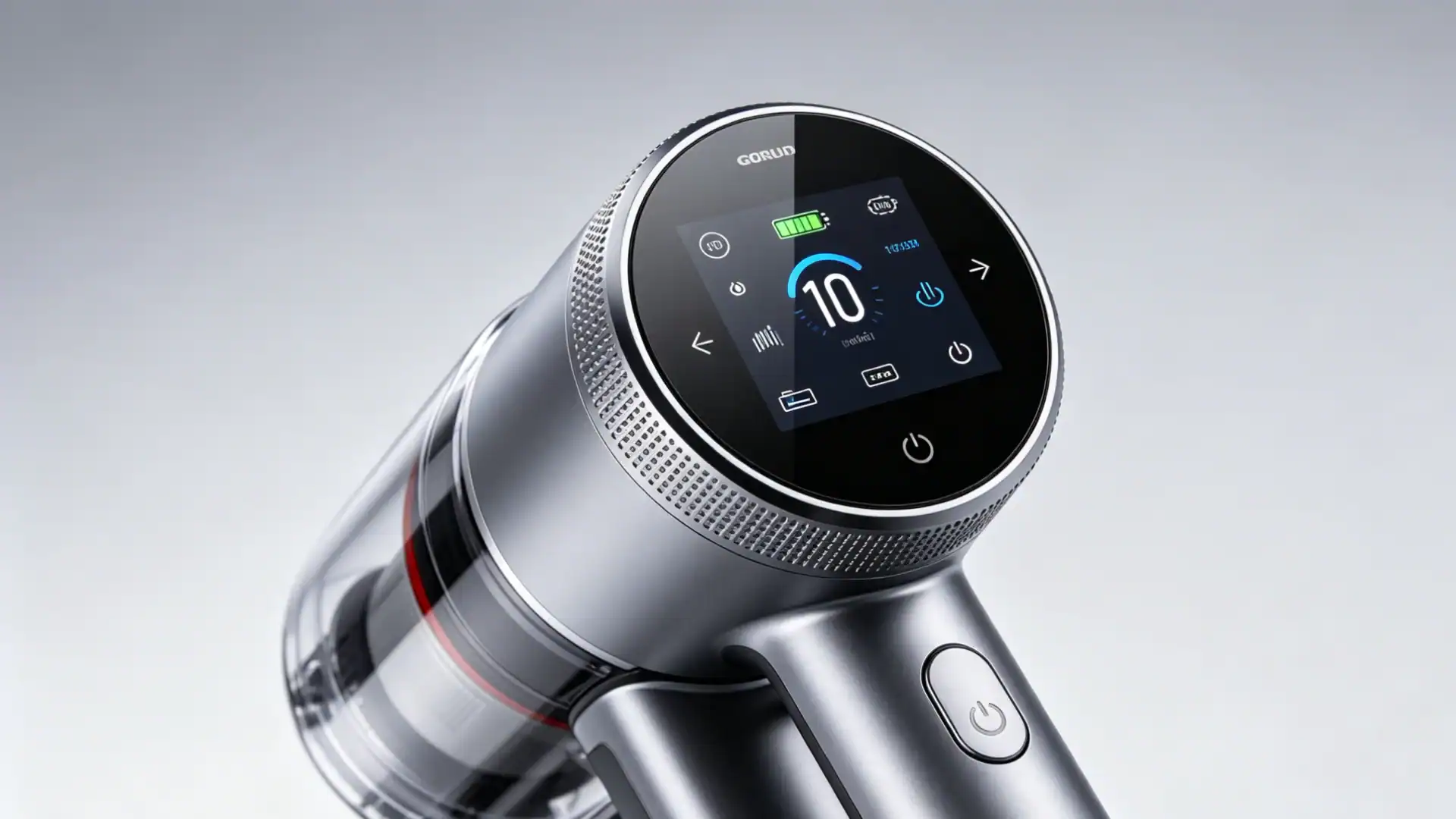
Human-Machine Interface (HMI): Moving Beyond LEDs
Smart displays replace static LED indicators with high-resolution IPS touchscreens to provide real-time diagnostic data and intuitive control. These interfaces use quad-core processors and rugged IP66-rated housings to ensure reliable performance in harsh automotive and industrial environments.
High-Resolution Touchscreen Integration
Engineers are moving away from limited 7-segment LED indicators in favor of 7-inch and 10.1-inch IPS LCD panels. These modern displays provide 1024 x 600 resolution, allowing for detailed graphical interfaces that simple lights cannot match. For outdoor applications such as EV charging stations and off-grid camping gear, high-brightness screens reaching 1200 nits ensure the display remains readable under direct sunlight. Integration for 2026 models includes capacitive 5-point multi-touch technology, featuring specialized sensitivity modes that allow operators to use the interface with wet hands or heavy work gloves.
Processing Power and Industrial Durability
Robust internal hardware now supports the heavy data demands of modern industrial and automotive accessories. Quad-core Cortex-A55 processors running Android 14 or Linux provide the necessary compute power for smooth UI animations and real-time system logging. To withstand demanding environments, these units feature IP66 and NEMA4 waterproof ratings alongside anti-glare optical bonding to prevent fogging and maintain structural integrity across wide temperature ranges. Connectivity suites including CANbus, MQTT, and Wi-Fi 6 enable the hardware to synchronize local data with cloud platforms for remote fleet monitoring and predictive maintenance.
Display Types: Segment LED vs. Full Color LCD
Segment LED displays provide high-visibility, monochromatic numeric data with fast update speeds, ideal for air pumps and vacuums. Full-color LCDs offer complex UI/UX capabilities, supporting millions of colors and NTSC gamuts up to 110%, making them the preferred choice for premium EV chargers and car fridge control systems in 2026.
| Feature | Segment LED | Full-Color LCD |
|---|---|---|
| Color Depth | 2 (ON/OFF) | Millions (256 per primary) |
| Technology Type | Emissive (PN Junction) | Transmissive (LED Backlit) |
| Color Gamut | Monochromatic | 92% – 110% NTSC |
| Thickness | Variable (Thin COB) | 8 mm – 25 mm |
| Update Speed | High/Instant | 144 – 240 Hz (Refreshed) |
Structural Differences Between Emissive LEDs and Transmissive LCDs
Segment LED interfaces utilize 7-segment or 16-segment configurations with PN junction diodes for high-speed, monochromatic numeric readouts. This emissive architecture means the display segments themselves produce light, ensuring superior sunlight readability for outdoor tools and automotive gauges. These units operate reliably across wide temperature ranges, though they are limited to simple alphanumeric data and specific color depths.
Full-color LCDs rely on transmissive technology powered by LED backlights with operational lifespans exceeding 50,000 hours. The hardware uses liquid crystals to modulate light from a background source through color filters, offering a color depth of up to 256 per primary for detailed graphics. This structure supports complex UI/UX designs, making it suitable for modern HMI applications where rich visual feedback is necessary.
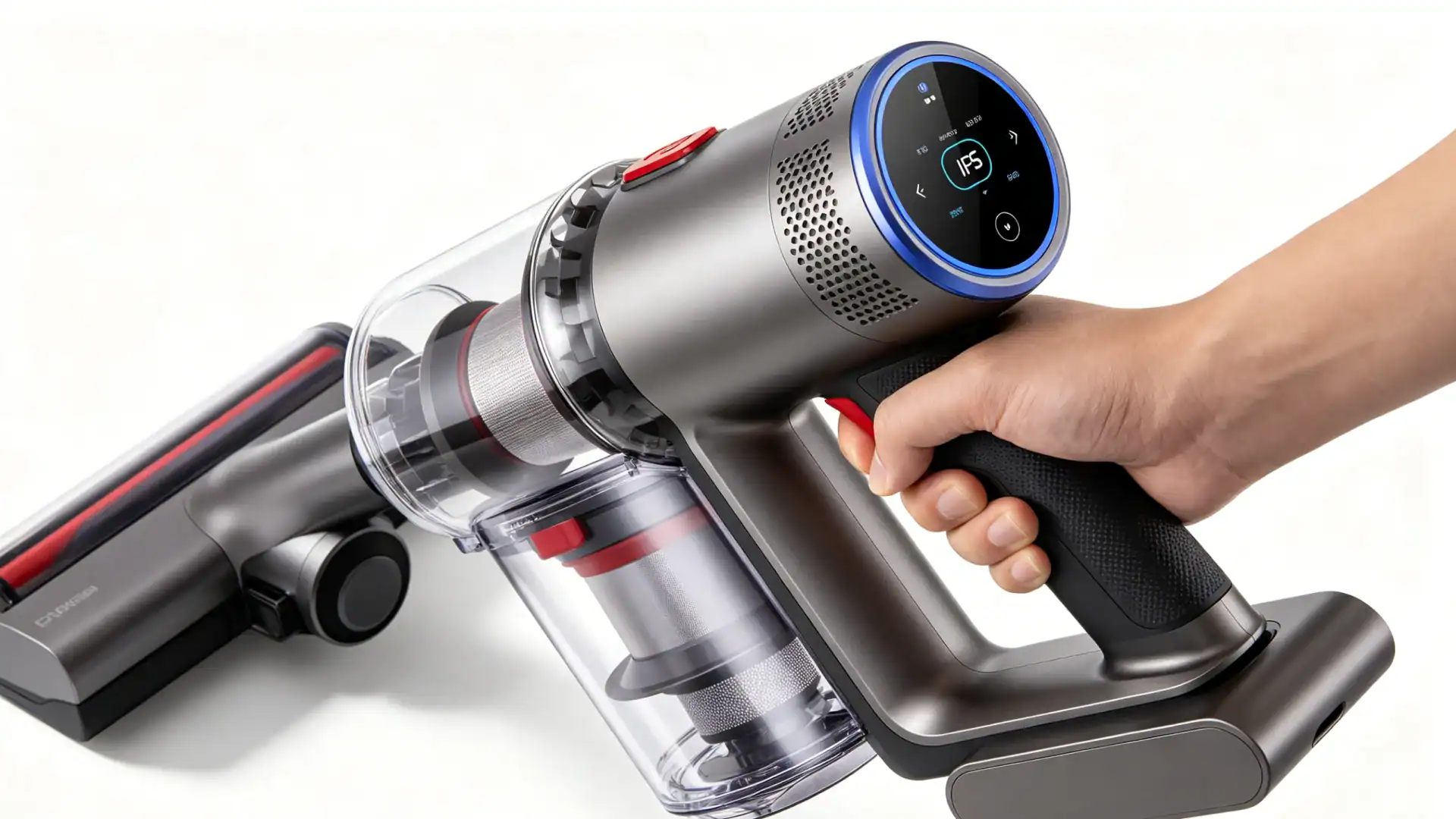
Performance Data on Color Gamut and Power Efficiency
Direct-lit LCD modules integrate 500-800 LED chips to achieve brightness uniformity ratings above 90% across the screen. These modules often feature 10-20 dimming zones to manage contrast and light diffusion. While LCDs consume roughly 22% less energy per square meter than some older alternatives, the power draw remains higher than segment LEDs because the backlight must remain active regardless of the displayed content.
Advanced LCD backlights support a wide color gamut ranging from 92% to 110% NTSC for superior color accuracy. This wide spectrum allows for sRGB and Adobe RGB coverage in high-end automotive displays. Display hardware profiles range from 8 mm for edge-lit frames to 25 mm for direct-lit units, providing engineers with multiple form factors depending on the available installation depth.
Information Hierarchy: Runtime, Blockages, Modes
Smart displays prioritize information flow through the AUTOSAR Runtime Environment (RTE), which executes non-blocking runnable entities. By managing privileged operational modes and using communication timeouts, the system prevents software stalls and ensures that critical safety data reaches the screen without latency or interruptions.
| Execution Layer | Control Mechanism | System Impact |
|---|---|---|
| Runtime Environment (RTE) | Runnable Entity Partitioning | Ensures memory isolation and efficient inter-core data flow. |
| Privilege Modes (EL3/SMM) | Non-maskable SMI Handlers | Provides secure firmware execution for low-latency events. |
| GPU Pipeline | SIMT Thread Yielding | Redistributes resources to eliminate rendering stall cycles. |
Runtime Logic and Privileged Operational Modes
The Runtime Environment (RTE) assigns Runnable Entities to specific OS applications to maintain efficient data flow and memory partitioning. This architecture prevents data corruption by restricting mixed assignments and ensuring that each software component operates within its designated memory space. By organizing data execution this way, the system supports complex inter-OS application communication across different CPU cores without compromising stability.
System Management Mode (SMM) and Arm EL3 provide isolated, high-privilege firmware environments for secure system-level tasks. These modes utilize interrupt context propagation to handle low-latency events without suspending core UI processes. Hardware triggers non-maskable SMI interrupts in SMRAM, which allows the system to address critical events opaque to the main OS, maintaining a secure root state for platform firmware.
Timeout Protocols and Performance Blockage Metrics
Communication timeouts stop infinite blocking during synchronous intra-task operations, keeping the HMI responsive to user input. If a data request hangs, the system terminates the wait cycle to prevent a total interface freeze. RTE semantics also block Category 1 interrupts to avoid long-duration system schedule delays that could otherwise stall critical visual updates on the smart display.
GPU profiling metrics like ‘unit__cycles_stalled’ identify specific cycles where the output interface cannot process new rendering data. Engineers use these metrics to pinpoint bottlenecks in the graphics pipeline. SIMT execution models yield threads during data dependencies to minimize idle cycles, ensuring the rendering engine meets 2026 hardware standards for real-time fluid animations.
Premium OEM/ODM Vacuum Cleaner Manufacturing Solutions

Localization: Multi-Language Support
Smart displays in 2026 use Android-based firmware and Unicode rendering to support over 24 languages, including Arabic, Russian, and Vietnamese. This localization strategy allows B2B providers to ship identical hardware to 50+ countries while offering localized On-Screen Display (OSD) menus and user manuals, ensuring safety and usability across diverse linguistic regions.
Software Localization and Global Accessibility
Deploying smart displays across 50+ global markets requires native language support for diverse equipment like air pumps, car fridges, and EV chargers. By offering interfaces in 24 specific languages—including Arabic, Vietnamese, and Kazakh—manufacturers eliminate barriers to entry in linguistic regions across Europe, Asia, and North America. This capability ensures that identical hardware units can be repurposed for different markets without regional hardware SKU changes.
Localized On-Screen Display (OSD) menus increase operational safety by translating runtime alerts and blockage notifications into the user’s primary language. This clarity reduces user error and assists operators in identifying system status immediately. Customizing user instructions and regional plug labeling further aligns products with 2026 compliance standards, ensuring that safety information remains legible and culturally relevant for international consumers.
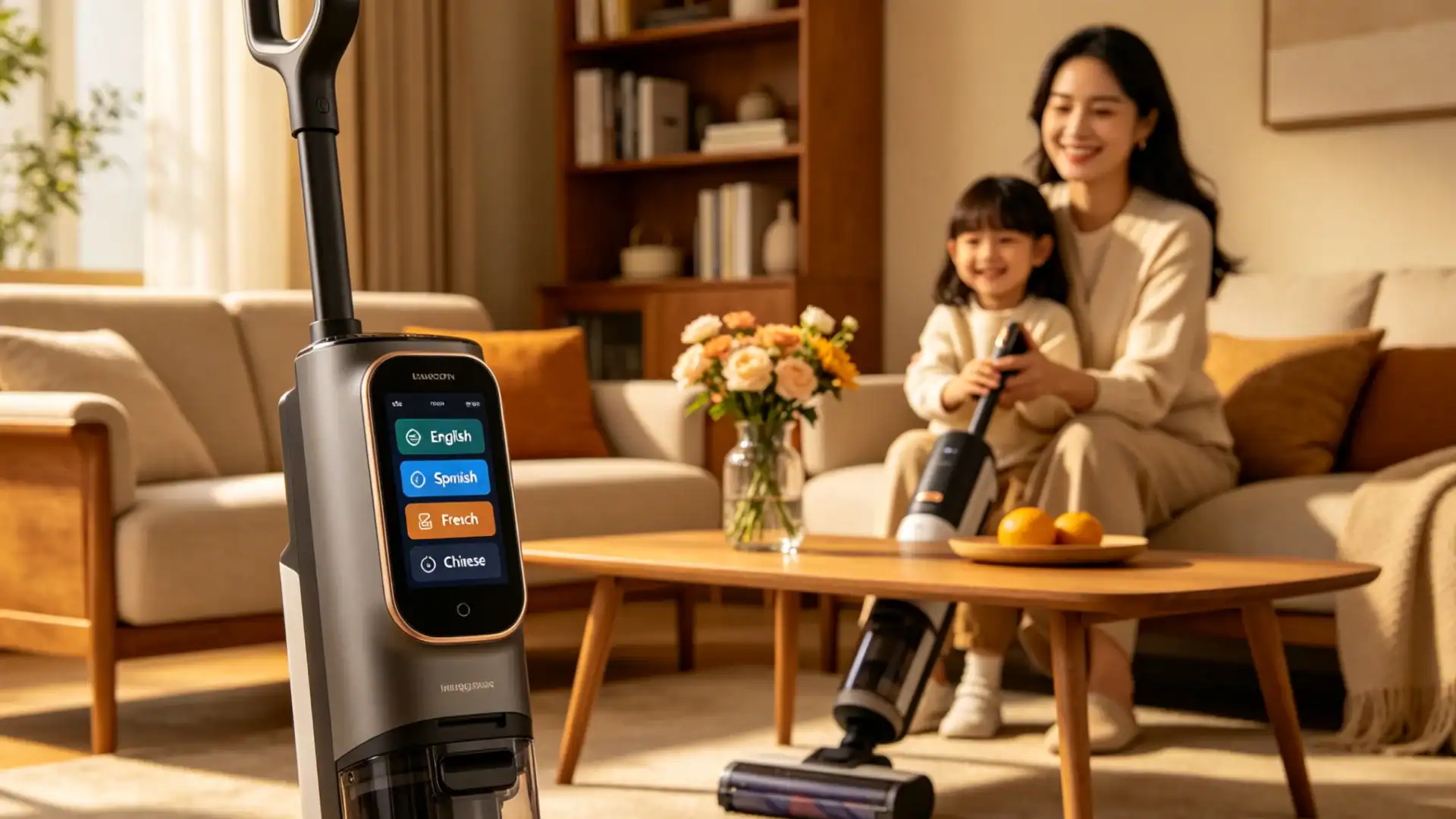
Technical Integration via Android and Unicode
Hardware configurations utilizing Android 11 or Android 13 OS manage UI localization across 4K UHD panels with 3840×2160 resolution. Unicode text rendering allows these systems to display complex scripts accurately, maintaining legibility across 1.07 billion colors and high-contrast DLED backlights. This technical foundation supports right-to-left scripts and Traditional Chinese characters without pixelation, ensuring that the visual interface remains professional across all supported regions.
Systems equipped with Amlogic T982 CPUs and 4GB DDR4 RAM provide the processing power needed for seamless language switching and 20-point IR touch responsiveness. Manufacturers push language updates and UI improvements via Over-the-Air (OTA) upgrades. This delivery method removes the need for manual firmware flashes or hardware modifications, allowing B2B providers to update linguistic libraries and software features remotely after the product is deployed in the field.
Upsell Value: Why Screens Justify +$50 Price
Advanced HMI screens justify a $50 price increase by integrating high-performance Quad Core SoCs and professional-grade display panels. These components provide the processing power for lag-free touch interaction and the visual clarity of 4K resolutions, ensuring hardware remains relevant through 2026 and beyond while reducing the total cost of ownership.
Professional Display Standards and Interface Clarity
Mini-LED backlighting utilizes dedicated diodes to achieve superior contrast and deep blacks below 0.0005 nits. This hardware configuration maintains clear visibility in outdoor environments where standard LCDs become unreadable. Integrating 4K UHD resolutions alongside a 120% DCI-P3 color gamut provides the high pixel density and color accuracy necessary for premium retail demonstrations. HDR standards and the Rec. 2020 color space keep visual fidelity consistent regardless of changing ambient light conditions.
High-Performance Processing and Hardware Longevity
The inclusion of 1.4GHz Quad Core SoCs, 2GB DRAM, and 16GB Flash storage facilitates a service life of up to seven years without performance loss. This technical foundation prevents the lag and system crashes that often affect entry-level boards during heavy video or communication loads. Armored resistive multi-touch systems and dedicated GPUs ensure immediate response times during complex UI navigation. These advanced materials and architectures protect the long-term investment by removing the need for frequent hardware upgrades.
Final Thoughts
Transitioning from basic indicators to high-resolution IPS touchscreens fundamentally improves how operators manage industrial and automotive gear. These interfaces offer the high data density required for live diagnostics and clear control in demanding settings. Using quad-core processors and IP66-rated shells means the hardware stays responsive under heavy use and extreme weather. This upgrade replaces vague blinking lights with a sharp, functional display that simplifies complex tasks.
Adopting these display standards readies products for international growth with native support for dozens of languages and easy over-the-air updates. The hardware supports a service life of up to seven years, which offsets the higher starting price by minimizing the need for frequent replacements. Equipment built with these 2026-spec screens delivers a reliable, high-end experience that fits the evolving needs of the global B2B market.
Frequently Asked Questions
Can the HMI screen display remaining runtime in minutes?
High-performance HMI displays show remaining runtime on Level 3 detail screens. This allows users to monitor operational duration for components like compressors alongside active faults.
Is the interface language customizable for international markets?
The system includes multi-language text support that users can switch at runtime. For 2026 hardware efficiency, we recommend keeping multilingual text files within a 50KB limit to ensure fast performance.
Do the displays show visual animations for specific errors like clogs?
Visual alarms and error animations for common issues, such as system clogs or blockages, come as a standard feature on Level 1-3 displays to simplify troubleshooting.

 English
  Español
  Français
  Deutsch
  Português do Brasil
  Русский
  한국어
한국어  日本語
日本語  العربية