 跳转到主要内容 跳转到页脚
High-pitched motor whine does more than just add volume; it triggers a visceral anxiety in users resembling the sound of a dentist’s drill. Frequencies peaking between 9 kHz and 20 kHz increase the sharpness metric, transforming a functional tool into an abrasive and painful experience for the operator.
We analyze how 2026 hardware targets require a 5 dB to 10 dB reduction in high-frequency output to shift user perception from harsh to smooth. This guide breaks down the mechanics of sound dampening—using foam linings with 2.5 to 8 lbs/ft³ densities and suspension mounts that limit compression deflection to 1 psi—to help you tune motor signatures for a balanced, professional hum.
The “Dentist Drill” Effect: High-Frequency Anxiety
Anxiety in tools like air pumps and vacuums often results from high-frequency sound components reaching up to 20,000 Hz. These frequencies increase ‘sharpness,’ a psychoacoustic metric linked to metallic and harsh perceptions. Engineering targets for 2026 focus on attenuating components above 9 kHz to shift user impressions from painful to smooth.
| Acoustic Metric | Frequency Range | Subjective Impression |
|---|---|---|
| LAeq (Sound Pressure) | Broadband | Correlates with perceived power and volume. |
| Sharpness | 9 kHz – 20 kHz | Triggers metallic, harsh, and unpleasant feelings. |
| Comfort Index (CI) | System-wide | Predicts anxiety reduction and user satisfaction. |
Sharpness Metrics and Subjective Sound Quality
Acoustic evaluations distinguish between the perceived power of a motor and its potential to cause emotional distress. Sound pressure levels, measured as LAeq, correlate with the impression of a powerful machine, yet they do not fully account for user discomfort. High-frequency components in portable tools often reach 20 kHz, mirroring the acoustic signature of dental turbines known for triggering immediate anxiety. Sharpness serves as the primary psychoacoustic metric for predicting emotional responses like fear or pain. When frequencies exceed the 9 kHz threshold, users categorize the sound as metallic or harsh. Statistical data indicates that reducing these sharpness levels directly improves the Comfort Index (CI) with high significance (p<0.01).
Attenuation Targets for 9-20 kHz Ranges
Technical specifications for 2026 hardware require a broadband reduction of 5 dB to 10 dB in high-frequency output. This attenuation targets the transition of user perception from painful to smooth. Engineering strategies prioritize suppressing components above 9 kHz to lower the overall sharpness metric rather than just lowering volume. Masking techniques, which combine specific sound components, help improve subjective ratings on the “painful-not painful” scale in controlled environments. Modern insulation standards emphasize material thickness and suspension damping. These methods filter air-conducted high-frequency noise from motor housings, effectively reducing the acoustic triggers that cause anxiety in novice operators and pet owners.
Motor RPM and Pitch: The Engineering Trade-off
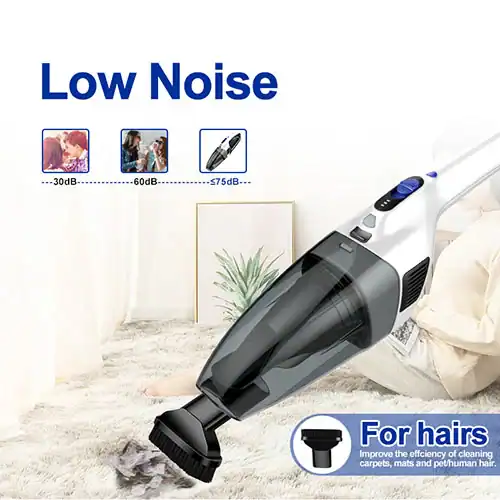
Motor RPM and pitch share an inverse relationship where increasing blade angle adds load, reducing overall speed. In 2026, engineers balance these factors to optimize efficiency, using specific metrics like the 200 RPM-per-inch rule and synchronous motor calculations to avoid cavitation and excessive mechanical stress while maintaining low-noise operation.
Mechanical Dynamics of Blade Pitch and Torque
Engineers measure nominal blade pitch at 75% of the radial distance from the hub to the tip to determine the effective angle of attack. This specific location provides a standardized metric for calculating how much fluid or air a propeller displaces per revolution, directly impacting the torque requirements of the motor.
Constant-speed propeller governors utilize 300 psi oil pressure within specialized hydraulic systems to modulate pitch. By adjusting the blade angle in real-time, these systems maintain a target RPM even when external loads fluctuate, preventing the engine from overspeeding or stalling during high-demand maneuvers.
AC induction motors typically show approximately 4% slip under operational loads. When pitch-induced torque demands increase, they pull actual rotation speeds below the synchronous 1,800 RPM no-load benchmark. This mechanical lag represents the physical cost of overcoming the resistance generated by aggressive blade angles.
Technical Metrics for Speed and Efficiency
Wide-open throttle calculations apply a standard engineering rule where a one-inch pitch increase drops engine output by 200 RPM. Reducing the pitch by the same one-inch increment raises the output by 200 RPM, providing a predictable scale for technicians to tune systems for either maximum thrust or higher rotational velocity.
System constraints for marine and drone motors prioritize the prevention of cavitation by limiting tip speeds. Engineers often cap 3,800 max-RPM engines at an operational range of 3,300 to 3,400 RPM when pairing them with high-reduction gearboxes and larger diameter propellers to maintain structural integrity and efficiency.
Synchronous speed formulas for 60 Hz 4-pole motors establish a baseline of 1,800 RPM. Engineers use this fixed calculation to calibrate the airflow and suction efficiency of high-speed portable accessories, ensuring that the motor operates within its peak power band without excessive heat generation or mechanical wear.
Sound Dampening: Foam Lining vs. Suspension Mounts
Foam linings reduce high-frequency noise by absorbing sound waves within cellular structures, while suspension mounts decouple vibrating components to prevent structural rattles. Engineers in 2026 combine both—using foam for echoes and mounts for vibration—to achieve optimal noise, vibration, and harshness (NVH) control in portable electronics.
| Material Type | Primary Mechanism | Key Metric |
|---|---|---|
| Foam Lining (Polyurethane) | Wave Absorption (Mid-to-High Frequency) | 2.5 – 8 lbs/ft³ Density |
| Suspension Mounts (EPP/Fiber) | Mechanical Decoupling (Structural Vibration) | ≤ 1 psi Compression Deflection |
| Butyl Rubber Composites | Mass Loading (Low-Frequency Blocking) | 25-50% Surface Coverage |
Material-Based Absorption: Foam Lining Applications
Foam materials like polyurethane and closed-cell decouplers trap sound waves to reduce mid-to-high frequency echoes and reverb in motor housings. Engineers maintain material density between 2.5 and 8 lbs/ft³ to balance weight with effective wave absorption in portable vacuum cleaners and air pumps. This density range ensures the cellular structure remains open enough to dissipate kinetic energy from sound waves while remaining rigid enough for industrial assembly.
Targeting 25-50% surface coverage on resonant panels significantly reduces internal echoes without adding excessive bulk to the device chassis. Specialized closed-cell foam types, such as ResoNix CCF, provide thermal insulation alongside noise reduction. This dual-purpose utility protects sensitive electronics in car fridge compressors and other heat-generating hardware during high-duty cycles.
Mechanical Decoupling: Suspension Mounts and Vibration Isolation
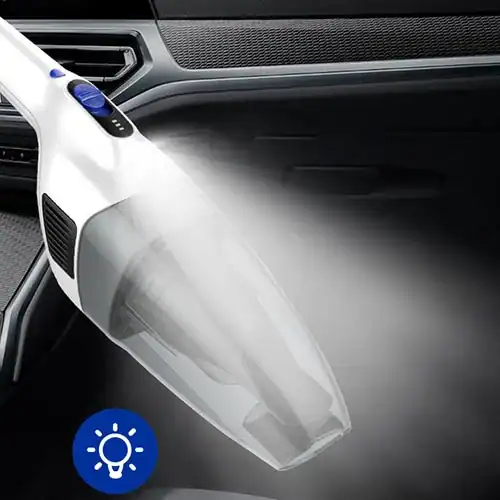
Suspension mounts create air gaps that prevent direct vibration transfer between a motor and its external casing, stopping structural rattles at the source. High-compliance mounts adhere to ASTM D 1056 standards, specifically maintaining compression deflection at or below 1 psi. This specific compression rating ensures a secure fit within the enclosure without creating a rigid bridge that would otherwise transmit vibration.
Eliminating air gaps larger than 1% prevents the 50% efficiency loss often seen in poorly fitted noise barriers and decoupling layers. Viscoelastic foams and EPP panels reduce peak frequency heights by decoupling multi-layer assemblies in high-pressure air pump designs. These components act as mechanical fuses, breaking the path of kinetic energy before it reaches the outer shell of the product.
Scale Your Brand with Custom, High-Performance Home Vacuum Solutions

Airflow Turbulance: Whistling Hoses and Nozzles
Whistling occurs when airflow encounters edges or orifices, creating aeroacoustic phenomena like vortex shedding and hole tones. By 2026, engineers will increasingly use thermoplastic hoses with high volumetric expansion (VE) to damp these pressure pulses and reduce the acoustic Q factor in systems operating between 1500 and 5000 psi.
Aeroacoustic Mechanisms: Hole Tones and Edge Tones
High-frequency whistling in fluid systems originates from specific aeroacoustic triggers when air travels through orifices or across sharp edges. Vortex shedding at a Strouhal number of 0.20 creates dipole sound fields as fluctuating forces interact with the trailing edges of nozzles. These interactions transform steady flow into oscillatory patterns, radiating sound as energy dissipates through the system without the need for moving mechanical parts.
Circular orifices generate symmetric vortex rings that produce monopole-like sound fields. These fields resonate at specific frequencies determined by the tube length or the spacing of internal corrugations, often following a characteristic frequency where wavelength relates to tube length. This hole tone mechanism creates a feedback loop between the downstream plate and the orifice. Incoming air swirls within the chamber to initiate pressure variations, which maintains the vibration as long as the flow velocity remains constant.
Mitigation via Volumetric Expansion and Material Choice
Engineers suppress these acoustic disturbances by selecting materials with superior damping properties. Thermoplastic fiber-reinforced hoses offer higher volumetric expansion (VE) rates compared to traditional wire-braided rubber. This increased expansion allows the hose wall to absorb pressure pulses and surges more effectively, which lowers the acoustic Q factor and reduces the transmission of turbulence-induced vibrations through the fluid line.
In high-pressure environments ranging from 1500 to 5000 psi, high-VE materials eliminate localized noise issues such as steering valve popping. Modern manufacturing protocols emphasize precise bore calibration and flow smoothing to prevent the formation of unsteady shear layers. These design choices disrupt the feedback loops between orifice width and vortex size, preventing the misalignment-induced distortion that typically leads to persistent high-pitched whistling in complex pneumatic or hydraulic circuits.
The “Pleasant Hum”: Tuning the Sound Signature
A “pleasant hum” involves tuning the frequency response to a U-shaped or warm profile, emphasizing rich lows and smooth highs while suppressing harsh peaks. By controlling the 6 kHz to 16 kHz range and maintaining a consistent noise floor, engineers reduce psychoacoustic fatigue, making high-performance motors sound sophisticated rather than abrasive.
Psychoacoustic Profiles and Frequency Balancing
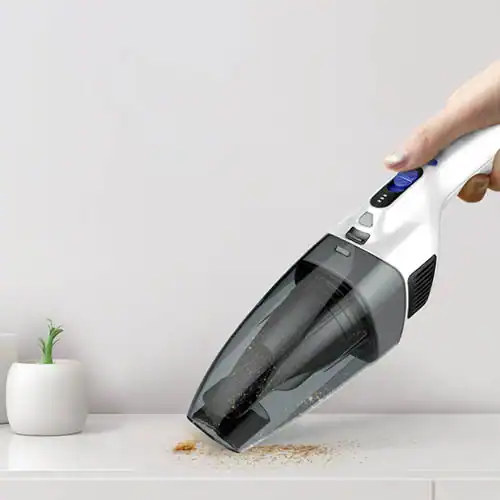
Engineers utilize U-shaped sound signatures to provide a forward presence and articulated layering without introducing harshness. This profile balances brilliance specifically in the 6 kHz to 16 kHz frequency range to suppress sibilance, which frequently triggers user stress during operation. By applying even-order harmonic distortion, the system creates “round” notes and a more natural timbre that mimics high-end audio equipment.
The implementation of a controlled bump near 500 Hz adds necessary warmth to the motor’s operating tone. This adjustment prevents the device from sounding hollow or overly mechanical. These deliberate frequency response adjustments create a balanced psychoacoustic profile that minimizes auditory fatigue for both the user and nearby occupants.
Technical Specifications for 2026 Acoustic Standards
Achieving optimized sound quality in hardware requires the integration of 99.99% pure copper conductors (26 AWG) to ensure unaltered signal output and reduced physical resonance. Current engineering targets a signal-to-noise ratio between 60-100 dB to maintain operational clarity in portable devices. For high-suction vacuum motors, maintaining noise floor thresholds between 75-82 dB prevents the onset of auditory fatigue during extended cleaning sessions.
Optimization of transient response and attack times ensures punchy dynamics near the 200 Hz and 5 kHz bands. This precision allows the motor to maintain a consistent acoustic output even under varying load conditions. By prioritizing these metrics, designers ensure the hardware meets rigorous acoustic standards while providing a high-quality user experience.
Final Thoughts
Motor design now prioritizes the emotional impact of sound rather than just lowering decibel levels. Engineers target specific frequency bands between 9 kHz and 20 kHz to remove the sharp, metallic tones that cause immediate stress. Using a mix of foam liners and suspension mounts helps block these high-pitched triggers at the source. This focus on psychoacoustic metrics ensures that high-speed tools provide the necessary power without the discomfort of a dental-drill sound profile.
These technical shifts lead to a better experience for anyone using air pumps or vacuums. Lowering the sharpness of a motor reduces ear fatigue and makes long tasks more manageable. As manufacturers adopt 2026 standards, the focus remains on creating a warm, balanced sound that feels sophisticated. Moving toward these refined acoustic profiles turns harsh machinery into high-quality equipment that respects the user’s environment.
Frequently Asked Questions
How is acoustic foam used to manage motor housing noise in 2026 models?
Internal motor housings utilize melamine or composite foam, such as IVF insulated vinyl, to absorb airborne sound. These materials trap high-frequency waves before they escape the casing, effectively dampening the sharp whine associated with high-speed vacuum and pump motors.
Are motor frequencies specifically tuned to stay below 1000Hz?
While operational frequencies may exceed 1000Hz, engineering teams mitigate low-frequency vibrations through damping systems. They use elastomeric pads and rubber sealing tape to keep structure-borne noise below audible thresholds, preventing the “dentist drill” effect.
Do portable automotive accessories feature rubber-mounted motors?
Yes, designers typically decouple motors in 2026 air pumps and vacuum cleaners from the main chassis using rubber mounts or vibration-damping foams. This isolation prevents mechanical energy from transferring to the exterior shell, which reduces overall resonance.
What is the recognized safety limit for machine sound pressure?
The standard maximum permissible sound pressure level for machinery is 80 dB. Maintaining noise levels at or below this threshold serves as a key safety requirement in 2026 to prevent hearing fatigue and health risks during prolonged operation of portable electronics.

 English
  Español
  Français
  Deutsch
  Português do Brasil
  Русский
  한국어
한국어  日本語
日本語  العربية