 跳转到主要内容 跳转到页脚

Evaluating the ROI of ownership (gas station air pump cost) reveals that relying on public infrastructure creates a recurring financial drain for fleet managers and safety directors. Broken machines and high fees lead to wasted fuel and increased labor hours, directly eroding annual profit margins.
KelyLands addresses these inefficiencies with industrial-grade 150 PSI inflators built for consistent professional use. Our analysis benchmarks pure copper motor engineering and IATF 16949 manufacturing standards against public equipment to prove how self-reliance secures long-term savings and vehicle safety.
The “Out of Order” Sign: Why rely on broken gas station machines?
Gas stations ignore broken pumps because fuel margins are razor-thin. Owning a KelyLands portable inflator ensures 150 PSI reliability and eliminates the frustration of non-functional public equipment.
Maintenance Realities and Equipment Downtime
Gas stations operate on extremely tight margins, typically earning only $0.03 to $0.07 per gallon of fuel sold. With a daily profit of just a few hundred dollars, owners prioritize fuel system compliance over air pump repairs. Commercial compressed air systems require significant upkeep that often drains any revenue the machine generates.
The financial burden of keeping these machines online includes several factors:
- Annual Maintenance: Costs range from 5% to 10% of the total equipment investment.
- Operational Costs: High electricity consumption and frequent filter replacements.
- Vandalism: Frequent damage to hoses and nozzles in unattended areas.
- Regulatory Pressure: Complex cost-benefit calculations often favor keeping a broken machine offline rather than funding expensive upgrades.
Reliability Through Pure Copper Motor Engineering
KelyLands eliminates the gamble of public infrastructure by providing industrial-grade internals in a portable frame. We utilize pure copper motors rather than the cheaper aluminum alternatives common in budget consumer pumps. This engineering choice ensures the device handles the thermal stress of continuous inflation without internal failure.
B2B distributors and wholesalers choose our hardware for its consistent technical performance across diverse vehicle types:
- Max Pressure: 150 PSI (Supports cars, SUVs, and motorcycles).
- Inflation Speed: 3–5 Minutes for a standard 195/65/R15 tire.
- Heat Dissipation: Integrated vents and copper conductivity prevent overheating.
- Certification: Manufactured under ISO 9001:2015 and IATF 16949 standards.
Stable airflow and heat resistance are critical for professional-grade tools. By providing a personal solution with 150 PSI capacity, we give users immediate access to tire maintenance, improving fuel efficiency and safety without relying on neglected gas station hardware.

Hygiene & Safety: Touching dirty machines in dark parking lots.
Public air pumps collect bacteria and industrial grime. Drivers now use personal portable inflators to ensure a sterile environment and better visibility during nighttime roadside emergencies.
Sanitization risks of high-touch communal equipment
Public gas station hardware acts as a primary vector for cross-contamination. Unlike fuel nozzles which occasionally benefit from fuel’s solvent properties, air pump handles and hoses remain untreated and exposed to the elements for years. Thousands of users touch these surfaces, leaving behind a cocktail of pathogens and waste.
- Industrial Contaminants: Pump handles accumulate layers of industrial grease, diesel soot, and road grime that transfer instantly to skin and vehicle interiors.
- Environmental Pathogens: Stationary equipment in outdoor lots provides a stable surface for bacterial buildup and environmental allergens.
- Professional Standards: We see fleet managers and automotive wholesalers shifting toward personal tools like the KelyLands inflator to maintain hygiene standards in shared logistics spaces.
Integrated LED lighting for roadside safety
Gas station air pumps often sit in the darkest, most isolated corners of the lot to stay clear of traffic flow. This placement creates a significant security vulnerability for drivers during nighttime maintenance. Personal portable inflators solve this by bringing the light source directly to the tire.
- High-Intensity Illumination: KelyLands units feature built-in LEDs that light up the workspace, eliminating the need for external station lights or holding a separate flashlight.
- Emergency SOS Function: Our multifunctional models include a dedicated SOS light mode to signal for help during dangerous nighttime breakdowns on busy roads.
- Secure Positioning: Portable cordless designs allow users to inflate tires in a secure, well-lit area or a locked garage instead of being forced into a vulnerable public location.
Choosing a personal inflator removes the physical contact with unsanitary communal gear and addresses the inherent risks of working in poorly lit environments. This shift reflects a growing demand for tools that prioritize the user’s personal health and situational security.
Scale Your Brand With Custom Portable Inflators
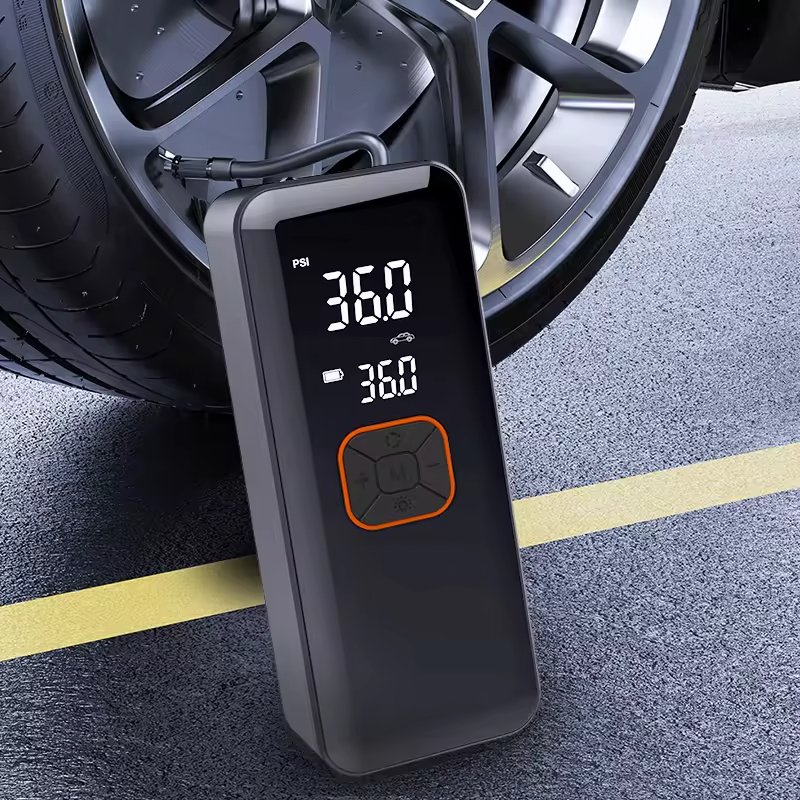
Cost Math: $2.00 per fill vs. Free at home (Payback in 1 year)
A $35 portable inflator pays for itself within 12 months by eliminating $3.00 gas station fees while improving fuel efficiency and extending tire life.
| Financial Metric | Gas Station Air Pump | KelyLands Portable Inflator |
|---|---|---|
| Cost Per Session | $2.50 – $3.00 (5 mins) | $0.00 |
| Annual Cost (12 Fills) | $30.00 – $36.00 | $0.00 (Post-purchase) |
| Payback Period | Never | 10 – 12 Months |
| Hidden ROI | Wasted Fuel & Time | +3% MPG & Long Tire Life |
Calculating the Annual Savings Against Public Air Fees
Public air pumps transitioned from a courtesy service to a high-margin revenue stream for gas station owners. By 2026, many stations charge up to $3.00 for a single five-minute session. While the fee seems small, regular monthly maintenance adds up to a recurring $36 annual tax on drivers who lack their own equipment.
- Standardized Fees: Gas station air sessions now average $2.50 to $3.00 per use.
- Recurring Costs: Maintaining tire pressure 12 times per year costs $30 to $36 annually.
- Fuel Efficiency: Properly inflated tires improve gas mileage by up to 3%, saving roughly $125 in fuel costs annually for the average driver.
- Reliability: Owning a device eliminates the common risk of driving to a station only to find the machine broken or out of order.
Long-Term Value and the Pure Copper Motor Advantage
The durability of the hardware determines whether the payback period holds true. Cheap, plastic-internals pumps often fail before the one-year mark, negating any savings. KelyLands engineers portable units with industrial-grade components to ensure the device outlasts the initial investment period by several years.
- Pure Copper Motors: High-performance copper wiring provides superior heat resistance and stable airflow compared to budget aluminum alternatives.
- Smart Auto-Stop: This technology prevents over-inflation by stopping the pump at the exact target PSI, protecting the motor and the tire.
- Thermal Management: Integrated heat dissipation systems allow the user to fill all four tires consecutively without motor burnout.
- Multi-Tool Utility: Digital monitoring replaces manual gauges, providing a real-time health check for the vehicle in seconds.

Cold Tires: Why must you measure pressure before driving?
Measuring pressure while tires are cold provides the manufacturer-required baseline. Heat from driving expands air, creating false high readings that mask dangerous under-inflation.
The Impact of Thermal Expansion on Pressure Accuracy
Driving generates significant internal heat through rubber friction and constant road contact. This thermal energy causes air molecules inside the tire to move rapidly and expand, which artificially raises the internal pressure. A tire that looks properly inflated at a gas station may actually be dangerously low once it cools down at home.
- Temperature Correlation: A 10°F change in ambient or internal temperature shifts tire pressure by approximately 1–2 PSI.
- Reading Errors: Measurements taken immediately after driving provide a false positive, showing higher pressure than the tire holds at rest.
- Engineering Standards: Cold readings capture the specific inflation pressure engineers use to calibrate steering responsiveness and stopping distance.
Digital Monitoring for High-Precision Baseline Checks
Professional-grade portable tools allow operators to bypass the inaccuracies of heated gas station pumps. By using sensors that provide real-time data the moment the hose connects, you can establish an accurate baseline before the vehicle even moves. This ensures safety inspections meet strict tolerance levels.
- Sensor Precision: KelyLands units maintain a ±1.5 PSI accuracy, identifying subtle leaks that manual analog gauges often miss.
- Smart Auto-Stop: The technology allows users to set exact manufacturer-recommended PSI levels for a cold start, preventing over-inflation.
- Thermal Management: Integrated heat dissipation systems keep the pump cool while adjusting multiple tires, ensuring the tool’s own operating heat doesn’t interfere with the sensor data.

 English
  Español
  Français
  Deutsch
  Português do Brasil
  Русский
  한국어
한국어  日本語
日本語  العربية