 跳转到主要内容 跳转到页脚
Handheld vacuum manufacturers face a constant struggle between delivering high suction power and maintaining a tolerable noise profile for the user. Since these devices operate near the ear, excessive sound pressure levels lead to auditory fatigue and can quickly violate environmental health standards. Engineering teams must move beyond basic volume control to address specific psychoacoustic metrics that influence how customers perceive quality and performance.
This article explores the technical methods used to keep noise levels below the 75 dBA threshold, including how doubling fan diameter can reduce motor noise by 15 dB. We analyze the use of layered composite foams with NRC ratings of 0.85 and explain the engineering of exhaust diffusers that turn a harsh air blast into a quiet discharge. From ISO testing protocols to the mechanics of air turbulence, this guide covers the essential benchmarks for modern handheld acoustic design.
The Psychoacoustics of Handheld Proximity
Psychoacoustics in handheld proximity evaluates how users perceive sound quality through metrics like loudness, sharpness, and tonality. By utilizing binaural recording and artificial head standards, engineers ensure that noise from motors and air turbulence stays within comfortable auditory thresholds, preventing fatigue during operation.
Human Sound Perception and Noise Quality Metrics
Sensory metrics including loudness, roughness, and tonality determine the subjective quality of handheld tool noise. These parameters describe how the human auditory system processes acoustic signals, going beyond simple volume to account for user comfort. Testing at frequency discrimination thresholds of 500 Hz, 1000 Hz, 2000 Hz, and 4000 Hz identifies the specific ranges where motor whines or air turbulence become most irritating. Maintaining pure tone detection thresholds below 20 dB HL across the 250-8000 Hz range ensures that the device does not produce harmful or distracting noises during close-range use. Sharpness calculations for bandwidths less than 150 Hz at 60 dB assess the piercing quality of high-frequency components, allowing engineers to dampen the most abrasive sounds.
Engineering Standards for Binaural Audio Assessment
ISO/TS 12913-2:2018 protocols mandate binaural measurements using artificial heads to replicate human auditory sensations. This method captures how sound waves interact with the head and torso, providing a realistic map of noise exposure for handheld devices. DIN 45692 governs the calculation of loudness and sharpness across critical bands, simulating the way the inner ear filters and masks different frequencies. Precise stimuli parameters, such as 500 ms durations and 10 ms cosine squared ramps, provide data for amplitude modulation detection at a 70.7% accuracy level. Mobile assessment systems like iPAAS validate these findings by comparing temporal gap detection and spectral encoding against laboratory-grade equipment, ensuring consistent sound quality across different operating environments.
Decibel Targets: <75dB for Comfortable Use
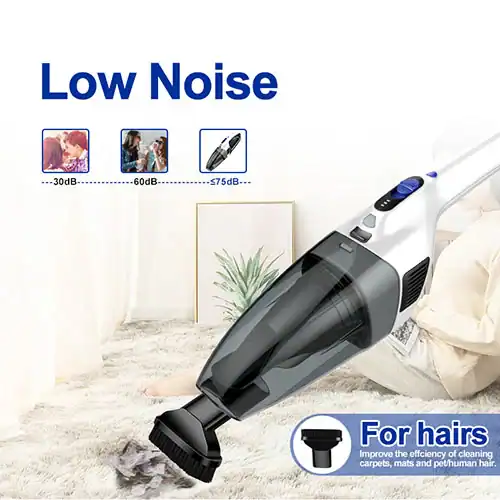
Acoustic engineering targets of 75 dBA or lower align with EPA and WHO recommendations for comfortable 8-hour exposure. Maintaining noise levels below this threshold distinguishes consumer-grade handheld tools from industrial equipment, preventing auditory fatigue and ensuring compliance with environmental health standards without requiring hearing protection.
Acoustic Comfort Thresholds and Health Guidelines
EPA and WHO guidelines establish 75 dBA as the upper limit for comfortable exposure over an 8-hour period to prevent long-term auditory risk. This threshold serves as a critical design constraint for 2026 handheld electronics, ensuring that prolonged use does not result in permanent hearing shifts or chronic stress responses.
Environmental comfort for 24-hour averages remains at 70 dBA, with normal human conversation typically occurring at 60 dBA at a 1-meter distance. Handheld devices must operate near these levels to remain socially acceptable in residential or shared office environments where excessive noise pollution disrupts communication.
Handheld devices reaching 70-80 dBA are often perceived as very loud, comparable to standard vacuum cleaners. Engineering teams target sub-75 dBA levels to improve user experience, as this range reduces the perceived “harshness” of motor-driven or fan-cooled components during active operation.
Regulatory Limits and Engineering Validation Standards
NIOSH recommends an 8-hour exposure limit of 85 dBA, a more protective standard than the OSHA PEL of 90 dBA which triggers formal hearing conservation programs. By targeting 75 dBA, manufacturers provide a significant safety buffer that protects users even if the device is used in resonant environments that naturally amplify sound.
Engineering calculations for real-world noise reduction must account for a 50% derating after a 7 dB subtraction (NRR – 7) x 50% according to OSHA field protocols. Engineers use these metrics to validate that hardware baffles and dampening materials effectively lower the sound pressure level reaching the user’s ear during high-intensity tasks.
A-weighted decibel (dBA) measurements focus on mid-frequencies most sensitive to human hearing. Designers manage frequency distribution alongside raw volume levels to eliminate dissonant tones, ensuring the resulting acoustic profile remains within the targets required for consumer comfort and regulatory compliance.
Source of Noise: Air Turbulence vs. Motor Whine
Handheld device noise stems from two distinct physical phenomena: air turbulence and motor whine. Turbulence, or jet noise, occurs as high-velocity air exits exhaust ports and creates vortex shedding. Motor whine involves high-pitched tonal frequencies caused by rotating fan blades and electromagnetic vibrations. Effective 2026 engineering standards prioritize reducing exhaust velocity to manage both sources.
| Noise Source | Physical Mechanism | Reduction Method |
|---|---|---|
| Air Turbulence | Shear layer instability and ring vortices | Lowering exhaust velocity |
| Motor Whine | Blade tip speeds and rotor interaction | Increased fan diameter (15 dB drop) |
| Tonal Frequencies | Blade passing frequencies (BPF) | Acoustic liners (4-7 dB drop) |
Aerodynamics of Air Turbulence and Exhaust Noise
High-velocity exhaust creates shear layer instability as the moving air stream interacts with the stationary environment. This process forms ring vortices that eventually break down into broadband turbulence, commonly recognized as a rushing air sound. Because sound pressure levels scale heavily with exhaust speed, reducing the air velocity remains the most effective strategy for lowering the overall decibel output of handheld electronics. Flow separation at the nozzle or intake of handheld vacuums mimics the jet noise found in high-thrust industrial environments. Engineering designs utilize high-bypass-ratio principles to shield high-speed core air with a layer of slower-moving bypass air, which dampens the turbulence mixing and lowers the noise profile.
Mechanical Motor Whine and Blade Passing Frequencies
Motor whine originates from high blade tip speeds and the interaction between rotors and coherent flow fluctuations. This mechanical activity produces blade passing frequencies, which are high-pitched tones that become the dominant noise source once exhaust turbulence is minimized. Reducing rotational speeds provides a significant advantage; doubling the fan diameter while halving the speed can achieve a 15 dB reduction in motor-related noise. Specialized components like acoustic liners and honeycomb nacelles target these specific fan tones. These materials absorb electromagnetic and mechanical vibrations, typically yielding a 4-7 dB reduction in the perceived whine during standard operation.
Premium Wholesale Vacuums: High Suction & Custom Branding

Dampening Solutions: Foam Inserts and Housing Thickness
Dampening noise in handheld tools requires a combination of absorption and transmission loss. Engineers use layered composite foams, such as Megasorber C50, to achieve NRC ratings of 0.85 and STC ratings of 28. Strategic housing thickness and specific material densities, like mass-loaded vinyl or hydrophobic melamine, ensure 2026 products meet strict decibel targets.
| Material System | Performance Rating | Technical Application |
|---|---|---|
| Megasorber C50 Composite | NRC 0.85 / STC 28 | 125Hz–2000Hz frequency attenuation |
| TuffMass (MLV) | STC up to 32 | High-density motor transmission loss |
| Tiger Foam Open Cell | NRC 0.70 (at 3″) | Confined internal compartment filling |
| POLYDAMP PHM-UL | 40% Density Reduction | Handheld vacuums and portable pumps |
Layered Composite Materials for Absorption and Transmission Loss
Engineers specify multi-layer architectures like Megasorber C50 to target specific frequency signatures between 125Hz and 2000Hz. This three-layer system uses a flexible noise barrier sandwiched between acoustic foam and an enhancer layer to dissipate sound energy effectively. Noise Reduction Coefficient (NRC) measurements determine how much energy the foam dissipates, while Sound Transmission Class (STC) ratings quantify the material’s success in blocking noise from escaping the device housing. Flexible noise barriers paired with enhancer layers create dual mechanisms that tackle both airborne noise and mechanical vibrations within the motor housing.
Thickness Standards and Environmental Material Applications
Housing thickness correlates directly with frequency response targets. One-inch foam configurations manage mid-to-high frequencies, whereas four-inch wedge foam provides maximum absorption for low-frequency waves. Tiger Foam open-cell spray systems provide a functional NRC of 0.70 at three inches of thickness, making them ideal for complex, confined internal compartments where traditional inserts fail. For portable tools like handheld vacuums, POLYDAMP Melamine Foam (PHM-UL) reduces component density by 40% while maintaining thermal resistance.
Environmental factors dictate the selection of specialized facings and composites. Hydrophobic melamine and Soundmesh G8 facings meet IMO Resolution A653(16) standards, ensuring moisture resistance in tropical or high-humidity environments. For compact motor housings requiring maximum transmission loss, Soundown TuffMass mass-loaded vinyl provides surface densities up to 2 lbs/ft². These high-density barriers prevent noise leakage without adding significant bulk to the handheld device exterior.
Exhaust Diffusers: Softening the Air Exit Sound
Exhaust diffusers reduce exit noise by slowing down high-velocity air through perforated metal elements and acoustic infills. By converting turbulent energy into heat or lower frequencies, these components achieve noise reductions of 35-50 dB, transforming a harsh air blast into a controlled, quiet discharge.
Flow Deceleration through Perforated Geometry
Engineers integrate in-line diffusers and “pepper pot” perforated pipes to fragment high-velocity air jets into numerous smaller streams. This fragmentation significantly reduces turbulence at the source. Aerodynamic regain designs, such as bell-mouth entrances and streamlined passages, minimize pressure drop while shifting acoustic energy toward lower frequency bands. Internal baffles and diffuser cones effectively decelerate air discharge from speeds of 20 m/s down to safer, quieter exit velocities, ensuring the tool remains manageable for the operator.
Acoustic Materials and ISO Performance Standards
Standard construction features Z275 galvanized sheet steel housing to contain acoustic-grade mineral wool or glass fiber. Manufacturers maintain these materials under 15% compression to prevent settling and ensure consistent sound absorption. While standard configurations achieve a 35-50 dB noise reduction, specialized water-injected variants provide an additional 6 dB of attenuation for high-heat or high-pressure applications. Technicians verify these results using ISO 7235 standards, measuring dynamic insertion loss across the 125 Hz to 250 Hz frequency bands to guarantee performance in real-world environments.
The “Powerful Sound” Paradox: Do Users Want Noise?
By 2026, user experience data shows that while people associate loud mechanical sounds with motor strength, they simultaneously demand high intelligibility and low ambient interference. Resolving this requires engineering that maintains a high Signal-to-Noise Ratio (SNR), often targeting over 33dB of noise suppression to ensure the ‘power’ is felt through performance rather than raw decibel output.
Psychoacoustic Perception of Motor Power
Acoustic feedback serves as a primary indicator of suction or inflation force in handheld vacuum cleaners and air pumps. Many users interpret high decibel output as a direct correlation to motor strength. This perception creates a design conflict where engineering teams must preserve the “robust” audio profile of a 150 PSI motor while aggressively filtering out the high-frequency whines that cause user fatigue. Recent market shifts favor “clean power” over raw volume, suggesting that mechanical efficiency has become the new benchmark for perceived quality.
Technical Benchmarks for Intelligent Suppression
Hardware teams integrate components like the LMV1099 to achieve 33dB of far-field noise suppression in mobile and handheld interfaces. These systems utilize differential microphone inputs and 2.7-5.5V power supplies to maintain EMI immunity across a 30Hz to 12kHz frequency response. By optimizing the signal path, these devices sustain high functional clarity even when the motor operates at peak capacity.
Engineers target near-field SNR enhancements between 6dB and 18dB to ensure voice and operational signals remain distinct. Professional-grade accessories often incorporate hybrid ANC technologies that suppress between 25dB and 40dB of background noise. Establishing an A-weighted chain SNR that exceeds 60dB allows for “powerful” perceived volume through clean signal boosting, effectively resolving the paradox by delivering intelligible loudness without the distraction of raw mechanical noise.
QC Testing: Distance Standards for dBA Measurement
Accurate dBA measurements require sensors positioned at distances 5 to 10 times the source’s largest dimension to achieve free-field conditions. Technicians rely on the principle of spherical spreading, where sound levels drop by 6 dB for every doubling of distance, ensuring the environment is free from reflective interference.
The Physics of Distance and Spherical Sound Decay
Technicians position the microphone at 5 to 10 times the largest dimension of the noise source to ensure a free-field measurement environment. This distance allows the sound waves to propagate as a spherical front, isolating the primary emission from near-field distortion. For complex equipment with multiple noise-emitting components, such as generator ducts and exhausts spaced 0.7 meters apart, teams maintain a 7-meter minimum distance to satisfy scaling requirements.
Acoustic engineers verify a 6 dB decay for every doubling of distance from the source to confirm the presence of spherical spreading. This step proves the absence of ground reflections or nearby obstacles that could contaminate quality control data. If the initial test field does not meet this 6 dB criterion, the testing protocol mandates increasing the measurement distance to at least 10 times the source’s largest dimension.
Calibration Protocols for Microphone Height and Ambient Noise
Field testers set the microphone height to 4 feet (1.2 m) above the ground to align with standard human ear levels and reduce surface reflection. If the environment contains specific reflective obstacles, the sensor must stay at least 3 feet (0.9 m) above those surfaces. For handheld device assessments, operators keep the microphone at arm’s length and always utilize mandatory windscreens to protect the sensitive diaphragm from air turbulence.
Accurate assessment requires the noise source to be at least 10 dB higher than the ambient background level. This gap eliminates the need for complex correction factors, though technicians apply specific subtractions—such as 3 dB—when the difference between source and background is narrow. Standard hardware configurations utilize A-weighting (dBA) with slow or fast response settings to capture steady or fluctuating tones effectively.
Different industries follow specialized distance benchmarks to ensure consistency across QC reports. For example, stationary or moving vehicles require a 15-meter (50 ft) microphone placement, resulting in typical readings like 65 dBA for an automobile at 50 mph. In contrast, residential-grade air conditioners utilize a 90-centimeter distance for closer proximity assessment. Documentation follows SAE J47, J331, or J1970 standards to track directivity variations, usually maintaining a tolerance of ±1-2 dB.
Final Thoughts
Effective noise management in handheld tools depends on balancing high-performance suction with refined acoustic signatures. Engineers target levels below 75 dBA to meet health guidelines while using multi-layered composites and optimized fan geometry to dampen mechanical whine. This approach ensures the device signals power through performance rather than distracting volume.
Adopting these 2026 engineering standards transforms how people use portable tools in residential and shared office settings. Using precise measurement protocols and advanced dampening solutions helps maintain a quieter environment without compromising suction strength. Manufacturers who apply these psychoacoustic strategies deliver products that protect long-term hearing and improve daily usability.
Frequently Asked Questions
Why do handheld vacuums produce so much noise?
Handheld vacuums generate noise due to high-speed motors and air turbulence within a compact chassis. The industry standard range is 70-80 dB, comparable to a loud conversation. Models like those from KelyLands minimize this by using high-density housing and foam inserts to dampen motor whine.
What is the acceptable decibel range for a quiet portable vacuum?
In 2026, a quiet handheld vacuum typically operates between 60 and 75 dB. Performance is measured against DS/EN 60704-2 standards to ensure accuracy. Devices exceeding 80 dB can cause hearing fatigue or discomfort if used for extended periods without protection.
How can users reduce the sound level during operation?
Users can lower noise levels by selecting the low-power mode for light debris or ensuring filters stay clean to prevent motor strain. Manufacturers also include exhaust diffusers that soften the exit of air, reducing the harsh ‘hiss’ associated with high-velocity suction.
Does higher suction power always mean a louder vacuum?
Not necessarily. While higher suction requires more motor work, advanced acoustic engineering allows for units with 13,000Pa to 20,000Pa suction to remain under 75 dB. Noise reduction technology, such as optimized impeller blades and thicker plastic housing, decouples power from noise output.

 English
  Español
  Français
  Deutsch
  Português do Brasil
  Русский
  한국어
한국어  日本語
日本語  العربية