 跳转到主要内容 跳转到页脚

Executing the Hotel Hygiene Pitch(small electric kettle travel) effectively turns viral consumer anxiety over room sanitation into measurable retail sales and long-term brand loyalty. Travelers now actively inspect in-room appliances for mold and hidden residue, sharing their negative experiences across social media platforms. Retailers who ignore this behavioral shift face high return rates and lose market share to competitors offering specialized, sanitary travel solutions.
This operational playbook details the exact product specifications required to build a winning retail campaign around portable water boilers. We analyze critical hardware features, including seamless 316 stainless steel interiors that prevent hidden mold growth and rolling boil mechanisms that act as reliable tap water sterilizers. Supply chain managers and marketing teams can use these technical parameters to evaluate fast-heating capacities, verify the absence of internal plastic components, and confidently source appliances for travelers demanding strict sanitation standards.
Why Is the “Dirty Hotel Kettle” a Viral E-commerce Marketing Hook?
The viral exposure of hotel appliance misuse has transformed deep-rooted consumer hygiene anxiety into a primary demand driver for the personal travel kettle market.
The Viral Social Media Incident Exposing Appliance Misuse
Travel influencer Tara Woodox published a video demonstrating underwear washing in a hotel coffee maker, instantly validating long-held rumors about guest appliance misuse. This visual proof triggered immediate consumer disgust and forced the affected hotel property to issue refunds and replace all compromised boiling equipment. The footage exposed severe hygiene flaws in shared hospitality appliances and sparked an immediate consumer panic that hotels are still struggling to contain.
Rising Distrust in Shared Hotel Amenities
Travelers now actively avoid standard room accessories, viewing shared kettles and coffee makers as potential health hazards rather than complimentary conveniences. Consumers openly question the sanitization protocols of hotel housekeeping staff, specifically regarding internal appliance components that resist visual inspection. The hospitality sector faces an ongoing challenge to convince guests that in-room water heaters remain safe for daily use, driving a wedge between standard hotel offerings and baseline guest hygiene expectations.
The Organic Shift Toward Personal Travel Kettles
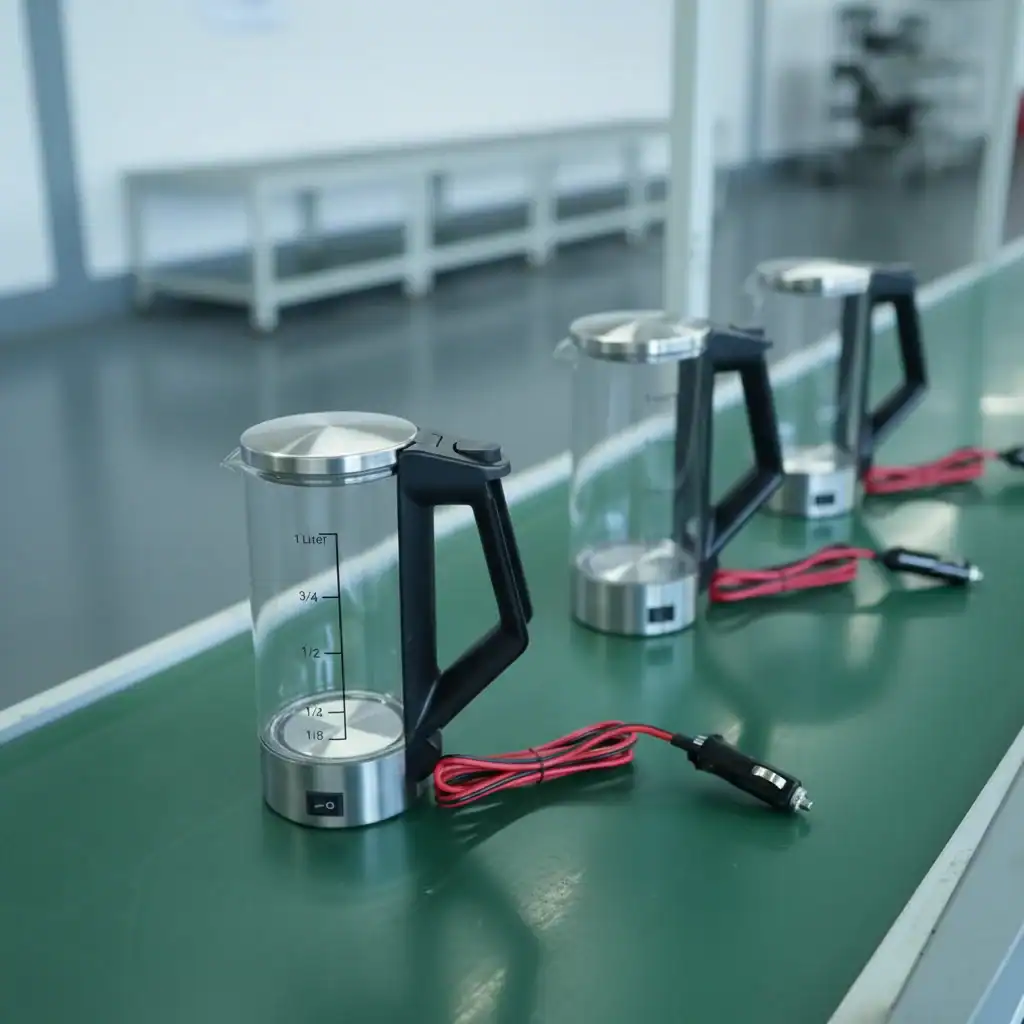
By 2026, the persistent anxiety surrounding shared appliances sustains massive organic demand for personal travel kettles. E-commerce brands actively leverage this hygiene panic, using the viral scandal as a direct marketing angle to highlight the absolute necessity of carrying private boiling equipment. To capture this shifting consumer behavior, B2B buyers and commercial retailers supply safe, portable alternatives like the KelyLands 12V/24V DC car kettles. These proprietary models accommodate logistical fleets, remote workers, and travelers who flatly refuse to rely on potentially contaminated hotel amenities.
Can the Seamless 316 Stainless Interior Prevent Hidden Mold Growth?
While 316-grade stainless steel significantly restricts direct mold attachment through advanced corrosion resistance, stagnant moisture and lingering organic dust still create micro-environments for fungal growth inside completely seamless kettles.
How 316 Stainless Steel Resists Corrosion
Molybdenum in 316-grade stainless steel provides exceptional resistance to rust and degradation in highly saturated environments. Manufacturers standardly deploy this specific alloy across commercial hotel kettles, healthcare instrumentation, and food processing equipment because it easily withstands constant water exposure. The material’s dense, non-porous surface naturally repels corrosion. This structural integrity establishes a robust baseline defense, making it exceptionally difficult for mold to penetrate or take root directly on the bare metal.
| Material / Design Level | Corrosion Resistance | Mold Prevention Capability |
|---|---|---|
| Standard 304 Stainless Steel | Moderate (Susceptible to pitting) | Low (Crevices trap organic matter) |
| 316 Stainless Steel (Seamed) | High (Molybdenum fortified) | Medium (Seams trap lingering moisture) |
| Seamless 316 Stainless Steel | Maximum (Industrial grade) | High (Requires active ventilation) |
Why Seamless Designs Still Face Mold Risks
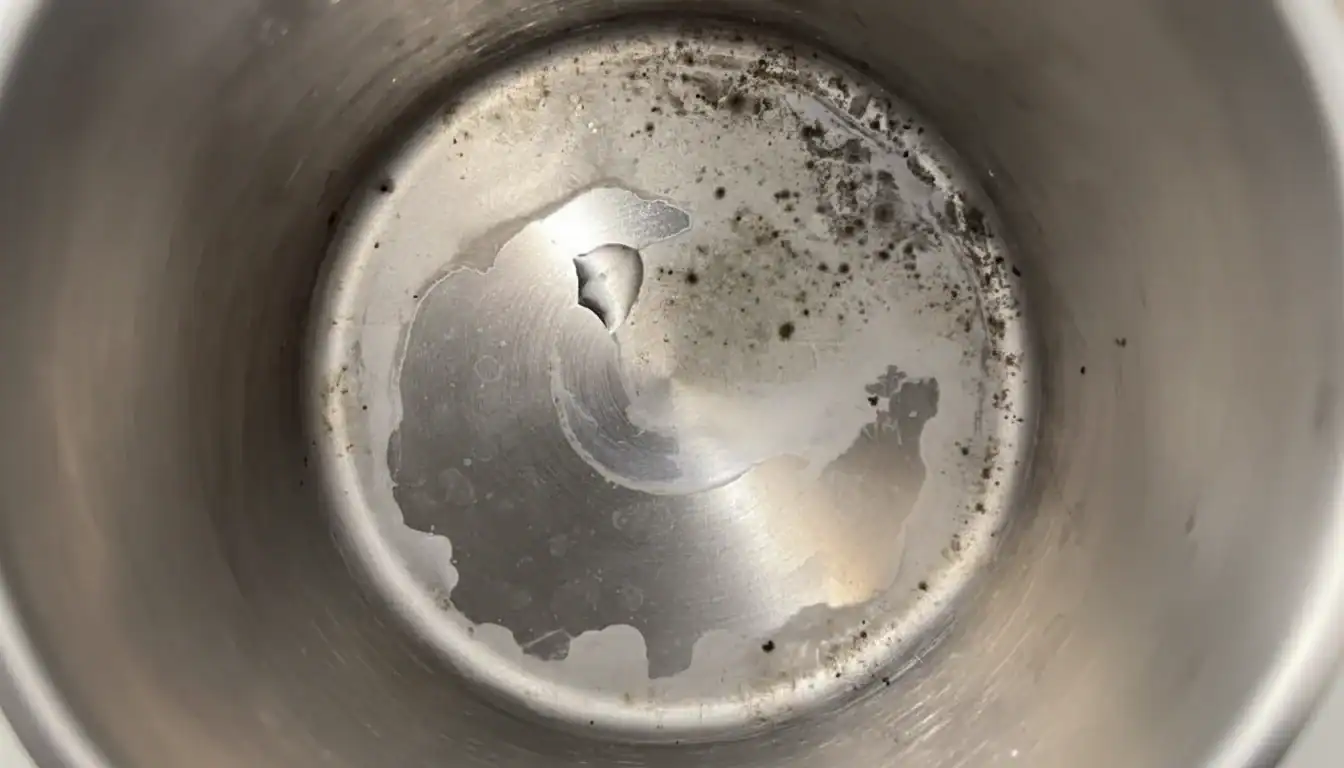
Seamless construction effectively eliminates the deep crevices and welded joints where mineral grime typically collects. Yet, mold requires only three basic elements to thrive: warmth, moisture, and surface dust. Water droplets and condensation routinely linger inside kettles immediately after use, generating the precise humid microclimate that fungal spores seek.
Closing the lid on a damp kettle traps stagnant air and moisture inside the chamber. This allows airborne spores to settle and multiply rapidly on any microscopic dust or organic debris coating the steel surface, entirely bypassing the advanced alloy’s natural defenses.
Maintenance Steps to Stop Mold Proliferation
Proper environmental management remains strictly essential; the metal alone cannot actively eradicate biological growth. Users and hotel cleaning staff must implement active drying protocols to maintain interior hygiene and block spore proliferation.
- Evacuate and Ventilate: Empty all excess water immediately and leave the kettle lid wide open after the boiling cycle completes to guarantee full evaporation and introduce fresh airflow.
- Routine Surface Disruption: Regular cleaning strips away the ambient environmental dust, residual organic debris, and hard water mineral buildup that act as the primary food sources for mold colonies.
High-Margin 12V/24V Car Kettles For Wholesale
Does the Rolling Boil Function Act as a Tap Water Sterilizer?
A continuous 212°F rolling boil physically destroys biological pathogens in municipal tap water, ensuring medical-grade biological safety without altering the source water’s chemical composition.
Biological Contaminant Inactivation
A continuous rolling boil effectively neutralizes biological threats found in municipal or local tap water. Waterborne pathogens die at temperatures as low as 150°F. Hitting a full 212°F rolling boil and maintaining it for at least one minute guarantees complete biological inactivation. Health organizations globally recognize this physical thermal process as a highly reliable method for eliminating specific disease-causing microorganisms:
- Bacteria: Rapidly destroys bacterial strains including E. coli, cholera, and typhoid.
- Viruses: Neutralizes severe viral threats such as Hepatitis A.
- Protozoa: Inactivates resilient waterborne parasites like Giardia and Cryptosporidium.
| Contaminant Category | 212°F Rolling Boil Efficacy | Required Secondary Treatment |
|---|---|---|
| Biological Pathogens (Viruses/Bacteria) | 100% Inactivation | None Required |
| Heavy Metals (Lead/Mercury) | 0% Removal | Reverse Osmosis Filtration |
| Dissolved Chemicals (PFAS/Salts) | 0% Removal | Activated Carbon / Ion Exchange |
Limitations with Chemical Contaminants
High heat physically destroys living organisms but leaves the chemical composition of the source water completely intact. The rolling boil process fails to extract heavy metals, PFAS, salts, or dissolved organic matter from municipal tap water. Water evaporation during the boiling phase actually slightly concentrates these remaining impurities. Users needing pure chemical safety alongside biological sterilization must pair their electric kettle with certified filtration systems, such as reverse osmosis or high-grade activated carbon units.
Reliability in Travel and Hotel Settings
Portable electric kettles give long-haul drivers, logistics fleets, and travelers a dependable method to sanitize local tap water on demand. KelyLands 12V/24V car kettles utilize a dedicated food-grade stainless steel heating plate to reach a full rolling boil in approximately 30 minutes. This heavy-duty power output provides continuous access to biologically safe drinking water without compromising vehicle electrical architectures. After boiling, users must immediately store the sterilized water in clean, sealed containers upon cooling to prevent environmental recontamination.
How Fast Can It Heat 500ml for Pre-Meeting Coffee?
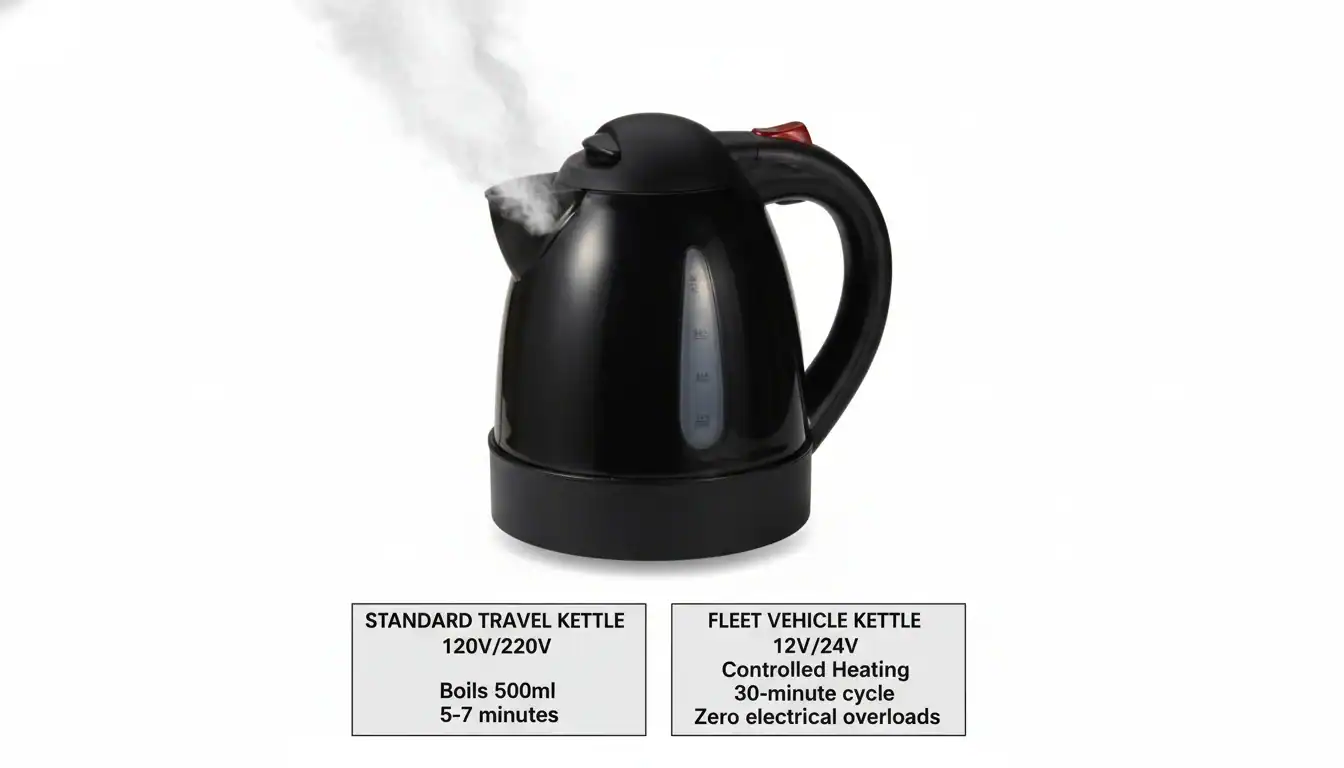
Standard 120V/220V travel kettles boil 500ml in 5 to 7 minutes, while purpose-built 12V/24V fleet models execute a controlled 30-minute heating cycle to guarantee zero electrical overloads on vehicle infrastructure.
Power Output and Heating Speeds
Standard portable kettles drawing 300W to 400W bring 500ml of water to a rolling boil in 5 to 7 minutes on 120V or 220V circuits. Off-grid and commercial fleet applications demand a different thermal approach. KelyLands engineers 12V (150W) and 24V (250W/300W) direct-current kettles that heat the same volume in approximately 30 minutes. We intentionally restrict this power draw to protect vehicle electrical systems and dashboard sockets from catastrophic overloads. This physical constraint ensures long-haul professionals secure reliable hot water on daily routes without compromising the truck’s main fuses.
Temperature Controls for Specific Drinks
Digital interfaces give users absolute command over water temperatures for precise extraction. Brewing a pre-meeting pour-over coffee or delicate tea requires temperatures well below a rolling boil to prevent bitter flavor profiles. Built-in temperature displays feature exact presets, cutting the heating cycle the microsecond the water hits the target brewing metric. Skipping the wait for a full 212°F boil and the mandatory cooldown period shaves valuable minutes off the preparation timeline.
Thermal Insulation and Safe Operation
Structural design dictates both thermal efficiency and user safety in tight spaces. Dual-wall insulation traps heat directly inside the food-grade stainless steel chamber, eliminating the need to reheat the water if a client call runs long. KelyLands integrates sensitive dry-boil prevention and automatic shutoff sensors, physically cutting power upon reaching the target temperature or detecting an empty chamber. Engineers compress these heavily insulated, failsafe systems into a highly portable footprint, keeping the total unit weight strictly under 1.5 lbs for effortless transport in a briefcase or travel bag.
Conclusion
Utilizing the hotel hygiene angle gives marketing agencies and dropshippers a reliable hook that directly addresses consumer health concerns. Pairing a seamless stainless steel interior with a true rolling boil function allows travelers to avoid hidden mold and confidently sterilize their water. Highlighting these specific safety and rapid heating features directly supports higher conversion rates and stronger customer satisfaction.
Evaluate your current travel appliance product lines to see where these hygiene-focused marketing angles fit best. Reach out to our B2B wholesale team to request a product sample or review our detailed OEM catalog.
Frequently Asked Questions
Best small electric kettle travel for purifying water?
For purifying water while traveling, the best small electric kettles are those featuring a 316 medical-grade stainless steel interior and a sustained rolling boil function. Holding water at a rolling boil for 3 to 5 minutes is crucial for eliminating waterborne pathogens. Look for compact, double-wall insulated models from premium appliance brands that prioritize rapid boiling and advanced temperature control over collapsible designs to ensure maximum durability, safety, and hygiene.
Is the interior completely seamless for easy cleaning?
Yes, industry-standard premium travel kettles feature a completely seamless, unibody stainless steel interior. This gap-less construction prevents hard water scaling, mineral buildup, and bacterial growth in hard-to-reach crevices. The smooth surface allows you to effortlessly wipe the interior clean with a damp cloth or sanitize it quickly using a simple citric acid or vinegar descaling rinse.
Can it be used to boil and sterilize baby bottles?
Absolutely. A high-quality travel electric kettle is highly effective for sterilizing baby bottles, silicone nipples, and pacifiers. By bringing the water to a full rolling boil (212°F / 100°C), you safely eliminate harmful bacteria and contaminants. You can either pour the freshly boiled water into a separate travel sterilizing basin or, if the kettle has a wide-mouth unibody design, place smaller items directly into the stainless steel reservoir for quick sterilization.
Are there any hidden plastic parts touching the water?
Top-tier travel kettles are meticulously engineered with a zero-plastic-contact guarantee. The entire water cavity—including the underside of the inner lid, the spout, and the main reservoir—is constructed entirely from food-grade stainless steel. This strict design architecture ensures there are no hidden plastic rings, structural components, or adhesives exposed to the boiling water, completely eliminating the risk of microplastic leaching and chemical off-tastes.

 English
  Español
  Français
  Deutsch
  Português do Brasil
  Русский
  한국어
한국어  日本語
日本語  العربية