 跳转到主要内容 跳转到页脚

Equipping an outdoor barista with a precision 12v coffee maker directly protects your brand from costly product returns caused by dead vehicle batteries and ruined coffee beans. Retailers consistently reject standard automotive kettles because basic heating elements scorch specialty roasts and trigger widespread customer complaints. Your product line needs exact thermal control and smart power management to survive the transition from a cheap vehicle accessory to a highly profitable specialty appliance.
This technical specification guide breaks down the hardware requirements you need to engineer a reliable travel brewing device. We detail the thermal sensors necessary to lock in a steady 92 degrees Celsius for optimal pour-over extraction while preventing auxiliary battery drain during the keep-warm phase. You will also learn how to adapt spout designs for a true gooseneck pouring experience and elevate your brand strategy to capture serious coffee enthusiasts.
Why Do Pour-Over Coffees Require Exactly 92°C to Prevent Bitterness?
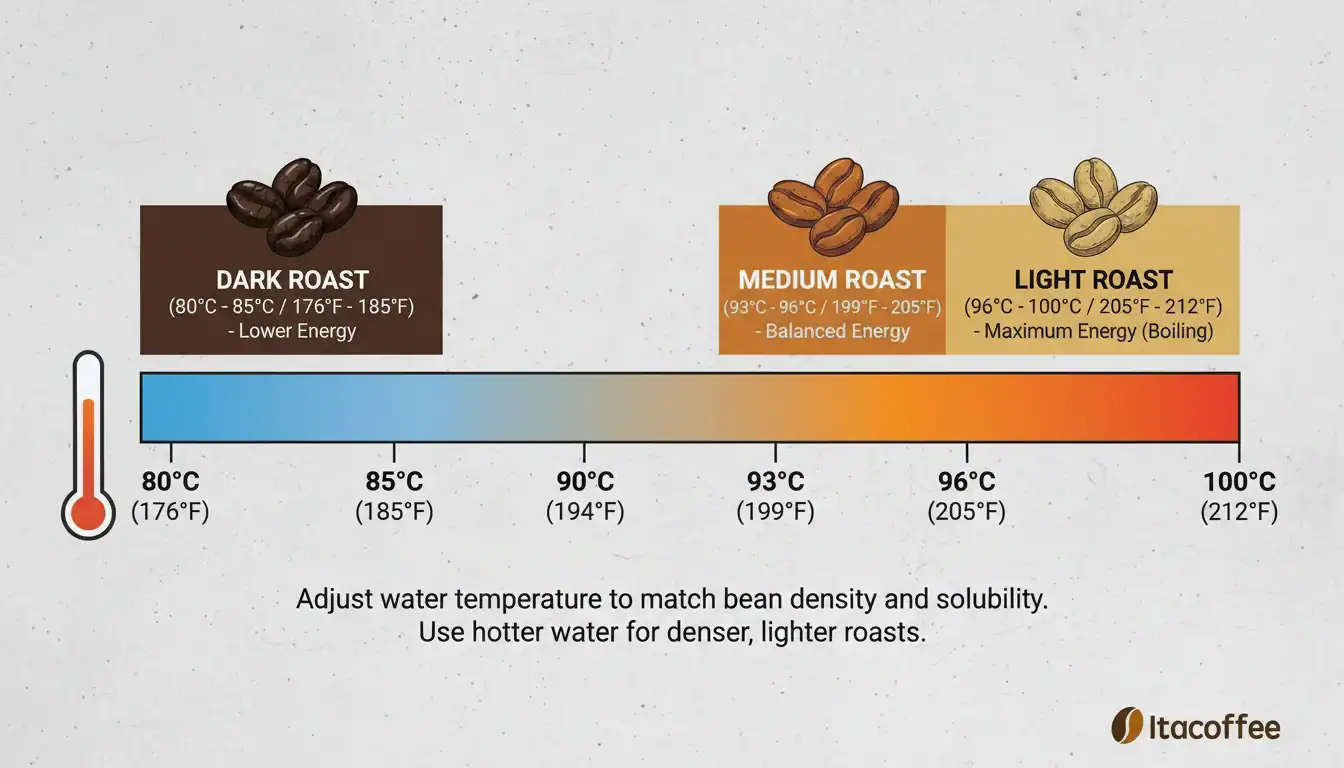
The belief that pour-over coffee demands exactly 92°C is a myth; preventing bitterness actually requires matching specific water temperatures between 90°C and 96°C to the density of your selected roast profile.
The Reality of the 90-96°C Brewing Window
Coffee professionals routinely debunk the premise that pour-over coffee requires an exact 92°C pour to prevent bitterness. The optimal extraction window spans a broader range between 195-205°F (90-96°C). While 92°C sits comfortably inside this window, industry experts consider 93°C the actual sweet spot for most brewing setups.
Brewing temperature dictates which flavor compounds dissolve into the cup. Water hotter than 96°C rapidly pulls harsh tannins and bitter compounds from the grounds. Water cooler than 90°C fails to extract enough solubles, leaving the final brew weak and sour. Hitting the target window ensures you extract the right balance of sugars and acids.
Adjusting Heat for Specific Roast Profiles
The density of the coffee bean dictates the exact water temperature you need. Light roasts maintain a dense cellular structure post-roast. You need higher temperatures (93-96°C) to penetrate the bean and properly extract its bright, complex flavors. Dark roasts have already broken down extensively during the roasting process. You must brew them at lower temperatures (85-90°C) to avoid over-extracting ashy, bitter notes.
Medium roasts offer the most balanced extraction when brewed right in the middle at 90-93°C. Matching the temperature to the roast level gives users the highest probability of avoiding an unpleasantly bitter cup.
| Roast Level | Optimal Brewing Temperature | Cellular Extraction Behavior |
|---|---|---|
| Light Roast | 93-96°C (200-205°F) | Requires maximum heat to break down dense cellular structures and extract bright acids. |
| Medium Roast | 90-93°C (195-200°F) | Delivers balanced extraction for standard specialty coffee flavor profiles. |
| Dark Roast | 85-90°C (185-195°F) | Needs lower heat to prevent over-extracting pre-developed ashy compounds. |
Managing Extraction Variables Beyond Temperature
Temperature alone does not guarantee a perfect cup. Bitterness directly results from over-extraction. This happens when water interacts with the coffee grounds for too long, or when the grounds are too fine for the chosen brewing method.
You must balance water temperature with contact time, grind size, and the correct water-to-coffee ratio. Locking in a consistent baseline temperature allows you to isolate and adjust these other variables. When you eliminate temperature fluctuations, you can easily tweak your grind size to perfect the final recipe.
Maintaining Temperature Consistency on the Road
Hitting precise temperatures between 90°C and 96°C requires accurate heating hardware. Road-based environments make this challenging. KelyLands engineers 12V and 24V DC auto kettles with stable thermostats to help drivers and travelers achieve exact temperatures away from home.
Our SM400 premium glass edition utilizes high borosilicate glass to completely eliminate the chemical plastic smells that ruin specialty coffee profiles. Using reliable, heavy-duty DC-powered kettles ensures fleets and outdoor enthusiasts can maintain the exact thermal consistency needed to brew flawless, bitterness-free coffee anywhere.

Can We Customize the Spout Design for a “Gooseneck” Pouring Experience?
Customizing a gooseneck spout for portable 12V/24V kettles demands precise fluid dynamics and seamless welding to achieve barista-grade laminar flow without compromising appliance durability.
Engineering Precision for Laminar Flow
Designing a gooseneck spout requires exact curvature and internal diameter specifications to guarantee a smooth, laminar pour without splashing. The physics of water flow shift in mobile environments, demanding strict control over the pour profile. Our engineers calculate and model the ideal spout angle and flow rate to match your brand’s specific brewing requirements.
We employ advanced seamless welding techniques to attach the custom spout directly to the heating chamber. This fabrication method prevents micro-leaks and maintains the appliance’s structural integrity against the heavy vibrations of commercial transport and off-grid travel.
Material Selection and Global Certifications
Custom spouts must utilize materials that preserve water quality and meet international safety regulations. We construct the custom gooseneck spout and inner heating chamber from high-quality, food-grade stainless steel. This keeps the water completely safe for specialty brewing and prevents metallic off-tastes.
This strict material selection ensures the final product easily passes global compliance standards, including FDA and LFGB certifications. KelyLands integrates these stainless steel spouts with other premium components, such as our High Borosilicate Glass bodies and high-temperature Bakelite plugs, creating a highly durable, market-ready appliance that avoids the toxic odors common in standard plastic car kettles.
OEM Prototyping and Scalable Production
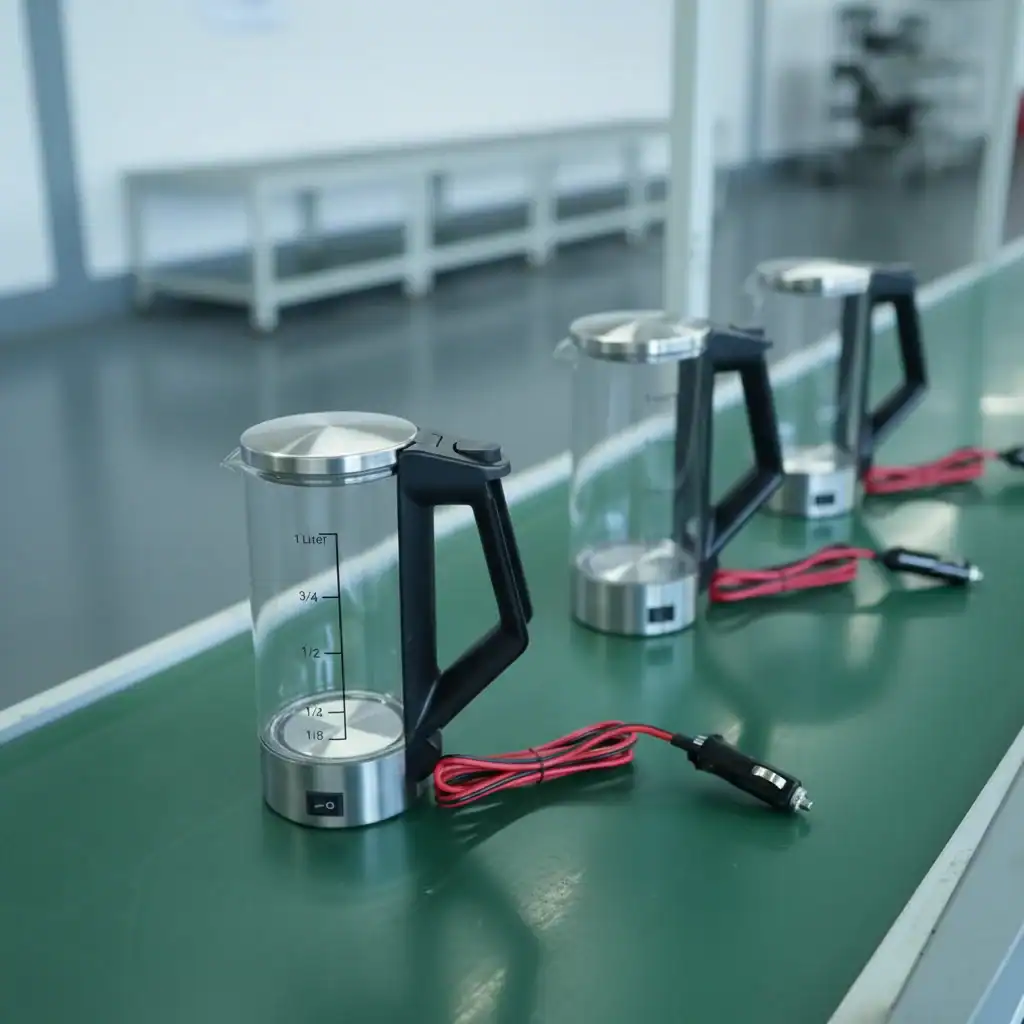
B2B brands leverage our dedicated manufacturing facilities to prototype and scale their custom gooseneck designs. Clients collaborate directly with our Yuyao facility to design and open dedicated molds for their unique spout profiles. Our engineering team manages the entire development lifecycle:
- Initial CAD drafting and physical 3D prototyping for flow testing.
- Precision tooling and mold creation for the stainless steel components.
- Full-scale assembly supported by a strict triple-layer quality inspection process.
We structure these custom manufacturing projects for B2B wholesale distribution. KelyLands standardizes custom kettle orders at an MOQ of 1,000 units to maintain competitive factory pricing while delivering premium, barista-grade mobile hardware to your distributor networks.
Wholesale 12V/24V Car Kettles Built For Safety
Does the Keep-Warm Function Drain the Vehicle’s Auxiliary Battery?
Running a persistent keep-warm function during vehicle standby steadily draws current from the 12V auxiliary system, making hardware-level automatic shut-off features critical for preventing deep battery depletion.
Understanding Isolated Auxiliary Battery Circuits
Automotive engineers design modern vehicle electrical architectures with isolated auxiliary battery circuits. This separation protects the primary starting battery from accessory power consumption. The localized 12-volt auxiliary system handles climate control, comfort features, and secondary commercial appliances like 12V/24V car kettles. In electric and hybrid vehicles, a high-voltage DC-to-DC converter manages the 12V system actively while driving. Once parked, this charging dynamic changes entirely, shifting the accessory load directly onto the auxiliary battery.
Power Draw During Extended Standby
Activating a keep-warm function demands a steady current draw from the 12V auxiliary system to maintain water temperature. This persistent power requirement poses a specific risk during extended parking periods. If the driver leaves the vehicle inactive for long durations, the continuous 150W or 250W load will steadily deplete the auxiliary battery. Electric vehicles face an elevated challenge here. Their DC-to-DC converters stop actively charging the 12V system when the vehicle sits idle, leaving the auxiliary battery to shoulder the entire appliance load alone.
| Vehicle Operational State | DC-to-DC / Alternator Status | Auxiliary Battery Impact (150W/250W Load) |
|---|---|---|
| Active Driving (ICE or EV) | Engaged / Active Charging | Zero depletion; the vehicle system sustains the continuous appliance load. |
| Short-Term Standby (< 30 mins) | Disengaged | Minimal voltage drop; safe for a single rapid boiling cycle. |
| Extended Idle / Parked | Disengaged / Offline | Steady drain; high risk of deep discharge without physical appliance failsafes. |
Intelligent Power Management and Safety Engineering
Vehicle manufacturers program 2026 charging systems to monitor and limit auxiliary battery depletion during extended standby. Relying solely on vehicle-side protections leaves fleets vulnerable. KelyLands reinforces this power management by engineering our commercial kettle series with a proprietary Triple Safeguard system.
- Automatic Shut-off Trigger: Instantly cuts the current draw once the water reaches a rolling boil.
- Recoverable Temperature Controller: Actively regulates the heating plate to eliminate unnecessary power spikes.
- Irrecoverable Thermal Fuse: Executes a hard physical power cutoff during dry-boil scenarios, protecting the vehicle’s electrical architecture.
These hardware-level interventions eliminate continuous, unchecked power draw. Commercial fleets and RV operators run our 12V/24V appliances safely, ensuring drivers never return to a drained auxiliary battery.
How to Market This as a Premium Coffee Appliance Rather Than a Car Accessory?
Shifting from a basic 12V automotive accessory to a premium off-grid brewing appliance requires marketing engineering tolerances, material purity, and barista-grade extraction consistency.
Emphasize Brewing Precision and Craft Quality
Move the product narrative away from basic travel convenience to focus on professional extraction capabilities. Specialty coffee requires consistent heating performance, and the KelyLands 12V/24V appliance delivers the exact thermal stability needed for off-grid environments. This hardware transforms a simple water heater into a mandatory tool for achieving barista-level results in remote locations.
Educate B2B buyers on the internal engineering that makes this possible. Components like 100% pure copper cables and mechanical dry-boil protection ensure reliable, uninterrupted brewing cycles. Fleet managers and premium distributors respond to these specifications because they guarantee peak performance without drawing dangerous loads from the vehicle’s electrical architecture.
Target Outdoor Lifestyle and Specialty Coffee Niches
Break out of traditional automotive parts catalogs by aligning the product with premium outdoor and coffee cultures. Pitch the KelyLands SM and CC series directly to high-end RV outfitters, overlanding lifestyle brands, and premium camping equipment distributors. Direct your B2B marketing efforts toward brands that already sell single-origin beans or specialty brewing gear, showing them an appliance that matches their high hardware standards.
Build marketing campaigns around the ritual of coffee making. Demonstrate the appliance’s role in a refined, off-grid setup. Buyers want to see how the SM400 Glass model integrates seamlessly into a high-end campervan kitchen, proving it belongs next to premium grinders and pour-over drippers.
Leverage OEM Capabilities for Premium Presentation
Use KelyLands’ extensive OEM customization services to build a sophisticated brand identity that rivals high-end kitchenware. Standard decals fail in the luxury segment. Apply professional brand logos using advanced techniques like UV printing or laser engraving. Utilize strict Pantone matching to create aesthetically cohesive product lines that fit naturally into modern kitchen or premium RV environments.
Design custom, eco-friendly retail color boxes that elevate the unboxing experience. Upgraded packaging combined with premium tactile finishes on the appliance justifies a higher retail price point and secures better shelf placement among high-end distributor networks.
Highlight High-End Materials and Global Certifications
Tangible quality indicators and safety standards must drive the sales pitch. Promote KelyLands’ rigorous safety engineering as hallmarks of luxury appliance design. Update your B2B catalogs to explicitly feature these premium components:
- High Borosilicate Glass (SM400): Prevents flavor contamination and completely eliminates the chemical plastic smell associated with cheap alternatives, ensuring medical-grade hygiene for specialty coffee.
- High-Temperature Bakelite Plugs: Guarantee zero melting and eliminate fire hazards even under prolonged 150W/250W continuous loads.
- Proprietary Triple Safeguard System: Integrates an auto-off switch, a recoverable temperature controller, and a physical thermal fuse for ultimate dry-boil protection.
Display food-grade and safety certifications like LFGB, CE, and RoHS across all B2B touchpoints. These certifications reassure high-volume commercial buyers of the product’s premium status and regulatory compliance across global markets.
Conclusion
Precise temperature control and safe power management guarantee a premium pour-over coffee experience on the road. Integrating customizable spout designs and thermal-shock-resistant glass elevates the appliance from a basic travel accessory to a specialized brewing tool. Prioritizing pure copper wiring and physical dry-boil protection ensures overland vehicles operate safely without compromising the electrical architecture.
Evaluate your current outdoor brewing lineup to identify areas where a tailored 12V solution can enhance your brand offerings. Reach out to our team to request a sample or discuss OEM customization options for your next coffee appliance.
Frequently Asked Questions
Are 12v kettles any good for making pour-over coffee?
12v kettles can make excellent pour-over coffee, provided they can reach the optimal brewing temperature range of 195–205°F (90–96°C). While a 12v power source heats water more slowly than a standard wall outlet due to lower wattage, the final coffee quality depends on the water temperature, grind size, and contact time, not the heating speed. Once the 12v kettle reaches the sweet spot of around 200°F (93°C) for a balanced medium roast, it performs exceptionally well for pour-over extraction.
Can I set the exact temperature to 96°C on the travel kettle?
Yes, our advanced travel kettles feature precise variable temperature controls that allow you to set and hold the exact temperature at 96°C. This level of precision is ideal for extracting light roasts, which benefit from higher temperatures (up to 205°F/96°C) to effectively overcome their denser cellular structure. By maintaining exactly 96°C, you ensure consistent extraction and avoid the under-extraction and sour flavors associated with cooler water.
Do you manufacture 12v gooseneck kettles?
Yes, we manufacture 12v gooseneck kettles specifically engineered for mobile, RV, and off-grid pour-over brewing. The precision gooseneck spout allows you to completely control water flow and bed agitation, which is critical for an even extraction. Combined with the 12v power system, it gives you everything you need to maintain consistency and perfectly extract your coffee no matter where you travel.
Does it have a digital real-time temperature display?
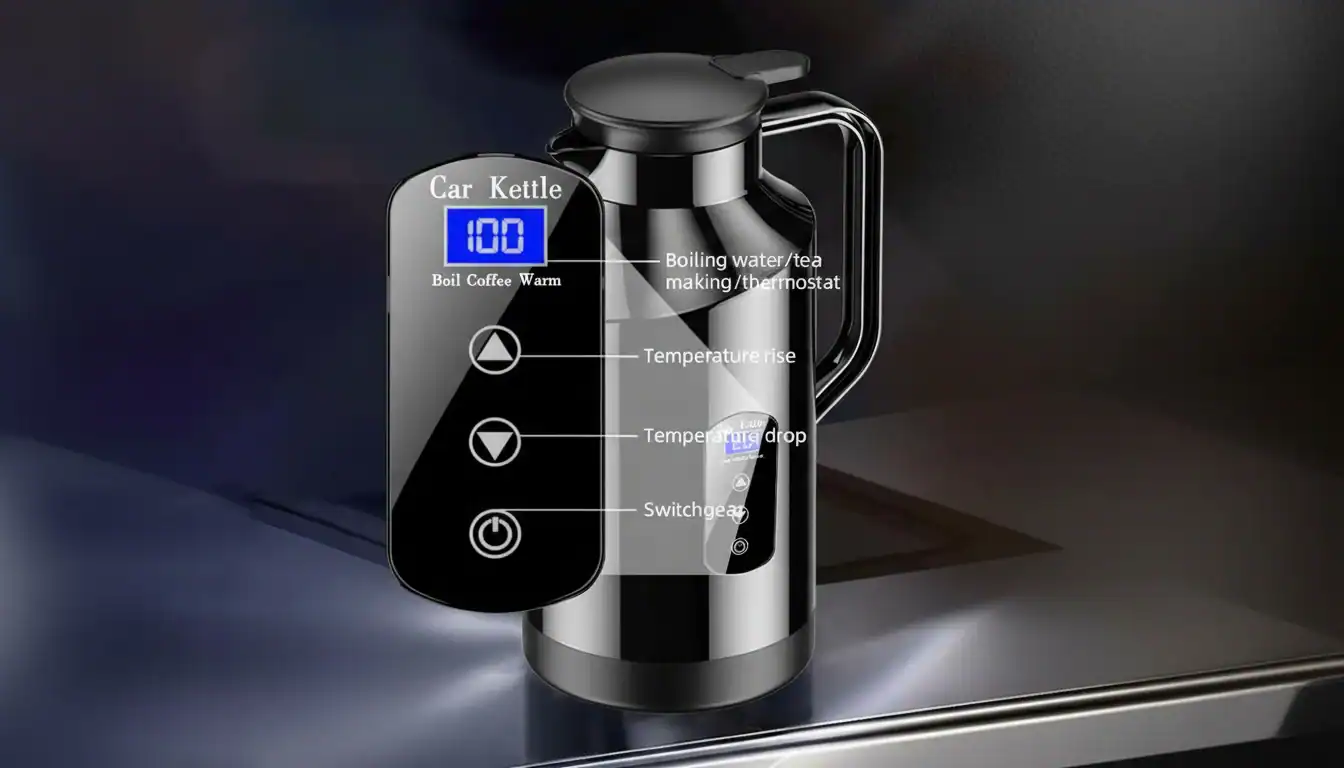
Yes, the kettle features an integrated digital real-time temperature display. Monitoring the temperature as it climbs is crucial for preventing over-extraction and bitterness. With the live display, you can precisely track the heat to accommodate different beans—stopping at 185–195°F to avoid pulling harsh tannins from dark roasts, or continuing up to 205°F for light roasts—ensuring you hit the exact sweet spot for your brewing scenario.

 English
  Español
  Français
  Deutsch
  Português do Brasil
  Русский
  한국어
한국어  日本語
日本語  العربية