 跳转到主要内容 跳转到页脚

B2B procurement teams often rely on decibel ratings to select equipment, yet a small numeric difference on a spec sheet frequently results in a significantly louder work environment than expected. Because sound measurement operates on a logarithmic scale, a jump from 60dB to 70dB sounds twice as loud to the human ear and represents a 1,000% increase in noise intensity. Understanding these physics helps you identify vacuums that maintain acoustic comfort rather than relying on misleading surface-level metrics.
We examine the technical distinction between sound power (Lw) and sound pressure (Lp) measured at one meter to help you evaluate manufacturer claims with laboratory precision. This guide covers why a 3dB reduction effectively removes half of a motor’s sound energy and how environmental factors, such as the shift from carpet to hard tile, can amplify surface noise by up to 12 times during operation.
The Logarithmic Scale: Why 70dB is 2x Louder than 60dB
Sound measurement uses a logarithmic base-10 scale to represent the wide range of human hearing. While a 10dB increase represents a tenfold jump in physical sound intensity (acoustic power), the human brain perceives this specific change as approximately twice as loud, moving from the level of a conversation to a standard vacuum cleaner.
Acoustic Intensity vs Perceived Volume
The decibel formula β = 10 log₁₀ (I / I₀) shows that sound intensity multiplies exponentially rather than adding linearly. A 3dB increase doubles the actual acoustic energy or sound power produced by a motor. Human psychoacoustics require a 10dB increase for the brain to perceive a sound as doubling in volume. This relationship means 70dB sounds twice as loud as 60dB despite containing 10 times the physical energy.
Decibel Benchmarks for Portable Appliances
Standard conversation typically measures at 60dB, while many vacuum cleaners reach 70dB. This represents a massive shift in environmental noise levels. Moving from a 60dB ‘ultra-quiet’ rating to a 70dB ‘standard’ rating increases sound intensity by 1,000%, which often disrupts sleep or concentration. Engineers focus on the 3dB threshold for noise reduction because cutting 3dB effectively removes half of the sound energy generated by the vacuum motor.
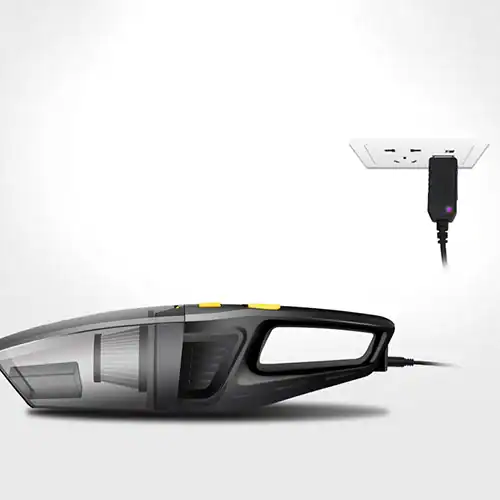
Measuring Standards: At the Motor vs. At the Nozzle
Engineers measure motor noise as sound power (Lw) to establish a distance-independent source baseline using ANSI S12.51 standards. Noise at the nozzle reflects sound pressure (Lp), which decreases as distance increases, typically measured at 1 meter to simulate real-world operation for the user.
| Metric Type | Standard & Formula | Distance Variable |
|---|---|---|
| Sound Power (Lw) | ANSI S12.51 / Lw = 10 log (W/W0) | Constant; independent of distance. |
| Sound Pressure (Lp) | ISO 1680 / IEC 60034-9 | Decreases 6 dB per doubling of distance. |
| Measurement Accuracy | Type 1/Class 1 Meter | ±0.7 dB laboratory precision. |
Sound Power and Motor Source Metrics
Sound power level (Lw) quantifies the total acoustic energy emitted by the motor assembly in all directions. Engineers calculate this value using the logarithmic formula Lw = 10 log (W / W0), establishing a rating that remains constant regardless of the room size or the distance of the sensor. ANSI S12.51 and ANSI S12.54 standards regulate no-load testing to isolate the motor’s mechanical noise from environmental reflections. NEMA MG1 Part 9 documentation relies on these metrics because they provide a repeatable source baseline for technical specifications. Precision testing requires Type 1 or Class 1 sound level meters to maintain accuracy within ±0.7 dB in laboratory settings.
Sound Pressure and Environmental Measurement Variables
Sound pressure (Lp) measures the acoustic intensity perceived by a listener at a specific point, such as the nozzle interface or operator position. In a hemispherical free field, this intensity drops by 6 dB for every doubling of distance from the source. ISO 1680 and IEC 60034-9 standards define standardized measurement positions at 1 meter or 3 meters to ensure nozzle-side noise ratings are comparable across different models. A-weighting (dBA) adjustments align raw frequency data with human hearing sensitivity, specifically targeting the 1 kHz to 4 kHz range where vacuum noise is most noticeable. Field verification uses a 94 dB @ 1 kHz calibrator to ensure sensors accurately subtract ambient noise and account for local obstacles.
The “Conversation Test”: Cleaning While Talking
The Conversation Test measures how much a device’s operating sound interferes with natural speech. In 2026, manufacturers use this to ensure that tools like portable vacuums, which often run at 75-82dB, allow for dialogic interaction without requiring excessive concentration or causing listener exhaustion.
Understanding Perceptual Noise During Multitasking
Engineers evaluate seven specific perceptual dimensions to determine how sound impacts human interaction, including distraction, fluency, and the concentration levels needed for dialogue. This assessment moves beyond static recordings by using interactive exchanges that mimic real-world household or car cleaning environments. By focusing on these interactive phases, testers can identify if motor frequencies lead to communication fatigue or vocal strain. This process categorizes sounds based on their impact on human stamina, distinguishing between noises that feel exhausting and those that allow for natural speech.
Decibel Benchmarks for Speech Transmission Quality
Acoustic validation correlates standard vacuum noise—often between 75dB and 82dB—with specific speech quality benchmarks to maintain intelligibility. Engineers employ multidimensional scaling with a 0.509 stress value to measure how sound degradation affects telecommunication clarity. To prevent conversational lag during active tasks, systems maintain direct back coupling at under 10 ms. Automated models also use 1,600-token windows to segment and analyze voice patterns while motors are running, providing a data-driven look at how mechanical noise interferes with spontaneous, non-scripted responses.
Premium Home Vacuum Manufacturing: Custom Solutions for Your Brand

Hard Floor vs. Carpet: Where Noise is Generated
Hard floors reflect sound and amplify impact noise, while carpets absorb airborne sound and dampen vibrations. Hard surfaces typically yield high reverberation and low insulation ratings, whereas carpeted surfaces utilize pile and cushion structures to reduce noise transmission by up to 50 times compared to bare concrete or stone.
Surface Reflection and Airborne Sound Amplification
Hard materials like natural stone, ceramic, and concrete possess a Noise Reduction Coefficient (NRC) near 0.0, which means they reflect almost all airborne sound back into the room. This reflection creates echo-heavy environments where noise levels quickly escalate. Research indicates that bare tile floors generate 7 to 12 times more surface noise than carpets during the standard operation of household appliances. While commercial carpets provide an NRC between 0.15 and 0.30, cut-pile carpets paired with permeable cushions reach NRC values of 0.60, absorbing 60% of all sound energy. Specialized wool carpets combined with high-performance underlays further improve these results, reducing airborne noise by 50% to 70% based on recent acoustic benchmarks.
Impact Insulation Ratings and Reverberation Metrics
Impact Insulation Class (IIC) ratings measure how effectively a floor assembly blocks impact noise from traveling to the room below. Hard floors generally score between 15 and 30, but textile composite flooring achieves a significantly higher rating of 64. According to ASTM E-492 and ISO R-140 tapping machine tests, open-cell cushion-backed carpet tiles transmit 50 times less noise between floors than hard surface alternatives. This material choice also impacts the duration sound lingers in a space. Reverberation time drops from 3.3 seconds on hard concrete to just 1.6 seconds in carpeted environments. Engineering validation shows that 6.0 lb/ft³ polyurethane cushions effectively dampen vibrations across the 100-3,150 Hz frequency range, preventing the transmission of footfalls and mechanical hums.
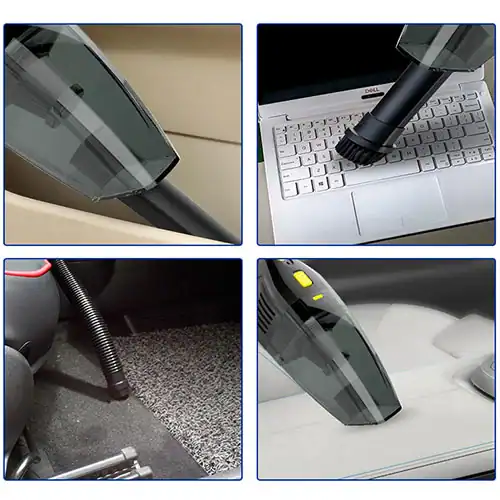
Sourcing Benchmark: What qualifies as “Ultra-Quiet”?
Ultra-quiet refers to noise levels below 40 dB, equivalent to a hushed library or quiet room. In 2026, premium consumer goods aim for levels under 30 dB to ensure no sleep disruption, following health guidelines that prioritize acoustic comfort and minimize involuntary awakenings.
| Noise Intensity (dB) | Acoustic Comparison | Health & Performance Standard |
|---|---|---|
| Under 30 dB | Whisper or rustling leaves | Optimal for deep sleep; zero disruption |
| 30–40 dB | Hushed library environment | Threshold for involuntary movements |
| 40–45 dB | Moderate rain or quiet office | WHO limit for nighttime road traffic |
| 0 dB SPL | Threshold of hearing | Theoretical floor for engineering |
Decibel Thresholds for Sleep-Safe Environments
Acoustic engineers define ultra-quiet performance by maintaining sound output between 30 and 40 dB, effectively replicating the stillness of a secluded library. For consumer products intended for nursery or bedroom use, the market demands levels below 30 dB. This specific range eliminates sleep disturbances and prevents the involuntary physical movements often triggered by ambient spikes.
Safety standards for nighttime environments often reference the 45 dB limit. This threshold, used globally for regulating wind turbines and traffic, serves as a ceiling for maintaining health-safe surroundings. At the most granular level, precision hardware aims for the 0 dB SPL mark, which represents the absolute limit of human hearing and serves as the benchmark for high-end acoustic isolation.
Technical Metrics and Perception Gaps
Measuring sound for commercial goods requires A-weighted decibels (dBA) to account for how the human ear interprets different frequencies. Engineers track the ±3 dBA threshold as the primary indicator of perceptible change. In practical environments like a home or car, a shift of 3 decibels is the minimum amount of sound variation a user can actually notice.
Perception differs significantly from raw data. The ±10 dBA rule establishes that a user perceives a 10-decibel increase as a doubling of volume, while a 10-decibel decrease sounds half as loud. To ensure consistent performance, labs utilize L10 and L50 exceedance metrics. These measurements evaluate how often a product exceeds specific noise limits, aligning with strict residential codes like the Minnesota nighttime standard for acoustic quality.
Final Thoughts
Sourcing a vacuum under 65dB involves more than checking a spec sheet. Because the human ear perceives a 10dB increase as a doubling in volume, a 60dB motor feels significantly quieter than a standard 70dB model. High-quality sourcing focuses on these small numeric differences because they represent massive changes in acoustic energy and user comfort.
Choosing the right equipment means balancing raw suction power with the reality of the environment. Whether cleaning a hardwood hallway or a carpeted office, the interaction between the motor and the floor surface dictates the final noise level. By targeting machines that meet ultra-quiet benchmarks, users can maintain a productive space where conversation and concentration remain possible during maintenance.

Frequently Asked Questions
Is the dB rating measured at the vacuum body or the nozzle?
Industry standards like DIN 45635 and the ISO 3744 series require measurements from microphones positioned at multiple points around the equipment. This captures the total acoustic profile rather than a single point like the nozzle. For portable vacuums, sound pressure levels are typically recorded at 1 meter from the unit surface.
What distance do manufacturers use for sound level measurements?
The standard distance for measuring sound pressure is 1 meter according to ISO protocols. While some older internal tests might have varied, 2026 industry benchmarks favor the 1-meter distance to provide a consistent reference for B2B buyers and quality assurance teams.
Why does the vacuum sound louder on hard wood or tile floors?
Noise levels increase on hard surfaces due to acoustic reflection. While carpets absorb sound energy, hard floors reflect it, often causing a spike of 6 to 10 dB compared to absorbent surfaces. This environmental factor can make a quiet motor sound significantly louder in a kitchen versus a carpeted office.

 English
  Español
  Français
  Deutsch
  Português do Brasil
  Русский
  한국어
한국어  日本語
日本語  العربية