How to Verify Factory Certifications and Detect Fakes
Learn effective methods to verify factory certifications, identify fake documents, and ensure supplier compliance to protect your supply chain.
Reading Time:5 min
|
Word Count:1370
In today’s global supply chains, verifying factory certifications is a critical barrier against counterfeit documents and supplier fraud. This article delivers a comprehensive guide on how to effectively verify factory certifications, detect fake compliance documents, and implement rigorous supplier due diligence to safeguard your supply chain integrity. The global value of counterfeit goods was estimated to be between USD 923 billion and USD 1.13 trillion in 2016, impacting health, safety, and economic stability.
Counterfeit goods now represent a staggering $1 trillion global market. This fraud directly threatens supply chain integrity and consumer safety. Over 70% of procurement officers report increased supply chain risks in the past year. Robust certification verification is no longer optional—it’s a critical business defense.
Understanding and Identifying Factory Certifications
Effective verification starts with recognizing both legitimate credentials and clear warning signs of deception.
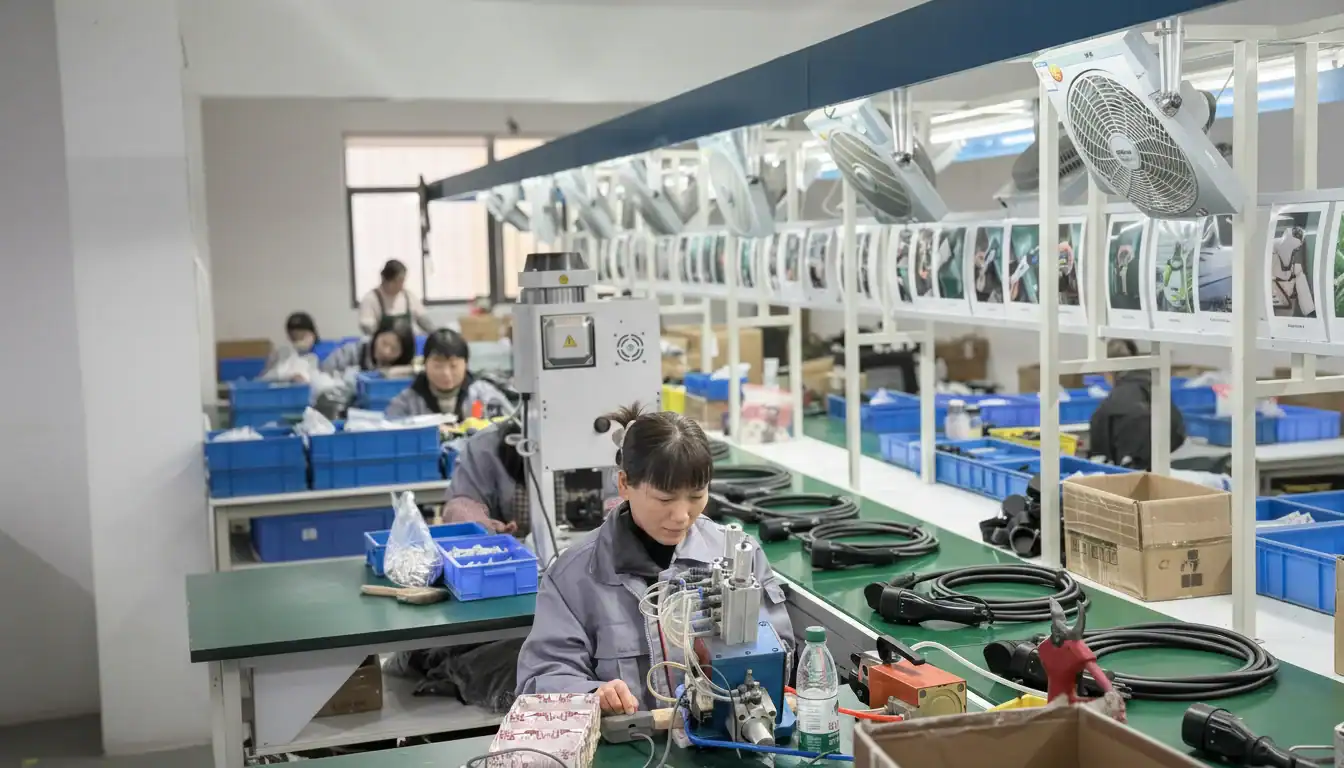
Workers at an assembly line in a factory setting, focused on assembling products.
How to Spot Fake Certifications and Key Red Flags
Always request the official certificate ID and its exact date of issuance from potential suppliers to enable independent verification. Inspect every document for pixelated logos or blurry text, as accredited bodies produce professionally formatted certificates, and scrutinize all company details for inconsistencies against your purchase order and contract.
Ensure the certificate number is present and check its issue and expiration dates against the certification body’s database. A vague or unclear description of the certified product or process scope significantly reduces trustworthiness. Legitimate documents feature official accreditation symbols, signatures, and security features like watermarks or holograms.
Common Red Flags in Fake Certifications
Red Flag
Description
Impact
Source
Pixelated Logos and Blurry Formatting
Unprofessional print quality inconsistent with accredited bodies’ standards.
Raises suspicion of counterfeit documents.
SourceReady Compliance Guide 2025
Inconsistent Company Details
Mismatch in business name, address, or factory site versus contract or PO.
Indicative of falsified or altered documents.
SourceReady Compliance Guide 2025
Typos and Awkward Translations
Errors due to machine translation or poor templates.
Strong indicator of forgery.
SourceReady Compliance Guide 2025
Missing or Expired Certificate Numbers
Omission of certificate identifiers or invalid dates.
May indicate lack of validity or fraud.
SourceReady Compliance Guide 2025
Vague Certification Scope
Unclear description of the product or process certified.
Reduces trustworthiness of the certification.
SourceReady Compliance Guide 2025
Official Verification Methods for Factory Certifications
Never rely solely on documents provided by the supplier. Visit the certification body’s official online registry or database to confirm validity. Use the certificate ID to verify the supplier’s legal name, location, and product scope for an exact match.
If any doubt remains, contact the issuing laboratory or certification body directly via email or phone for confirmation. Compare new certificates with previous versions from the same supplier to check for consistency in formatting, logos, and other details. Leverage digital tools like QR code scanning or API integrations with accreditation databases for instant verification.
Key International Standards and Accreditation in Certification
Understand the landscape of respected certifications like ISO 9001 for quality management, FSSC 22000 for food safety, and SA8000 for social accountability. Recognize that accreditation bodies audit certification bodies to ensure they follow strict international standards like ISO/IEC 17021.
International marks like CE or UL demonstrate tested compliance, but watch for misuse. Always use official directories from IEC, TÜV, SGS, or Intertek for verification, as these are primary sources for validating a certification body’s legitimacy.
Advanced Techniques and Tools for Detecting Fake Documents
Technology provides powerful new weapons in the ongoing battle against sophisticated document forgery.
Technological Solutions for Document Fraud Detection
Leverage Optical Character Recognition (OCR) technology to automatically scan for inconsistent data and altered text within documents. Deploy AI and machine learning algorithms trained to identify subtle anomalies like font inconsistencies, layout irregularities, and manipulated images that escape the human eye. Employ biometric verification to confirm identity documents by comparing user photos with document photos.
Blockchain technology is emerging as a powerful deterrent, creating immutable and timestamped records for certifications that prevent unauthorized alterations. Specialized fraud detection software can compare documents against known counterfeit templates, flagging suspicious certificates for review in real-time.
Best Practices in Physical and Visual Document Examination
Conduct a careful physical examination when possible. Feel the paper quality and check for security features like watermarks, holograms, or color-shifting inks that are difficult to replicate. Examine logos for subtle discrepancies or outdated designs that forgers often miss.
Look for any signs of physical tampering, such as erasures, chemical stains, or punched holes. Verify detailed artwork, tactile printing, and optically variable features. Always cross-check serial numbers, barcodes, or embedded URLs against official databases.
Keep your vehicle spotless with KelyLands’ compact, quiet, and efficient vacuums. Featuring strong suction, multi-tool attachments, and customizable designs, they fit every cleaning task—from pet hair to tight spaces. Choose from cordless or wired models with fast USB-C charging and reliable global certifications.
Comprehensive Supplier Due Diligence Beyond Certification Verification
True supply chain integrity is built on a foundation of ongoing oversight, not just a one-time document check.
Conducting Factory Audits and Assessments
Schedule on-site or virtual factory inspections to observe production processes, quality controls, and workplace conditions firsthand. Assess the facility’s cleanliness, safety protocols, and employee training to ensure they align with the standards promised by their certifications.
Review documentation access at the factory site; certificates, licenses, and audit reports should be organized and readily available. Evaluate managerial transparency during your visit. When physical travel is impossible, partner with trusted local quality control agencies or use third-party digital audit platforms for remote verification.
Building a Supplier Compliance and Performance Monitoring System
Develop a comprehensive supplier scorecard that tracks certifications, audit outcomes, delivery performance, and other risk indicators. Monitor key performance indicators (KPIs) like product defect rates, on-time delivery percentages, and corrective action completion times.
Implement centralized digital platforms for certification tracking that provide automated alerts for expirations and document mismatches. Facilitate shared dashboards between your quality, compliance, and sourcing teams to maintain alignment and a single source of truth.
Portable car battery booster compatible with all vehicle types for reliable startup.
Legal and Financial Due Diligence Measures
Verify the supplier’s business license, registration status, and adherence to all regional manufacturing and export regulations. Review their financial health through credit reports and check for any ongoing litigations or sanctions that could impact their ability to supply.
Obtain and validate client references from current or recent customers to get unbiased feedback on performance. Always request product samples to inspect build quality and conformity before placing large-scale orders. Implement strong contract clauses that detail compliance requirements, audit rights, and penalties for non-compliance.
Frequently Asked Questions
How can I quickly verify if an ISO 9001 certificate is authentic?
Request the certificate ID and issuance date from the supplier. Then, search the official database of the certification body that issued it (not just the ISO website) to confirm its validity and ensure all supplier details match exactly.
The most immediate red flags are pixelated logos, inconsistent company information, spelling errors, and missing certificate numbers. A vague certification scope that doesn’t clearly define the product or process is also a major warning sign.
Can digital certificates and blockchain technology prevent certification forgery?
Yes, these technologies are significantly raising the bar. Blockchain creates an immutable, timestamped record that is nearly impossible to alter fraudulently. Digital certificates often incorporate advanced security features that are far harder to counterfeit than paper documents.
Auditing frequency depends on the supplier’s risk level and your industry. For critical suppliers, an annual audit is standard. For high-risk sectors or suppliers with past issues, biannual audits may be necessary.
What should I do if I suspect a supplier’s certification is fake?
Immediately contact the issuing certification body directly to confirm your suspicions. Cross-check the document with the body’s official database. Halt any business with the supplier until verification is complete, and report the suspicious document to the relevant certification authority.
Hi, I’m Hanke Chen, the Head of KelyLands Sales Team. With over a decade of experience as a sales engineer, I bring in-depth expertise in the design, production, and sales of car accessories.
Please leave your information here, our team will get back to you soon..
WhatsApp us
We use cookies to ensure that we give you the best experience on our website. If you continue to use this site we will assume that you are happy with it.
 跳转到主要内容 跳转到页脚




 English
  Español
  Français
  Deutsch
  Português do Brasil
  Русский
  한국어
한국어  日本語
日本語  العربية