 跳转到主要内容 跳转到页脚

Hard floor maintenance often results in inconsistent hygiene when traditional mopping tools simply redistribute debris across the surface. For facility managers and homeowners alike, single-bucket methods pose a risk of cross-contamination and lingering bacterial growth. Wet-dry mop hybrids eliminate these concerns by utilizing two-tank technology to reach a 99.9% efficiency rate in particle removal, ensuring that only fresh water and clean solution touch the floor.
This guide details the technical architecture behind these systems, including the 15,000 Pa suction power and automated docks that use 6.3 A heating elements for sanitization. We also examine the specific detergent dilution ratios required to protect internal pumps and the environmental standards necessary to ensure a streak-free finish on hardwood surfaces.
The Mopping is Dead Trend: Vacuum + Wash in One Step
The 2026 floor care market replaces multi-step cleaning with wet-dry hybrids that vacuum and scrub simultaneously. These systems use motorized rollers and high-pressure suction to remove liquids and solids in a single pass, ensuring fresh water application through dual-tank isolation and sensor-driven flow control.
| Performance Metric | Standard Benchmark | Key Hardware Logic |
|---|---|---|
| Suction Power | 15,000 Pa | High-pressure liquid and dry debris lift |
| Water Management | 600mL – 700mL Tanks | Dual-tank isolation prevents cross-contamination |
| Battery Runtime | 30 – 35 Minutes | Cordless coverage for standard floor plans |
| Noise Profile | 70 – 80 dB(A) | Acoustic dampening with high-torque output |
Single-Pass Workflow and Soil Management Logic
Modern floor cleaners utilize motorized absorbent rollers that apply cleaning solution while agitating surface films. A rear suction channel immediately recovers the resulting slurry into a separate reservoir. This process eliminates the need to vacuum before mopping, as the system handles both dry particulates and liquid spills at the same time.
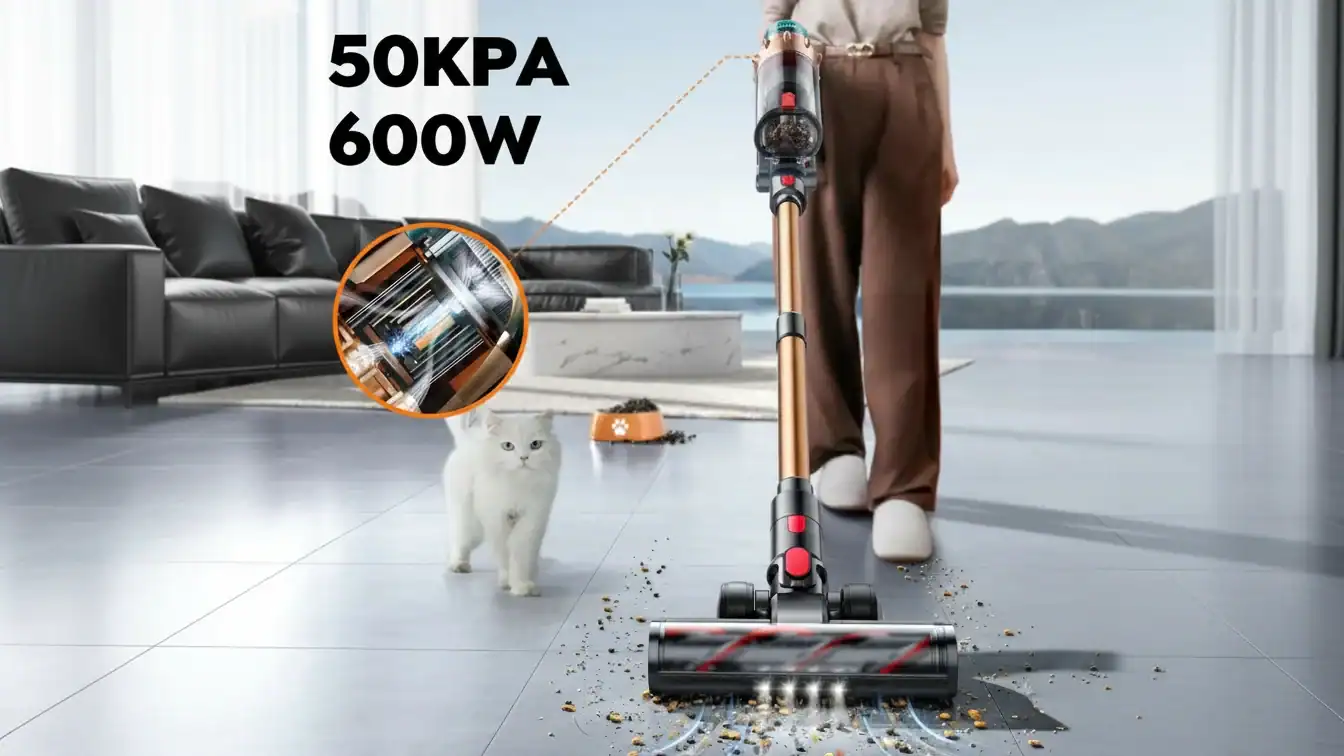
Smart dirt detection sensors, found in hardware like the Eureka 880, modulate suction power and water volume based on the measured debris load. To maintain performance during wet pickup, anti-tangle brush designs use stainless steel comb teeth. These 104-tooth systems actively strip hair and fibers from the roller to prevent clogging and maintain constant contact with the floor surface.
Technical Benchmarks and Dual-Tank Architecture
Suction pressure in mid-to-high tier units reaches 15,000 Pa, providing the necessary negative pressure to lift heavy liquid spills and embedded dry grit. Dual-tank systems physically separate the clean solution from the 600mL to 700mL dirty water reservoirs. This architecture ensures the device never recycles soiled water, which is a common failure point in traditional mopping methods.
Cordless power systems deliver roughly 35 minutes of continuous runtime, requiring a 4 to 5 hour charge cycle. Engineering focus remains on balancing motor torque with noise control, keeping operating levels between 70 and 80 dB(A). Advanced models also include self-maintenance cycles where the base station uses hot water and forced air to flush the internal pathways and dry the roller, preventing biofilm and odor buildup.
Two-Tank Technology: Separating Clean & Dirty Water
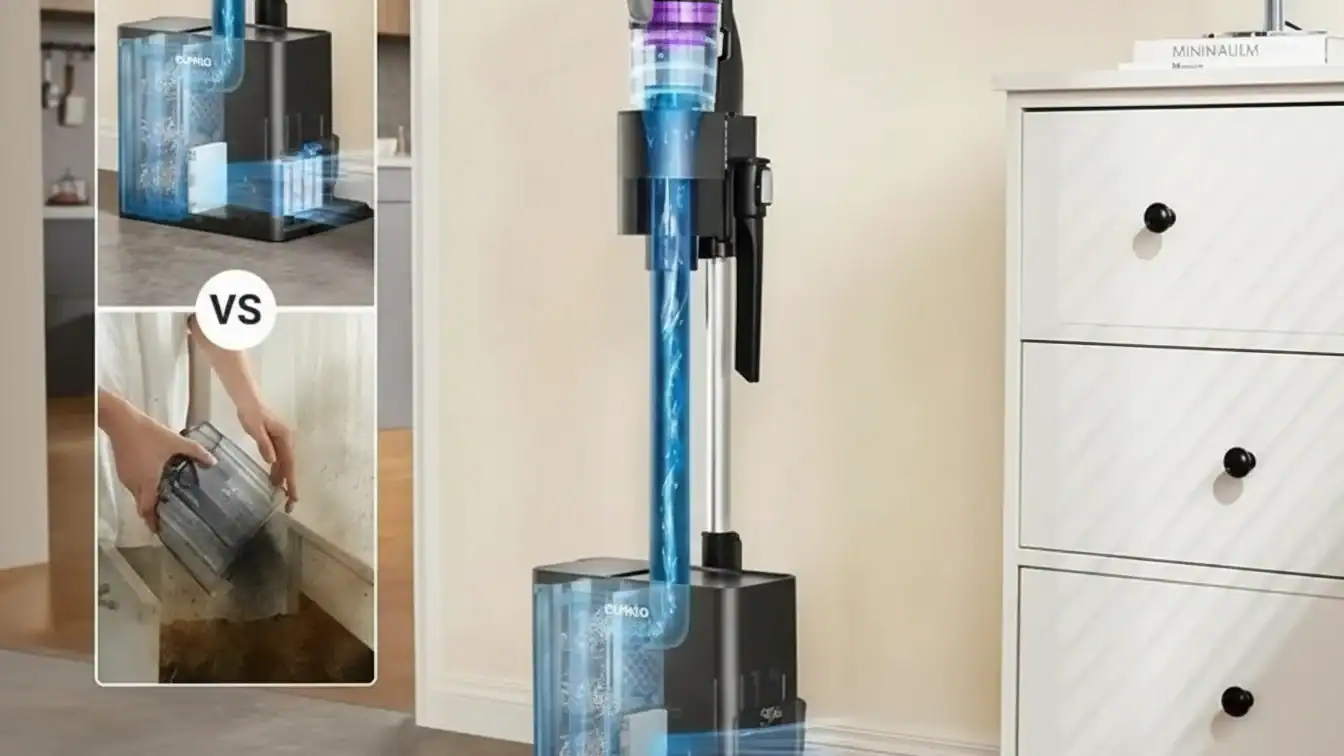
Two-tank technology uses separate reservoirs to ensure the cleaning surface only touches fresh solution. By isolating wastewater in a recovery tank, the system prevents the spread of dirt and bacteria, achieving higher hygiene standards than traditional single-bucket mopping methods.
Dual-Chamber Design for Continuous Fresh Water Supply
The physical architecture of a two-tank system relies on a dual-chamber configuration to prevent recontamination. Primary grit chambers remove solid waste through specific retention times and inlet aprons that minimize internal turbulence. Secondary separation chambers use 90-degree perforated outlet tubes to retain floating solids and debris within the recovery area. Internal weirs and non-clog diffusers guide the influent flow to ensure clean and dirty water never mix during the cleaning process. Advanced phase separation floats track water levels with ±0.10-inch accuracy to manage tank capacity and maintain mechanical balance.

Engineering Standards and Particle Removal Efficiency
High-performance separation systems achieve 99.9% efficiency by utilizing corrugated plate technology and specialized coalescing modules. These engineering standards meet pr-EN1825 and UL SU2215 requirements, which keep oil and grease levels in the recovery tank below 25 ppm. The separation process effectively isolates microscopic droplets as small as 30-40 µm to maintain high-clarity output and prevent streaks on surfaces. Watertight shut-off valves capable of handling pressures up to 0.5 bar secure the tanks against overflows during heavy-duty operation.
Self-Cleaning Docks: The Killer Feature
Self-cleaning docks automate maintenance by flushing brush rolls and internal channels with clean water before applying hot-air drying. This closed-loop process removes embedded debris and evaporates moisture, preventing the bacterial growth and odors that previously required manual scrubbing of vacuum components.
| System Component | Technical Specification | Maintenance Benefit |
|---|---|---|
| Automated Flush Cycle | 15,000 Pa Suction / 0.6 L Loop | Clears internal blockages automatically |
| Hot-Air Drying | 6.3 A @ 120 V Power Draw | Eliminates moisture and odor growth |
| Fluid Management | Dual-Tank Separation | Ensures only clean water rinses the brush |
Automated Maintenance and Odor Prevention
Once a wet-dry vacuum parks in the dock, a sequence of full flush and brush wash cycles cleans the roller and internal liquid paths. This process utilizes the same liquid path as floor washing to ensure consistent suction performance over time. By pumping clean water through the system, the dock removes embedded soils before they can harden or cause obstructions.
Advanced models, such as the Eureka Floorshine 880, incorporate hot-air drying cycles to evaporate residual moisture. This step is critical because it suppresses the formation of biofilm and unpleasant smells that typically occur in damp environments. These dock-initiated sequences eliminate the need for users to manually scrub brushes or internal components between daily floor cleaning tasks.
Technical Power and Fluid Integration
Engineering a self-cleaning dock requires substantial power to manage thermal and fluid dynamics. High-energy drying phases draw approximately 6.3 A at 120 V to operate dedicated heating elements and air vents. This electrical draw, observed in systems like the Roborock F25 Ultra, allows the unit to push warm air over the mop pad to ensure it dries completely and remains hygienic.
Resource management is handled through dual-tank technology, which keeps the 0.6 L fresh water supply separate from the dirty recovery tank during the purge. Smart dirt detection systems further refine this process by allowing the dock to adjust detergent dosing and water flow based on the debris levels detected on the brush roll. These integrated designs maintain a 15,000 Pa suction threshold by clearing blockages from internal channels every time the unit charges.
Build Your Brand with High-Performance Custom Vacuums

Drying Time: Preventing Streaks on Hardwood
Hardwood floors require specific evaporation windows to prevent residue and streaks. Water-based finishes typically dry in 1 to 3 hours, while oil-based options take up to 24 hours. Ensuring the surface reaches a 70% cure state within the first day prevents mop-induced marks and protects the finish integrity.
Differences Between Surface Drying and Chemical Curing
Water-based polyurethanes like Bona Mega reach a touch-dry state in 2 to 3 hours but remain highly vulnerable to moisture. The finish may feel solid, yet the chemical bond requires more time to stabilize before it can withstand wet cleaning. If you apply moisture too early, the water disrupts the film-forming process, leading to the hazy streaks often seen on newly finished boards. Most water-based products require at least 24 hours to reach a 70% cure state, which is the minimum threshold for light traffic and gentle maintenance.
Oil-based urethanes demand a much longer evaporation window, typically requiring 8 to 12 hours before the surface is safe to walk on. Using a wet-dry mop hybrid on these surfaces prematurely traps moisture under the finish film. This interference causes long-term durability issues and can lead to adhesion failure where the topcoat peels away from the wood. Full chemical curing for oil-based options takes between 7 and 30 days. Mopping during this sensitive period often results in permanent clouding of the wood grain that no amount of buffing can remove.
Controlling Environmental Variables for Uniform Evaporation
You must maintain indoor temperatures between 65-80°F and relative humidity between 40-60% to satisfy ASTM D1640 standards. These conditions ensure that the finish levels and dries according to the manufacturer’s specifications. High humidity or stagnant airflow slows the solvent evaporation process, which causes the uneven residue that users identify as streaks. When the finish cannot dry at a consistent rate, the gloss levels fluctuate, failing to meet the precision required by ASTM D523 standards for satin, semi-gloss, or high-gloss appearances.
NWFA guidelines recommend consistent ventilation to help the finish stabilize throughout the room. Proper airflow prevents “solvent trap,” where heavy vapors sit on the floor surface and stop the underlying layers from hardening. By controlling the environment, you ensure the finish achieves a uniform sheen and the necessary hardness to resist the mechanical action of a mop. This technical preparation is the most effective way to guarantee a streak-free result and maintain the structural integrity of the hardwood protection.

Detergent Compatibility: Sourcing Safe Solutions
Safe operation of wet-dry hybrids requires low-foam, pH-neutral detergents to prevent pump corrosion and sensor interference. While brands like Roborock and Dreame offer proprietary solutions, users must maintain specific dilution ratios—typically 1:10 for vinegar or 1:20 for hydrogen peroxide—to avoid voiding warranties or damaging internal seals by 2026.
Chemical Profiles and Prohibited Agents
Using low-foam, pH-neutral formulas prevents residue buildup in water nozzles and suction paths. This specific chemical profile ensures that the internal delivery systems remain free of obstructions. Hardware longevity depends on maintaining these clear pathways to avoid performance degradation over time.
Avoid using bleach, ammonia, or oil-based cleaners such as Pine-Sol and Murphy’s Oil Soap. These substances cause internal corrosion and clog spray mechanisms, often leading to immediate warranty forfeiture. Harsh chemical additives specifically target and damage sensitive water pumps and sensors.
Modern self-cleaning cycles that utilize 176°F hot-water washes require thermally stable detergents. These solutions do not break down into sticky residues when exposed to high temperatures. Using the correct agent keeps the mop pads and internal docks sanitary without creating a buildup that interferes with the 158°F to 167°F drying and cleaning phases.
Manufacturer Solutions and Dilution Standards
Deploying brand-specific agents like DEEBOT Cleaning Solution, Narwal Cleaning Solution, or Dreame Multi-surface solutions ensures the best results for auto-dispensing systems. These products are formulated to work with high-power suction systems, such as the 20,000Pa units found in advanced hybrid models like the Narwal S20 Pro.
Standardize DIY mixtures with a 1:10 dilution ratio for white vinegar or concentrated solutions to protect plastic components from degradation. For disinfection, a 1:20 ratio for hydrogen peroxide mixtures balances cleaning efficacy with the protection of internal seals. This approach maintains the integrity of the device while achieving a deeper clean without the risks associated with unmanaged chemical concentrations.
Automated docks with 200ml detergent reservoirs facilitate consistent maintenance. These tanks usually support regular cleaning schedules for about three months before requiring a refill. This automated dispensing prevents the overuse of chemicals, which protects the floor surface and the vacuum’s internal plumbing from long-term damage.
Final Thoughts
Vacuum and mop combos simplify home maintenance by combining two chores into one seamless process. These machines handle wet and dry messes simultaneously, which cuts cleaning time in half for most people. The two-tank system plays a vital role here, as it keeps dirty water separate and ensures only fresh solution touches the floor. This technology makes traditional mopping feel outdated and provides a more hygienic result for every room in the house.
Getting the most out of these tools requires following a few simple rules regarding detergents and floor types. Hardwood floors stay protected when you use pH-neutral cleaners and allow for proper drying windows. Running the self-cleaning cycles after every use keeps the internal parts running smoothly and prevents odors from building up. These hybrids provide a practical path to clean floors for anyone looking to reclaim their time without sacrificing home hygiene.
Frequently Asked Questions
Do wet-dry mop hybrids leave water streaks on hard floors?
Most wet-dry robotic hybrids leave no visible streaks when paired with the correct cleaning pad and detergent dosage. These machines aim for a residual moisture level that evaporates within 5 to 10 minutes on hard surfaces, which is the current performance benchmark for residential cleaning.
How long does the self-cleaning cycle take for the mop pads?
Industry designs for self-cleaning docks typically range from 2 to 5 minutes for a standard rinse and dry cycle. Premium systems with advanced hot-air drying sequences may take up to 10 minutes to complete the full maintenance process.
Can custom or branded detergents be used with these systems?
Every major manufacturer requires neutral pH (~7), non-foaming, and low-residue detergents to protect internal pumps and seals. Using third-party detergents works only if the solution meets these technical requirements and passes compatibility testing to maintain the machine’s warranty.

 English
  Español
  Français
  Deutsch
  Português do Brasil
  Русский
  한국어
한국어  日本語
日本語  العربية