 跳转到主要内容 跳转到页脚

Sourcing a custom logo portable boiler requires strict alignment between corporate branding guidelines and factory-level manufacturing realities. Procurement teams often face hidden tooling fees, inconsistent color matching, or easily scratched printing that degrades the perceived value of the final retail product. A poorly executed branding application directly impacts stakeholder confidence and halts mass production schedules.
This standard operating procedure breaks down the exact production requirements for applying corporate artwork to travel water heating appliances. We evaluate the durability differences between laser engraving and silk screening, detail the tooling costs associated with 360-degree wraparound designs, and clarify the injection molding requirements for Pantone-matching the outer plastic shell. You will also find exact parameters for expediting physical branded prototypes to secure rapid client sign-off before you commit to a full manufacturing run.
Why Does Laser Engraving Command a Higher Perceived Value Than Silk Screening?
Laser engraving physically alters material surfaces to create an indestructible, high-precision mark, elevating the product’s premium positioning far beyond the capabilities of surface-level silk screening.
Durability and Permanent Branding
Laser-engraved logos physically alter the material surface to create an indestructible mark that resists wear, intense heat, and harsh chemical exposure. Unlike surface-level inks that inevitably fade, peel, or wash off after repeated use, engraved branding maintains its original integrity for the entire lifecycle of the product.
Screen-printed designs often scratch or degrade over time, diminishing brand impact on industrial or high-use items. Brands offering premium promotional items and professional equipment fleets demand this permanence to justify high-end pricing strategies and guarantee long-term brand visibility.
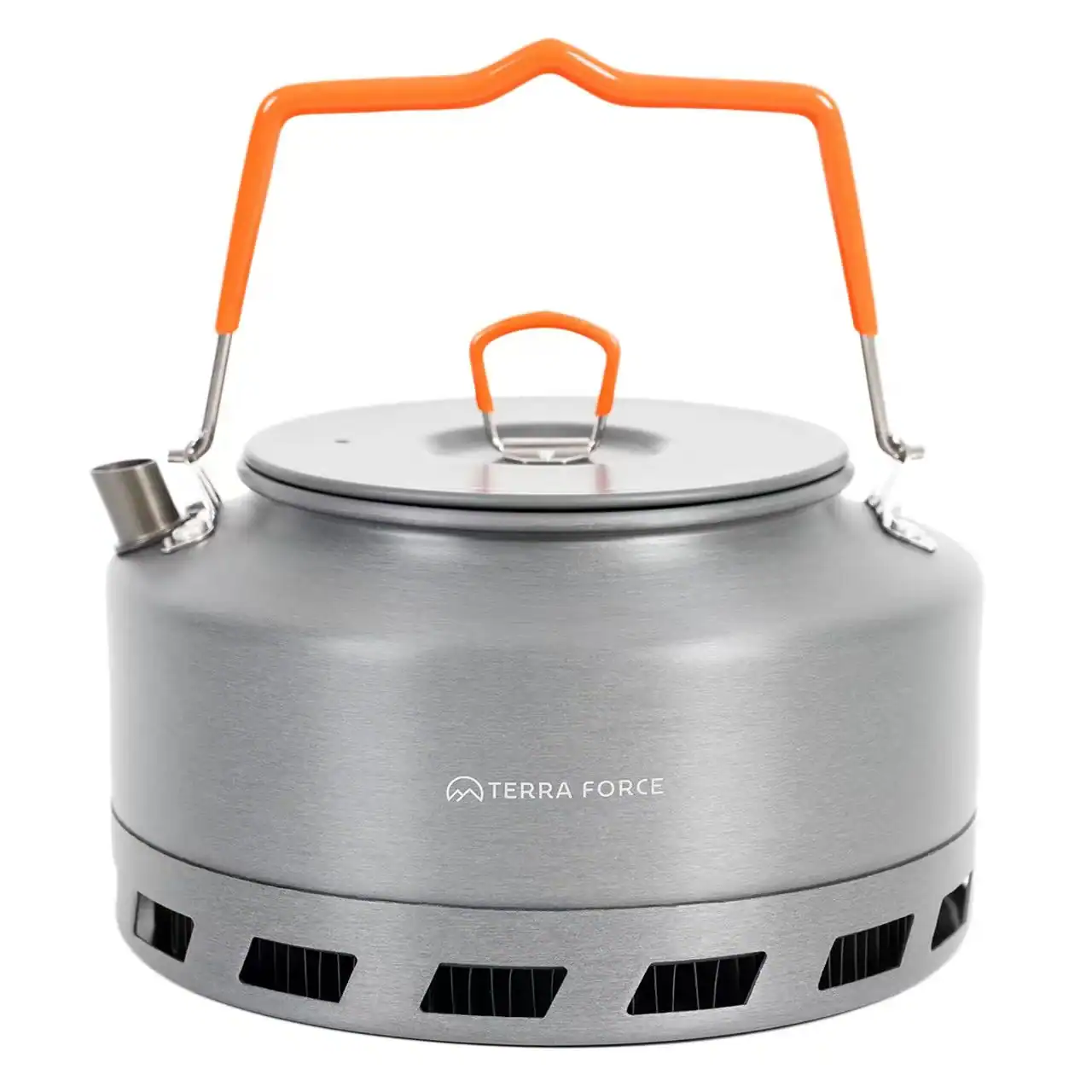
| Performance Metric | Laser Engraving | Silk Screening |
|---|---|---|
| Durability & Lifespan | Permanent; resists heavy wear, heat, and chemicals | Prone to scratching, peeling, and fading over time |
| Precision & Detailing | Ultra-fine detail reproduction; micro-text capable | Limited by mesh counts; higher risk of ink bleed |
| Surface Adaptability | Executes 3D marks on heavily curved or complex objects | Requires flat or minimally curved surface geometries |
Precision and Detail on Complex Geometries
Non-contact laser technology achieves ultra-fine detail reproduction, allowing manufacturers to execute intricate logos, micro-text serial numbers, and subtle branding elements in highly restricted spaces. The laser beam easily applies precise three-dimensional marks on heavily curved or structurally complex surfaces, such as the cylindrical body of a heavy-duty portable boiler.
Silk screening struggles with heavily curved objects, severely limiting design flexibility. Premium brands leverage laser precision to maintain crisp, legible branding across sophisticated product forms where traditional ink applications fail.
Material Synergy and Premium Finishes
Laser engraving creates a sleek, elegant finish that pairs exceptionally well with high-end materials like food-grade stainless steel, anodized metals, and natural wood. Engineers and procurement managers prefer the non-contaminating nature of lasers for precision instruments and hygiene-critical products, as it completely eliminates the contamination risks associated with external ink applications.
While the laser marking process remains limited to monochrome applications, the raw, material-specific contrast it produces elevates the perceived value of the product far beyond flat, colored ink. This premium finish signals industrial-grade quality and meticulous engineering to end-users.
Eco-Friendly Application Methods
Laser technology offers a highly sustainable manufacturing alternative by completely eliminating harmful consumables from the production line. Operators run the marking process without relying on industrial inks, chemical solvents, or harsh cleaning agents.
Environmentally conscious brands leverage this clean manufacturing method to align directly with corporate sustainability targets. By avoiding chemical waste and VOC emissions, manufacturers drastically reduce their environmental footprint while securing contracts with enterprise buyers demanding green supply chains in 2026.
What Is the Setup Tooling Cost for a 360-Degree Wraparound Design?
Manufacturing tooling expenses typically consume 3% to 6% of top-line costs, with custom cylindrical wraparound dies requiring investments ranging from $1,250 for basic profiles to over $5,000 for complex hollow configurations.
Baseline Industry Tooling Cost Metrics
General manufacturing benchmarks dictate the initial investment for custom die creation. Tooling expenses generally account for 3% to 6% of top-line costs based on the intended production volume and part complexity. Standard aluminum extrusion profiles offer a helpful baseline reference, with solid profile dies requiring an investment of $1,250 to $1,950. Complex designs, such as hollow dies or multi-part configurations for appliances, push upfront tooling costs to $5,000 or more.
| Die Configuration | Estimated Setup Cost | Primary Application |
|---|---|---|
| Standard Solid Profile | $1,250 – $1,950 | Basic cylindrical wrapping |
| Complex Hollow Die | $1,950 – $5,000+ | Multi-part appliance layouts |
| KelyLands 360° Branding | Absorbed into Bulk Pricing | Standard 3,000-Unit MOQ Orders |
Variables Influencing 360-Degree Setup Expenses
Physical product attributes directly dictate the engineering complexity and final cost of wraparound tooling. Cylindrical wrapping processes demand specialized dies tailored to the exact diameter, material thickness, and curvature of the appliance shell. Material hardness drives tool wear rates, forcing engineers to utilize durable, high-cost steel alloys for extended production runs. Intricate interface layouts and mounting structures increase the precision and time required during the CNC machining phase of mold development.
How KelyLands Manages Custom Tooling for Bulk Orders
KelyLands mitigates upfront design costs through structured OEM production and strategic order volumes. The engineering team provides full OEM development support, factoring custom housing design and interface layout costs directly into bulk pricing models. Clients absorb initial setup expenses efficiently by leveraging standard B2B wholesale minimums, such as the 3,000-unit MOQ for our SM and CC series 12V/24V car kettles. We execute custom 360-degree branding through UV printing or laser engraving, achieving precise Pantone matching without requiring excessive secondary tooling.
Source Certified High-Safety Car Kettles Today
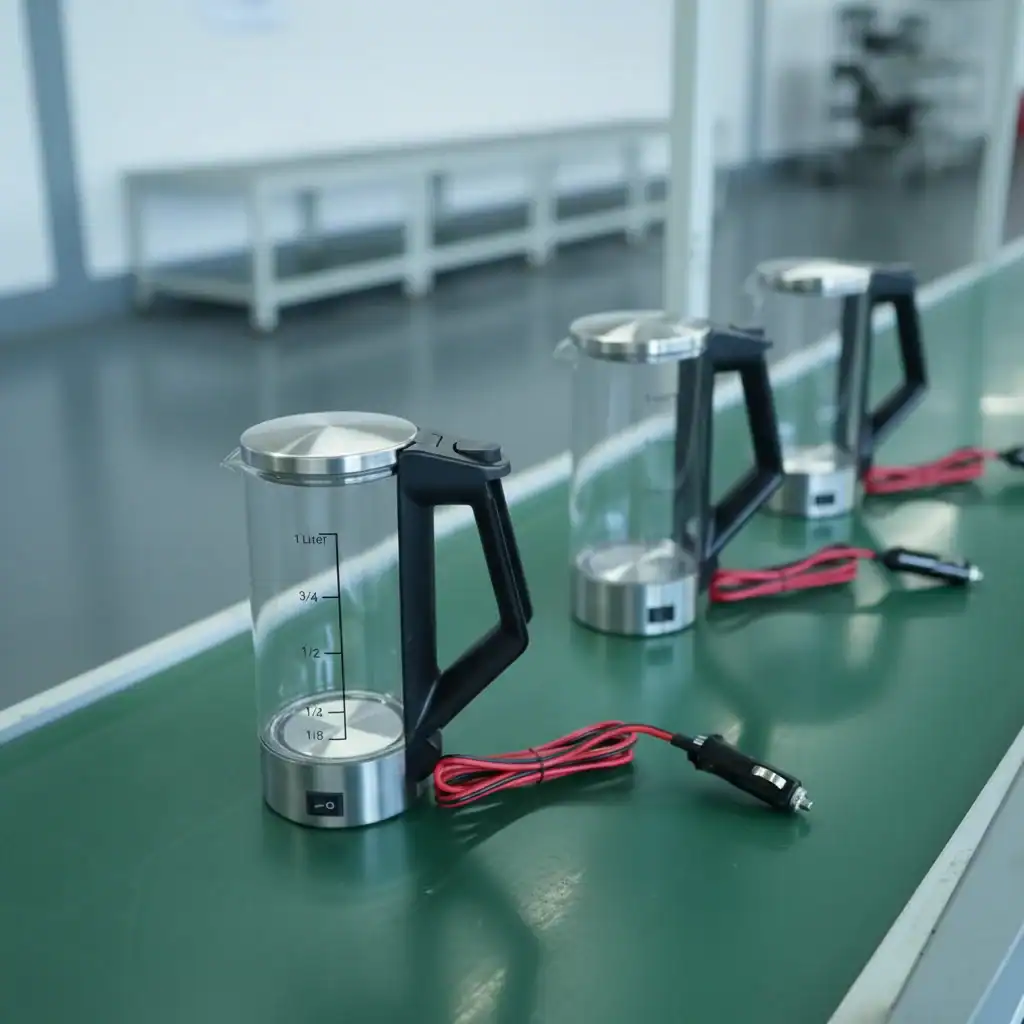
Can the Factory Pantone-Match the Outer Plastic Shell to Our Brand Guidelines?
Advanced injection-molding color matching requires bridging the gap between digital Pantone formulas and the physical reality of polymer light absorption.
The Process of Injection-Molding Color Matching
KelyLands offers full color customization using exact Pantone matching for OEM/ODM bulk orders, ensuring new 12V appliances or EV chargers align perfectly with corporate identities. Production teams translate digital brand colors into exact physical plastic production standards by combining digital measurement tools, such as spectrophotometers, with standardized Pantone Plastic Chip Collections.
Operating advanced color-matching technologies like X-Rite systems reduces cycle times and enforces identical specifications across all Cixi and Yuyao manufacturing lines.
Material and Finish Variables Affecting Color
Color formulas behave differently on plastic surfaces compared to flat printing materials like paper or digital screens. The final visual output shifts directly depending on the surface texture. A glossy finish on a mini-fridge reflects light sharply, while a textured matte grip on a portable air pump scatters light, altering the perceived color.
Factory engineers adjust color mixtures based on the specific polymers used in the injection molding process. This calculated adjustment compensates for varying light absorption rates and keeps the final product true to the original brand guidelines.
Physical Swatch Approval Before Mass Production
Inherent material variability means even scientifically matched formulas look slightly different across various plastic batches. This mandatory verification step prevents costly visual inconsistencies in bulk manufacturing.
To guarantee brand compliance, KelyLands produces physical color swatches of the plastic shell for client review. Full mass production of the 100 to 500-unit pilot or minimum order begins only after the client approves the physical sample, completely eliminating the risk of unaligned brand colors entering the market.
How Fast Can You Ship a Physical Branded Prototype for Client Approval?
Delivering a fully functional, branded physical prototype typically requires 12 to 24 days, encompassing exact Pantone color matching, precise logo application, and express global transit.
Standard Production Timelines for Custom Samples
Initial manufacturing of a physical branded prototype requires dedicated engineering and production time. Producing a customized sample featuring exact Pantone color matching and specific logo applications like UV printing or laser engraving takes 7 to 14 days. KelyLands allocates specific engineering support during this phase to ensure these initial units match all B2B bulk order specifications perfectly before moving into mass production.
Express Global Transit Logistics
International delivery schedules depend on direct courier partnerships for rapid transit. We utilize express shipping services like DHL, FedEx, and UPS to dispatch prototypes globally, adding 7 to 10 days to the schedule. Clients receive the physical branded sample for final approval within a total timeframe of 12 to 24 days from the initial request.
Managing Iterations and Material Sourcing
Certain design variables dictate the exact prototyping schedule and iteration cycles. Complex OEM requests demand extra processing time due to several key operational factors:
- Structural Modifications: Unique housing layouts or specialized bases for 12V/24V kettles require custom engineering validation.
- Safety Upgrades: Implementing proprietary safeguard systems and thermal fuse integration extends testing cycles.
- Component Sourcing: Procuring specialized raw materials, such as high borosilicate glass or high-temperature Bakelite, requires precise coordination.
We incorporate these buffer periods into our production schedules to manage specialized sourcing without compromising strict on-ground quality control.
Conclusion
Selecting the appropriate branding method for your portable boilers ensures corporate gifts maintain strict brand alignment and high perceived value. Laser engraving delivers exceptional durability alongside a premium aesthetic, while exact Pantone color matching guarantees consistency across large-scale procurement campaigns. Integrating these precise customization techniques with reliable hardware maximizes the impact of your promotional investments.
Evaluate your upcoming corporate gifting requirements to determine which branding approach best supports your timeline and budget. Contact our team to request a physical branded prototype of the KelyLands kettle series and verify your exact logo placement.
Frequently Asked Questions
What is the MOQ for a custom logo portable boiler?
The standard Minimum Order Quantity (MOQ) for custom logo portable boilers is typically 500 units. However, for premium laser-engraved branding, many manufacturers accommodate lower initial runs of 100 to 200 units to support product launches and high-end promotional campaigns.
Does the factory charge a setup fee for laser engraving?
Unlike silk screening, which requires burning physical screens, laser engraving is a fully digital, non-contact process. Consequently, most factories do not charge a traditional setup fee. There may be a nominal, one-time file digitization or programming fee for highly complex logos, but the overall setup costs are significantly lower than conventional printing.
How long does it take to produce a branded prototype sample?
Producing a branded prototype sample typically takes 5 to 7 business days once the artwork is approved. This timeline allows for precise calibration of the engraving or printing equipment to ensure the logo meets premium durability and professional finish standards before full-scale production begins.
Can the logo be printed on the LED touch screen?
Yes, logos can be applied to the LED touch screen area, but this is typically achieved through specialized silk screening or UV printing beneath the glass layer rather than laser engraving. This method ensures the branding does not interfere with the touch capacitance while maintaining the vibrant visibility of the display.

 English
  Español
  Français
  Deutsch
  Português do Brasil
  Русский
  한국어
한국어  日本語
日本語  العربية