 跳转到主要内容 跳转到页脚

car fridge sku mix is the first checkpoint buyers should lock before they approve a supplier, budget, or production slot. “Why did the 50L unit sell out in three weeks but the 20L is still sitting in your warehouse?” That’s the question a distributor in Brisbane asked his supplier after a summer promo run. The answer had nothing to do with price or brand. It was all about the car fridge SKU mix he committed to back in January.
Most importers treat their product assortment like a static list — pick a few sizes, split between thermoelectric and compressor, and call it done. But the margin difference between those two technologies is not subtle. Compressor units typically carry higher FOB pricing and require more careful sample approval, yet they generate roughly 70% of annual profit for distributors who get the balance right. Thermoelectric coolers move fast during peak season, especially at lower price points, but their quality tolerance around ambient heat ratings can turn a hot July into a return nightmare if stock is overfilled without checking the spec sheet.

Why Your Car Fridge SKU Mix Decides Gross Margin
Compressor fridges generate 70% of annual margin despite being only 40% of units sold.
Most importers I’ve worked with assume thermoelectric coolers drive volume because they’re cheap and easy to sell at retail. That assumption costs them margin. The reality is that compressor fridges — specifically the 35L and 50L models — produce the bulk of your profit per container, even though they turn slower.
Compressor vs Thermoelectric Price Bands Explained
Thermoelectric coolers sit in the $25–$55 FOB range for 20L to 30L units. These are picnic baskets with a Peltier chip. They cool to about 18–20°C below ambient temperature, which means on a 35°C day your drinks sit at roughly 17°C. Not cold enough for raw food or dairy. The margin per unit is thin — typically $8–$12 after freight and duties.
Compressor fridges start at $85 FOB for a basic 20L unit and climb past $250 for a dual-zone 50L model with digital control and battery protection. The gross margin per unit lands between $40 and $90 depending on your landed cost structure. A single container of compressor units can generate the same profit as three containers of thermoelectric coolers.
Which Customers Buy Which Technology in 2026
Thermoelectric buyers fall into two camps: casual campers who want a weekend cooler for soda, and budget-conscious consumers picking up a $39 unit from an auto parts store as an impulse buy. Neither group reorders frequently. They buy once every two or three seasons, often when their old unit dies.
Compressor fridge buyers are different. Overlanding enthusiasts, van-life builders, and serious off-road campers treat their fridge as core gear. They research specs like power draw, low-voltage cutoff thresholds, and insulation density before buying. These customers upgrade every two years — moving from a single-zone to a dual-zone model, or from a 35L to a 50L when they add solar panels.
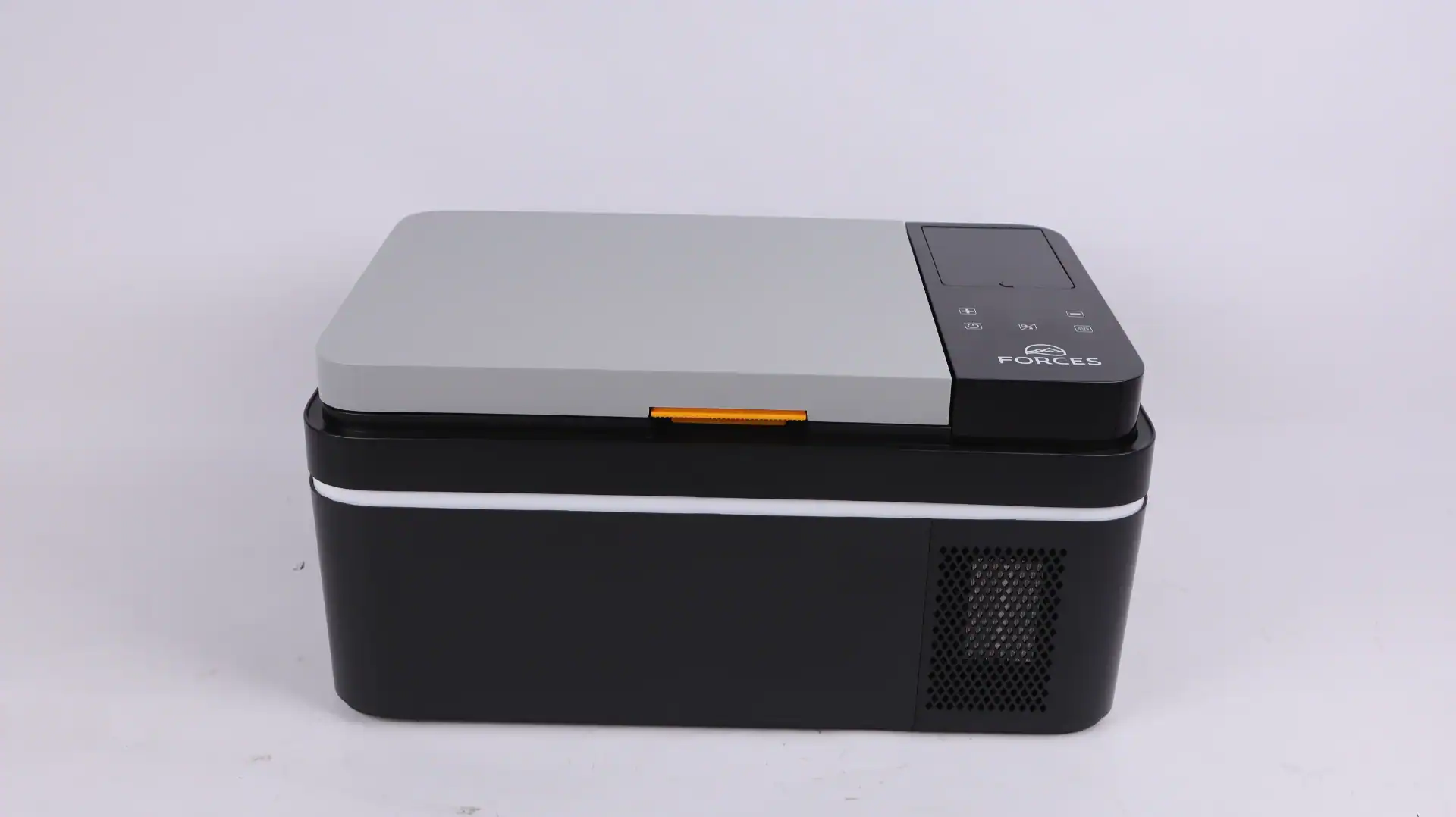
Building a Balanced Catalog: Recommended SKU Ratios
A 60:40 thermoelectric-to-compressor SKU split works for summer volume, but compressor units deliver 70% of annual margin.
Most importers start their car fridge catalog by chasing the lowest price point. They load up on 20L thermoelectric coolers because the unit cost sits under $80 FOB Ningbo and the sell-through feels easy during summer. Then Q3 hits, the thermoelectric inventory lingers, and they realize the margin story lives in a different category entirely.
20L, 35L, 50L: What Importers Actually Reorder
The reorder data from distributors who have run three seasons or more tells a consistent story. The 20L segment moves units — it is the entry price point that gets first-time buyers in the door. But reorder velocity drops after July. The 35L compressor fridge is the SKU that earns repeat orders year-round. Overlanding buyers, van-life builders, and serious campers all converge on this size because it fits behind a truck seat or under a cargo platform while holding enough for a weekend trip.
The 50L dual-zone compressor models are a different animal. They turn slower but carry higher absolute margin per unit — typically $80–120 gross profit versus $25–40 on a thermoelectric cooler. The buyers who want 50L units usually know exactly what they need and rarely return them.
Common SKU Mix Mistakes That Kill Inventory Turns
Thermoelectric units without ambient heat ratings fail in 40°C+ climates.
The most common inventory killer in the car fridge category is overstocking thermoelectric coolers without verifying their ambient heat rating. A unit rated for a 25°C delta (meaning it cools to about 15°C below outside temperature) works fine in mild European summers. Ship that same SKU to a Middle Eastern or Australian distributor, and the internal temperature never drops below 18°C when ambient hits 45°C. The cooler becomes a glorified storage box.
Distributors who stocked deep on unrated thermoelectric units in Q1 2026 saw clearance rates drop by half by August. The fix is simple: require every thermoelectric SKU in your mix to carry a published ambient heat rating — ideally tested at 32°C and 43°C so you know where the performance cliff sits. Factories in Ningbo that produce for export usually run these tests; the data exists if you ask for it before sample approval.
Ignoring Dual-Zone Compressor Models for Premium Buyers
The second mistake is more subtle but costs more margin. Importers who stock only single-zone compressor fridges miss the overlanding and RV owner segment — buyers who will pay a premium for separate freezer and fridge compartments. A dual-zone compressor model at 50L typically carries a wholesale price of $280-$350 versus $180-$220 for a single-zone unit of the same size, yet the bill of materials difference is under $40.
That gap translates directly into higher margin per container slot. Overlanding buyers are less price-sensitive than casual campers; they prioritize function over FOB pricing. KelyLands’ partnership with Mr. Zhou’s Ningbo-based portable fridge factory includes dual-zone compressor models that hit this exact buyer segment — units that maintain -18°C in the freezer compartment while holding 4°C in the fridge section, even at high ambient temperatures.

Conclusion
A smart car fridge SKU mix doesn’t guess at demand — it matches technology to use case. Compressor units carry the margin, thermoelectric units move the volume during peak season. Get that ratio wrong, and you’re sitting on inventory that won’t turn until next summer.
-
- Compressor fridges generate roughly 70% of annual margin despite lower unit volume.
- Thermoelectric coolers work best as summer promo stock below a $35 FOB price point.
- 35L compressor units see the strongest reorder rates in the overlanding segment during Q2.
- Mixed-container loading from Ningbo factories lets you test new thermoelectric SKUs without full MOQ commitment.
For your next order review, benchmark your current assortment against a simple industry standard: aim for a catalog where compressor models account for at least one-third of total SKUs but deliver two-thirds of projected gross profit. That split keeps your warehouse moving and your margins healthy across both summer peaks and year-round overlanding demand. Browse the current car fridge lineup to see how the price bands and capacity options align with this ratio before you finalize your container mix for Q1.
Frequently Asked Questions
What is the best car fridge SKU mix for 2026?
A 60:40 thermoelectric-to-compressor SKU split works well for summer volume, but compressor units generate 70% of annual margin despite being only 40% of units sold. For premium buyers, dual-zone compressor models. Adjust ratios based on your target market’s climate and customer segment.
Which car fridge type has higher margins?
Compressor fridges deliver higher margins, contributing 70% of annual margin even though they make up only 40% of units sold. Thermoelectric units drive volume but carry lower per-unit profit and risk returns in. Prioritize compressor models if margin is your primary goal.
What SKU sizes do importers reorder most?
Importers consistently reorder 35L and 50L compressor models for overlanding and camping buyers, while 20L thermoelectric units move slower unless priced aggressively. The sweet spot for inventory turns is a. Stock more mid-size compressors and use small thermoelectrics as entry-level loss leaders.
Why do thermoelectric fridges fail in hot climates?
Thermoelectric units without ambient heat ratings cannot cool effectively above 40°C, leading to returns and lost trust. Always verify the rated ambient temperature range before ordering for markets like Australia. Specify ambient heat ratings in your purchase order to avoid stock issues.
How many dual-zone compressor models should I stock?
“At least one dual-zone model per size tier (e.g., a dual-zone version of your best-selling 35L or 50L) is recommended to capture premium buyers willing to pay a. Add at least one dual-zone model per size tier to protect your premium margin.

 English
  Español
  Français
  Deutsch
  Português do Brasil
  Русский
  한국어
한국어  日本語
日本語  العربية