 跳转到主要内容 跳转到页脚
Facility managers often struggle with cleaning methods that loosen soil but fail to remove it, causing contaminated water to settle back into tile grout and porous surfaces. Traditional mops reach their saturation limit quickly, resulting in soil re-deposition and long drying times that disrupt daily operations. Transitioning to integrated steam-suction technology addresses these issues by combining high-thermal bond disruption with immediate mechanical extraction in a single pass.
This guide examines the technical specifications required for effective commercial cleaning, from the thermal dynamics of 300°F boiler systems to the fluid recovery performance of high-wattage vacuum motors. We compare the efficiency of flash heating versus pressurized boilers and detail how maintaining a steam dryness fraction of at least 0.95 ensures deep sanitization without puddling, ultimately reducing typical floor drying times from four hours to just 45 minutes.
The Physics of Steam Cleaning: Heat + Moisture + Suction
Steam cleaning works by delivering high-enthalpy steam at temperatures above 300°F to disrupt molecular soil bonds. A dryness fraction of at least 0.95 ensures maximum energy transfer without over-saturation, while high-pressure suction immediately removes loosened contaminants and moisture to prevent mold growth.
| Cleaning Parameter | Commercial Specification | Technical Impact |
|---|---|---|
| Boiler Temperature | 300°F+ (150°C) | Provides latent heat to break soil-to-surface bonds. |
| Steam Dryness | ≥0.95 (EN 285) | Limits moisture to ≤5% to prevent substrate saturation. |
| System Pressure | 75 – 100+ PSI | Forces vapor into grout pores and microscopic crevices. |
| Suction Integration | 4-Level Control | Captures soil and condensate to stop microbial growth. |
Thermal Dynamics and Steam Dryness Standards
Commercial boilers operating at 300°F provide the necessary latent heat to break chemical bonds between soils and surfaces. This high thermal energy denatures proteins and liquefies greases that standard cleaning methods cannot affect. Using equipment that meets the EN 285 standard ensures a steam dryness fraction of 0.95 or higher. This means the vapor contains less than 5% liquid water by mass, preventing the “wet loads” that lead to puddling and damage on sensitive flooring.
Precise superheat control limits temperatures to no more than 25°C above local saturation levels. This technical calibration ensures the steam condenses efficiently the moment it contacts the cooler surface, releasing its full energy payload into the contaminants. Maintaining temperature regulation within a tight 3°C margin at the steam header produces consistent phase-change behavior for predictable, high-quality cleaning results across large surface areas.
Pressure Delivery and Vacuum Extraction Synergy
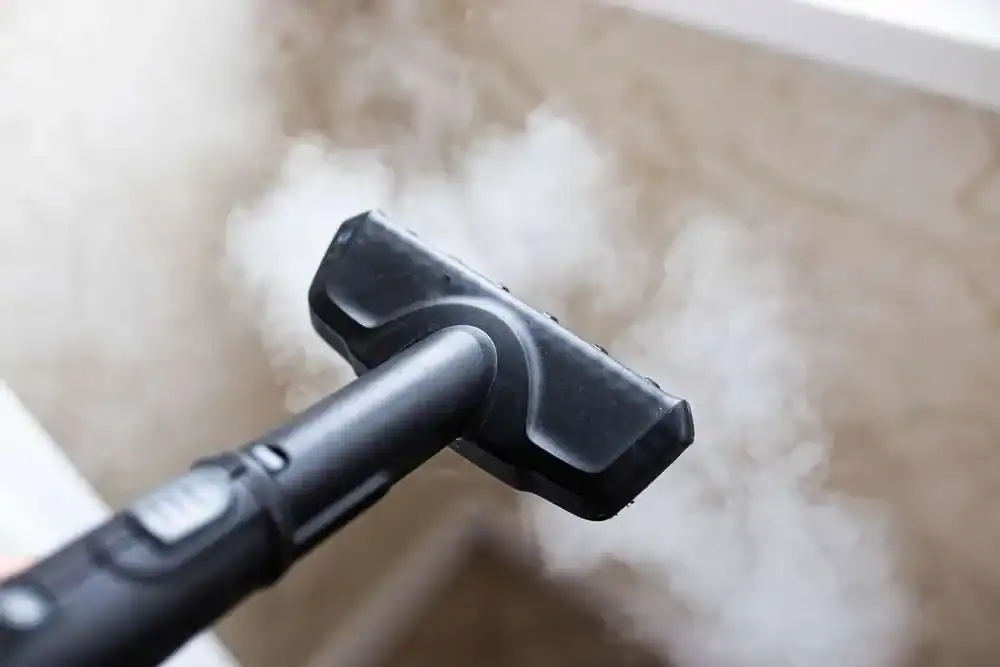
Professional cleaning units maintain working pressures between 75 and 100 PSI to penetrate porous materials like tile grout. This mechanical force drives the high-temperature vapor into deep recesses where bacteria and biofilms reside. Without sufficient pressure, the steam stays on the surface, failing to dislodge embedded particulates that cause long-term discoloration and odors.
Integrated vacuum systems, such as those found in industrial steam-vac units, use multi-level suction control to capture condensate and soil immediately after steam application. This rapid extraction reduces surface moisture to a slightly damp state within seconds. By removing the water and dislodged contaminants nearly simultaneously, the process eliminates the risk of efflorescence in grout and prevents the microbial regrowth associated with damp environments. Operators can tune the steam volume and suction power to balance deep penetration against the specific drying requirements of the substrate.
The “Mop vs. Vac” Debate: Removing Dirty Water
Passive steam mops rely on microfiber pads to absorb loosened grime, which eventually leads to soil re-deposition once the fabric saturates. In contrast, steam-vacuum systems use suction—typically ranging from 10 to 25 kPa—to physically extract dirty water and emulsified oils into a sealed recovery tank, preventing residue buildup in grout lines.
| Cleaning Mechanism | Passive Steam Mop | Steam-Vacuum System |
|---|---|---|
| Soil Removal Method | Microfiber pad absorption | Motorized suction extraction |
| Contaminant Storage | Held in textile fibers | Sealed recovery tank |
| Suction Performance | 0 kPa (No suction) | 10 – 25 kPa |
Soil Suspension and Microfiber Pad Saturation
Traditional steam mops use thermal energy reaching temperatures of at least 100 °C at the nozzle to emulsify grease and break soil adhesion. These units rely entirely on the absorbency of a textile pad to lift the resulting slurry from the floor surface. Because a microfiber pad has a finite capacity for holding condensate and particulate matter, it reaches a saturation point quickly during operation.
A saturated pad loses its ability to sequester contaminants and begins smearing a thin film of contaminated water across the tile. This mechanics of soil re-deposition creates significant issues for porous surfaces. Without a dedicated suction phase, the liquid slurry often settles into cementitious grout pores or textured crevices as the floor dries, leading to long-term discoloration and buildup.
Vacuum Extraction Metrics and Fluid Recovery Performance
Steam-vacuum units incorporate high-wattage motors, often featuring 2000 W configurations, to generate the vacuum pressure necessary for effective fluid recovery. These systems produce upwards of 24 kPa of suction power to lift emulsified oils and dirty water immediately after the steam application. This physical extraction ensures that the soil moves into a sealed tank rather than remaining on the floor surface.
Advanced recovery systems, such as the Tineco Floor One S5 Steam, automate the maintenance of the cleaning hardware through self-cleaning cycles for brushes and internal tubing. This process prevents microbial growth and ensures the system maintains peak suction performance. Removing the moisture rapidly through vacuum-assisted recovery minimizes the dwell time of dirty water on the floor.
Modern cleaning standards for 2026 emphasize vacuum extraction to eliminate the risk of efflorescence in tile installations. By pulling the liquid waste from the surface, these units prevent dissolved salts and minerals from crystallizing within the grout joints. This approach effectively breaks the cycle of re-soiling that occurs with manual mopping or passive steam systems.
Boiler vs. Flash Heating: Pressure Differences
Traditional boilers maintain fixed pressure levels within a storage vessel, categorized by ASME as low-pressure at 15 psi or less. Flash heating generates steam through rapid pressure drops, where condensate at 145 psig can expand instantly, providing high kinetic energy for cleaning with lower stored-energy risks.
Stored Energy in Pressurized Boiler Vessels
ASME classifies steam boilers as low-pressure systems when they operate at or below 15 psi (1.0 bar gauge). These systems typically maintain water temperatures at or below 121 °C. Industrial high-pressure boilers operate in a much higher range, typically between 15 psi and 1500 psi, while utility drum boilers can exceed 2800 psi. At the supercritical point of 3200 psi and 705 °F, water and steam merge into a single phase, requiring specialized once-through designs to handle the transition.
Commercial units like the Miura LX series manage large volumes of stored energy by using safety valves set to lift at 90% of the maximum allowable working pressure. For instance, a model rated for 300 psi will trigger its relief valve at 270 psi. Because these vessels hold significant water volume at high saturation temperatures—such as 353 °C at 2500 psi—the mechanical integrity of the vessel is critical. The heavy-duty construction serves as the primary safeguard against the potential for a catastrophic energy release.
Kinetic Expansion in Flash Heating Systems
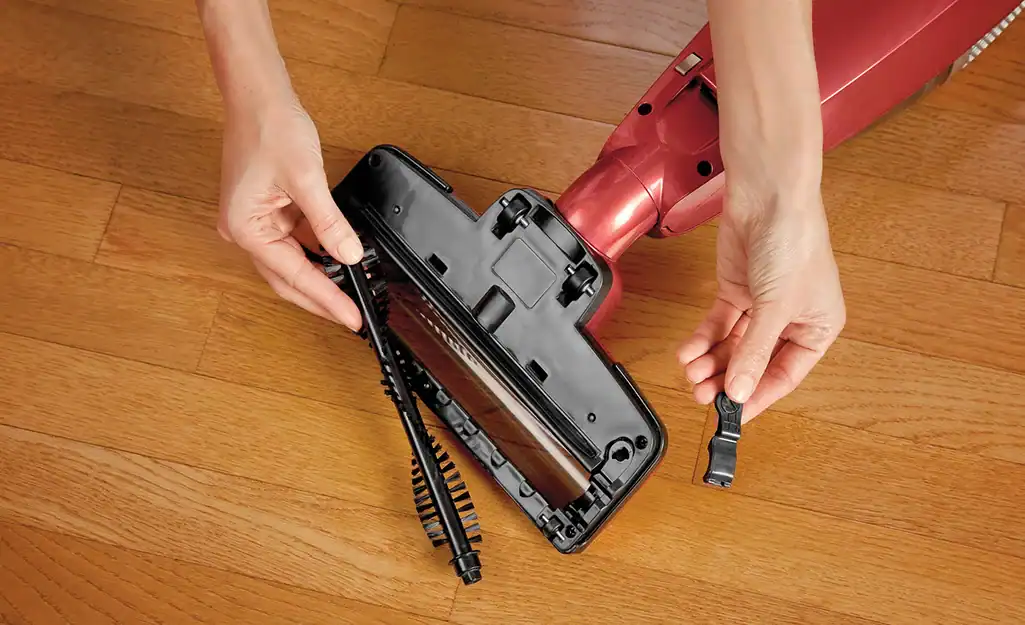
Flash steam generation utilizes pressure differentials rather than static vessel pressure. When high-pressure condensate or heated water enters a lower pressure zone, a portion of the liquid mass instantly transforms into steam. Discharging 145 psig liquid into an atmospheric environment causes approximately 16.1% of the water mass to flash. This process happens because the saturation temperature at the lower pressure is significantly lower than the incoming liquid temperature.
The transition from liquid to gas creates a massive jump in specific volume. Water at 100 °C occupies 0.00104 m³/kg, but as atmospheric steam, it expands to 1.67 m³/kg. This rapid volumetric change generates powerful kinetic energy, producing a sweeping or suction effect highly effective for cleaning industrial surfaces or grout. Copper-coil flash boilers take advantage of this physics by reaching pressures of 107 psi and temperatures of 255 °C with a very small water inventory. By reducing the volume of pressurized water, these systems minimize explosive potential while delivering high-velocity steam on demand.
Custom OEM/ODM Home Vacuum Cleaners Built for Your Market

Sanitization Speed: Dwell Time Requirements
Effective sanitization depends on maintaining specific surface temperatures for set durations. While gravity-displacement systems require 30 minutes at 121°C, high-pressure steam-suction equipment achieves equivalent results in 3 to 4 minutes by operating at temperatures between 132°C and 135°C, effectively neutralizing resistant pathogens in porous grout.
Microbial Kill Kinetics and D-Value Correlations
Validated pharmaceutical models establish the D-value for Geobacillus stearothermophilus at 121.1°C between 1.5 and 3.0 minutes. This measurement defines the time required at a specific temperature to achieve a 1-log (90%) reduction in the pathogen population. At a sustained temperature of 121°C, the microbial bioburden typically decreases by one order of magnitude every 2 minutes.
Reaching a sterility assurance level (SAL) of 10⁻⁴ from a standard starting load necessitates approximately 20 minutes of exposure at 121°C. Increasing the steam temperature accelerates the microbial kill rate significantly. This thermal acceleration provides substantial time savings during professional floor and grout cleaning, as higher temperatures reduce the necessary dwell time to neutralize resistant organisms.
Thermal Benchmarks for Healthcare and Steam-In-Place Systems
ANSI/AAMI ST79 standards define a minimum dwell time of 4 minutes at 132°C for dynamic air-removal cycles. High-performance steam equipment operating at 135°C achieves validated lethality within a 3-minute exposure window. These benchmarks ensure that even wrapped porous loads receive sufficient heat penetration to neutralize resistant pathogens.
Steam-In-Place (SIP) protocols for industrial piping and complex geometries often require 5 to 20 minutes to account for potential cold spots within the system. Similarly, healthcare standards for gravity-displacement cycles utilize 30-minute exposure at 121°C for deep heat penetration into porous materials. Modern steam-suction systems must maintain these verified dwell times on the target surface to achieve true sanitization in commercial environments.
Vacuum Recovery: Leaving Floors Dry Instantly
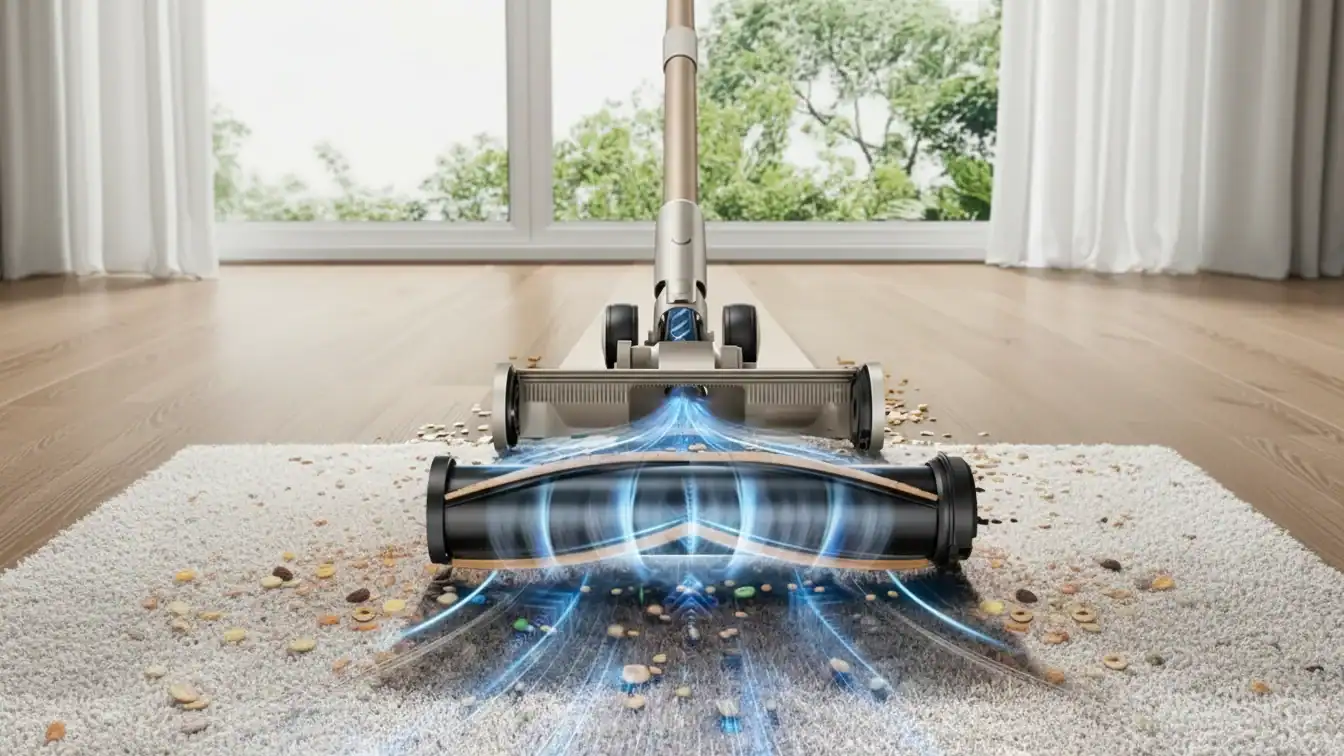
Integrated vacuum recovery uses high depression (suction pressure) and airflow to capture moisture the moment steam condenses. Systems typically operate at 2100 mm H₂O suction power and use 1200 W vacuum motors to remove over 90% of water, leaving a thin film that evaporates in seconds rather than minutes.
Mechanics of Simultaneous Steam and Suction
The cleaning head applies steam at temperatures reaching 184°C to rapidly loosen surface contaminants. A trailing vacuum port captures the resulting condensate immediately. This extraction prevents dirty water from settling into porous surfaces like grout lines or wood grain, which reduces the risk of moisture-related damage over time.
Localized vacuum zones minimize the spread of moisture to ensure the machine only affects the specific area under the nozzle. Active suction avoids the “mop effect,” a common issue where manual cleaning redistributes dirt across the floor surface instead of removing it from the environment.
Technical Performance and Recovery Capacity
Professional units like the Steam Hero utilize 1200 W vacuum motors to generate 95 m³/h (56 CFM) airflow and 2100 mm H₂O depression for deep water removal. These specifications allow the equipment to pull moisture from deep within textures or crevices. Recovery tanks are sized for commercial duty, ranging from 1.5 L (0.4 gal) in compact models to 8 L (2.2 gal) in heavy-duty industrial systems.
Internal filtration systems often use Venturi water filters to scrub exhaust air of fine particulates. This engineering approach ensures that moisture and dust do not re-enter the environment during operation. Furthermore, boilers constructed from AISI 304 stainless steel support high-pressure outputs up to 10 bar (145 psi), which facilitates the rapid expansion and subsequent extraction of steam vapor during the cleaning cycle.

Final Thoughts
Choosing a steam-vacuum system over a traditional mop or a basic steam cleaner changes how professional environments handle deep cleaning. These machines combine high-temperature vapor with mechanical suction to pull contaminants out of porous surfaces like grout and textured tile. Instead of pushing dirt around or saturating floors with excess water, the integrated engine captures soil and moisture in a single pass. This technical approach addresses the root causes of biofilm buildup and prevents the long-term surface degradation caused by leftover residue.
The shift toward integrated suction and precise thermal control sets a high standard for facility hygiene and maintenance. By reducing drying times from hours to seconds and meeting strict sanitization benchmarks, these units help operators maintain high-traffic areas without the risks of mold or slip-and-fall accidents. Using equipment that balances boiler pressure with vacuum recovery ensures that surfaces remain dry and sanitized, protecting the structural integrity of flooring while streamlining daily cleaning workflows.
Frequently Asked Questions
Can the vacuum and steam functions run simultaneously?
Yes, steam-suction units use integrated cycles that allow both functions to operate at the same time. The system delivers steam to loosen debris while a blower or compressor immediately evacuates the vapor and moisture in a continuous workflow.
Does the unit use a pressurized boiler or a gravity-fed heater?
Most professional-grade units employ pressurized boilers rather than gravity-fed systems. These boilers utilize steam jet ejectors to maintain compression levels between 5″ Hg abs. and 3 mm Hg abs., ensuring consistent pressure for deep cleaning.
What is the typical drying time for surfaces after cleaning?
Surfaces generally dry within 45 minutes when using vacuum recovery. This is a significant improvement over the four hours required by conventional cleaning methods, as the suction removes residual moisture by optimizing conditions above the triple point of water.

 English
  Español
  Français
  Deutsch
  Português do Brasil
  Русский
  한국어
한국어  日本語
日本語  العربية