 跳转到主要内容 跳转到页脚

Exceeding inverter wattage limits (low wattage travel kettle) immediately triggers system faults, damages expensive portable power stations, and drives up costly warranty returns from frustrated customers. Standard 500W heating elements routinely pull massive current spikes during cold starts, which overloads the sensitive battery management systems on popular off-grid power banks. Brands face severe financial and reputational risk when their supplied appliances repeatedly shut down user equipment instead of functioning reliably in the field.
This technical specification guide outlines the precise engineering parameters you need to manufacture an appliance that operates safely within strict off-grid power constraints. We break down the thermal dynamics of a 150W heating element to balance practical boiling speeds against battery preservation. You will learn how our engineering team customizes peak wattage draw for specific EcoFlow and Jackery units while embedding hardware-level overcurrent protection directly onto the internal PCB. Procurement teams and product engineers can use this framework as a standard operating procedure to specify custom firmware limits and guarantee flawless compatibility with modern lithium power setups.
Why Do Standard 500W Kettles Overload and Damage Portable Power Stations?
Standard AC kettles pull massive inrush currents that instantly breach the continuous wattage limits of entry-level power stations, triggering protective shutdowns and causing permanent inverter degradation.
The Danger of High Inrush Current
Heating elements demand immediate peak power the moment you switch them on. This creates a massive inrush current that often exceeds the rated continuous wattage of a standard 500W kettle. When plugged into an entry-level portable power station, this initial surge easily pushes past the unit’s continuous AC output limits. The sudden wattage spike forces the internal protection circuit to engage, instantly shutting down the unit to prevent electrical failure.

Inverter Capacity and Thermal Stress
A typical mid-range portable power station handles between 500W and 600W of continuous AC output. Running a 500W AC kettle pushes the internal inverter to its absolute maximum capacity for extended periods. This continuous high-load operation generates excessive heat inside the unit. Repeated thermal stress degrades the inverter components over time, permanently reducing both the conversion efficiency and the overall lifespan of the power station.
Rapid Battery Depletion Rates
High-wattage AC kettles drain portable battery reserves aggressively and inefficiently. Field data indicates that running a standard 500W kettle consumes roughly 3% of a high-capacity power station’s battery in just eight minutes of operation. These rapid discharge rates elevate the internal temperatures of the lithium cells, risking long-term capacity degradation. Dedicating this volume of energy to a single heating appliance leaves insufficient power reserves for critical off-grid gear like portable fridges or CPAP machines.
The Purpose-Built 150W/300W DC Alternative
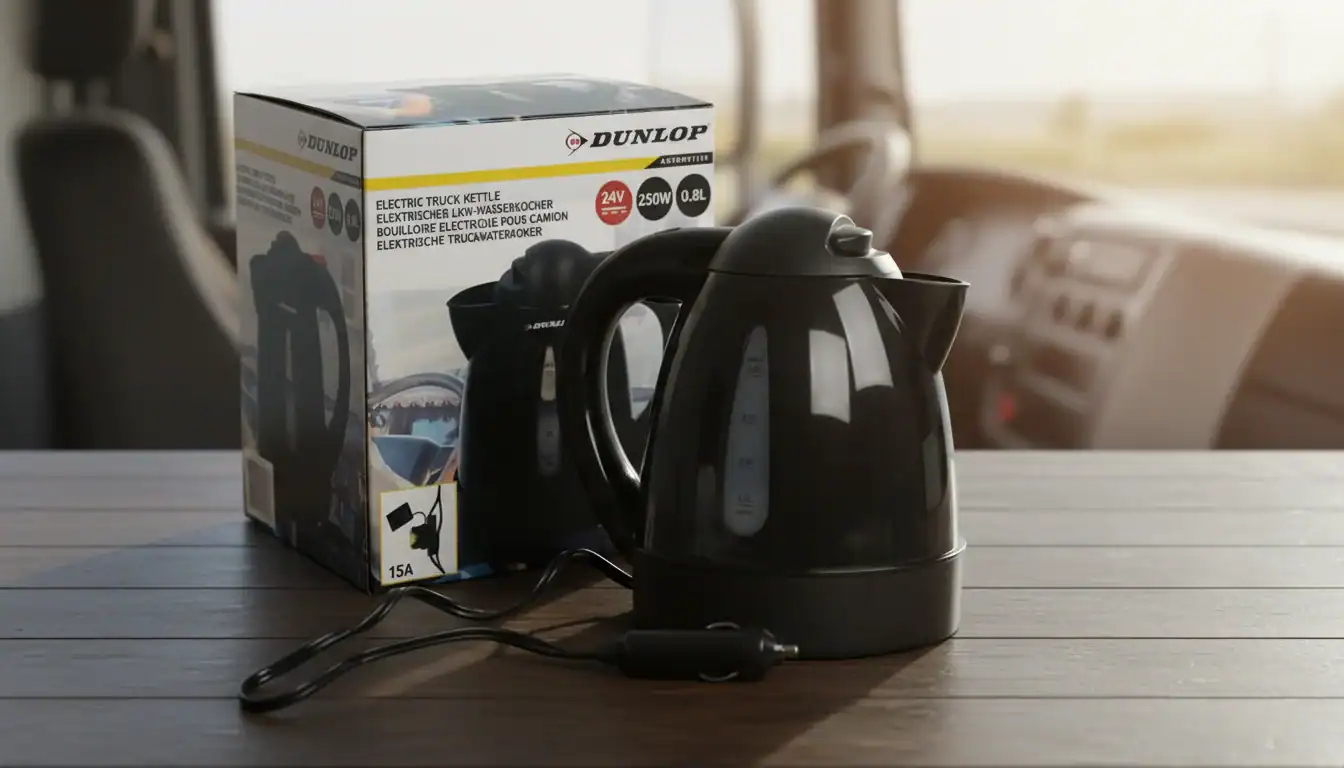
Lower-wattage DC kettles eliminate inverter strain and bypass AC overload risks entirely. Manufacturers like KelyLands engineer 150W (12V) and 250W/300W (24V) kettles specifically for mobile and off-grid configurations. Drawing DC power directly from the source yields several distinct technical advantages:
- Zero Inverter Stress: Bypassing the AC inverter prevents conversion energy losses and eliminates the thermal degradation of internal components entirely.
- Stable Current Transmission: These units feature 100% pure copper cables that maintain steady electrical flow without overheating vehicle wiring matrices.
- Thermal-Resistant Hardware: Heavy-duty Bakelite plugs replace standard ABS plastics, allowing the kettle to handle sustained current draws safely without melting 12V sockets or blowing vehicle fuses.
How Does a 150W Heating Element Balance Boiling Speed and Battery Life?
A 150W power draw provides the optimal thermal exchange rate, bringing water to a rolling boil in 30 minutes while keeping continuous loads well below the inverter overload thresholds of standard portable power stations.
Comparing 150W Performance Against Extreme Wattages
High-wattage electric kettles pulling 1,000W to 2,200W drain standard 500Wh portable batteries in under an hour. This aggressive power draw frequently exceeds the continuous output ratings of compact inverters, triggering automatic shutdown protocols and crippling off-grid capabilities. Ultra-low wattage alternatives operating between 30W and 60W swing the pendulum too far in the opposite direction. While they offer 50+ hours of runtime, they fail to heat liquids within a practical timeframe, often requiring over an hour to warm small volumes of water.
A 150W DC draw solves this thermal equation. It generates sufficient energy to boil one liter of water in approximately 30 minutes. This configuration delivers immediate usability for mobile operators while preserving the power station’s charge for other mission-critical applications.
| Heating Element Output | Average Boiling Time (1L) | Battery Impact (500Wh Station) |
|---|---|---|
| 1,500W AC Kettle | 3-5 Minutes | Triggers Inverter Overload / Rapid Depletion |
| 150W DC Kettle (KelyLands 12V) | ~30 Minutes | ~10% Capacity Drain (Highly Sustainable) |
| 50W USB Kettle | 60+ Minutes | ~3% Drain (Impractical Speed) |
Synergy with Modular Power Station Ecosystems
Capping the peak wattage at 150W completely bypasses the sudden voltage drops that shut down travel-sized power banks. This steady, predictable energy consumption integrates seamlessly with modern extendable battery systems designed for automotive tourism, off-grid logistics fleets, and emergency home backup.
Operators can run multiple boiling cycles on a single charge and still retain substantial battery capacity. This efficiency leaves ample overhead to continuously power sensitive secondary loads, including compressor car fridges, CPAP machines, and communication devices throughout a long-haul trip.
KelyLands 12V Component Engineering for Thermal Efficiency
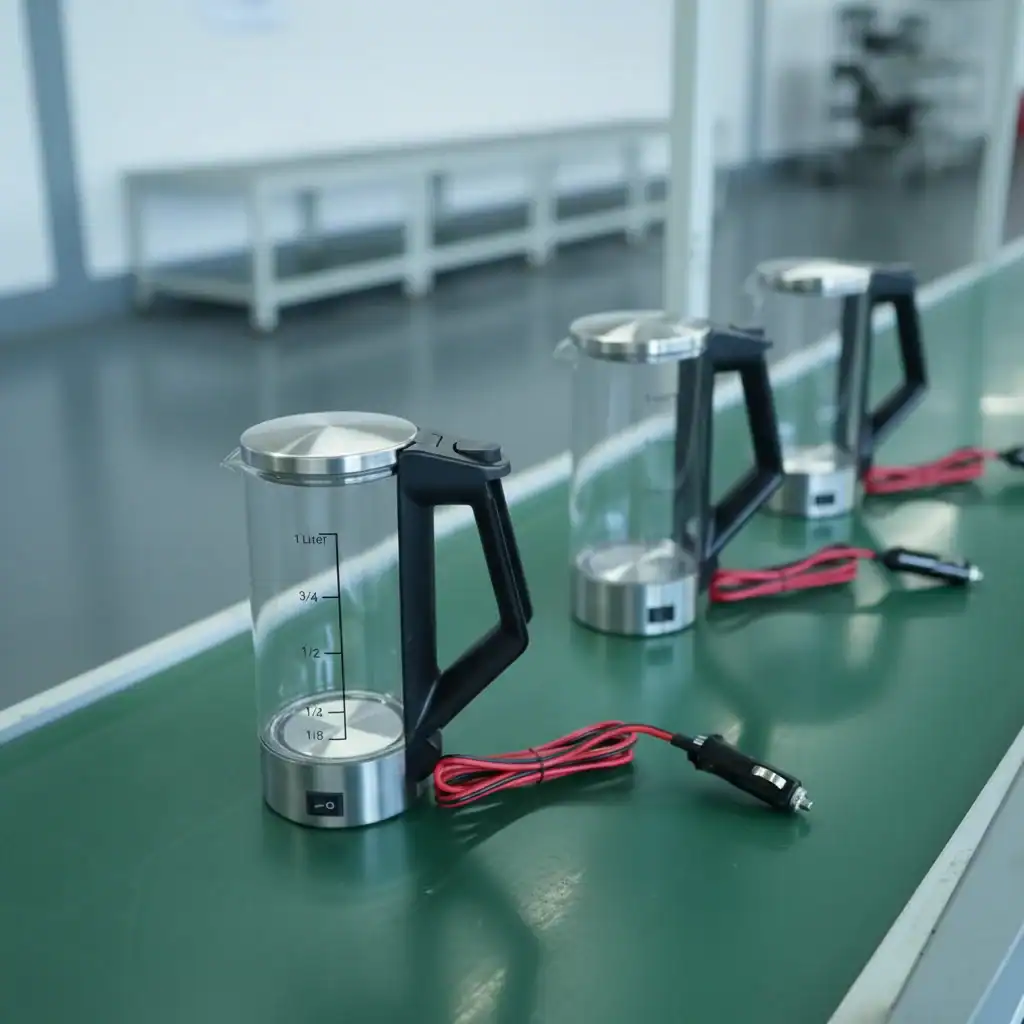
Sustaining a continuous 150W load demands high-grade wiring and strict fail-safes to convert electrical power directly into heat without thermal loss. KelyLands constructs all 12V kettles using 1.4-meter 100% pure copper cables, guaranteeing highly stable current transmission from the power station directly to the food-grade stainless steel heating plate.
Engineers specify high-temperature Bakelite plugs to manage this continuous current safely. Unlike budget ABS plastics that degrade under sustained amp draw, our phenolic resin components eliminate fire hazards and prevent socket melting. We pair this material architecture with a proprietary Triple Safeguard system to conserve every watt of remaining battery life:
- An auto-off switch triggers immediately upon reaching a rolling boil to prevent unnecessary power draw.
- A recoverable temperature controller manages standard operational heating cycles.
- An irrecoverable thermal fuse physically cuts the circuit during dry-boil scenarios, protecting the kettle from core meltdowns and ensuring vehicle or power station fuses remain intact.
Source Safe, High-Profit 12V/24V Car Kettles
Can We Customize the Peak Wattage Draw for Specific EcoFlow/Jackery Models?
Customizing peak wattage draw requires bridging the gap between software-driven power stations and fixed-limit DC outputs through precise hardware-level resistance engineering.
Differences Between Software-Controlled and Fixed DC Power Stations
Major portable power station brands handle output limits differently, dictating how appliances must interact with their power management systems. EcoFlow models provide app-based control over AC charging speeds and utilize technologies like X-Boost to manage power delivery dynamically. This software flexibility allows users to throttle peak wattage draws, preventing sudden inrush currents from tripping the inverter’s overload protection.
Jackery units rely heavily on fixed DC output limitations. These systems present constrained options for users needing granular power management. When a power station lacks software-level amp limiting, the connected appliance dictates the exact electrical demand, making hardware compatibility the primary defense against tripped circuits and rapid battery depletion.
Hardware Adjustments for Strict DC Output Limitations
When pairing accessories with power stations that lack software controls, hardware constraints act as the primary limitation for peak wattage customization. Adapting 12V and 24V appliances requires engineers to align the internal resistance and heating element specifications directly with the station’s fixed amp limit. If a power station’s 12V DC port caps at 10A (120W) or 15A (180W), the connected appliance must possess the exact physical resistance profile to stay below that threshold during its highest startup surge.
| Power Station Type | Output Control Mechanism | OEM Adaptation Requirement |
|---|---|---|
| EcoFlow (Delta/River Series) | Dynamic Software (X-Boost) | Flexible (Inverter actively throttles surge current) |
| Jackery (Explorer Series) | Fixed Hardware DC Limits | Strict (Requires specific heating plate resistance matching) |
| KelyLands Custom DC Output | Physical PCB & Thermal Failsafe | Pre-configured to match target ecosystem max amps |
OEM Customization for Optimal Power Compatibility
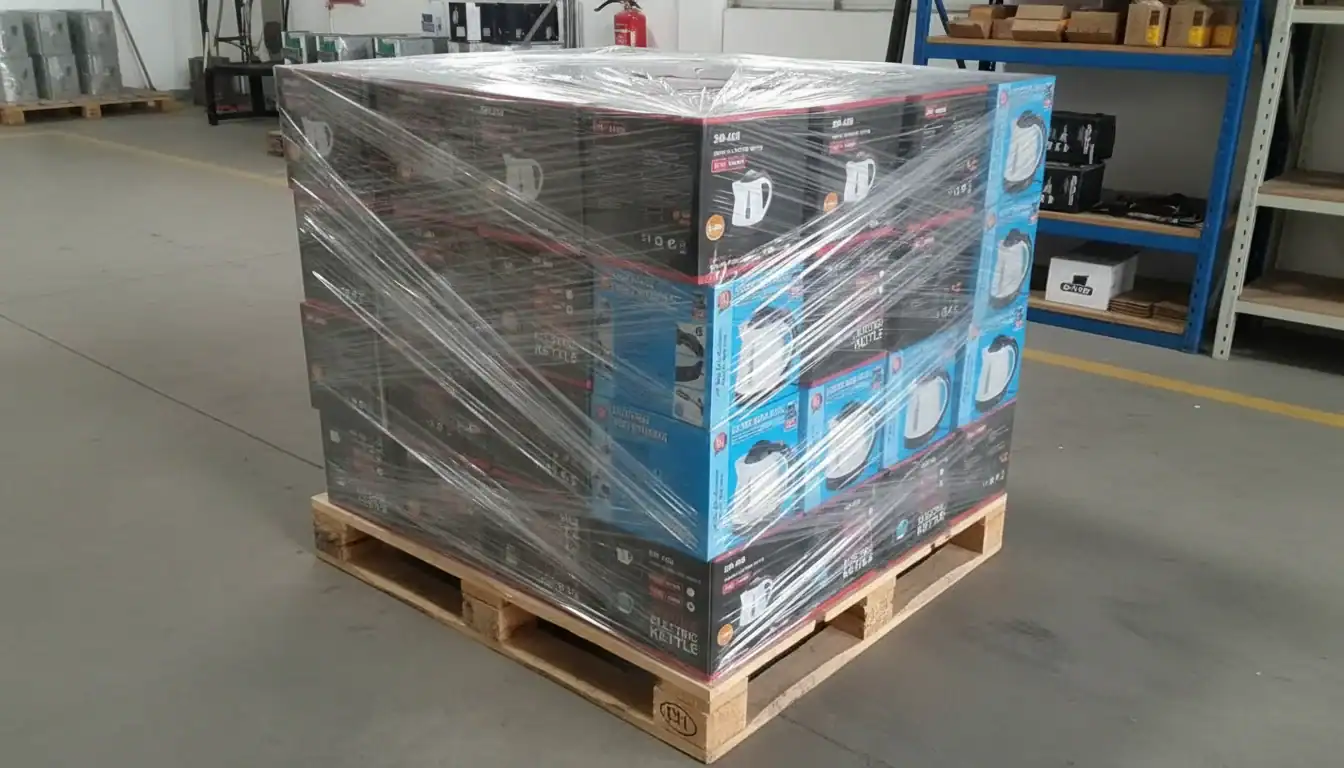
KelyLands utilizes full-service OEM and ODM capabilities to engineer custom 12V (150W) and 24V (250W to 300W) configurations for B2B procurement managers. Instead of relying on the power station to manage the load, we hardcode the maximum amp draw directly into the appliance’s physical architecture.
- Customizing the food-grade stainless steel heating plate resistance to stay strictly below target 10A or 15A thresholds.
- Integrating 100% pure copper wiring to eliminate thermal resistance drops during high-current DC transmission.
- Deploying irrecoverable thermal fuses to ensure instant dry-boil cutoffs independent of the power station’s internal software.
We modify the internal PCB and heating elements so the appliance operates safely within the exact peak wattage draw specified by the target EcoFlow or Jackery model. By pairing this customized power draw with high-temperature Bakelite plugs, we guarantee the kettle sustains continuous 150W or 250W loads without exceeding the designated DC port limitations, eliminating overcurrent faults entirely.

Do You Provide Overcurrent Protection (OCP) on the Internal PCB?
Modern PCB architectures integrate Overcurrent Protection (OCP) with thermal and overvoltage detection to physically block destructive power surges before they reach sensitive power stations or vehicle wiring.
Multi-Layered Protection Architectures
We integrate Overcurrent Protection (OCP) directly with overvoltage, thermal, and ground-fault detection mechanisms to build a rigid defense system against erratic power fluctuations. For high-draw 12V and 24V automotive kettles, our engineers deploy physical safety redundancies alongside the primary circuit. The proprietary KelyLands Triple Safeguard system utilizes a recoverable temperature controller paired with an irrecoverable thermal fuse to provide foolproof dry-boil prevention.
This architecture forces an immediate, hard shutdown during an abnormal current surge. Rapid isolation protects the kettle’s internal stainless steel heating elements and shields the connected portable power station or vehicle dashboard from catastrophic electrical overloads.
| Protection Layer | Generic Market Standard | KelyLands Triple Safeguard Architecture |
|---|---|---|
| Current Management (OCP) | Basic single-use glass fuse | Programmable ICs with real-time amp monitoring |
| Thermal Control | Software-only limits or absent | Recoverable temp controller & irrecoverable thermal fuse |
| Hardware Connection | Standard ABS plastic plug (melting risk) | High-temperature Bakelite plug & 100% pure copper cable |
Programmable ICs and Real-Time Monitoring
Our internal PCBs utilize advanced programmable integrated circuits to monitor continuous current draw in real time. Engineers calibrate these exact OCP thresholds to match your specific OEM operational environments. This granular control guarantees the appliance draws only the specified safe wattage—whether constrained to 150W for 12V passenger cars or optimized up to 300W for heavy-duty 24V logistics fleets.
Active amperage monitoring neutralizes sudden power spikes before they manifest as thermal damage. This continuous oversight specifically prevents high-resistance scenarios that commonly melt cheap ABS plastic plugs inside 12V vehicle sockets, ensuring zero damage to the host vehicle’s infrastructure.
Compliance with Global Safety Standards
Reliable OCP implementation requires strict adherence to international electrical safety benchmarks. We align our internal PCB engineering with stringent testing frameworks, adapting the core principles of industrial inverter standards for rugged DC-powered consumer appliances.
Our QA engineers subject every completed unit to a rigorous Triple-layer inspection process (IQC, PQC, FQC). We stress-test the overcurrent protections under maximum load to verify flawless operational shutdown capabilities. This uncompromising testing sequence guarantees our production batches maintain valid CE, RoHS, FCC, and UKCA certifications, securing immediate and compliant distribution across global B2B markets.

Conclusion
Matching the heating element wattage to a portable power station limits current spikes and prevents inverter trips during startup. Integrating dedicated overcurrent protection directly onto the internal PCB allows solar brands and outdoor retailers to offer safe off-grid boiling solutions. Precise power management extends battery lifespan and reduces retail return rates caused by overloaded circuits.
Evaluate your current portable power station specifications to determine the exact peak wattage limits your product line requires. Contact our OEM engineering team to request a customized testing sample or review our complete catalog of low wattage travel kettles.
Frequently Asked Questions
Can I plug a regular kettle into a Jackery without tripping it?
Plugging a regular standard kitchen kettle, which typically draws between 1,500W and 3,000W, into a standard or lower-capacity portable power station will trip the inverter overload protection. Electric kettles require a high initial surge power (inrush current) that easily exceeds the rated continuous output of smaller units. To run a regular kettle without tripping the system, you must use a high-capacity power station rated for at least 2,000W to 3,000W continuous AC output.
What wattage is best for a low wattage travel kettle on lithium batteries?
The ideal wattage for a low-wattage travel kettle powered by lithium batteries is between 300W and 500W. At 500W, a kettle will boil water efficiently—typically consuming only about 3% of a standard portable power station battery capacity in 8 minutes of operation—while remaining well within the continuous output limits of most 500W to 600W rated inverters. This prevents triggering overload mechanisms and preserves overall battery health.
Does the factory test peak wattage draw upon startup?
Yes, reputable manufacturers strictly test for peak wattage draw, also known as inrush current, during the factory quality control phase. These tests ensure the inverter and Battery Management System (BMS) correctly identify and manage initial power surges. Testing verifies that if a load exceeds the rated capacity, the protective mechanisms engage smoothly to sustain brief surges or safely cut power to prevent thermal stress and component damage.
Can we limit the maximum amp draw via custom firmware?
Yes, you can limit the maximum amp draw through custom firmware configurations applied to the Battery Management System (BMS) and the inverter controller. By modifying the firmware, you can implement dynamic voltage scaling, which lowers the output voltage to keep the total wattage and amp draw within safe, predefined thresholds. This technique allows high-draw appliances to operate at a reduced capacity rather than immediately triggering the system’s hard overload protection shutoff.

 English
  Español
  Français
  Deutsch
  Português do Brasil
  Русский
  한국어
한국어  日本語
日本語  العربية