 跳转到主要内容 跳转到页脚

Choosing between Original Equipment Manufacturing (OEM) and Original Design Manufacturing (ODM) for vacuum cleaners is a critical decision with long-term consequences. These two models present fundamentally different approaches to product development, directly influencing design control, costs, and time-to-market.
An OEM partnership gives a brand full authority over product design, ideal for creating a unique appliance from the ground up. An ODM partnership, conversely, offers a faster route to market by adapting a manufacturer’s existing product designs. Understanding the nuances of each option is essential for making an informed decision that aligns with your company’s resources, brand ambitions, and strategic goals.
Key Insights on OEM vs ODM Vacuum Manufacturing
- OEM offers more design control, higher costs, and better intellectual property protection.
- ODM is a faster, more cost-effective option for businesses needing pre-designed products with limited customization.
What is OEM and ODM Manufacturing?
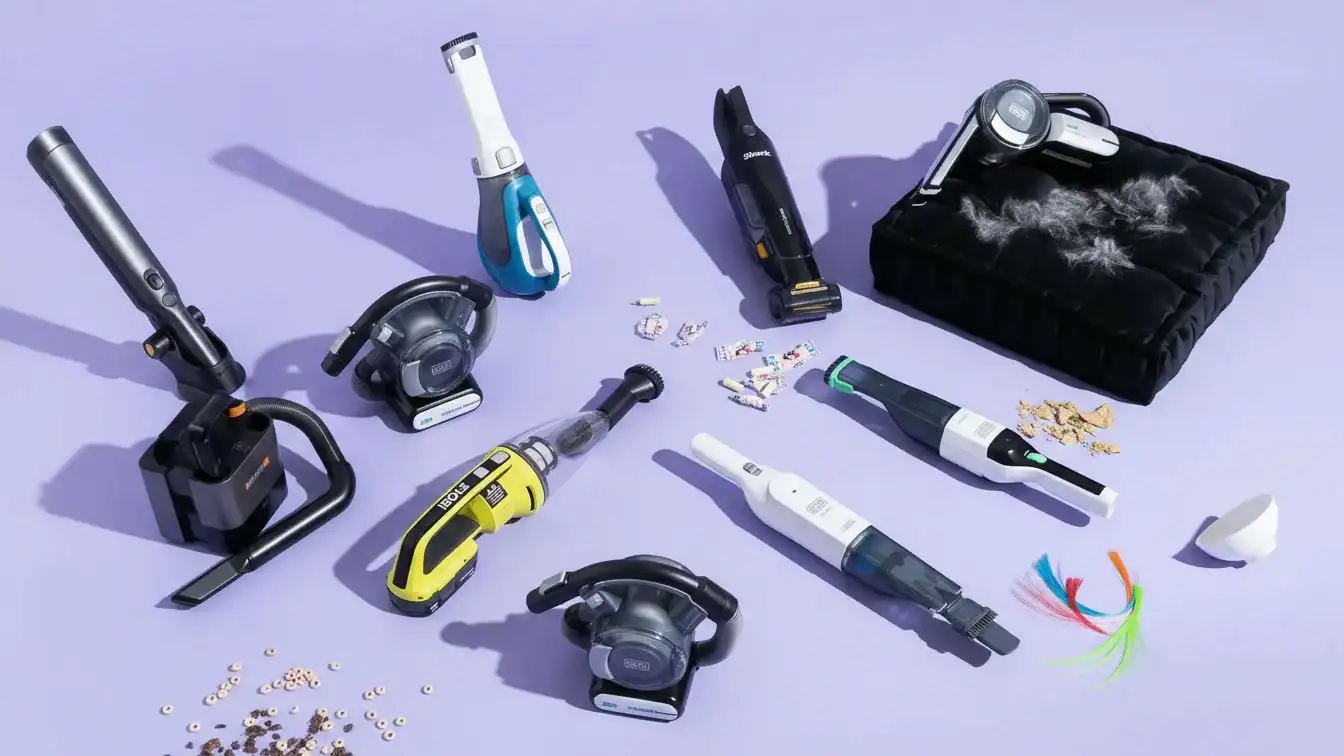
OEM (Original Equipment Manufacturing) and ODM (Original Design Manufacturing) are the two dominant partnership models in the world of product creation. While both result in a finished product, they represent fundamentally different philosophies regarding design, investment, and intellectual property. The path you choose will define your role in the development process and shape your product’s position in the market.
Understanding OEM Manufacturing
Original Equipment Manufacturer (OEM) partnerships grant a company total creative authority over its vacuum cleaner’s design and engineering specifications. This approach allows a brand to build a product from the ground up, ensuring every feature aligns with its unique market strategy. While this level of control enables true product differentiation, it requires a significant upfront investment in research, prototyping, and tooling.
The OEM process is intensive, involving detailed design phases, material selection, multiple prototyping rounds, and rigorous testing before mass production begins. This model is best suited for established brands or well-funded startups aiming to introduce a product with unique, protectable features. For example, Apple’s partnership with Foxconn for the iPhone is a classic OEM arrangement; Apple handles all design and engineering in-house, while Foxconn provides the manufacturing expertise to build the product to exact specifications. This level of control ensures product quality and protects valuable intellectual property, which is one of the core OEM manufacturing benefits.
Understanding ODM Manufacturing
Original Design Manufacturer (ODM) partnerships offer a much faster and more cost-effective path to market. In this model, the manufacturing partner has already developed a base product—or a “white-label” product—that a company can brand as its own. Customization is typically limited to cosmetics like color, branding, and packaging, though some ODMs may offer minor functional modifications for larger orders.
This approach dramatically reduces research and development costs and shortens production timelines, as the core engineering and tooling are already complete. An ODM partnership is ideal for businesses looking to quickly enter the vacuum market, test a new product category, or supplement an existing product line without committing to a full development cycle. For instance, a major retail chain wanting to launch its own brand of affordable stick vacuums for the holiday season would likely use an ODM. This allows them to go from concept to store shelves in months, not years, highlighting the key ODM manufacturing advantages of speed and efficiency.
How to Choose Between OEM and ODM for Vacuum Manufacturing?
Selecting the right manufacturing partner requires a careful evaluation of your business’s priorities, resources, and long-term strategy. The decision isn’t just about the initial product launch; it has lasting implications for your brand’s identity, profitability, and competitive standing. Factors like design uniqueness, budget constraints, market timing, and intellectual property protection must be weighed to determine the optimal path forward.
Customization vs. Cost-Effectiveness
The primary trade-off between OEM and ODM is the level of product customization versus the overall cost. An OEM partnership provides virtually limitless control over every component of the vacuum cleaner. This includes core performance characteristics like motor power and filtration systems (e.g., multi-cyclonic, HEPA), as well as battery technology for cordless models and the integration of smart features like app connectivity. This deep customization allows a brand to create a truly unique product but comes with substantial non-recurring engineering (NRE) costs for design, prototyping, and tooling.
ODM manufacturing, in contrast, prioritizes cost-effectiveness by building upon an existing product chassis. The engineering is complete, and the tooling is owned by the manufacturer, eliminating massive upfront expenses for the client. While this limits customization to surface-level changes, it makes the per-unit cost predictable and the initial investment minimal. This model is perfect for brands competing on price or those who need a reliable, market-ready product without the financial burden of ground-up development.
Time-to-Market and Resource Constraints
How quickly you need to get your product onto store shelves is another critical factor. The OEM development lifecycle is comprehensive and, as a result, much longer. A typical timeline for a new vacuum cleaner can range from 12 to 24 months, encompassing everything from initial concept sketches to final mass production. This process requires a dedicated internal team of engineers, designers, and project managers to oversee development and collaborate with the manufacturing partner.
ODM offers a significant speed advantage, with typical timelines ranging from just 4 to 8 months. Because the core product is already designed and tested, the process is streamlined to focus on branding, final configurations, and production scheduling. This accelerated path is ideal for companies needing to react quickly to market trends or for businesses that lack the internal engineering resources to manage a complex OEM project. It allows a small team to launch a new product efficiently.
Intellectual Property and Long-Term Brand Strategy
Intellectual property (IP) ownership is a crucial consideration that impacts long-term brand value and defensibility. In an OEM partnership, the brand that commissions the design owns all the resulting IP. This includes design patents, utility patents, and the custom tooling created for production. Owning the IP provides a powerful competitive advantage, as it prevents other companies from copying your unique design and features. It builds lasting brand equity and ensures your product remains exclusive to you.
With an ODM model, the manufacturer retains ownership of the core design and tooling IP. The client company is essentially licensing a pre-existing product for their own branding. This arrangement carries a significant strategic risk: the same ODM could sell a nearly identical vacuum cleaner to a direct competitor. This can lead to market saturation and dilute your brand’s uniqueness, making it difficult to stand out if another company is selling a similar product under a different name.
Custom Home Vacuum Cleaners Built for Performance
Partner with KelyLands to create powerful, portable, and smart vacuum cleaners tailored to your brand. Experience flexible OEM/ODM solutions with advanced suction, filtration, and design options for diverse markets.

Conclusion
The choice between OEM and ODM manufacturing hinges on a company’s strategic priorities. OEM is the definitive path for businesses that require complete control over product design and intellectual property to build a unique brand identity. In contrast, ODM provides a streamlined, cost-effective solution for companies aiming to enter the market quickly by leveraging existing, proven designs.
To make the right decision, evaluate your specific business needs, from customization desires to time constraints and budget limitations.
Frequently Asked Questions
What’s the key difference between OEM and ODM?
The fundamental difference lies in who is responsible for the product’s design and engineering. In an OEM (Original Equipment Manufacturer) partnership, the client company (the brand) creates the product design and specifications, then hires the manufacturer to build it. The brand owns the intellectual property and has complete control over the product’s features and functionality.
In an ODM (Original Design Manufacturer) partnership, the manufacturer has already designed and engineered a product. The client company then selects a product from the manufacturer’s catalog and applies its own branding. The manufacturer owns the core design, and the client’s customization options are usually limited. Essentially, OEM is “you design it, we build it,” while ODM is “we design it, you brand it.”
What is a fair MOQ for entry-level models?
Minimum Order Quantities (MOQs) for entry-level models differ significantly between OEM and ODM. For ODM products, MOQs are generally lower, often ranging from 500 to 1,000 units. This is because the manufacturer produces the same base model for multiple clients, allowing them to benefit from economies of scale and keep production lines running continuously.
For OEM products, MOQs are almost always higher, frequently starting at 1,000 units and going up from there. The higher quantity is necessary to justify the manufacturer’s costs for setting up a dedicated production line, sourcing custom components, and amortizing the investment in unique tooling and molds created specifically for that product.
Can tooling costs be shared?
Tooling costs, which refer to the creation of custom molds and dies for manufacturing, are a major expense in OEM projects. In a standard OEM arrangement, the client pays for and owns the tooling outright. Sharing these costs is uncommon but can sometimes be negotiated in hybrid or joint development models where both parties contribute to the design process. However, this often complicates intellectual property ownership.
In an ODM model, tooling costs are not a direct expense for the client. The manufacturer has already invested in the tooling for their existing product designs. The cost of this tooling is factored into the per-unit price of the product, spreading the expense across all clients who purchase that model.
Who owns design rights?
Design rights ownership is a clear dividing line between the two models. In an OEM partnership, the client company that provides the product design retains full ownership of all intellectual property rights. This includes patents, industrial designs, and copyrights associated with the product. This exclusivity is a key benefit, as it legally prevents the manufacturer from selling the same design to anyone else.
In an ODM partnership, the manufacturer owns the rights to the core product design and engineering. The client company only owns the rights to its own branding elements, such as the logo, brand name, and custom packaging. This means the manufacturer is free to sell the same base product to other companies, including direct competitors.
How long is the lead time for new molds?
The lead time for creating new molds, a critical step in any OEM project, typically ranges from 6 to 12 weeks. This timeline can be influenced by several factors, including the complexity of the vacuum cleaner’s parts, the type of steel used for the mold, and the manufacturer’s current production queue. The process involves multiple stages, starting with the finalization of the 3D design.
After the initial mold is created, the first samples (known as T0 samples) are produced and sent for review. Based on feedback, revisions may be needed, leading to T1 and T2 samples. Each revision cycle adds time to the process. The lead time is complete only after the client gives final approval of the samples, clearing the mold for mass production.

 English
  Español
  Français
  Deutsch
  Português do Brasil
  Русский
  한국어
한국어  日本語
日本語  العربية